
Written by: Dr. Akash Chandawarkar, Board Certified Plastic Surgeon, Mirror Plastic Surgery | Last updated: September 9, 2026
Key Takeaways
- The overfilled look, or Facial Overfilled Syndrome (FOS), develops from excessive or poorly placed dermal fillers over time.
- Choosing a board-certified plastic surgeon with deep anatomical knowledge and a conservative approach supports natural, balanced results.
- A thorough consultation that includes full-face assessment and questions about existing filler helps prevent overfilling.
- Staged treatments with reassessment and a “less is more” philosophy create subtle, natural outcomes.
- Patients concerned about overfilled results can schedule a personalized corrective assessment at Mirror Plastic Surgery.
Step 1: Understand What Causes The Overfilled Look
The overfilled or “pillow face” appearance usually develops gradually over multiple appointments.1 It often results from repeatedly adding volume without auditing or dissolving what is already present. Several anatomical and technical factors drive this outcome.
The face is organized into distinct fat compartments separated by fibrous septa that age at different rates. The deep medial cheek fat deflates earliest, pulling the midface downward. Meanwhile, superficial fat pads descend and create hollowing. When an injector ignores these compartments and simply adds volume to visible lines or folds, the result becomes imbalance instead of restoration.
Compounding this, hyaluronic acid fillers are hydrophilic, meaning they attract and hold water. This property can make results appear more pronounced months after treatment than they did initially.1 High-resolution MRI studies have shown that HA fillers can persist in tissue for 10 to 15 years post-injection, far longer than traditional marketing suggests. Because each new syringe layers on top of product that has not fully cleared, total volume climbs session by session.
Attempting to lift sagging cheeks with large volumes of filler when the primary issue is skin laxity is an anatomical error. This approach creates the overfilled appearance instead of correcting aging. The face ages in three dimensions across bone, ligament, fat, and skin. Treating one area without assessing the whole creates imbalance that accumulates over time.
Step 2: Choose The Right Injector For Natural Results
The injector’s credentials and philosophy matter more than the specific product used. An international consensus framework in the Journal of Cosmetic Dermatology confirms that technique is as important as filler choice. Safe, natural results require proper training, strong knowledge of facial anatomy, and a clear understanding of the aging process.
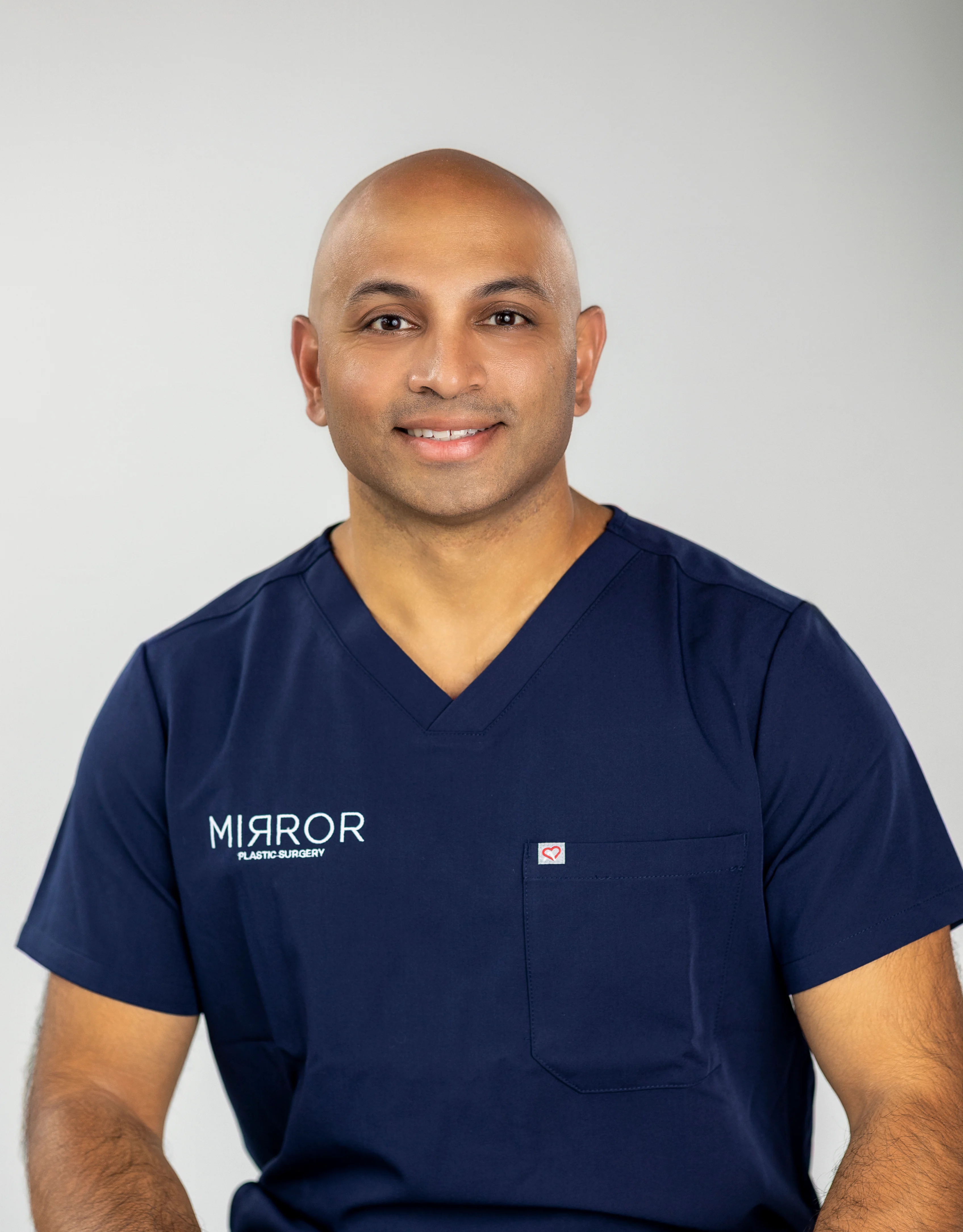
At Mirror Plastic Surgery in St. Petersburg, Florida, every injection is performed personally by Dr. Akash Chandawarkar, a Harvard-educated, Johns Hopkins-trained plastic surgeon with fellowship training in aesthetic surgery at the Manhattan Eye Ear & Throat Hospital. Because Dr. Akash is board-certified by the American Board of Plastic Surgery, every neuromodulator and dermal filler is placed by a physician with a surgeon’s command of facial and subdermal anatomy. He also serves as an advisory board member for Merz Aesthetics and Tiger Aesthetics, keeping him at the forefront of injectable innovation.
When evaluating any injector, look for the following credentials:
- Board certification by the American Board of Plastic Surgery or American Board of Dermatology
- Fellowship training in aesthetic or cosmetic surgery
- Demonstrated expertise in facial anatomy and full-face treatment planning
- A conservative philosophy that prioritizes starting with less product
- Willingness to say “no” when filler is not the right solution for a patient’s concern
Step 3: Ask These Questions During Your Consultation
A thorough consultation is the single most important step in avoiding overfilled results. At Mirror Plastic Surgery, consultations extend up to an hour and include a top-to-bottom facial assessment. This concierge approach contrasts with rushed, high-volume practices where isolated areas are treated without evaluating the whole face.
Bring these questions to any filler consultation:
- “What is your approach to facial balance and harmony?”
- “How do you decide where to place filler anatomically?”
- “What is your philosophy on volume, and do you start conservatively?”
- “Can you show me examples of your natural results?”
- “Which areas of my face do you think do not need filler?”
- “How do you account for filler that may still be present from previous treatments?”
A physician injector who is willing to recommend less filler, or none at all, signals a stronger focus on safety than one who simply fulfills whatever volume a patient requests. The question about which areas do not need filler is particularly revealing. An honest, anatomy-focused injector will always have a clear answer.
Step 4: Embrace The “Less Is More” Philosophy
Natural-looking fillers rely on using the minimum amount of product needed to restore volume and balance.1 A conservative first-session approach uses a maximum of 0.5 to 1 syringe per area.1 Patients then wait 10 to 14 days for swelling to resolve before reassessment.
A 2026 review in the Journal of Cosmetic Dermatology recommends conservative aliquots, slow delivery, reassessment, and hyaluronidase readiness as part of a staged strategy. The authors emphasize that the goal is better-directed filler rather than simply less filler. More product can always be added at a follow-up appointment once the initial result has fully settled. Removing excess filler later is a more complex process.
Dr. Akash’s philosophy at Mirror Plastic Surgery prioritizes safety first, function second, and aesthetics third. Staged treatments are the standard rather than the exception. Patients are assessed at follow-up before any additional volume is considered. This approach helps results remain natural and proportionate over time.
Step 5: Treat The Full Face, Not Just One Feature
Expert injectors begin every filler treatment with a detailed facial analysis. They evaluate relationships between the forehead, midface, and lower face to determine where volume loss affects overall structure. Treating a single feature in isolation, such as filling smile lines without addressing cheek volume, creates a heavy midface and unnatural contour.
Dr. Akash’s approach focuses first on revitalizing inherent facial characteristics. He considers volume augmentation only after foundational restoration. This sequence ensures a seamless transition between the upper, middle, and lower facial regions. It also helps prevent overfilled cheeks or lips that clash with the rest of the face.
Treating every sign of aging with fillers alone, instead of using a comprehensive facial rejuvenation plan, can disrupt natural facial proportions. This pattern often leads to an overfilled appearance. Sometimes the right answer is a neuromodulator, an energy-based treatment, or simply no treatment yet. A trustworthy injector will explain these options clearly.
Red Flags When Choosing A Filler Provider
Patients should feel educated and comfortable throughout the consultation process. They should never feel rushed or pressured. The following warning signs suggest a provider may not deliver natural results:
- Pressure to book immediately or “today only” discounts
- Discount deals, package offers, or “filler parties” that prioritize volume over assessment
- Lack of a thorough consultation or full-face assessment before treatment
- Inability to answer anatomical questions about placement depth or product selection
- A portfolio showing overfilled or unnatural results
- Reluctance to discuss existing filler from previous treatments
- Recommendations for large volumes of filler in a first session
A provider who pressures patients into large packages or multiple syringes on a first visit is a red flag. Accelerating injection frequency from yearly to quarterly and adding new areas at each visit are behavioral warning signs of a cycle that drives overfilling.
What To Do If You Already Have Overfilled Fillers
Correction of overfilled filler results is possible with a careful, staged plan. For hyaluronic acid fillers, hyaluronidase is the enzyme used to break down HA-based fillers. Visible softening often begins within hours, and the final outcome becomes clearer over one to two weeks.
Correction usually involves more than one session. Years of filler expansion can stretch the soft tissue envelope. Dissolving all volume at once may create hollowing rather than harmony. Conservative, staged correction is safer than aggressive dissolution. The recommended approach is to dissolve region by region, waiting four to eight weeks between sessions to allow tissue to settle before reassessing.
For moderate-to-severe Facial Overfilled Syndrome, correction may require three to five staged dissolving sessions. These sessions are often followed by collagen-stimulating rebuilding over a nine-to-twelve-month arc. During the rebuilding phase, biostimulatory fillers such as Radiesse can help restore structure by stimulating the body’s own collagen production.
Biostimulatory fillers like Radiesse are not reversible with hyaluronidase. Any correction plan involving these products requires a different management approach. This need is another reason why a board-certified plastic surgeon’s assessment is essential before beginning any corrective treatment.
Frequently Asked Questions
Disclaimer: Results may vary from person to person. Editorial content, before and after images, and patient testimonials do not constitute a guarantee of specific results.
What Breaks Down Fillers Naturally?
Hyaluronic acid fillers break down through the body’s natural metabolic processes over time. Most HA fillers last between 12 and 18 months depending on the product formulation, the area treated, and an individual’s metabolism.1 As noted earlier, some HA fillers can persist far longer than expected. This persistence is why staged treatments and periodic reassessment matter. Repeated top-ups on top of filler that has not fully cleared cause total volume to accumulate gradually and increase the risk of an overfilled appearance.
Can Too Much Filler Make You Look Older?
Too much filler can age the face visually. Excessive filler can stretch the soft tissue envelope, creating a heavy or puffy appearance and blurring the natural contours and shadows that define a youthful face.1 This added volume can accentuate sagging rather than lift it, because it adds weight to soft tissue already subject to gravity. The result is a face that reads as round, flat, or wide rather than refreshed and lifted. Over time, years of overfilling can also trigger mild fibrosis and stretch facial support ligaments, leaving the face looking swollen even after injections stop.
Which Facial Fillers Look The Most Natural?
Natural results depend far more on the injector’s skill and anatomical knowledge than on the specific product used. That said, hyaluronic acid fillers are generally preferred as a starting point because they are reversible with hyaluronidase. This reversibility allows for correction if results are unsatisfactory. Biostimulatory fillers such as Radiesse offer longer-lasting structural support by stimulating the body’s own collagen production. Their gradual onset makes them less likely to produce an immediately overfilled appearance. The right product for any individual depends on the area being treated, the depth of injection, and the patient’s specific anatomy. Dr. Akash evaluates all of these factors during a comprehensive consultation.
How Long Do Fillers Last?
Hyaluronic acid fillers typically last 6 to 18 months depending on the product, the area treated, and individual metabolism.1 Lip fillers tend to metabolize faster due to continuous muscular activity.1 Biostimulatory fillers like Radiesse can last 12 to 18 months, while Sculptra results may persist up to 24 months as the body continues to produce new collagen.1 Filler longevity in marketing materials often reflects the best-case scenario. For most patients, visible correction begins to soften earlier, and some residual product may remain in tissue longer than expected.
Is It Possible To Have Fillers Dissolved?
Hyaluronic acid fillers can be dissolved safely when handled by an experienced professional. Hyaluronidase is the enzyme that breaks down HA. The process should only be performed by an experienced medical provider, because over-dissolving can cause temporary deflation or tissue laxity as the skin readjusts. As mentioned, correction is staged to avoid sudden facial collapse. Biostimulatory fillers such as Radiesse and Sculptra cannot be dissolved with hyaluronidase and require a different management approach if complications arise. A board-certified plastic surgeon is best positioned to assess which products are present and design an appropriate corrective plan.
Conclusion: Your Path To Natural Results
Avoiding the overfilled “pillow face” look depends on choosing an anatomy-focused injector, embracing a conservative approach, and treating the face as a whole rather than as isolated features. The right provider will spend time understanding your anatomy, your goals, and your history before recommending a single syringe. They will explain when you do not need more filler. They will also have a clear plan for every product they place.
At Mirror Plastic Surgery, Dr. Akash Chandawarkar brings a Harvard education, Johns Hopkins training, and fellowship-level expertise in aesthetic surgery to every injectable treatment he performs. His concierge approach, which includes up to an hour per consultation, a top-to-bottom assessment, and a philosophy of safety before aesthetics, is designed for patients who want results that look like themselves, only refreshed.
Disclaimer: Results may vary from person to person. Editorial content, before and after images, and patient testimonials do not constitute a guarantee of specific results.
1 Results may vary from person to person. Editorial content, before and after images, and patient testimonials do not constitute a guarantee of specific results.