
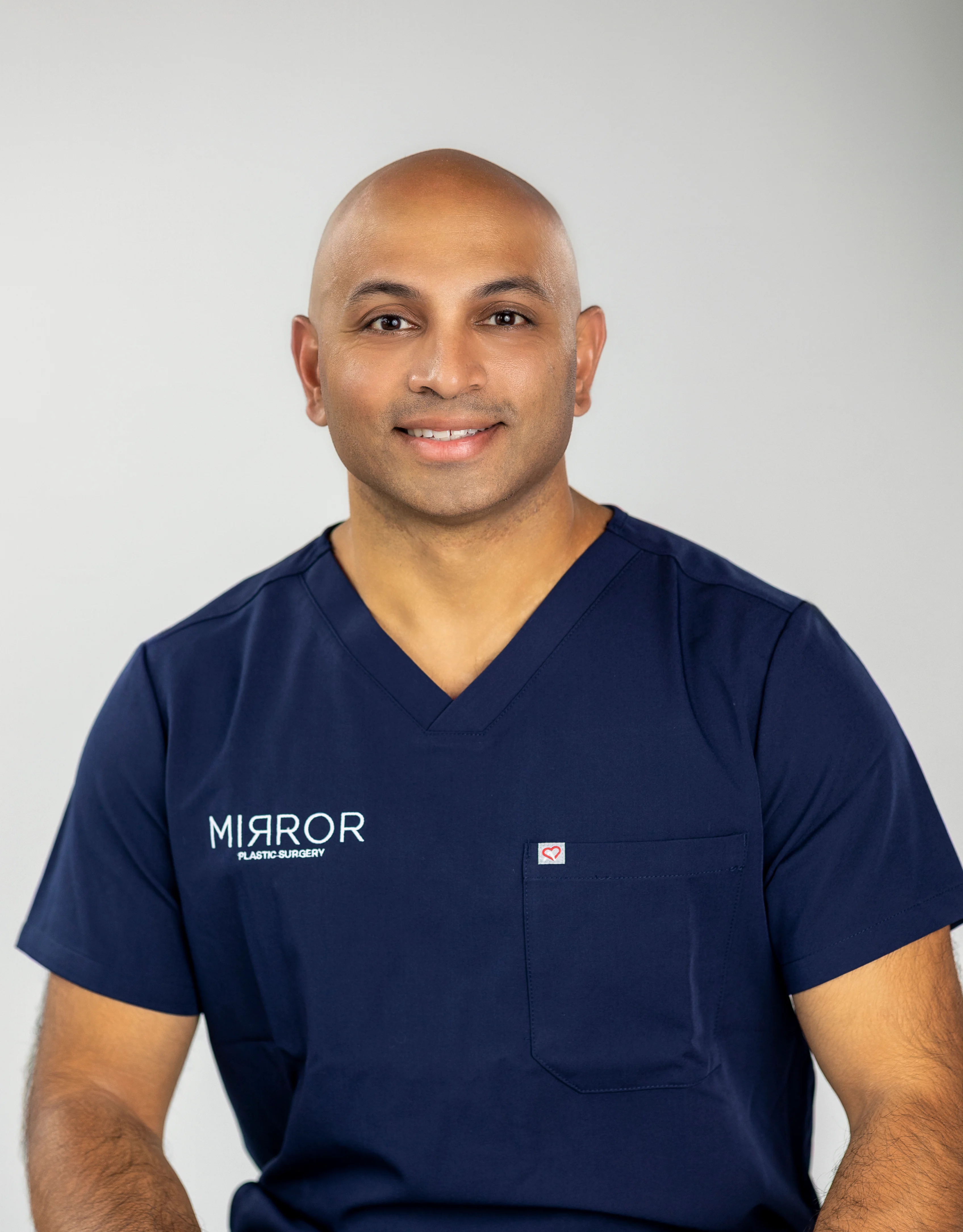
Written by: Dr. Akash Chandawarkar, Board Certified Plastic Surgeon, Mirror Plastic Surgery | Last updated: September 9, 2026
Botox (onabotulinumtoxinA) is an FDA-approved neuromodulator that relaxes targeted facial muscles and smooths dynamic wrinkles such as forehead lines, crow’s feet, and frown lines. The effect is temporary, and muscle activity gradually returns between treatment sessions.1
Key Botox Facts At A Glance
- Botox is an FDA-approved neuromodulator that relaxes specific facial muscles and softens dynamic wrinkles.
- Session cost depends on units used, treatment area, provider expertise, and location, with an average around $435 across the United States.
- Common side effects include bruising and headache, while serious complications are rare with qualified providers using FDA-approved products.
- Stopping Botox allows your face to return to its natural baseline over time without accelerating aging.1
- Choosing a board-certified plastic surgeon at Mirror Plastic Surgery supports safe treatment and natural-looking results.
How Botox Works In Your Muscles
OnabotulinumtoxinA is a purified neurotoxic protein produced by the bacterium Clostridium botulinum, classified as a neuromuscular blocker and acetylcholine release inhibitor. When injected into a targeted muscle, it enters the presynaptic nerve terminal and cleaves SNAP-25, a protein essential for neurotransmitter exocytosis. This process blocks the release of acetylcholine at the neuromuscular junction and reduces the muscle’s ability to contract with its usual force. As the muscle relaxes, the overlying skin appears smoother.
The effect remains temporary. Nerve terminals undergo collateral sprouting, and new nerve branches grow to reinnervate the muscle over weeks to months. Nerve-to-muscle signaling then returns, which is why maintenance treatments are needed.
The FDA first approved onabotulinumtoxinA in December 1989. Under the brand name Botox Cosmetic, it is FDA-approved for temporary improvement of glabellar lines, lateral canthal lines, forehead lines, and platysma bands.
Cosmetic And Medical Uses Of Botox
Botox treats a wide range of cosmetic concerns and several medical conditions.
Cosmetic Uses include:
- Forehead lines
- Frown lines (the “11s” or glabellar lines)
- Crow’s feet (lateral canthal lines)
- Brow lift
- Neck bands (platysmal bands)
- Masseter reduction for jaw slimming
- Trapezius (“swan neck”) injections
- Lip flip
- Chin dimpling and bunny lines
Medical Uses include:
- Chronic migraine prevention
- Severe primary axillary hyperhidrosis (excessive underarm sweating)
- Overactive bladder and urinary incontinence
- Cervical dystonia, blepharospasm, strabismus, and muscle spasticity
At Mirror Plastic Surgery, Dr. Akash Chandawarkar uses Botox for facial rejuvenation and for these medical indications. As a board-certified plastic surgeon, he places every injection with a surgeon’s understanding of facial and subdermal anatomy. This level of precision supports lower risk and more consistent outcomes.
Schedule a consultation to review your treatment areas and goals.
Botox Pricing: What Drives Your Cost
Several factors determine Botox pricing, and knowing them helps you compare quotes with confidence.
The primary cost drivers are:
- Number of units required. Men typically need 20 to 30% more units than women in the same area because male facial muscles are denser. Two patients requesting the same area can receive very different total unit counts at the same per-unit rate.
- Treatment area. Crow’s feet might require about 12 units, while treating forehead lines, glabella, and crow’s feet together can require 50–60 units.
- Geographic location. Florida markets like Miami and Tampa often fall in the $13–$20 per unit range, while premium markets like New York and Los Angeles can reach $15–$25 per unit or higher.
- Provider expertise. Board-certified plastic surgeons and dermatologists usually charge more per unit than less-credentialed injectors. This premium reflects deeper anatomical training and a lower complication rate.
- Product integrity. Prices below about $10 per unit often signal dilution or underdosing, which can increase annual cost once repeat visits are considered. The FDA has also flagged counterfeit Botox circulating in some low-cost settings.
Given these variables, the American Society of Plastic Surgeons cites an average Botox session cost of around $435. This blended figure spans many treatment areas and practice types, so individual quotes can fall below or above that number.
Mirror Plastic Surgery is a supplier-neutral practice. Dr. Akash focuses on the right dose and product for each patient’s anatomy and goals. The team provides clear, personalized quotes during consultation.
How Long Botox Results Typically Last
FDA-approved labeling for Botox Cosmetic reports a duration of about 3–4 months for glabellar lines. Clinical experience across other facial areas generally aligns with this range, although individual results vary.1
- Treatment area. Crow’s feet often fade sooner at 7–12 weeks because of constant eye movement, while masseter treatments can last 4–6 months.
- Metabolism and muscle strength. About 15% of patients metabolize Botox faster and may need touch-ups as early as 8–10 weeks.
- Dosage. Lower doses, sometimes called “baby Botox,” may last 6–10 weeks, while higher doses create more complete and longer-lasting relaxation.
- Cumulative treatment history. After a year or more of regular treatments, some patients see results extend to four or five months as targeted muscles weaken slightly over time.
Several habits help you maintain results as long as possible.
- Follow aftercare instructions. Avoid rubbing, massaging, or pressing the treated area and stay upright for about four hours to reduce the chance of product migration.
- Skip strenuous exercise and excessive heat exposure for the rest of the day, since increased blood flow can worsen swelling or bruising.
- Plan your next appointment around month three, before full muscle movement returns, to keep results consistent.
- Stay consistent over time. Regular treatments over years can create temporary, partly reversible muscle reduction in targeted areas, which may lengthen intervals between sessions.
Risks, Side Effects, And Safety Signals
Botox has a strong safety record when a qualified provider uses an FDA-approved product in a licensed setting. Knowing the risk spectrum helps you weigh benefits and make informed choices.
Common, temporary side effects include:
- Bruising occurs in 10–25% of treatments and swelling or redness in 10–20%, both resolving within days. Injection-site pain is common, although the exact incidence is not specified in the evidence.
- Headache, reported in about 5–10% of cases.
- Mild, short-lived tenderness at the injection site.
Less common but clinically significant risks include:
- Eyelid drooping (ptosis). Ptosis occurs in about 1–5% of cases and usually resolves in 2–6 weeks as the Botox wears off. Proper technique, including staying at least 1 cm above the orbital rim, greatly reduces this risk.
- Brow ptosis. Brow ptosis results from over-treating the frontalis muscle while neglecting the brow depressor complex, which leaves the depressors unopposed. An experienced injector treats both areas together to maintain balance.
- Allergic reaction. Serious allergic reactions occur in fewer than 0.1% of treatments.
FDA Black Box Warning information provides additional context. Labeling includes a boxed warning about possible distant spread of toxin effect, with symptoms such as generalized muscle weakness, ptosis, difficulty swallowing, and breathing problems that can be life-threatening. Importantly, no definitive serious adverse event reports of distant spread have been linked to dermatologic use of Botox Cosmetic at standard cosmetic doses.
Contraindications include hypersensitivity, active infection at the injection site, and pre-existing neuromuscular disorders. Pregnancy and breastfeeding are generally avoided because safety data are limited, although they are not listed as absolute contraindications in FDA labeling.
The CDC has documented severe illness after injections from unlicensed sources. Patients should confirm that their provider uses FDA-approved product drawn from a labeled vial in a licensed clinical setting. Warning signs include cash-only pricing with no medical documentation, unlabeled or pre-drawn syringes, no visible medical license, and unrealistically low pricing.
What To Expect If You Stop Botox
Stopping Botox allows wrinkles to return to their natural baseline without making them worse than before treatment. Available evidence does not show that discontinuation speeds up aging.
After a final injection, the paralytic effect usually fades over about 3 to 6 months as muscle movement returns.1 The change happens gradually. Any sense of “sudden” aging often reflects a psychological contrast effect after months or years of seeing a smoother face.
Long-term users may keep some residual benefit even after stopping. A 2023 study in Toxins found that 3.5 years after stopping Botox, injected muscles still showed roughly 10–11% less thickness and 12–13% less strength than untreated muscles. Long-term use can also support skin quality through collagen synthesis and reduced mechanical stress on the skin.
If a patient discontinues treatment, muscle activity eventually returns to normal and the skin continues to age naturally. Effects remain reversible over time.
How To Choose A Qualified Botox Provider
The expertise of the injector is the most important factor in Botox outcomes. Many complications from neurotoxin injections arise from injectors without formal training in facial anatomy and emergency management, and most are preventable with proper training.
Use this practical checklist when evaluating a provider:
- Verify board certification. Look for a board-certified plastic surgeon or dermatologist. Board certification reflects rigorous, peer-reviewed training.
- Assess anatomical expertise. Ask about specific training in facial anatomy. The American Society of Plastic Surgeons and the American Academy of Dermatology both highlight injector skill as a key factor in outcomes.
- Review before-and-after photos. Look for consistent, natural-looking results across many patients, not only a few standout cases.
- Evaluate the consultation. A thorough consultation should cover your goals, anatomy, and medical history. The visit should feel personalized rather than rushed.
- Confirm product sourcing. Neurotoxins should come directly from manufacturers, with unopened vials, visible lot and serial numbers, sterile technique, and proper informed consent.
- Watch for red flags. Avoid providers who offer cash-only pricing with no receipts, lack a visible medical license, use unlabeled or pre-drawn syringes, rely only on social media booking, or push “today-only” discounts.
At Mirror Plastic Surgery, Dr. Akash Chandawarkar, a Harvard-educated, Johns Hopkins-trained, board-certified plastic surgeon, personally performs every neuromodulator injection. His philosophy places safety first, function second, and aesthetics third. Initial consultations can last up to an hour and cover your anatomy, medical history, motivations, and long-term goals. The practice remains supplier-neutral, so product recommendations reflect your anatomy and objectives rather than commercial incentives.
Request your personalized Botox treatment plan with Dr. Akash and Ellie.
Frequently Asked Questions
How Much Do 20 Units Of Botox Normally Cost?
Twenty units usually represent a modest dose suitable for a single small area, such as a lip flip or light glabellar treatment. At typical U.S. per-unit rates, 20 units fall on the lower end of single-area session pricing. Total cost still depends on your location, your provider’s credentials, and the exact area treated. As explained above, Mirror Plastic Surgery provides individualized quotes during consultation so your dose matches your muscle strength and goals.
What Happens After 20 Years Of Botox?
Long-term, consistent Botox use can gradually weaken targeted muscles. Over many years, this pattern may allow treatments to last longer and require smaller doses for the same effect.1 Research suggests that some degree of muscle atrophy can persist for years after stopping, so long-term users may retain shallower lines than they would have developed without treatment. Botox does not stop natural aging driven by genetics, sun exposure, collagen loss, and skin laxity. The face continues to age, and consistent users often carry fewer deep dynamic lines into later decades.
Do You Look Older If You Stop Botox?
When Botox wears off, wrinkles return gradually to their natural baseline over several months. They do not rebound beyond their original state. Current evidence does not show that stopping Botox accelerates aging. The feeling of suddenly looking older often reflects contrast with the smoother appearance you saw during treatment. Stopping remains safe, and effects are reversible.
What Is The Biggest Risk Of Botox?
The most clinically significant cosmetic risk is eyelid or brow drooping, known as ptosis. Eyelid ptosis occurs when toxin diffuses to the levator palpebrae superioris muscle. Brow ptosis occurs when the frontalis is over-relaxed without balancing the brow depressor complex. Both issues are temporary and usually resolve within 2–6 weeks as the product wears off. Precise technique from a provider with deep anatomical knowledge greatly reduces these events, which is a strong reason to choose a board-certified physician injector.
Is Botox Safe?
Botox is considered safe when a qualified, licensed medical professional uses an FDA-approved product from a legitimate supplier. The treatment has been in clinical use since 1989 and has one of the most extensively studied safety profiles in aesthetic medicine. Serious complications remain rare at standard cosmetic doses. Risk increases when unlicensed or undertrained individuals inject, when counterfeit or mishandled product is used, or when the setting lacks sterile technique and emergency preparedness. Selecting a board-certified physician injector in a licensed clinic is one of the most effective ways to protect your safety.
Conclusion: Partner With A Surgeon-Led Botox Practice
Botox offers a well-studied, effective approach to softening dynamic wrinkles when you understand the treatment and choose an experienced provider. The mechanism is clearly defined, indications are broad, pricing becomes predictable once you know the cost drivers, and risks remain manageable with proper technique and authentic product.
Mirror Plastic Surgery gives patients in the St. Petersburg and Tampa Bay area a surgeon-led experience. Every injection comes from a board-certified plastic surgeon, consultations are unhurried and tailored, and the team prioritizes your long-term well-being alongside aesthetic results.
Contact Ellie to schedule your Botox consultation and plan your next steps.
Contact Mirror Plastic Surgery
Mirror Plastic Surgery is located in the heart of St. Petersburg, Florida, and serves patients throughout the Tampa Bay area. Dr. Akash Chandawarkar and his team are available by call, text, or email to answer questions and schedule your personalized consultation.
- Address: 780 4th Ave S, St. Petersburg, FL 33701
- Phone: 727-361-6515
- Email: hello@mirrorplasticsurgery.com
- Instagram: @mirrorplasticsurgery | @dr.akashplasticsurgery | @perfectlyplastics
Disclaimer: Results may vary from person to person. Editorial content, before and after images, and patient testimonials do not constitute a guarantee of specific results.
1 Results may vary from person to person. Editorial content, before and after images, and patient testimonials do not constitute a guarantee of specific results.