Written by: Dr. Akash Chandawarkar, Board Certified Plastic Surgeon, Mirror Plastic Surgery | Last updated: September 9, 2026
Key Takeaways
- Most expert-level surgical BBLs in Tampa cost $8,000–$14,000 all-in with a board-certified plastic surgeon in an accredited facility.
- American Board of Plastic Surgery certification, ultrasound-guided subcutaneous injection, and accredited centers raise cost but also raise safety and consistency of results.
- Time off work, lymphatic massage, supplies, and possible revision surgery can add thousands beyond the quoted surgical fee.
- Surgical BBL offers long-lasting results for patients with stable weight, while non-surgical filler options give temporary enhancement with quick recovery but ongoing maintenance.1
- Choosing a qualified provider is the key investment; schedule a personalized consultation at Mirror Plastic Surgery for a clear quote and guidance from Dr. Akash Chandawarkar.
BBL Cost In Tampa: Typical Price Range
In Tampa, a surgical Brazilian Butt Lift with a board-certified plastic surgeon in an accredited facility usually costs $8,000–$14,000 all-in, with some quotes reaching $15,000. Non-surgical BBL pricing varies more. A Sculptra butt lift often runs $3,000–$6,500, while a full Sculptra BBL course may cost $2,500–$5,000. A liquid BBL using 40–100 or more Sculptra vials can reach $15,000–$40,000. That wide range reflects how much price depends on anatomy, aesthetic goals, number of liposuction donor sites, and the surgeon’s experience.
A complete surgical BBL quote includes several required components. The surgeon’s fee usually represents 40–55% of the total bill, with the rest spread across:
- Surgeon’s fee (about 40–55% of total cost)
- Anesthesia fees ($1,000–$2,500 depending on operative time)
- Accredited facility fees ($1,500–$3,500 for AAAASF, AAAHC, or Joint Commission centers)
- Pre-operative labs and medical clearance ($150–$500)
- Compression garments and post-surgical supplies ($150–$400)
- Prescription medications ($50–$200)
- Follow-up care, often bundled for the first year at reputable practices
The 2026 Synchrony Average Procedural Cost Study lists Florida’s average BBL cost at $7,924, slightly below the national average of $8,057. That figure reflects the surgeon’s fee plus standard bundled costs. Patients who budget only the surgeon’s fee usually plan for about half of the true all-in cost.
Why BBL Prices Differ Across Tampa
Surgeon Expertise And Board Certification
Board certification by the American Board of Plastic Surgery (ABPS) remains the primary credential for cosmetic surgery in the United States. ABPS-certified surgeons complete at least six years of accredited surgical training and pass written and oral exams. Studies link higher surgeon experience to lower complication rates and higher fees. A surgeon who performs BBLs regularly using refined, ultrasound-guided subcutaneous technique charges more because that skill set improves safety and outcomes. Labels such as “cosmetic surgeon” or “board-certified by the American Board of Cosmetic Surgery” are not recognized by the American Board of Medical Specialties, and any licensed physician can adopt those titles.
Safety Protocols And Technique
Current BBL safety standards call for subcutaneous-only fat injection, real-time ultrasound guidance, and large blunt cannulas of 4 mm or more. These steps add time, training, and equipment costs. Since July 2023, Florida law (HB 1471) has required ultrasound guidance and documentation for all BBL procedures. Surgeons who fully comply and invest in this technology typically charge more, reflecting the added safety infrastructure.
Facility Accreditation
Accredited ambulatory surgical centers certified by AAAASF, AAAHC, or the Joint Commission cost more to run than unaccredited office suites, and that difference appears in facility fees. Accreditation represents a core safety requirement. A 2023 study by Pazmiño and Garcia reported that 92% of BBL deaths in South Florida occurred at high-volume, budget clinics rather than accredited facilities.
Geographic Location And Overhead
Tampa pricing generally falls between Miami’s broad range and the highest coastal markets. Trust Clinic’s 2026 regional analysis lists Miami/South Florida at $6,500–$12,000 and Houston/Dallas/Atlanta at $8,000–$14,000. Tampa usually aligns with the safer, mid-to-upper end of the Southeast range when patients choose board-certified surgeons and accredited centers.
Hidden Costs Patients Commonly Miss
The quoted surgical fee rarely reflects the full financial commitment. Patients should also plan for:
- Time off work: 2–3 weeks for most jobs and 6–8 weeks for physical labor, often the largest indirect cost
- Lymphatic massage: $75–$150 per session, with 5–10 sessions commonly recommended
- BBL pillow and extra compression garments
- Revision potential: 8–20% of patients seek revisions, usually priced at 60–80% of the original procedure
Surgical Vs. Non-Surgical BBL: Cost And Tradeoffs
Beyond the surgical price tag, many patients consider non-surgical BBL as a lower-downtime alternative. The comparison below outlines how each option differs in cost, durability, and recovery.
| Factor | Surgical BBL | Non-Surgical BBL |
|---|---|---|
| Typical Cost (Tampa) | $8,000–$14,000 all-in (some sources cite up to $15,000) | Sculptra butt lift $3,000–$6,500; full Sculptra course $2,500–$5,000; liquid BBL with Sculptra $15,000–$40,000 |
| Results Longevity | Long-lasting with stable weight | About 2–3 years, sometimes up to 5 years, with maintenance |
| Recovery Time | 2–3 weeks off work; no direct sitting for 2–4 weeks | About 24–48 hours, then return to normal activity |
| Procedure | Liposuction and autologous fat transfer | Biostimulatory fillers (Radiesse, AlloClae) |
Surgical BBL For Dramatic, Long-Lasting Change
A surgical BBL removes fat with liposuction from areas such as the abdomen, flanks, or thighs. The team purifies that fat and reinjects it into the buttocks within the subcutaneous layer. Higher cost reflects two to four or more hours in the operating room, dedicated anesthesia, and the surgeon’s skill in both liposuction and fat grafting. About 60–80% of transferred fat typically survives long-term, with final shape visible at 3–6 months.1 Results remain stable for patients who keep a steady weight, because the grafted fat behaves like normal fat cells.1 Recovery usually requires 2–3 weeks away from most work and strict no-sitting rules for the first two weeks.
Non-Surgical BBL For Subtle, Low-Downtime Enhancement
A non-surgical BBL uses biostimulatory fillers such as Radiesse (calcium hydroxylapatite) and AlloClae (adipose-derived fillers). These products can add volume, smooth cellulite, soften stretch marks, and address concerns like hip dips. Dr. Akash Chandawarkar personally performs these treatments at Mirror Plastic Surgery and draws on his advisory roles with Merz Aesthetics (Radiesse) and Tiger Aesthetics (AlloClae and Avéli for cellulite) to apply current techniques. Lower upfront cost and minimal downtime appeal to patients seeking modest enhancement or those without enough donor fat for surgery. Results are temporary, usually lasting two to three years, sometimes longer, and require maintenance sessions.1
Safety First: How Price Reflects Risk
A 2017 ASERF Task Force survey of 4,843 plastic surgeons and more than 198,000 BBLs estimated BBL mortality at about 1 in 3,000, the highest rate among cosmetic surgeries at that time. Pulmonary fat embolism from fat injected too deeply into the gluteal muscle caused most deaths. In every fatal case studied, fat appeared deep in the gluteus maximus muscle or submuscular space, and no confirmed death involved fat confined to the subcutaneous plane.
The British Association of Aesthetic Plastic Surgeons reported in its 2022 Gluteal Fat Grafting Safety Review that strict subcutaneous-only injection with real-time ultrasound guidance lowers BBL mortality to about 1 in 15,000, similar to abdominoplasty. That shift highlights why technique and safety protocols matter more than headline price.
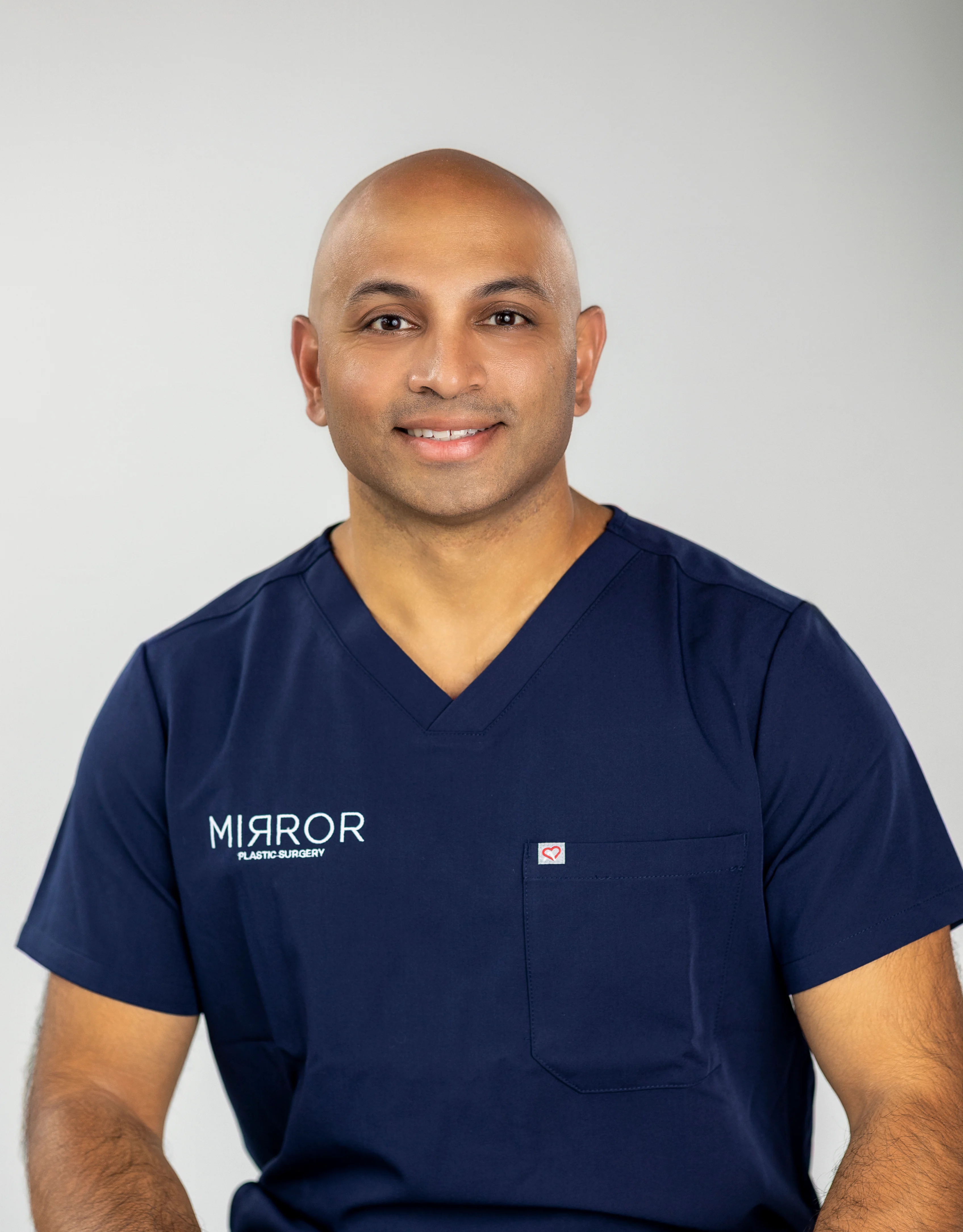
Dr. Akash Chandawarkar, founder of Mirror Plastic Surgery, trained at Harvard and Johns Hopkins and completed aesthetic fellowship training at Manhattan Eye Ear & Throat Hospital (MEETH)/Lenox Hill Hospital. He is board-certified by the American Board of Plastic Surgery and also completed medical innovation training at Stanford University. His philosophy prioritizes safety, then function, then aesthetics, and he applies this by limiting his schedule to one or two surgeries per day, which allows focused, individualized care instead of high-volume throughput.
Several warning signs should prompt patients to walk away:
- Prices far below the typical market range for a surgical BBL
- Surgeons who lack ABPS board certification
- Consultations that feel rushed or last under 30 minutes
- No access to an accredited surgical facility
- Inability to explain injection plane, cannula size, and ultrasound protocols clearly
- Daily schedules with more than two to three major cases
Schedule a consultation to review Mirror Plastic Surgery’s safety-focused approach and discuss whether a surgical or non-surgical BBL fits your goals.
Realistic Expectations For Longevity And Recovery
How BBL Results Age Over Time
Transferred fat behaves like normal fat cells and responds to weight change and aging. Patients who keep a stable weight usually maintain their shape over many years. Significant weight loss can reduce buttock volume, while weight gain can increase it. A skilled surgeon respects the patient’s proportions and avoids over-augmentation, which helps results age naturally. Surviving fat cells integrate as living tissue and remain part of the body.
Recovery Timeline
Recovery expectations differ between surgical and non-surgical approaches:
- Surgical BBL: 2–3 weeks off work, no direct sitting for 2–4 weeks, BBL pillow from weeks 3–6, and full exercise at 6–8 weeks
- Non-surgical BBL: Return to normal activity within 24–48 hours with minimal restrictions
Fat Survival And Revision Rates
As noted earlier, about 60–80% of transferred fat usually survives long-term once it stabilizes at 3–6 months. Published revision rates range from 8% to 20%, with revisions often priced at 60–80% of the original procedure. Careful fat processing, appropriate injection volumes, and strict subcutaneous placement improve fat survival and reduce asymmetry, which makes surgeon experience a central factor in outcome quality.
How To Choose The Right BBL Provider In Tampa
Choosing a BBL provider should follow a structured vetting process rather than a price comparison alone. Each step below builds a clearer picture of safety and fit.
- Start by verifying ABPS board certification through the public ABPS database, which confirms accredited training and testing.
- Then review before-and-after photos, looking for natural, proportionate results that match your goals, which reveals the surgeon’s aesthetic style.
- Evaluate the consultation itself. It should feel thorough, with time for detailed anatomical review and questions, not like a rushed sales pitch.
- Ask directly about safety protocols, including injection plane, cannula diameter, real-time ultrasound guidance, and daily case volume, to understand how they manage risk.
- Confirm facility accreditation through AAAASF, AAAHC, or Joint Commission directories so you know where surgery will occur.
- Request an itemized written estimate listing all fees before paying any deposit, which prevents surprise charges later.
Mirror Plastic Surgery’s concierge model addresses each of these points. Dr. Akash personally performs all injections and surgeries. Consultations can last up to an hour, giving space for careful planning. The practice limits itself to one or two surgeries per day, a structural choice that keeps attention on safety and detail.
Request a personalized consultation to experience this thorough approach and receive a clear, itemized quote.
Financing And Payment Considerations
A BBL counts as an elective cosmetic procedure and does not qualify for health insurance coverage. Brazilian butt lift surgery is generally considered cosmetic and not medically necessary, including for complications. Many practices partner with third-party financing companies such as CareCredit, Alphaeon, and PatientFi. Medical credit lines often carry interest rates above 25% after promotional periods, so a financed “bargain” surgery can end up costing more than a higher-quality procedure paid for after saving. Financing can add 20–40% to total cost over a multi-year term if 0% APR offers convert to deferred interest. Mirror Plastic Surgery provides transparent pricing and helps patients explore payment options that fit their budget.
Frequently Asked Questions
Still have questions? The answers below address common concerns patients raise during BBL consultations.
What Disqualifies You For A BBL?
Several factors can make a patient a poor candidate for a surgical BBL. Insufficient donor fat is the most common issue, and patients with a BMI below about 21–22 may not have enough harvestable fat for meaningful change. Uncontrolled medical conditions, such as clotting disorders or active infections, raise surgical risk to an unacceptable level. Active smoking harms healing and fat survival, so most surgeons require at least four weeks of nicotine cessation before and after surgery. Large weight swings also create problems, because results can change unpredictably. A thorough consultation with a board-certified plastic surgeon remains the only reliable way to assess candidacy.
How Long Do BBL Results Last?
Surgical BBL results can last many years for patients who maintain stable weight, because the surviving fat integrates as living tissue and behaves like normal fat cells.1 The fat that remains after the initial resorption period, usually 60–80% of what was injected, establishes a blood supply and persists. Major weight loss can reduce volume, and weight gain can increase it. Non-surgical BBL results with Radiesse often last 18–24 months, while AlloClae may last 1–3 years or longer, and maintenance treatments help sustain the outcome.1
What Is A Skinny BBL?
A “skinny BBL” describes buttock enhancement for lean patients who have limited donor fat for traditional fat transfer. For these patients, non-surgical biostimulatory fillers such as Radiesse or AlloClae can provide volume and shaping without relying on fat deposits. In select cases, smaller-volume fat transfer may still work if enough fat can be harvested safely. The right approach depends on anatomy and goals, so a detailed consultation is essential before finalizing a plan.
Is A BBL Worth It?
For well-selected candidates who choose a board-certified plastic surgeon and an accredited facility, published satisfaction rates are high.1 The decision involves balancing financial cost, recovery time, and surgical risk against your aesthetic goals and lifestyle. Surgeon qualifications and facility safety influence long-term value more than the initial quote. Chasing the lowest price increases the chance of complications, disappointing results, and expensive revision surgery.
What Is The Recovery Like After A Surgical BBL?
Surgical BBL recovery generally follows the timeline outlined earlier: no direct sitting for the first two weeks, a BBL pillow for seated positions during weeks three through six, and a return to desk work around two to three weeks for most patients. Physically demanding jobs may require six to eight weeks away. Full exercise usually resumes at six to eight weeks. Many surgeons recommend lymphatic massage to reduce swelling and support healing. Final results appear at about three to six months, once swelling resolves and fat stabilizes.1
Invest In Safety, Experience, And Lasting Results
Expert BBL pricing in Tampa reflects real value: board-certified surgical expertise, accredited facilities, modern safety protocols, and personalized care that supports natural, durable results. Historical data show that serious complications cluster in high-volume, low-price settings, which makes surgeon credentials and facility standards central to any pricing decision.
Mirror Plastic Surgery offers a safety-focused, concierge-style experience for patients considering BBL. Dr. Akash Chandawarkar brings Harvard education, Johns Hopkins training, and fellowship-level aesthetic expertise to every interaction, whether surgical or non-surgical. Consultations can last up to an hour, the practice limits itself to one or two surgeries per day, and every recommendation rests on honest, evidence-based communication.
Start with a consultation to receive a personalized treatment plan and a transparent, itemized quote from one of Tampa Bay’s most credentialed plastic surgeons.
Disclaimer: Results may vary from person to person. Editorial content, before and after images, and patient testimonials do not constitute a guarantee of specific results.
1 Results may vary from person to person. Editorial content, before and after images, and patient testimonials do not constitute a guarantee of specific results.