
Written by: Dr. Akash Chandawarkar, Board Certified Plastic Surgeon, Mirror Plastic Surgery | Last updated: September 9, 2026
Key Takeaways
- Dermal fillers are FDA Class III medical devices, so lapses in hygiene or safety can lead to serious complications, even if rare.
- Confirm that your injector is a licensed medical professional, ideally a board-certified plastic surgeon or dermatologist, using state licensing boards.
- Ask to see product packaging, lot numbers, and expiration dates before injection to confirm authenticity and FDA approval.
- Choose a clinic with a clinical environment, single-use sterile supplies, on-site reversal agents, and clear emergency protocols.
- Schedule a consultation at Mirror Plastic Surgery to see a Harvard-educated, Johns Hopkins-trained board-certified plastic surgeon who prioritizes safety.
Why Verifying Safety Standards Matters
Dermal fillers are classified by the FDA as Class III medical devices, the highest-risk category, and require rigorous Premarket Approval (PMA) through clinical trials. Unlike prescriptions filled at a pharmacy, filler injections happen in settings that vary widely in quality and oversight.
An analysis of the FDA’s MAUDE database found 22,247 dermal filler adverse-event reports from 1996 through May 2026, with 83% classified as injuries. Serious complications remain rare, and vascular complications occur at incidences below 0.1%. When they do occur, the consequences can include tissue necrosis or vision loss. The FDA and the American Academy of Dermatology emphasize that the key safety factor is who holds the syringe and where they perform the injection.
This guide walks you through a clear verification process. You will learn how to check credentials, assess the clinic environment, confirm product authenticity, and confirm emergency preparedness before you proceed.
Step-By-Step Checklist For Verifying Clinic Hygiene And Safety
Step 1: Verify Provider Credentials
Your first and most critical check is the injector’s license. In every U.S. state, dermal fillers can only be legally administered by licensed medical professionals such as physicians (MD/DO), physician assistants, nurse practitioners, or registered nurses working under a physician’s delegation, and in some states also by dentists or podiatric physicians with specific training. Estheticians, cosmetologists, and medical assistants cannot legally inject fillers in any state.
To check a provider’s license in Florida, visit the Florida Department of Health’s license verification page. You can search by name or license number and confirm that the license is active and free of disciplinary actions. For a nationwide view, DocInfo.org, a free service of the Federation of State Medical Boards, aggregates licensing and disciplinary data across all states in a single search.
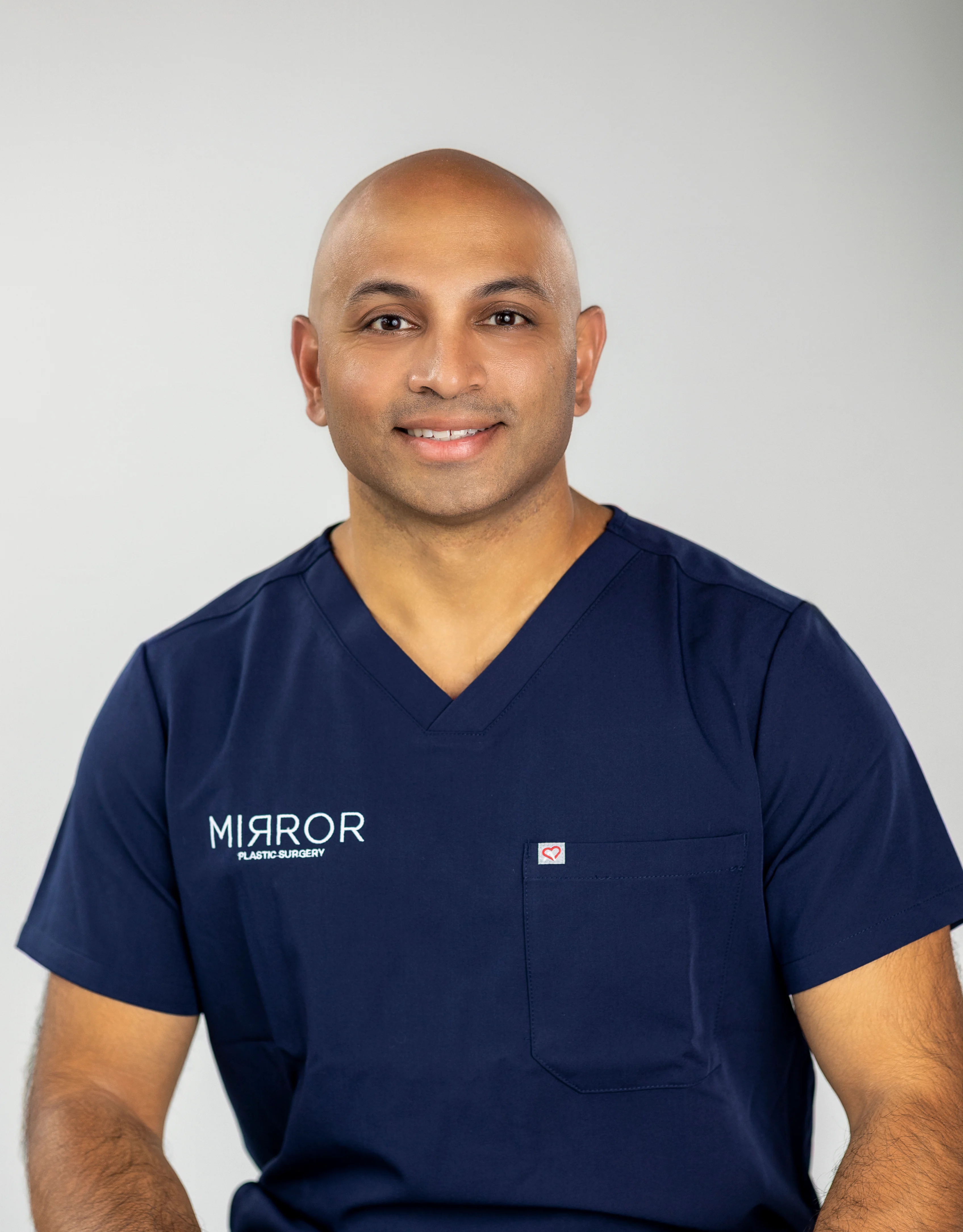
Board certification in plastic surgery or dermatology signals advanced training in facial anatomy and injection techniques. At Mirror Plastic Surgery, every injection is performed by Dr. Akash Chandawarkar, a board-certified plastic surgeon whose surgical knowledge of subdermal anatomy supports safer and more precise treatment. A training certificate from a private injection course does not create legal authority to inject in any state.
Step 2: Assess The Clinic Environment
The FDA and the American Academy of Dermatology warn against receiving dermal fillers in non-medical settings such as salons, private homes, hotel rooms, or “filler parties.” These locations lack the facilities and oversight needed for safe procedures.
During your visit, pay attention to specific details that signal strong infection control:
- Clean, dedicated treatment rooms that look and feel clinical
- Staff performing hand hygiene before and after patient contact, since hand hygiene is recognized as the single most critical measure in reducing transmission of organisms to patients
- Single-use needles and syringes opened from sterile packaging in front of you, because a new sterile syringe and needle must be used for each patient, and once used, both are contaminated and must be discarded
- Proper sharps disposal containers at the point of use in each treatment room, since sharps must be disposed of immediately into a puncture-resistant, tamper-evident container that is never more than three-quarters full
- Disinfected surfaces and fresh exam table paper between patients, as exam table paper must be replaced after every patient
A medical office, especially a plastic surgeon’s practice, should clearly function as a doctor’s office. If the environment feels more like a salon, consider that a warning sign.
Step 3: Confirm Product Authenticity
Counterfeit and diverted dermal fillers now appear more often in the market. In April 2024, the FDA confirmed counterfeit Botox in multiple U.S. states, administered by both licensed and unlicensed individuals in non-medical settings, causing patients to develop systemic botulism symptoms. By November 2025, the FDA had sent warning letters to 18 websites across five countries for illegally selling unapproved botulinum toxin products.
Before your injection, take these steps to verify authenticity:
- Ask to see the product packaging before your injection
- Confirm that the product name matches what your provider recommended
- Check for the lot number and expiration date on both the box and syringe, since lot numbers should match across the outer carton, inner packaging, and syringe, and any discrepancy warrants verification with the manufacturer
- Verify that the product is FDA-approved by searching the FDA’s Premarket Approval database
- Ask whether the clinic sources products directly from manufacturers or authorized distributors
Reputable clinics remain transparent about their products and can provide documentation. Be cautious with prices that sit far below the usual range, since counterfeit and diverted fillers may be genuine but expired or temperature-compromised, genuine but intended for a different market, or entirely counterfeit with unknown or non-sterile substances.
Step 4: Check Emergency Preparedness
Even highly skilled injectors can encounter complications. Your safety depends on whether the clinic can recognize and manage those events quickly. Ask these questions:
- What is your protocol for managing vascular occlusion or allergic reactions?
- Is a reversal agent available on-site?
- Are staff trained in emergency response procedures?
Of these measures, the reversal agent is the critical tool for managing complications from hyaluronic acid fillers, which are the most common filler type. For HA-related vascular occlusion, a high-dose pulsed approach is used. Redosing is performed frequently, often hourly, until clinical improvement, indicated by capillary refill time under three seconds. A clinic that does not stock a reversal agent or cannot clearly describe its emergency protocol does not meet basic safety expectations.
Schedule an emergency-ready consultation with Ellie at Mirror Plastic Surgery to review safety protocols and meet Dr. Akash Chandawarkar, who personally performs every injection.
Step 5: Review Before-And-After Photos
Ask to see examples of the injector’s work, especially for the specific area you plan to treat. Focus on natural results that enhance features without looking overdone.1 Consistent, aesthetically pleasing outcomes across many patients suggest strong skill and experience.1
At Mirror Plastic Surgery, Dr. Akash uses a holistic, top-to-bottom approach that creates smooth transitions between the upper, middle, and lower facial regions. This approach helps prevent asymmetry and the overfilled look that often appears when providers treat only a single area.1
Step 6: Evaluate The Consultation Process
A thorough consultation sets the tone for safe treatment and realistic expectations. During this visit, you should experience:
- Discussion of your medical history and any contraindications
- Exploration of your goals and expectations
- Explanation of the procedure, including risks and benefits
- Ample time for your questions, without rushing
The provider should assess your entire face instead of focusing on one isolated area. At Mirror Plastic Surgery, consultations can last up to an hour to allow for detailed planning and thoughtful discussion.
Step 7: Look For Red Flags
Certain warning signs suggest that you should seek care elsewhere. Watch for:
- Pressure tactics or urgency to book immediately, since pressure to book or add treatments during consultation is a recognized unsafe practice
- Non-medical settings such as salons, homes, or hotel rooms
- Injectors who are not licensed medical professionals or who refuse to discuss their credentials
- Reluctance to show product packaging or provide lot number documentation
- Nurse injectors without physician supervision in states that require it
- Prices dramatically below market average
Step 8: Trust Your Instincts
Your comfort level matters as much as the technical details. If something feels off, even if you cannot explain why, you can leave and seek a second opinion. A reputable clinic respects your choice to think things over.
A clinic that treats a patient’s decision to go home and think as a problem creates its own warning sign. Your intuition often reflects subtle cues about professionalism and safety.
Key Factors When Choosing A Filler Provider
Beyond the checklist steps, several broader factors shape your safety and your final result.
Injector experience and training: A 2024 ASJ international survey of 386 respondents across 61 countries estimated that practitioners require approximately 786 filler injections to reach an “advanced” competency level. A board-certified plastic surgeon brings years of surgical training in facial anatomy, which supports safer and more precise injections.
Type of filler used: Hyaluronic acid fillers can be enzymatically degraded by a reversal agent, which underpins established treatment algorithms for vascular occlusion, whereas calcium hydroxylapatite-related complications rely more on prevention and supportive care because no enzymatic reversal is available. This reversibility advantage makes the choice of filler, and the injector’s expertise, critically important. The vascular complication rate mentioned earlier remains below 0.1%.
Treatment area: The glabella, nasal dorsum, periocular area, and nasolabial folds are the highest-risk zones for filler injection because vessels there connect directly to the ophthalmic circulation, and inadvertent injection can cause tissue necrosis or irreversible blindness. Choose a provider with deep anatomical knowledge for any treatment, and especially for these high-risk areas.
Clinic philosophy: Mirror Plastic Surgery follows a guiding principle of safety first, function second, and aesthetics third. This hierarchy keeps your long-term well-being at the center of every treatment plan.
Safety, Risks, And Common Misunderstandings
Misunderstanding #1: “Fillers are completely safe.” Dermal fillers have an excellent safety profile when qualified professionals administer them, yet they remain medical devices with real risks. Over 90% of adverse events from hyaluronic acid and calcium hydroxylapatite fillers are mild and transient, such as redness, swelling, and bruising, but serious complications, while rare, are documented.
Misunderstanding #2: “Anyone can inject fillers.” As noted in Step 1, estheticians and similar non-medical professionals are prohibited from injecting in every state, although enforcement varies and unlicensed practitioners still operate. The FDA recommends receiving injections from licensed professionals in medical settings such as clinics and medical offices.
Misunderstanding #3: “All fillers are the same.” Only 20 original PMA approvals have been granted for dermal fillers in the U.S., and approval is product-specific and indication-specific. The filler choice should reflect your anatomy, your goals, and the treatment area, rather than discounts or convenience.
Plan a safety-focused consultation with Ellie to review your goals with Dr. Akash Chandawarkar, who offers unbiased, evidence-based guidance for every treatment recommendation.
Green Flags And Red Flags: Quick Safety Reference
Certain patterns consistently point toward safer care. Use these lists as a fast reference alongside the full checklist.
Green flags that indicate a safe, reputable provider:
- Board-certified physician injector, such as a plastic surgeon or dermatologist
- Clean, clinical environment with dedicated treatment rooms
- FDA-approved products shown and explained before injection
- Reversal agent available on-site
- Thorough consultation covering medical history, goals, and risks
- Transparent communication with no pressure tactics
- Willingness to answer questions and provide product documentation
Red flags that should send you elsewhere:
- Non-medical settings such as salons, homes, or hotel rooms
- Unlicensed injectors or providers who will not discuss credentials
- Pressure to book immediately or add treatments
- Refusal to show product packaging or provide lot numbers
- Prices dramatically below market average
- No emergency protocols or on-site reversal agents
- Rushed consultations that do not address your concerns
Bring this checklist to your consultation and refer to it openly. A reputable clinic welcomes informed questions and sees them as part of safe care.
How Dermal Fillers Fit Into A Broader Aesthetic Plan
Dermal fillers often form one part of a larger facial rejuvenation strategy. Many patients combine fillers with neuromodulators to address both volume loss and dynamic wrinkles. A skilled provider evaluates the upper, middle, and lower face together to create a balanced, harmonious result.
At Mirror Plastic Surgery, Dr. Akash Chandawarkar begins by revitalizing your inherent facial characteristics and considers volume augmentation after this foundation is restored. His focus on the full face helps prevent asymmetry and the overdone appearance that can follow single-area injections.1 As an advisory board member for Merz Aesthetics and Tiger Aesthetics, he stays current with injectable innovation and brings that expertise directly to his St. Petersburg patients.
Frequently Asked Questions
What Certification Do You Need To Inject Fillers?
In every U.S. state, dermal fillers can only be legally administered by licensed medical professionals such as physicians (MD/DO), physician assistants, nurse practitioners, or registered nurses working under physician delegation, and in some states also by dentists or podiatric physicians with specific training. Private certification courses do not create legal authority to inject in any state. Board certification in plastic surgery or dermatology indicates advanced training in facial anatomy and injection techniques, which goes well beyond the minimum legal requirement. When evaluating a provider, confirm both their active state license and their specialty training.
How Can You Check If A Filler Is FDA-Approved?
Search the FDA’s Premarket Approval (PMA) database by product name or manufacturer. Dermal fillers are Class III medical devices that require rigorous clinical testing before approval. You can also ask your provider to show you the product packaging and verify the lot number and expiration date before your injection. FDA approval is both product-specific and indication-specific, so a filler approved for nasolabial folds is not automatically approved for every facial area. Ask whether the planned injection site is an FDA-approved indication for the specific product being used.
What Should You Ask During A Consultation?
Ask about the injector’s credentials and board certification, the specific filler being recommended and whether it is FDA-approved for your treatment area, the clinic’s emergency protocols including whether a reversal agent is stocked on-site, and what results you can realistically expect. A thorough consultation should also cover your complete medical history, any contraindications, and a full explanation of the procedure’s risks and benefits. If a provider rushes through these topics or discourages questions, treat that as a significant warning sign. At Mirror Plastic Surgery, consultations can extend up to an hour to ensure every question receives a detailed answer.
Is It Safe To Get Fillers At A Med-Spa?
Safety at a med-spa depends on its structure and oversight. The FDA recommends receiving injections from licensed professionals in medical settings. A med-spa that operates under proper physician supervision with genuine medical oversight can provide safe care. Many med-spas, however, function with minimal physician involvement, which increases risk. Always verify the injector’s credentials, confirm the supervising physician’s active role, and apply the full checklist in this article before proceeding. The presence of a physician’s name on a website does not guarantee meaningful involvement in your care.
What Should You Do If You Experience Complications After Filler Injections?
Seek immediate medical attention if you experience intense pain, sudden color changes such as paleness, purplish spots, or gray skin, blurred vision or vision loss, difficulty speaking, fever, or marked swelling of the lips, tongue, or eyelids. For hyaluronic acid fillers, a reversal agent can dissolve the product and reverse complications, but only when trained medical personnel administer it promptly. Do not wait to see whether symptoms resolve on their own. Early recognition and rapid intervention strongly influence outcomes in vascular complications.
Conclusion: Put Your Safety First
Verifying clinic hygiene and safety standards before receiving dermal filler injections reflects informed self-care. The checklist in this article gives you clear steps to evaluate any provider with confidence. Check credentials through your state medical board, observe the clinical environment, confirm product authenticity before the needle is uncapped, and ask directly about emergency preparedness.
Take your time, ask your questions, and trust your instincts. When you find a provider who welcomes your questions, demonstrates expertise, and consistently prioritizes safety, you can move forward with greater peace of mind.
At Mirror Plastic Surgery in St. Petersburg, Florida, every injection is performed by Dr. Akash Chandawarkar, a Harvard-educated, Johns Hopkins-trained board-certified plastic surgeon with fellowship training in aesthetic surgery. His philosophy of safety first, function second, and aesthetics third keeps your well-being at the center of every decision.
Request your dermal filler consultation with Ellie at Mirror Plastic Surgery and experience treatment held to rigorous safety standards in the Tampa Bay area.
Disclaimer: Results may vary from person to person. Editorial content, before and after images, and patient testimonials do not constitute a guarantee of specific results.
1 Results may vary from person to person. Editorial content, before and after images, and patient testimonials do not constitute a guarantee of specific results.