
Written by: Dr. Akash Chandawarkar, Board Certified Plastic Surgeon, Mirror Plastic Surgery
Key Takeaways
-
Post-rhinoplasty swelling is completely normal and peaks within the first 48–72 hours, so the nose often looks larger before it gradually shrinks over the following months.
-
Most patients see 60–70% swelling reduction by weeks 3–4 and 80–90% by three months, while the final 5–10% of tip swelling can take up to a full year to resolve.1
-
The nasal tip usually takes the longest to refine because it has the thickest skin, the most complex lymphatic drainage, and the greatest concentration of structural surgical work.
-
Evidence-based steps such as keeping your head elevated, using cold compresses correctly, following a low-sodium diet, and avoiding strenuous activity can support faster swelling resolution.
-
If you have specific concerns about your rhinoplasty recovery or are considering the procedure, schedule a consultation with Dr. Akash at Mirror Plastic Surgery.
Why Your Nose Looks Bigger Right After Surgery
Immediately after rhinoplasty, the body initiates a normal inflammatory response. Trauma fluid, soft-tissue swelling, and the skin adjusting to a reshaped cartilage and bone framework all combine to make the nose appear larger and less defined than its eventual shape. Rhinoplasty swelling peaks at 48–72 hours post-surgery, which explains why the nose often looks worst on day three rather than on day one.
The external splint worn during the first week can partially conceal this swelling. When the cast is removed, typically around day seven, patients are sometimes surprised by how swollen the nose appears. The nose will look swollen and slightly upturned at that point, which reflects normal early swelling and not the final shape. This stage represents a healing milestone and an early preview, not the finished result.
Skin thickness influences the appearance from the very beginning. Thicker, more sebaceous skin retains more swelling in the dermis and subdermal tissue, which can make the nose look wide, boxy, or undefined for a longer period. Thin skin conforms more quickly to the underlying structure but is less forgiving of minor irregularities.
The Swelling Timeline: When Your Nose Starts Looking Smaller
Rhinoplasty recovery follows a predictable arc. The percentages below describe approximate swelling resolution at each stage and are drawn from multiple clinical sources. Individual results vary based on skin thickness, surgical technique, and overall health.
Weeks 1–2: The “Worst” Phase
Swelling and bruising commonly peak between post-op days 2–7, and the external splint is typically removed around day seven. During this time, the nose appears puffy, and bruising beneath the lower eyelids is darkest at days two to three, yellowing by day five, and largely gone by day 10–14. Because the most visible swelling improves within the first two weeks, most patients return to non-strenuous work or social activities within one to two weeks.
Weeks 3–6: The “Three-Week Uglies”
As the first two weeks pass, many patients enter a phase often called the “three-week uglies.” This period at 2 to 4 weeks post-operatively, when the nose can appear boxy, wide, or undefined, is particularly pronounced in the nasal tip because fluid clears slowly from an area with limited lymphatic drainage. A secondary swelling episode can occur around days 10 to 21, making the nose look puffier on day 14 than on day 9, as lymphatic drainage remains impaired and light activity resumes. By weeks 3–4, patients can expect a 60–70% reduction in swelling.1 The bridge begins to refine, while the tip stays noticeably fuller.
Months 1–3: Noticeable Improvement
Roughly 80–90% of nasal swelling resolves within three months after rhinoplasty.1 During this window, the nose looks smaller and more defined, and the profile improves significantly. The tip still appears fuller than its final shape, which remains expected and normal.
Months 3–6: The Refining Phase
The last 5–10% of swelling after rhinoplasty often localizes to the nasal tip, where the skin is thickest and lymphatic drainage is most complex, while visible bridge swelling usually subsides within 3 to 6 months.1 Many patients feel socially comfortable with their nose at this stage, even though subtle tip refinement continues in the background.
Months 6–12: The Final Reveal
Objective 3D and morphometric studies indicate that approximately two-thirds of post-rhinoplasty edema resolves within the first month, around 95% by 6 months, and about 97.5% by roughly one year.1 The last residual swelling, concentrated in the tip, fades, and the final contour becomes visible. For most patients, the result at 12 months represents their long-term nose. Thick-skinned or revision patients may need 12–18 months for full settling.
Plan to judge your result at one year rather than at one month. Almost every patient who feels disappointed at week six feels content by month twelve.
Why the Nasal Tip Takes Longer to Shrink
The nasal tip is usually the last area to show final rhinoplasty results because it has a limited lymphatic drainage network, the thickest skin, and the greatest density of structural work such as cartilage reshaping, suturing, and grafting. These factors create a sustained local healing response that slows fluid clearance.
Open rhinoplasty involves a small incision across the columella. Because the skin is raised off the cartilage and bone, it disrupts more lymphatic channels and generally causes more early edema than closed rhinoplasty. A closed rhinoplasty approach preserves more lymphatic pathways and tends to settle faster in the early weeks, though by around 12 months the difference between approaches narrows considerably.
Thick, oily, or sebaceous skin acts like a dense sponge, holding fluid longer and delaying the appearance of a refined tip, while thin skin contracts sooner and shows structure earlier. Patients with thick, sebaceous skin often need 15–18 months for final definition after rhinoplasty. What looks like a “bulbous” tip at three months often appears dramatically different by twelve months, so patience forms a key part of the process.
Why Nostrils Can Look Bigger After Rhinoplasty
Wider or more prominent nostrils during recovery are a common concern. Uneven nostrils after rhinoplasty are commonly caused by asymmetric swelling, because one side can stay puffier longer than the other. Tissue tension, scar firmness, and the skin settling over a new cartilage framework can temporarily distort nostril shape.
Swelling after rhinoplasty does not always occur uniformly, so one side of the nose may retain more fluid than the other, causing a temporary discrepancy in nostril size, height, or shape, especially in the early months. Nostril asymmetry often improves within the first 3–6 months, while the nose may continue to settle for 6–12 months before its final shape is visible. Final nostril assessment should wait until at least the 12-month mark.
What If My Nose Looks Too Small?
Over-reduction occurs infrequently with an experienced, board-certified surgeon. What appears “too small” or “pinched” in the early weeks often reflects swelling creating optical illusions or the skin still adapting to the new structural framework beneath it. An early appearance after rhinoplasty cannot reliably prove that the final nose will be too wide, too narrow, over-rotated, under-projected, or asymmetric.
If over-reduction still seems likely after full healing, revision rhinoplasty remains an option. However, the final result of a rhinoplasty is not fully visible until at least one year has passed, and in revision rhinoplasty cases, the timeline may extend to 18 or 24 months. Responsible surgeons wait until tissues stabilize before evaluating for revision.
How to Support Faster Swelling Reduction
The body follows its own healing timeline, yet specific habits can measurably support faster swelling resolution. The strategies below are grounded in clinical evidence, and each one targets a particular aspect of swelling control.
-
Keep your head elevated at 30–45 degrees for the first 1–2 weeks, especially while sleeping. Sleeping with the head elevated at a 30 to 45-degree angle for the first two weeks prevents fluid from pooling in facial tissues and reduces morning puffiness.
-
Use cold compresses on the cheeks and under-eyes only during the first 48 hours, never directly on the nose. Cold compresses applied to the cheeks and under-eyes during the first 48 hours reduce measurable swelling by 15–25%. After 72 hours, ice no longer provides meaningful benefit.
-
Follow a low-sodium diet for the first 2–3 weeks. Salt causes the body to retain water and can worsen swelling.
-
Stay hydrated with approximately 2–2.5 liters of water daily to support circulation and lymphatic flow.
-
Avoid strenuous activity for at least 3–4 weeks. Strenuous activity in the weeks after rhinoplasty can cause swelling to flare for days.
-
Avoid alcohol and nicotine. Nicotine constricts capillaries, impairs healing, and delays rhinoplasty swelling resolution by approximately 2–3 weeks.
-
Discuss nasal taping with your surgeon. A randomized clinical trial found that nose taping for four weeks after rhinoplasty significantly reduced supratip swelling compared to no taping, with two weeks of taping also showing measurable benefits, particularly in patients with thick nasal skin. Only tape as directed by your surgeon.
-
Ask your surgeon about arnica or bromelain. A 2026 systematic review found that plastic surgery demonstrated the highest proportion of reported benefit from Arnica montana, with six of nine completed plastic surgery studies showing significant reductions in bruising, swelling, or pain, although standardized dosing protocols are still lacking. Use these supplements only with surgeon approval.
When to Contact Your Surgeon About Swelling
Most swelling forms a normal part of healing, yet certain symptoms require prompt contact with your surgical team.
-
Sudden, asymmetric, painful swelling in the first two weeks, especially with a fluctuant feel or skin discoloration, which can indicate hematoma and requires same-day evaluation
-
Swelling that worsens after week three, especially with fever, increasing pain, redness, or drainage, which raises concern for infection
-
Fever above 101°F
-
Heavy or persistent bleeding
-
Severe or worsening pain that does not improve
-
Difficulty breathing that is sudden or worsening
-
Vision symptoms or shortness of breath, which require urgent medical guidance
When uncertainty arises, call your surgeon. Your surgical team remains available to support you throughout the entire recovery process.
Concerned about something specific in your recovery? Get expert, personalized guidance from Dr. Akash by booking a consultation.
Expert Insight: How Surgeon Choice Shapes Recovery
The surgeon’s skill, philosophy, and post-operative support directly influence both the aesthetic result and the recovery experience. A surgeon who sets accurate expectations, including an honest swelling timeline, builds trust and helps you navigate each stage with confidence.
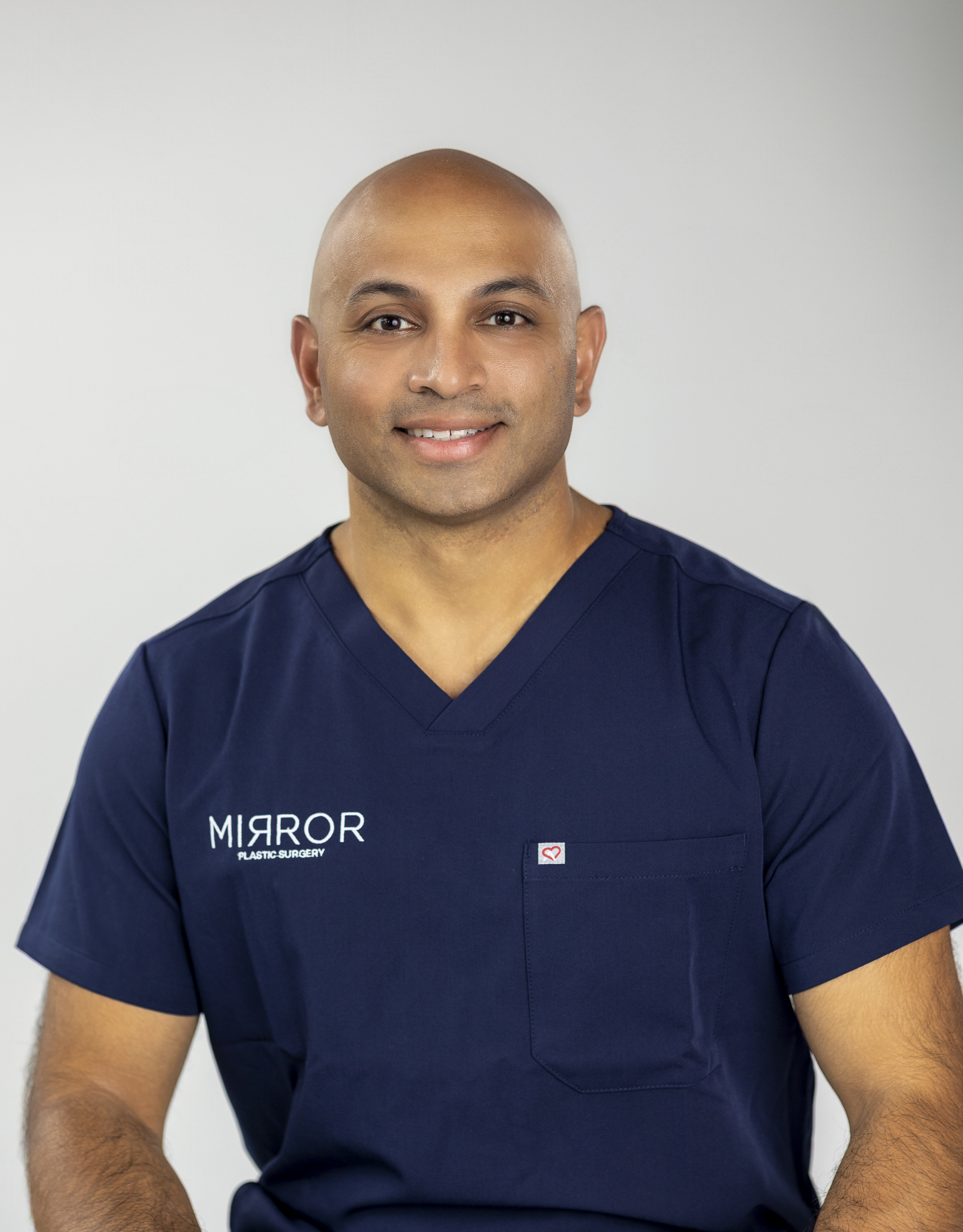
At Mirror Plastic Surgery, Dr. Akash offers a level of training that is rare in aesthetic practice. He graduated from Harvard Medical School with Honors through the Harvard-MIT Division of Health Sciences and Technology, completed a seven-year integrated plastic and reconstructive surgery residency at Johns Hopkins University, and holds specialized fellowship training in aesthetic surgery at the Manhattan Eye, Ear and Throat Hospital (MEETH), one of the most competitive aesthetic fellowships in the world. He also completed the Stanford University Biodesign Innovation Fellowship and is a leading researcher on the application of artificial intelligence in rhinoplasty. Dr. Akash has been recognized in Newsweek’s America’s Best Plastic Surgeons for two consecutive years.
Mirror Plastic Surgery operates on a core philosophy of Safety First, Function Second, Aesthetics Third. The practice limits surgeries to one to two per day, a deliberate contrast to high-volume practices performing five to ten procedures daily. This approach ensures that every patient receives focused, concierge-level attention before, during, and after surgery.
Frequently Asked Questions
Will My Nose Get Smaller 2 Months After Rhinoplasty?
By two months post-op, roughly 70–80% of visible swelling has usually resolved, and the nose looks noticeably smaller than it did in week one.1 The bridge appears more refined, and the overall profile improves significantly. The nasal tip still carries meaningful swelling at this stage, so the final shape has not yet emerged. Subtle refinement, particularly at the tip, continues for up to a year, and in patients with thicker skin or those who underwent revision rhinoplasty, up to 18 months. Two months represents clear progress rather than a final verdict.
How Long Until Tip Swelling Goes Down?
The nasal tip is the last area of the nose to fully settle after rhinoplasty. As discussed earlier, the tip’s thick skin, complex lymphatic drainage, and concentration of structural work make it slower to refine. Most patients see significant tip improvement by six months, but full refinement, when the tip reaches its true final shape, typically takes 12 months.1 Patients with thick or sebaceous skin, those who underwent open rhinoplasty, or those having a revision procedure may need 15–18 months for complete tip definition. A tip that looks rounded or bulbous at three months can appear dramatically more refined by month twelve.
Is It Normal for My Nose to Still Be Big After Rhinoplasty?
Within the first three to six months, persistent size almost always reflects swelling rather than a permanent outcome. The nose holds fluid longer than most other facial structures, and the tip in particular can remain visibly swollen for many months. If you are within the first six months of recovery, what you see very likely still forms part of the normal healing process. Final results should be judged after the 12-month mark. If you are past 12 months and still have concerns, that timing works well for a detailed discussion with your surgeon.
What Happens 20 Years After Rhinoplasty?
Rhinoplasty results remain permanent in the sense that structural changes to bone and cartilage last a lifetime. The framework your surgeon created stays in place. Natural aging, however, continues to affect the nose as it does the rest of the face. Skin loses elasticity, soft tissue shifts with gravity, and the nose may lengthen slightly or the tip may descend over decades. These changes reflect aging rather than failure of the original surgery. Most patients remain satisfied with their rhinoplasty results long-term, and age-related changes usually appear subtle and gradual.
Can I Speed Up the Healing Process?
You can strongly support healing, although you cannot override the body’s biological timeline. The most effective evidence-based strategies include sleeping with your head elevated at 30–45 degrees for the first two weeks, applying cold compresses to the cheeks and under-eyes (never directly on the nose) during the first 48 hours, following a low-sodium diet, staying well hydrated, and strictly avoiding strenuous exercise for at least three to four weeks. Avoiding nicotine and alcohol also matters, because both impair vascular function and slow healing. Nasal taping, when directed by your surgeon, has shown measurable benefit, particularly in thick-skinned patients. Patience remains the single most important factor in a successful rhinoplasty recovery.
Your Final Result Is Worth the Wait
Rhinoplasty recovery rarely follows a straight line. Swelling peaks, plateaus, and gradually resolves over months, with the nasal tip taking the longest to reveal its final shape. The nose you see at week two will differ from the nose at month six, and that appearance will change again by month twelve. Understanding this timeline supports realistic expectations and calmer decision-making about your recovery and your results.
Follow your surgeon’s post-operative instructions, attend every follow-up appointment, and resist the urge to judge your result before it is ready. The vast majority of patients who feel anxious at six weeks feel genuinely pleased by twelve months.
If you have concerns about your rhinoplasty recovery, or are considering rhinoplasty and want to understand what a well-managed recovery looks like, Dr. Akash and the team at Mirror Plastic Surgery are ready to help. With training from Harvard, Johns Hopkins, and MEETH, and a concierge approach that prioritizes your safety and long-term outcome, Mirror Plastic Surgery provides the expertise and personalized care you deserve. Take the next step and book your consultation with Dr. Akash today.
1 Results may vary from person to person. Editorial content, before and after images, and patient testimonials do not constitute a guarantee of specific results.