
Written by: Dr. Akash Chandawarkar, Board Certified Plastic Surgeon, Mirror Plastic Surgery
Key Takeaways
- Minimally invasive BBL alternatives include injectable biostimulators like Sculptra and Radiesse, structural fat-matrix options, and energy-based devices. Each option offers different levels of volume, downtime, and longevity.1
- Non-surgical options usually carry lower immediate risk than traditional fat-transfer BBL, but outcomes still depend heavily on provider expertise, technique, and patient anatomy.
- Patients with low body fat can still achieve moderate enhancement with biostimulatory fillers or AlloClae without needing donor fat for harvest.1
- PLLA and CaHA fillers build results gradually through collagen stimulation and typically need maintenance sessions every 1–2 years to sustain improvements.1
- Schedule a personalized consultation at Mirror Plastic Surgery to identify the safest, most effective option for your anatomy and goals.
The following table compares six buttock enhancement approaches across invasiveness, volume potential, recovery time, longevity, and documented complication risks so you can quickly see how each option balances results and risk.
Comparison Table: Ranking Minimally Invasive Buttock Enhancement Options
| Option | Invasiveness | Expected Volume / Projection1 | Downtime | Longevity1 | Key Documented Complication Risks |
|---|---|---|---|---|---|
| Traditional BBL (fat transfer) | Surgical | High (anatomy-dependent) | 2–6 weeks | Long-term (variable graft survival) | Fat embolism, fat necrosis, oil cysts, contour irregularities, dilutional anemia |
| AlloClae (structural fat-matrix augmentation) | Minimally invasive (in-office) | Moderate–high (structured integration) | Minimal | Long-term (structural integration) | Technique-dependent, provider expertise critical |
| PLLA Biostimulator (Sculptra) | Minimally invasive (injectable) | Low–moderate (gradual collagen) | Minimal, return same day | 2+ years with maintenance | Nodules, asymmetry, bruising, rare vascular compromise |
| Calcium Hydroxylapatite (Radiesse) | Minimally invasive (injectable) | Low–moderate (biostimulatory + immediate) | Minimal | 12–24 months (variable) | Nodules, asymmetry, technique-dependent vascular risk |
| Hyaluronic Acid Filler BBL | Minimally invasive (injectable) | Moderate (immediate gel volume) | Minimal | 12–18 months | Migration, vascular compromise, asymmetry (higher risk than PLLA) |
| Energy-Based Devices (e.g., radiofrequency, HIFEM) | Non-invasive | Very low (toning, mild lift) | None | Maintenance-dependent | Burns, skin necrosis if intensity exceeded, thin tissue increases risk |
How Non-Surgical BBL Works
Non-surgical BBL covers injectable biostimulatory fillers, mainly poly-L-lactic acid (PLLA) and calcium hydroxylapatite (CaHA/Radiesse), along with energy-based devices that stimulate muscle or tighten skin without incisions. Biostimulators trigger the body’s own collagen production over weeks to months, so volume and texture improve gradually instead of through a single large-volume injection.1 PLLA collagen stimulators produce gradual tissue adaptation and avoid large gel deposits, lowering certain risk categories compared with high-volume hyaluronic acid fillers, although results still depend on precise technique. Energy-based devices such as high-intensity focused electromagnetic (HIFEM) technology can improve muscle tone and create a mild lifting effect, but they add very little true volume and require consistent maintenance sessions to preserve results.1
How Mirror Plastic Surgery Prioritizes Safer BBL Alternatives
Risk reduction in buttock enhancement depends on more than product choice and includes technique, dilution, placement depth, and provider expertise. Practitioner experience with buttock anatomy and complication management is more important than product choice for minimizing risks in non-surgical buttock enhancement. For injectable biostimulators, proper dilution, precise placement, and post-procedure massage are critical factors that reduce the risk of nodules and uneven results. For surgical fat transfer, fat embolism, the most serious historical complication, occurs primarily when providers fail to maintain strictly subcutaneous injection planes and instead inject deeply into muscle. A provider who understands vascular anatomy and follows evidence-based protocols can meaningfully shift the risk profile of any chosen method.
Book a consultation with Dr. Akash for an anatomy-first evaluation and an honest, evidence-based recommendation that fits your goals and risk tolerance.
Best Non-Invasive BBL Method in 2026
As of 2026, no non-invasive method fully matches the volume or structural change possible with surgical fat transfer or structural fat-matrix augmentation.1 Current non-invasive care focuses on biostimulatory injectables, especially PLLA, for patients who want gradual, lower-risk improvement.1 PLLA has a long safety record, with facial aesthetic approval in Europe since 1999 and in the United States since 2009, after earlier use in self-dissolving sutures and implants. Energy-based devices continue to improve but work best as add-ons for skin tightening and toning rather than as primary volume builders. In 2026, the most reliable outcomes come from combining modalities, such as a biostimulator plus energy-based tightening, within a single coordinated plan based on detailed anatomical assessment.
BBL Alternatives for Lean Patients
Patients with low body fat often need a different strategy for buttock enhancement. Traditional fat-transfer BBL requires enough donor fat for harvest, so very lean patients may not qualify. Biostimulatory injectables such as PLLA and CaHA do not rely on donor fat and therefore suit low body-fat frames, provided expectations stay realistic, since these methods create gradual, moderate enhancement rather than dramatic change.
For hip-dip correction, which many lean patients request, structural fat-matrix augmentation with AlloClae offers targeted volume and support in the lateral hip depression without large fat reserves. Energy-based devices can support these treatments by improving skin quality and tone in nearby areas. Thin subcutaneous tissue increases the risk of thermal complications from energy-based devices, so provider expertise and careful intensity settings become especially important for lean patients.
What You Can Inject in the Buttocks Instead of a Traditional BBL
Biostimulatory fillers include PLLA (Sculptra) and calcium hydroxylapatite (Radiesse). Both stimulate collagen production over time and gradually improve volume and texture. They do not add large gel volume immediately and instead integrate with the body’s own tissue.
Autologous fat grafting (traditional BBL) uses the patient’s own harvested fat, which is processed and injected into the buttocks. Because it transfers large volumes of living tissue, it delivers the most dramatic augmentation of any option, and that same feature explains its higher surgical risk profile, including fat embolism and fat necrosis.
Structural fat-matrix augmentation (AlloClae) forms a separate category that provides structured volume and supports fat integration. Outcomes differ from both traditional fat transfer and biostimulatory fillers, especially in longevity and structural support.
Energy-based skin tightening devices use radiofrequency, ultrasound, or electromagnetic energy to improve skin laxity and muscle tone. They do not create meaningful volume but can refine contour and lift when used as part of a broader plan.
Hyaluronic acid dermal fillers provide immediate gel-based volume but carry documented risks of migration, vascular compromise, and asymmetry, with results lasting only 9–18 months and requiring repeat high-volume sessions that increase cumulative risk. Mirror Plastic Surgery generally does not recommend this category because its risk-to-benefit profile compares poorly with other options.
Sculptra BBL Compared With Traditional BBL
Sculptra BBL and traditional fat-transfer BBL differ across volume, risk, and recovery. Traditional BBL delivers high volume in a single surgical session but carries documented risks such as fat embolism, fat necrosis, oil cysts, and contour irregularities, along with a recovery period of two to six weeks.1 Sculptra BBL delivers low-to-moderate gradual volume through collagen stimulation across multiple sessions, and a 2020 clinical review of 60 patients found PLLA gluteal augmentation safe and effective. Sculptra requires no surgical downtime, and quick sessions with minimal downtime allow patients to return to normal activities soon after treatment. These results generally last around two years or longer, depending on collagen response and treatment plan, often with maintenance sessions to preserve effects, while surgical fat transfer offers longer-term but less predictable graft survival.1 The better choice depends on each patient’s anatomy, volume goals, risk tolerance, and available recovery time.
Radiesse Butt Lift: Expected Results
Radiesse (calcium hydroxylapatite) acts as both an immediate volumizer and a biostimulator, giving an initial structural lift while also triggering collagen production over the following months. Patients can expect moderate volume enhancement and better skin quality, with results that usually last 12 to 24 months depending on tissue response and product volume.1 Maintenance sessions help sustain results as the CaHA particles slowly metabolize. Technique matters greatly, and precise placement and appropriate dilution are essential to reduce nodule formation and vascular risk. Dr. Akash serves on the advisory board for Merz Aesthetics, the manufacturer of Radiesse, which gives him direct access to the latest clinical data and technique refinements.
Safer Alternatives to Surgical BBL
Several minimally invasive options carry a lower acute risk profile than traditional surgical fat-transfer BBL. PLLA biostimulators avoid large gel deposits and produce gradual tissue adaptation, which reduces vascular compromise risk compared with high-volume hyaluronic acid fillers, and they remove the fat embolism risk associated with fat transfer. Safety still remains relative, since every procedure carries some risk, and overall safety depends on provider expertise, patient anatomy, and adherence to evidence-based technique. A thorough pre-procedure anatomical evaluation forms the starting point for identifying the safest appropriate option for each patient.
Choosing Between BBL and Sculptra
Neither BBL nor Sculptra works as a universally better choice. Traditional BBL suits patients with enough donor fat who want significant volume and accept surgical recovery. Sculptra suits patients who prefer minimal downtime, gradual natural-looking enhancement, and a lower acute risk profile, and who understand the limits of collagen-based volume.1 Nodule risk with Sculptra stays low but still deserves discussion during consultation. The decision depends on matching anatomy, goals, and risk tolerance to the evidence for each option, which requires a personalized evaluation.
Risks of Non-Surgical Buttock Fillers
Non-surgical buttock fillers carry several documented risks. Nodules: PLLA injections carry a low risk of nodules, which often respond to massage. Vascular compromise: the buttock area’s major blood vessels make large-volume injections a concern for vascular compromise, and as noted earlier, PLLA’s dispersed-particle mechanism reduces this specific risk compared with high-volume hyaluronic acid fillers, although safe technique remains essential. Migration: hyaluronic acid fillers carry a higher risk of product migration due to gravity and movement, while PLLA integrates into the patient’s own tissue and shows lower migration risk. Asymmetry, bruising, swelling, and infection can occur with any injectable procedure. Mitigation strategies include the provider expertise factors discussed earlier, combined with appropriate dilution protocols, targeting safer injection zones such as the upper outer quadrant, and following post-procedure massage protocols.
How Mirror Plastic Surgery Delivers High-Quality Care
Evidence-based buttock enhancement at Mirror Plastic Surgery starts with a comprehensive anatomical evaluation that reviews body composition, skin quality, existing volume distribution, hip-to-waist ratio, and vascular anatomy. This assessment guides a personalized treatment plan that sequences procedures thoughtfully, avoids stacking too many interventions at once, and sets realistic expectations. Safety receives priority, followed by function, and aesthetic goals are addressed within those boundaries. Post-procedure protocols, including massage schedules, activity restrictions, and follow-up imaging when needed, play a major role in final outcomes.
Dr. Akash’s Expert Perspective
Dr. Akash is a Harvard-MIT and Johns Hopkins-trained plastic surgeon who completed a specialized aesthetic surgery fellowship at the Manhattan Eye, Ear and Throat Hospital (MEETH). He serves on the advisory boards of Merz Aesthetics (Radiesse), Tiger Aesthetics (AlloClae and Avéli), Motiva, and Cypris Medical, which gives him direct access to clinical evidence for the newest minimally invasive buttock enhancement technologies. Newsweek has recognized him as one of America’s Best Plastic Surgeons 2025 for two consecutive years. His approach to buttock enhancement, whether surgical or non-surgical, follows the same safety-function-aesthetics hierarchy that guides every procedure at Mirror Plastic Surgery.
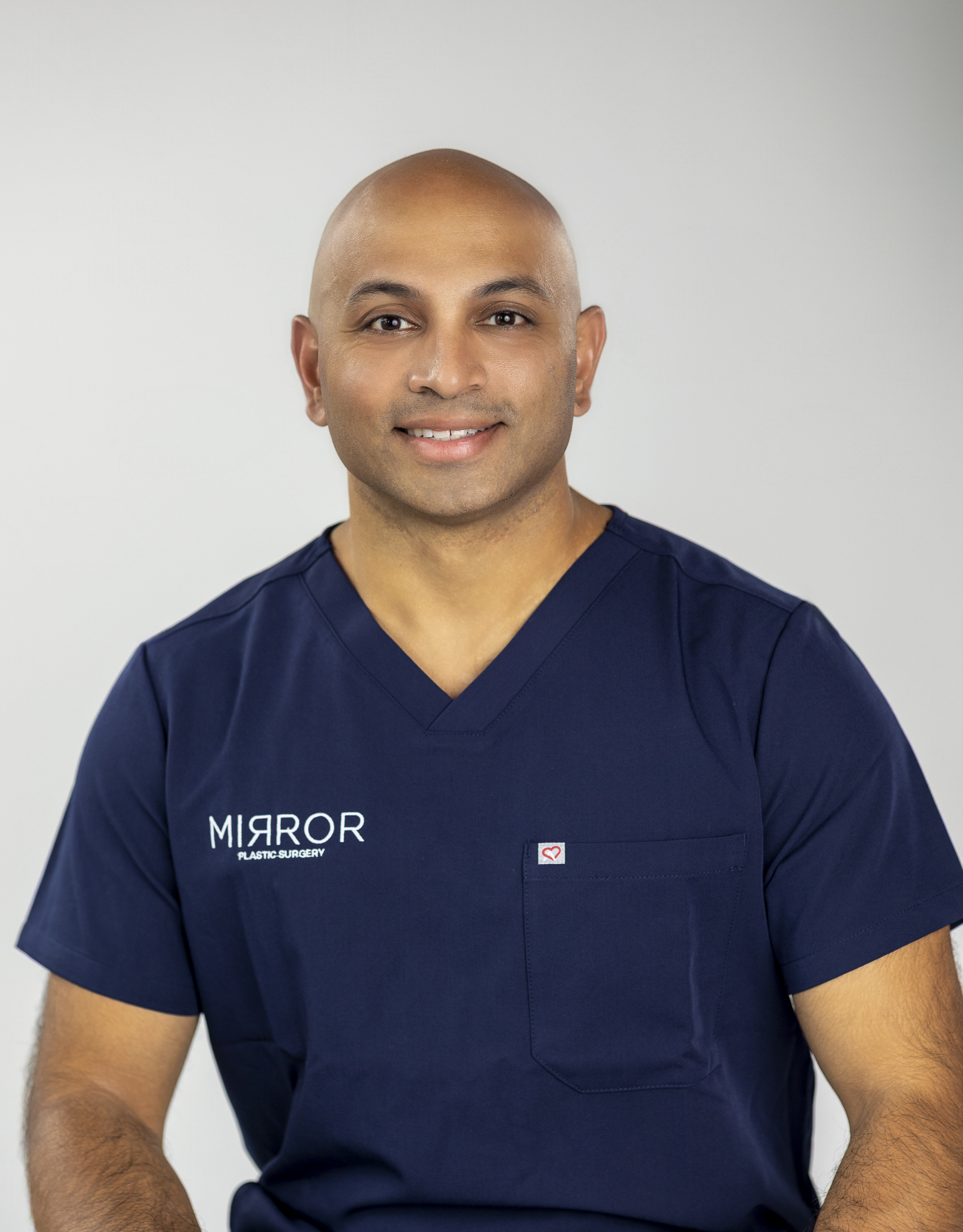
Book a consultation with Dr. Akash to explore which minimally invasive BBL alternative fits your anatomy, goals, and long-term plan.
Five-Year Maintenance and Cost Planning
Cumulative planning over a five-year period looks different for each method. Hyaluronic acid filler BBL results last 12 to 18 months and require repeat high-volume sessions at regular intervals, which raises long-term expense. Sculptra’s initial treatment series usually involves two to three sessions spaced four to six weeks apart, followed by maintenance every 1–2 years, which makes annualized cost more predictable. Structural fat-matrix augmentation with AlloClae offers longer-term structural integration and may reduce how often repeat treatments are needed. Energy-based devices require ongoing sessions to maintain results. Each patient’s maintenance schedule is customized based on tissue response, lifestyle, and aesthetic goals, and the plan is set during consultation rather than applied as a one-size-fits-all protocol. Pricing is not quoted in advance, and every patient receives a personalized plan and quote based on their anatomy and treatment needs.
Frequently Asked Questions
Am I a candidate for a non-surgical BBL if I have very little body fat?
Many lean patients still qualify for non-surgical BBL. Biostimulatory injectables such as Sculptra and Radiesse, along with structural fat-matrix augmentation with AlloClae, do not require donor fat and therefore work well for low body-fat individuals. Traditional fat-transfer BBL, by contrast, needs sufficient harvestable fat and may not be feasible for very lean patients. A thorough anatomical evaluation clarifies which options suit your frame and what volume you can realistically expect.
How many Sculptra sessions are typically needed for buttock enhancement?
Most patients need an initial series of two to three Sculptra sessions spaced four to six weeks apart to build collagen volume. The total number of vials used across this series strongly influences the degree of enhancement. After the initial series, occasional maintenance sessions, often once a year, help sustain collagen production and preserve results. Your anatomy, baseline tissue quality, and volume goals shape the exact protocol, which is finalized during consultation.
What is the difference between Sculptra and Radiesse for buttock enhancement?
Sculptra and Radiesse are both biostimulatory injectables but differ in composition and timing. Sculptra (PLLA) works only through gradual collagen stimulation, so results appear over weeks to months and can last two years or longer. Radiesse (calcium hydroxylapatite) provides immediate structural volume plus collagen induction, giving a faster initial result with longevity of about 12 to 24 months. Both products require proper dilution, precise placement, and post-procedure massage to reduce nodule risk. The better choice depends on your timeline, volume goals, and anatomy.
What makes a provider qualified to perform non-surgical buttock enhancement safely?
Safe non-surgical buttock enhancement requires deep knowledge of gluteal vascular anatomy, hands-on experience with the specific products used, and the ability to recognize and manage complications such as vascular compromise or nodule formation. Board certification in plastic surgery, fellowship-level training in aesthetic procedures, and advisory-level familiarity with the injected products all signal strong qualifications. The provider’s procedure volume and approach to pre-procedure assessment, including whether they perform a thorough anatomical evaluation before recommending treatment, matter just as much.
Is AlloClae a better long-term option than Sculptra for buttock augmentation?
AlloClae and Sculptra serve different needs rather than competing as a single best choice. AlloClae provides structural fat-matrix augmentation with integration that differs from collagen induction, which suits patients who want structured volume and longer-term results without surgical fat transfer. Sculptra works better for patients who want gradual, lower-volume enhancement with minimal downtime. Neither option is universally superior, and the right choice depends on anatomy, volume expectations, body composition, and long-term goals, all of which are reviewed during a comprehensive consultation.
Conclusion: Choosing the Right Buttock Enhancement Plan
Minimally invasive alternatives to traditional BBL surgery cover a wide range of mechanisms, risk profiles, volume potential, and maintenance needs. No single option fits every patient, and marketing claims should never replace an individualized anatomical assessment by a qualified, board-certified plastic surgeon. The choice between biostimulatory injectables, structural fat-matrix augmentation, energy-based devices, and surgical fat transfer works best when guided by a careful review of your body composition, vascular anatomy, realistic volume goals, risk tolerance, and long-term maintenance capacity. Mirror Plastic Surgery bases every recommendation on the safety-function-aesthetics hierarchy and on evidence-based practice rather than volume-driven protocols.
Book a consultation with Dr. Akash at Mirror Plastic Surgery in St. Petersburg, Florida, for a personalized, anatomy-first evaluation and a clear, honest comparison of the minimally invasive BBL alternatives that fit you best.
1 Results may vary from person to person. Editorial content, before and after images, and patient testimonials do not constitute a guarantee of specific results.