
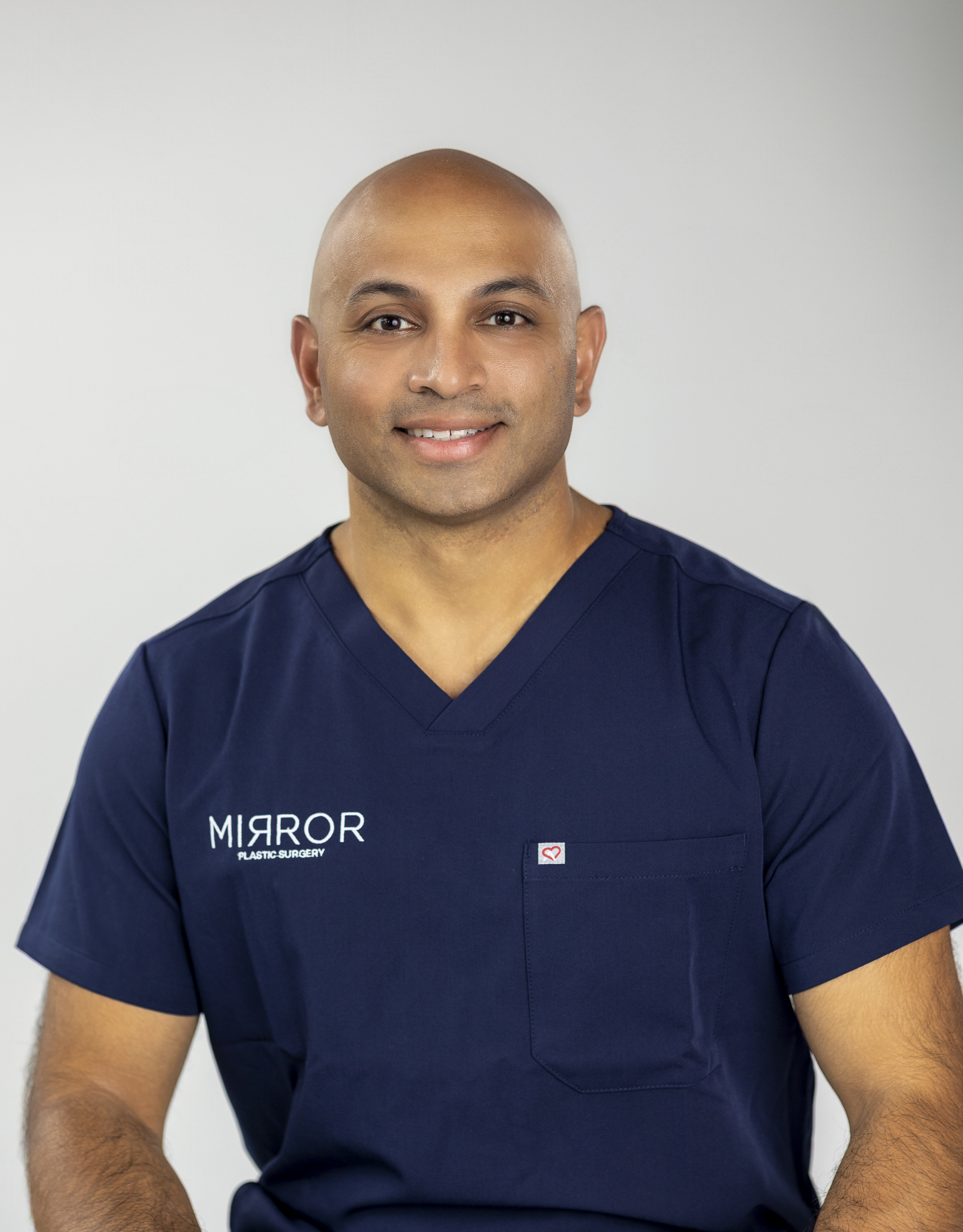
Written by: Dr. Akash Chandawarkar, Board Certified Plastic Surgeon, Mirror Plastic Surgery | Last updated: June 27, 2026
Key Takeaways for Lower Eyelid Blepharoplasty Safety
- Lower eyelid blepharoplasty performed by a board-certified plastic surgeon carries a very low infection risk because the eyelids have a rich blood supply, and most infections remain superficial and respond well to antibiotics.1
- Key warning signs of infection include spreading redness, warmth, purulent discharge, fever, vision changes, or escalating pain. Prompt reporting allows early treatment and helps prevent serious complications.
- The most common non-infectious complication is lower-lid malposition (ectropion), followed by lagophthalmos and the rare but serious retrobulbar hemorrhage. Conservative tissue handling and proper lid support reduce these risks.
- Factors that can worsen recovery include excessive skin removal, unaddressed lid laxity, combining too many procedures, poor wound care, and choosing a transcutaneous incision instead of a safer transconjunctival route when appropriate.
- Selecting an experienced surgeon and following evidence-based protocols at Mirror Plastic Surgery significantly lowers complication rates.1 Schedule your personalized consultation today to discuss your anatomy and safety plan.
Recognizing Infection After Lower Eyelid Surgery
Normal healing after lower blepharoplasty includes bruising and swelling that peak around 48 hours and improve over one to three weeks. Infection follows a different pattern and usually worsens instead of steadily improving. The following six warning signs call for prompt contact with your surgeon or, for vision changes, immediate emergency evaluation:
- Increasing redness – Redness that spreads beyond the incision edges or worsens after the first 48 to 72 hours instead of fading.
- Warmth – Localized heat around the incision that becomes more noticeable over several days.
- Purulent discharge – Thick, cloudy, yellow, or green fluid coming from or collecting along the incision line.
- Fever – An oral temperature above 38°C (100.4°F) that appears more than 24 hours after surgery, especially when paired with local wound changes.
- Vision changes – Blurred vision, double vision, or any sudden drop in visual clarity. These symptoms require emergency evaluation to rule off orbital compartment syndrome or infectious keratitis.
- Severe or worsening pain – Pain that intensifies instead of gradually easing after the first two to three postoperative days.
When these warning signs appear, they usually signal bacterial involvement at the surgical site. Common pathogens in periocular wound infections include Staphylococcus aureus and Streptococcus species. Superficial infections tend to show up early in the recovery period and often respond to oral antibiotics chosen using wound culture and sensitivity results. Deeper or spreading infections may need intravenous antibiotics, and in rare cases, surgical washout helps remove devitalized tissue and lower the bacterial load.
Most Common Complications After Lower Lid Blepharoplasty
A 2025 systematic review of 36 lower blepharoplasty studies found a low overall complication rate, with major problems remaining rare.1 Within that group, lower-lid malposition, most often ectropion, stands out as the most clinically significant non-infectious complication.
Ectropion describes the outward turning of the lower eyelid away from the eye. Cicatricial ectropion after lower eyelid blepharoplasty usually results from skin shortage or scarring. The lower lid turns outward and exposes the inner conjunctival surface. Mild ectropion can improve with massage and lubricating drops. More pronounced cases often need lid-tightening procedures or skin graft revision surgery.
Lagophthalmos, or incomplete eyelid closure, can develop when too much tissue is removed or when scarring tethers the lid. The eye surface then remains partly exposed during blinking and sleep. Patients may notice dryness, irritation, tearing, and discomfort. Without treatment, exposure keratopathy from lagophthalmos can progress from mild irritation to corneal ulceration and infectious keratitis.
Retrobulbar hemorrhage, which is bleeding behind the eye, is rare but represents a true surgical emergency. Blood collecting behind the eye can compress the optic nerve and cause permanent vision loss if not treated quickly. Sudden proptosis, sharp pain, or vision loss in the early postoperative period requires immediate emergency evaluation.
Factors That Can Worsen Blepharoplasty Recovery
Several modifiable and anatomical factors can raise the risk of complications during recovery. Patients and surgeons work together to identify and manage these risks.
Excessive skin removal is a major technical risk factor. Removing too much skin creates anterior lamellar shortage, which directly increases the chance of ectropion. This risk grows when other issues are present. Unfavorable scar contraction after surgery can tighten the skin further. Poor healing after eyelid skin resurfacing can reduce tissue elasticity. Uncorrected laxity with weak canthal support removes the structural support that helps keep the lid in position. To avoid these problems, surgeons should remove only a conservative amount of skin after checking the safe trim with the patient looking upward and opening the mouth.
Unaddressed lower-lid laxity before surgery also raises the risk of malposition. Significant laxity should be identified during the preoperative exam. When present, procedures such as canthopexy or lateral canthoplasty help support the lid and lower the chance of postoperative malposition.
Combining too many simultaneous procedures increases physiological stress, lengthens anesthesia time, and can impair wound healing. Mirror Plastic Surgery limits the number of concurrent procedures to reduce this compounded strain and support safer recovery.
Inadequate wound care after discharge, such as not keeping incisions clean, exposing healing tissue to sun too early, or stopping prescribed topical treatments, creates conditions that favor bacterial growth and abnormal scarring.
Incision approach also influences recovery. The transconjunctival approach for lower blepharoplasty generally carries a lower risk of lower-lid malposition than transcutaneous approaches because it avoids violating the septum from the anterior side, which can increase the chance of lower eyelid retraction.1 This difference shows that incision choice directly affects complication risk.
Step-by-Step Strategies to Prevent Complications
Risk reduction in lower eyelid blepharoplasty starts well before surgery and continues until the final follow-up visit. Together, the following measures create a structured safety plan:
- Comprehensive preoperative assessment – Evaluating lower-lid laxity, skin quality, orbital anatomy, and baseline dry eye allows the surgeon to tailor the plan to the individual patient and build a strong foundation for safe surgery.
- Sterile technique in accredited facilities – Operating in accredited surgical centers with board-certified anesthesiologists and strict sterile protocols reduces intraoperative contamination and supports safer anesthesia care.
- Conservative tissue handling – Removing only tissue confirmed safe during surgery and supporting the lid with canthopexy when laxity is present translates the preoperative plan into fewer malposition and wound-healing problems.
- Limiting simultaneous procedures – Performing one to two surgeries per day, instead of five to ten, keeps the team focused on each patient and reduces cumulative physiological stress.
- Structured postoperative wound care – Clear written instructions for incision hygiene, activity limits, and follow-up visits help bridge the gap between the operating room and full recovery.
Surgeon selection remains the most powerful prevention strategy available to patients. Dr. Akash completed a seven-year integrated plastic and reconstructive surgery residency at Johns Hopkins University and an aesthetic surgery fellowship at the Manhattan Eye, Ear and Throat Hospital (MEETH), a highly competitive program with focused training in facial rejuvenation and eyelid surgery. He is board certified by the American Board of Plastic Surgery and has been named to Newsweek‘s America’s Best Plastic Surgeons list for two consecutive years, including 2025. His hospital privileges add another safety layer if a rare complication requires escalated care.
Book a consultation with Dr. Akash to review your anatomy, your goals, and the specific safety protocols Mirror Plastic Surgery uses at every stage of lower eyelid blepharoplasty.
Frequently Asked Questions
Are antibiotics routinely prescribed after lower eyelid blepharoplasty?
Antibiotic prophylaxis varies based on surgeon preference and patient risk factors. Some surgeons prescribe a short course of oral antibiotics around the time of surgery. Others rely on meticulous sterile technique and topical antibiotic ointment applied to the incisions. Patients with a history of MRSA, weakened immunity, or significant systemic conditions may need a more aggressive prophylactic plan. During the preoperative consultation, Dr. Akash reviews each patient’s medical history and selects an approach tailored to that individual.
When should I go to the emergency room after lower eyelid blepharoplasty?
Emergency care is necessary if you experience sudden vision loss, rapidly increasing eye pain, or noticeable bulging of the eye (proptosis). Any combination of these symptoms can signal retrobulbar hemorrhage or orbital compartment syndrome, which require treatment within minutes to hours to protect vision. A fever above 38°C with spreading redness and purulent discharge also needs urgent evaluation, although this situation is usually less time-critical than vision-threatening events.
What activity restrictions reduce complication risk during recovery?
Most patients should avoid strenuous exercise, heavy lifting, and bending at the waist for at least two weeks after lower eyelid blepharoplasty. These activities raise blood pressure and increase the risk of bleeding and swelling. Sun exposure to healing incisions should be avoided or carefully shielded with SPF for several months to reduce hyperpigmentation and abnormal scarring. Sleeping with the head elevated for the first one to two weeks helps limit periorbital swelling. Specific restrictions are adjusted to each patient’s procedure and healing progress during follow-up visits.
Can dry eye worsen after lower eyelid blepharoplasty?
Yes. Patients with pre-existing dry eye syndrome face a higher risk of worsening symptoms after lower blepharoplasty, especially if lagophthalmos or lower-lid retraction occurs. A thorough preoperative evaluation should include baseline tear production and ocular surface health. Patients with significant dry eye may benefit from a modified surgical plan, additional lid support procedures, or a staged approach. Lubricating eye drops and ointments are standard recommendations for all lower blepharoplasty patients during healing.
How does the transconjunctival approach differ from the transcutaneous approach in terms of safety?
The transconjunctival approach reaches the lower eyelid fat compartments from inside the eyelid. This route leaves no external scar and preserves the anterior skin-muscle layer. It is associated with a lower risk of lower-lid malposition and ectropion compared with the transcutaneous approach, which uses an external incision just below the lash line.1 The transcutaneous approach, however, allows direct skin removal and access for lateral canthopexy through an infraciliary incision. The best approach depends on each patient’s anatomy, degree of skin excess, and lid laxity, which Dr. Akash evaluates carefully during the preoperative consultation.
Making an Informed Decision About Lower Eyelid Surgery
Lower eyelid blepharoplasty has a strong safety record when performed by a fellowship-trained, board-certified plastic surgeon who prioritizes detailed anatomical assessment. Infection remains uncommon. The more clinically relevant risks, including ectropion, lagophthalmos, and the rare but serious retrobulbar hemorrhage, become far less likely with conservative tissue handling, preoperative laxity assessment, thoughtful incision selection, and close postoperative follow-up.
Patients who invest time in choosing the right surgeon, learning about their own anatomy, and following evidence-based recovery instructions are more likely to achieve safe, natural-looking results. Mirror Plastic Surgery’s concierge model, with hour-long consultations, one to two surgeries per day, and a safety-first philosophy, is designed for patients who value that level of attention.
Book a consultation with Dr. Akash at Mirror Plastic Surgery in St. Petersburg, Florida, to begin your personalized safety and aesthetic planning for lower eyelid blepharoplasty.
1 Results may vary from person to person. Editorial content, before and after images, and patient testimonials do not constitute a guarantee of specific results.