
Written by: Ellie Pranckevicius, FNP-BC, Aesthetic Nurse Practitioner & Aesthetic Injector | Facial Restoration & Regenerative Injectable Specialist, Mirror Plastic Surgery | Last updated: August 6, 2026
Key Takeaways About GHK-Cu at Mirror Plastic Surgery
- GHK-Cu is a naturally occurring copper peptide whose levels decline with age, so supervised therapy is increasingly used for skin rejuvenation, hair health, and inflammation control.
- Injectable GHK-Cu offers higher bioavailability than topical forms, which supports hair follicle stimulation and whole-body anti-inflammatory effects.
- At Mirror Plastic Surgery, board-certified practitioner Ellie Pranckevicius, FNP-BC, designs individualized protocols supported by lab review, batch-tested sourcing, and ongoing telemedicine follow-up.
- Patients with copper metabolism disorders, impaired liver or kidney function, or known copper hypersensitivity are not appropriate candidates and require thorough medical screening before therapy.
- Schedule a GHK-Cu consultation at Mirror Plastic Surgery to see whether concierge peptide care matches your aesthetic and wellness goals.
How GHK-Cu Supports Skin, Hair, and Inflammation
GHK-Cu works through several connected biological pathways that affect skin, hair, and tissue repair. At the cellular level, it stimulates fibroblast activity, which drives the synthesis of collagen and elastin, the structural proteins that support skin firmness and elasticity. As both proteins decline with age, the skin loses volume and resilience. GHK-Cu therapy aims to partially counter this process by increasing expression of genes involved in collagen and elastin production.1
GHK-Cu also influences genes linked to tissue repair and wound healing. It shows anti-inflammatory activity by reducing pro-inflammatory cytokines, so it can support patients dealing with chronic low-grade systemic inflammation as well as cosmetic concerns.1 For hair health, GHK-Cu has been studied for its ability to stimulate hair follicle activity and extend the anagen, or growth, phase of the hair cycle.1 This mechanism differs from conventional hair-loss treatments and can complement other therapies.
Key terms defined:
- GHK-Cu acetate: The acetate salt form of the GHK-Cu tripeptide, commonly used in compounded injectable and topical preparations for improved stability.
- Copper peptide: A broad term for any peptide molecule bound to a copper ion. GHK-Cu is the most clinically studied example in aesthetic and regenerative medicine.
Delivery Methods for GHK-Cu and the Glow Stack
Delivery method shapes how GHK-Cu reaches target tissues and what results are realistic. GHK-Cu is available in two primary formats: topical and injectable, and each has distinct clinical uses.
Topical formulations, including creams, serums, and patches, apply GHK-Cu directly to the skin surface. Penetration is limited by the stratum corneum, so topical GHK-Cu can improve surface texture and tone, but systemic or deep-tissue effects remain minimal.1 Topical options suit patients focused on localized skin concerns and those who prefer a non-invasive starting point.
Injectable GHK-Cu bypasses the skin barrier and delivers the peptide into subcutaneous tissue or systemically through intramuscular administration. This route provides substantially higher bioavailability. It is the preferred method when goals extend beyond surface improvement to include hair follicle stimulation, systemic inflammation support, or broader anti-aging effects at the cellular level.
At Mirror Plastic Surgery, GHK-Cu is also available as part of the Glow Stack, a combination protocol that pairs GHK-Cu with BPC-157, or Body Protective Compound 157, and TB500, or Thymosin Beta-4. BPC-157 focuses on systemic inflammation that affects muscles, tendons, ligaments, and joints. TB500 supports soft tissue repair and wound healing. Together, the three peptides address inflammation, structural repair, and collagen production at the same time. The Glow Stack is often considered when goals span skin health, hair rejuvenation, and whole-body recovery.
Discuss GHK-Cu delivery options with Ellie to decide whether topical therapy, injectable therapy, or the full Glow Stack fits your clinical profile.
Medical Supervision and Quality Standards at Mirror Plastic Surgery
All peptide therapy at Mirror Plastic Surgery is directed by Ellie Pranckevicius, FNP-BC. She holds a Bachelor’s in Health Science from Boston University, which provided a strong foundation in human biology. She then completed an aesthetics licensure program to deepen her understanding of skin physiology and cosmetic treatments.
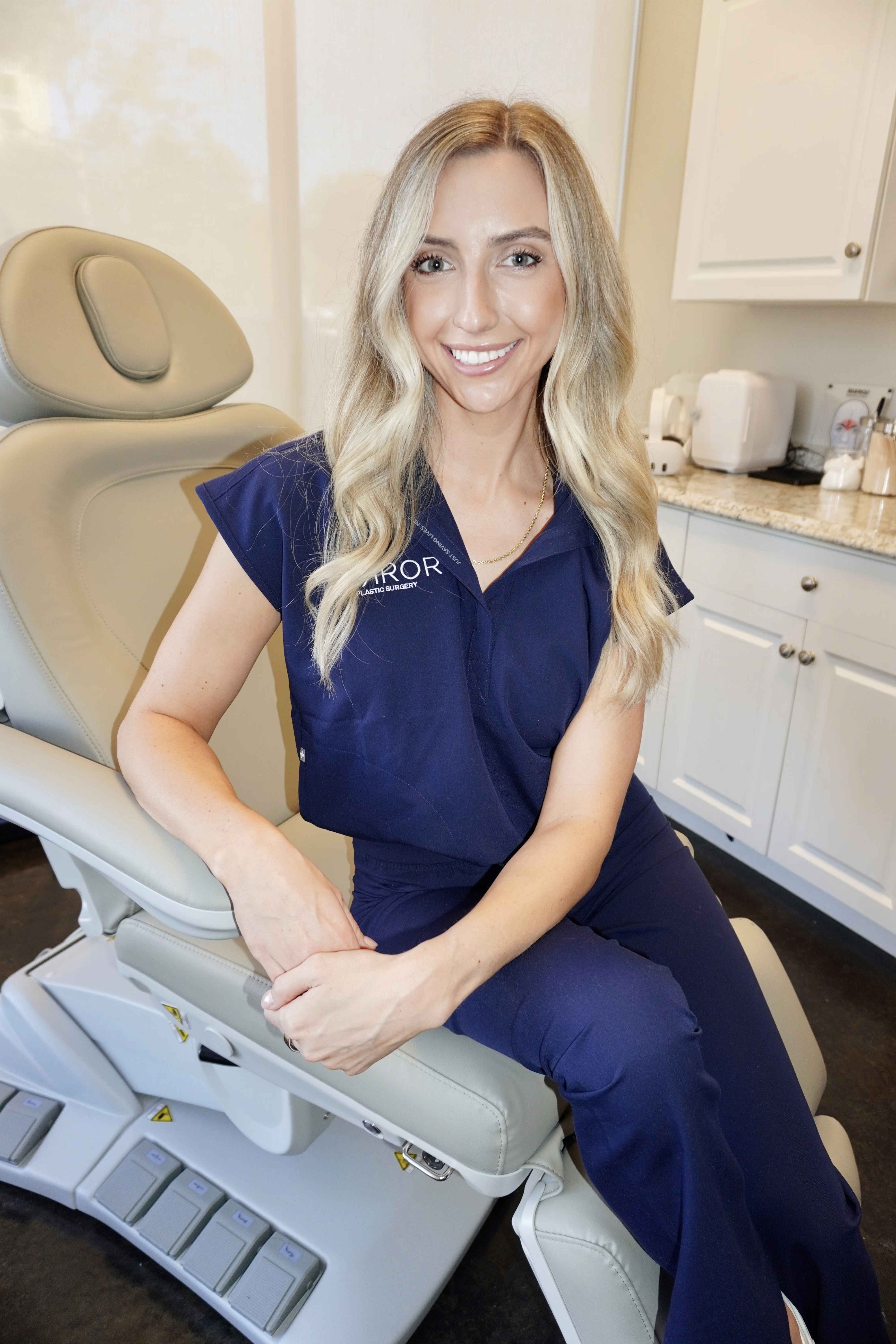
Ellie recognized that advanced peptide protocols require more than surface-level aesthetic training. She pursued both her Bachelor’s and Master’s in Nursing from the University of South Florida to build full clinical competency. She then spent four years as a practitioner in the Neuroscience ICU at Tampa General Hospital. That environment demanded expertise in physiology, metabolic health, and complex patient management, which now informs her peptide practice.
After her ICU work, Ellie joined a high-end medical spa in Boston. This experience combined hands-on aesthetic care with advanced clinical science and gave her a dual background that is uncommon in the peptide space.
The concierge treatment process at Mirror Plastic Surgery follows a structured, patient-centered workflow:
- 30–60 minute consultation: Ellie reviews the patient’s full medical history, current medications, aesthetic and wellness goals, and any prior peptide or pharmaceutical experience.
- Optional lab review: Relevant panels, including thyroid, liver, kidney, hormone, and metabolic markers, are reviewed if available or ordered when needed so the protocol rests on objective data.
- Custom protocol design: A personalized peptide stack and dosing schedule is created from the consultation findings and lab results rather than a standard template.
- Batch-tested sourcing: All peptides come from reputable compounding providers that perform rigorous batch testing for purity, potency, and accurate dosage. This step separates supervised care from unverified sources mentioned later.
- Remote or in-person initiation: Protocols can begin in person at the St. Petersburg clinic or entirely remotely, with shipping across the United States, including Hawaii and Alaska. Patients receive detailed reconstitution and self-administration instructions, along with video demonstrations.
- Ongoing text and telemedicine support: Ellie remains available through direct text for questions, dosing adjustments, and refill requests throughout therapy.
This concierge model differs from high-volume telemedicine platforms that may provide peptides without individualized lab review, direct practitioner access, or verified sourcing.
Who Typically Benefits from GHK-Cu Concierge Care
GHK-Cu concierge medicine can support several patient groups. Adults with visible signs of skin aging, such as loss of firmness, uneven tone, or reduced elasticity, represent a common candidate profile. Patients with hair thinning or early-stage hair loss may benefit from GHK-Cu’s follicle-stimulating properties, especially when combined with TB500 in the Glow Stack.
Individuals managing chronic systemic inflammation from autoimmune conditions, metabolic dysfunction, or post-surgical recovery may also find the anti-inflammatory mechanisms of GHK-Cu and its stack partners clinically meaningful. These patients often seek support that bridges aesthetic and wellness goals.
The move toward personalized peptide stacks reflects a broader shift in aesthetic and wellness medicine. Many patients now prefer lab-informed, multi-target protocols that match their specific physiology instead of single-ingredient solutions. Mirror Plastic Surgery’s concierge model is designed for this type of patient.
Start with a lab-focused consultation to review your health data and determine whether GHK-Cu therapy fits your profile.
Risks, Contraindications, and Regulatory Limits
GHK-Cu is not regulated by the U.S. Food and Drug Administration, or FDA, as a drug. This status applies to most peptide therapies and is a key factor to understand before beginning any protocol. The absence of FDA approval does not remove potential clinical value. It does place significant weight on sourcing quality and practitioner oversight, which is why the main risks usually come from unsupervised use of unverified products.
The unverified sources mentioned earlier frequently lack third-party batch testing, so the actual active content, purity, and dosage cannot be confirmed. Patients may experience no therapeutic response, incorrect dosing, or adverse reactions, especially when contraindications or drug interactions have not been screened.
Patients with copper metabolism disorders, Wilson’s disease, or known hypersensitivity to copper compounds are not appropriate candidates for GHK-Cu therapy. Pre-existing liver or kidney impairment can change how the peptide is processed and should be evaluated through lab review before treatment starts.
Timelines for GHK-Cu outcomes vary. Skin texture improvements may appear within several weeks of consistent use. Hair follicle changes usually require several months of observation. Individual results depend on genetics, baseline health, lifestyle factors, and adherence to the protocol, so no practitioner or clinic can guarantee specific outcomes.1
Topical and injectable GHK-Cu are not interchangeable. Bioavailability differs between these methods, so a patient using only a topical product may not experience the systemic effects associated with injectable protocols.
Planning for Long-Term GHK-Cu Maintenance
GHK-Cu therapy functions as an ongoing support strategy rather than a single intervention. The mechanisms it influences, including collagen synthesis, follicle stimulation, and inflammation modulation, require continued signaling to maintain their effects. When therapy stops, benefits gradually fade, which mirrors the behavior of many biological regulators.
Ellie addresses this reality directly and often compares it to dentistry. Professional treatment can create meaningful change, while long-term results depend on consistent maintenance and patient engagement between visits.
Maintenance protocols are individualized. Some patients cycle GHK-Cu on a defined schedule. Others maintain continuous low-dose use. The appropriate plan depends on goals, lab markers, response to initial therapy, and overall health trajectory. Ellie evaluates these factors on an ongoing basis through the concierge support model.
Frequently Asked Questions About GHK-Cu at Mirror Plastic Surgery
Does GHK-Cu require a prescription?
GHK-Cu is not an FDA-approved drug and does not require a traditional prescription in the same way as pharmaceuticals. Compounded injectable formulations are prepared by licensed compounding pharmacies and are dispensed under practitioner oversight. At Mirror Plastic Surgery, Ellie reviews each patient’s medical history and, when appropriate, lab results before starting any protocol. This clinical review process separates supervised concierge care from purchasing peptides online without professional involvement.
Is GHK-Cu therapy covered by insurance?
GHK-Cu therapy is not covered by health insurance. Because peptides fall outside FDA drug approval, they are classified as out-of-pocket wellness services. Pricing at Mirror Plastic Surgery is tailored to each patient’s protocol and is discussed during the consultation. Patients can speak with Ellie directly about what their individualized plan would include.
Can GHK-Cu be used daily, and what does a typical dosing schedule look like?
Dosing frequency and volume depend on delivery method, goals, and clinical profile. Topical GHK-Cu is generally applied once or twice daily to targeted areas. Injectable protocols vary more, with some patients dosing several times per week and others following a cycled schedule. There is no universal dosing template. Ellie designs each protocol from the consultation and lab findings and adjusts it over time based on response and any changes in health status.
Are there contraindications that would prevent someone from using GHK-Cu?
Several clear contraindications exist. Patients with copper metabolism disorders such as Wilson’s disease, known hypersensitivity to copper, or significantly impaired liver or kidney function are not appropriate candidates. Certain medications may also interact with copper-based compounds. These factors explain why a thorough medical history review and, in many cases, a lab panel are completed before any protocol begins at Mirror Plastic Surgery. Self-administering GHK-Cu without this screening remains one of the main risks associated with unregulated online purchases.
How long does it take to see results from GHK-Cu therapy?
Results vary by individual and by the outcome targeted. Improvements in skin texture and tone are often reported within four to eight weeks of consistent use, while deeper structural changes to collagen and elastin take longer. Hair follicle changes usually require at least three to six months of sustained therapy before meaningful assessment. Systemic inflammation markers may shift earlier, especially when GHK-Cu is combined with BPC-157 and TB500 in the Glow Stack.1 Ellie sets realistic expectations during the initial consultation and monitors progress through follow-up visits and, when relevant, repeat lab panels.
Conclusion: Is GHK-Cu Concierge Medicine Right for You?
GHK-Cu concierge medicine offers a structured alternative to generic topicals and unverified peptide sources. Under qualified supervision, with individualized lab review, batch-tested sourcing, and ongoing clinical support, copper peptide therapy can provide an organized, evidence-aware approach to skin rejuvenation, hair health, inflammation management, and aging concerns. The value of this model comes from the clinical framework around the peptide, including consultation, lab data, personalized protocol design, and direct access to a practitioner who understands both the science and the patient.
This concierge approach, supported by the clinical standards established by Dr. Akash Chandawarkar, MD, at Mirror Plastic Surgery, is intended for patients who want to move beyond one-size-fits-all solutions and invest in care tailored to their physiology and goals.
Request a medically supervised GHK-Cu evaluation at Mirror Plastic Surgery to receive a personalized protocol built around your health profile.
Disclaimer: GHK-Cu and the peptide therapies described in this article are not approved by the U.S. Food and Drug Administration (FDA) for the treatment or prevention of any disease or medical condition. All information provided is for educational purposes only and does not constitute medical advice. Individual results vary significantly based on genetics, health status, lifestyle, and protocol adherence. Consult a qualified healthcare practitioner before initiating any peptide therapy.
1 Results may vary from person to person. Editorial content, before and after images, and patient testimonials do not constitute a guarantee of specific results.
Peptide therapy is intended for wellness and optimization purposes and is not prescribed to diagnose, treat, cure, or prevent disease unless specifically stated. Many peptides are not FDA-approved and may be used off-label. Some have limited long-term safety data, with a potential for unknown risks, complications, or desensitization with prolonged use.