
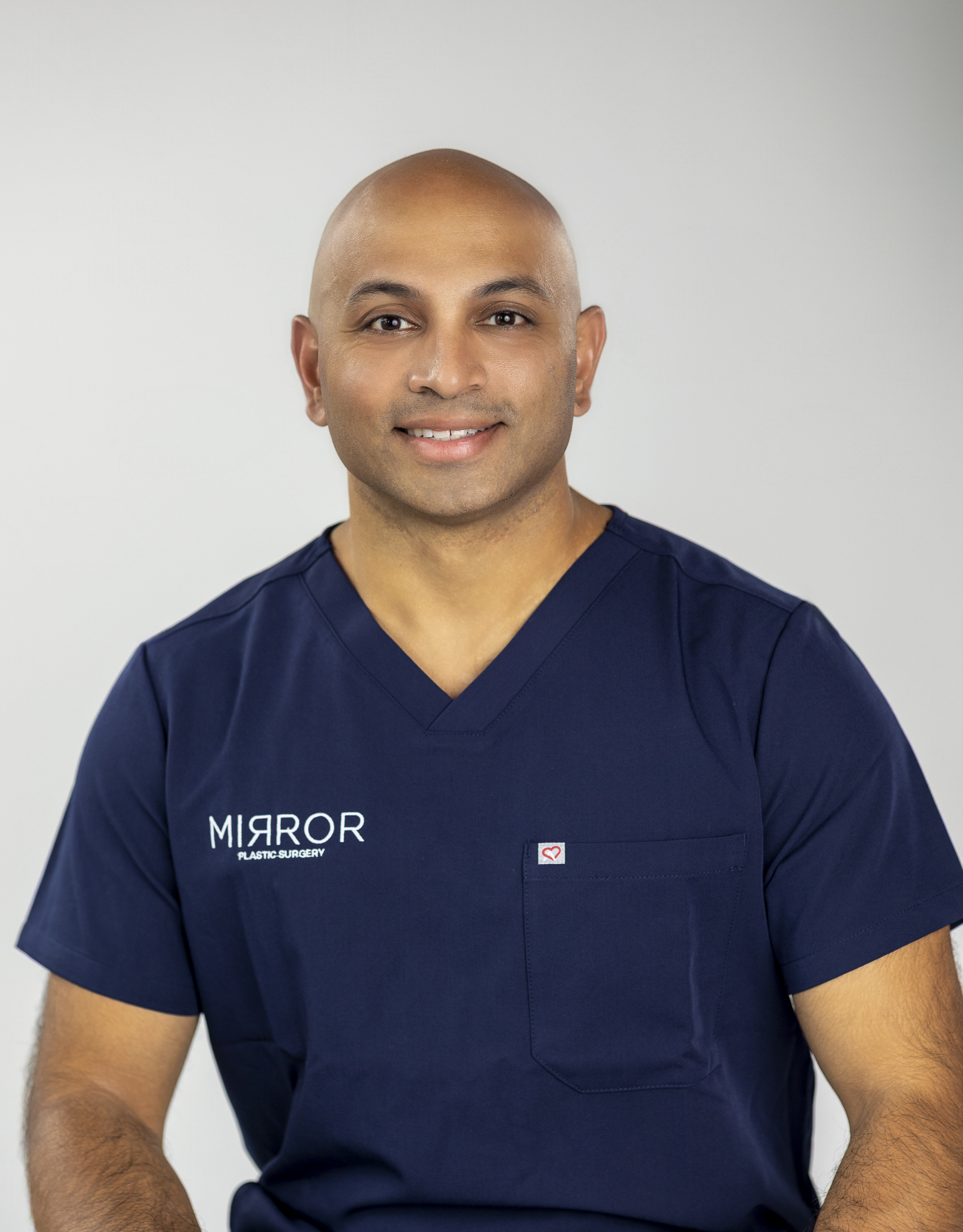
Written by: Dr. Akash Chandawarkar, Board Certified Plastic Surgeon, Mirror Plastic Surgery | Last updated: July 15, 2026
Key Takeaways for Treating Male Pattern Baldness
- Androgenetic alopecia stems from genetic sensitivity to DHT. Evidence-based treatments such as minoxidil, finasteride, dutasteride, and FUE transplantation can slow progression and partially restore density when started early and used consistently.
- Combination treatment plans outperform single medications. Finasteride or dutasteride paired with minoxidil delivers the strongest hair-density gains in clinical trials and network meta-analyses.
- Dutasteride 0.5 mg lowers DHT more than finasteride 1 mg and produces greater hair-count improvements.1 Both drugs have similar sexual side-effect profiles and must be continued to maintain results.
- Microneedling, Secretome therapy, and FUE transplantation work as powerful add-ons or definitive options once medical therapy has stabilized loss and expectations are realistic.
- Schedule a personalized consultation at Mirror Plastic Surgery to receive an evidence-ranked treatment plan tailored to your Norwood stage and long-term goals.
Medical Treatments That Slow and Reverse Male Pattern Baldness
Androgenetic alopecia cannot be cured, but targeted treatments can slow progression and restore meaningful density when started early. Natural remedies alone have not shown reversal of genetic hair loss in peer-reviewed studies, because follicle miniaturization is driven by hormonal and genetic pathways that require pharmacologic or surgical intervention.
Topical minoxidil extends the anagen growth phase and increases blood flow to follicles through a non-hormonal mechanism. A 48-week double-blind RCT found that 5% topical minoxidil produced a greater mean increase in non-vellus hairs versus placebo, with most participants rated as improved on global photographic assessment. Most patients notice improvement around month 4.1 Shedding during weeks 2 to 8 usually reflects follicles cycling into a stronger growth phase rather than treatment failure.
Oral minoxidil bypasses the variable follicular enzyme SULT1A1 that limits topical response in many patients. Hepatic SULT2A1 converts oral minoxidil to the active sulphate metabolite systemically. Cardiovascular monitoring with baseline blood pressure and pulse, repeated after any dose increase, is mandatory before and during oral minoxidil therapy.
Finasteride 1 mg/day inhibits type 2 5-alpha reductase and reduces serum DHT by about 70%. Clinical trial data show that finasteride maintains or improves hair counts in most men at two years, while placebo groups continue to lose hair. Results usually appear after 3 to 6 months, with maximal effect around 12 months.1 The FDA issued an April 2025 warning about potential mental health risks, including depression, linked to compounded topical finasteride. The UK MHRA strengthened finasteride safety warnings in May 2026 after reviewing evidence of psychiatric side effects, including suicidal thoughts, and sexual dysfunction that may persist after stopping the drug. Patients should review their risk profile with a physician before starting finasteride. The drug also lowers serum PSA by about 50%, so clinicians should double measured PSA values when assessing prostate-cancer risk.
Dutasteride 0.5 mg/day inhibits both type 1 and type 2 5-alpha reductase isoenzymes, achieving a 90–95% reduction in serum DHT versus the 70% reduction noted earlier with finasteride. Dutasteride follows a similar 3 to 6 month timeline for initial response, although maximum benefit can extend to 24 months because of its longer half-life. Long-term studies support sustained efficacy with continued use.
Key Research on Hair Regrowth from 2024 to 2026
Recent network meta-analyses rank oral dutasteride 5 mg/day as the most effective single treatment for male androgenetic alopecia, followed by oral finasteride and minoxidil formulations.
A 2025 network meta-analysis identified finasteride plus minoxidil as the most effective regimen for men with androgenetic alopecia (SUCRA ≈80.18%) and reported a mean hair-density increase of 35.12 hairs/cm² for the PRP plus bFGF plus minoxidil combination.1
A 2025 systematic review and meta-analysis of randomized controlled trials found that topical minoxidil-finasteride combination therapy improved hair density, hair diameter, and global photographic scores more than minoxidil alone.
A 2026 retrospective analysis of 638,629 men using compounded topical finasteride 0.3% plus minoxidil reported that 80.4% of the 151,352 patients who completed a 130-day follow-up were satisfied.1 Only 2.7% reported any side effects, and sexual side effects occurred in just 0.002% of patients.
Dutasteride and Finasteride Compared in Practice
Both finasteride and dutasteride inhibit 5-alpha reductase, but their isoenzyme coverage differs. Finasteride targets only type 2 (the 70% DHT reduction noted earlier), while dutasteride blocks both type 1 and type 2, producing a larger DHT reduction of 90–95%.
A high-quality RCT showed that dutasteride 0.5 mg increased hair counts more than finasteride 1 mg at 24 weeks.1 Dutasteride also reversed follicular miniaturization more effectively: thin hair count decreased from 65 to 57 hairs/cm² with dutasteride, compared with 67 to 66 hairs/cm² with finasteride.
On sexual side effects, RCT comparisons show no statistically significant differences between dutasteride 0.5 mg and finasteride 1 mg for altered libido (P=0.54), erectile dysfunction (P=0.07), or ejaculation disorders (P=0.58). The main practical difference is pharmacokinetics rather than DHT suppression. Dutasteride has a half-life of about 5 weeks, while finasteride clears in 6 to 8 hours. Side effects from dutasteride therefore take longer to resolve after stopping the drug, and men planning conception should discontinue dutasteride at least six months before attempting pregnancy.
For men without contraindications who want maximum efficacy, dutasteride 0.5 mg is supported as a first-line option by a 2024 network meta-analysis that ranked dutasteride 0.5 mg/day as the most effective monotherapy for male pattern hair loss. Finasteride 1 mg remains the FDA-approved standard and suits patients who prefer its longer regulatory history or have specific cost constraints.
Microneedling with Minoxidil for Added Density
Microneedling uses controlled micro-injuries to trigger growth factors such as VEGF and PDGF and to activate Wnt/β-catenin signaling. These channels also improve penetration of topical minoxidil through the stratum corneum. The two approaches complement each other. Microneedling activates follicle stem cells and improves delivery, while minoxidil keeps follicles in the growth phase through a separate non-hormonal pathway.
Combination therapy with topical minoxidil 5% plus PRP injections produces a 57% median increase in terminal hair density versus 48% with minoxidil alone, and 83% of patients achieve a negative hair pull test.1 When microneedling replaces or augments PRP in combination plans, the shared molecular pathways create additional density gains. A 25% improvement at two months with minoxidil-based combination therapy predicts a sustained response at six months, and most patients reach maximum response by month 6.
Microneedling sessions usually occur every 4 to 6 weeks during the initial series. Maintenance intervals then depend on individual response. Side effects are typically limited to short-lived redness and mild discomfort at treatment sites, with no systemic exposure.
Timing Hair Transplant Surgery for Lasting Results
Hair transplant surgery works best as part of a broader plan, not as a first-line fix for most men. Outcomes vary widely because results depend on surgeon experience, graft-handling technique, hairline design, and whether medical therapy protects native follicles from ongoing DHT-driven miniaturization.
The main decision points for surgical candidacy include:
- At least 6 to 12 months of medical therapy to stabilize hair loss before transplantation, especially in rapidly progressive androgenetic alopecia or when trichoscopy shows more than 15% miniaturization.
- Age 25 or older with documented stability, which reduces the risk of an unnatural hairline as future loss unfolds.
- Adequate donor density. Optimal donor density ranges from 65 to 85 follicular units per cm², while density below 40 FU/cm² limits or eliminates candidacy for large sessions.
- Realistic expectations. An ISHRS practice census found that 64% of men reported some disappointment with density after hair transplantation, highlighting the need for clear expectation setting.
Preoperative red flags that warrant deferral include unrealistic goals, unstable or rapidly progressive alopecia, major donor–recipient imbalance, very young age, and psychological vulnerability. Post-operative medical therapy with finasteride or dutasteride plus minoxidil remains essential because transplanted hair is permanent but native hair stays vulnerable to DHT.
Modern FUE can achieve graft survival rates of 85–95% when experienced surgeons operate in well-equipped clinics.
Staged Combination Protocols by Norwood Pattern
Evidence supports a staged combination strategy instead of relying on a single drug or procedure. Treatment intensity should match Norwood stage and documented progression.
- Norwood I–II: Focus on preventive medical therapy with finasteride or dutasteride plus topical or oral minoxidil. Schedule monitoring every 6 to 12 months. Surgery is usually premature at this stage.
- Norwood III–IV: Use combination medical therapy as the main treatment. Seek a surgical consultation when crown thinning accelerates or hairline recession exceeds 2 cm despite combination therapy. Begin FUE candidacy evaluation at this point.
- Norwood V–VII: Make surgical planning the primary pathway. Norwood VI–VII patients may need 4,000 to 7,500 grafts across multiple sessions. Continue medical therapy to protect native follicles and support graft survival.
Stabilizing loss before surgery is essential because operating in an unstable field increases the risk of shock loss in surrounding native follicles. This is why peri-operative use of 5-alpha reductase inhibitors such as dutasteride can improve graft survival and reduce native hair loss after FUE, according to clinical studies.
This protective strategy matters even more when you consider that lifetime donor supply is limited. Most patients have about 6,000 to 7,000 lifetime harvestable grafts. A first-time procedure in 2024 used an average of 2,347 grafts, which consumes roughly 35 to 40% of that lifetime donor reserve.
The Mirror Plastic Surgery Hair Restoration Approach
Mirror Plastic Surgery begins every hair restoration evaluation with a detailed anatomical assessment that includes scalp examination, trichoscopy, hair pull testing, and a full medical history. The practice follows a clear hierarchy of safety first, function second, and aesthetics third. No treatment is recommended until the biology of a patient’s hair loss is understood, progression is documented, and the risk–benefit profile of each option is explained clearly.
The clinic offers a full range of evidence-based treatments, including oral and topical medications, microneedling protocols, Secretome therapy with Acorn Biolabs stem-cell conditioned media, and FUE transplantation. Non-surgical therapies are planned as long-term programs rather than one-off procedures. Surgical cases are limited to one or two per day so the entire team can focus on each patient before, during, and after surgery. This concierge-style model contrasts with high-volume centers where individualized attention is difficult to maintain.
Why Dr. Akash Leads Hair Restoration at Mirror Plastic Surgery
Dr. Akash, a board-certified plastic surgeon through the American Board of Plastic Surgery, sets the clinical standard at Mirror Plastic Surgery. He completed his medical degree through the Harvard-MIT Division of Health Sciences and Technology and graduated from Harvard Medical School with Honors.
His surgical training includes a seven-year integrated plastic and reconstructive surgery residency at Johns Hopkins University and an aesthetic surgery fellowship at Manhattan Eye, Ear and Throat Hospital, one of the most competitive aesthetic programs worldwide. He also completed the Stanford University Biodesign Innovation Fellowship, focusing on physician-led medical technology development.
Newsweek recognized Dr. Akash in America’s Best Plastic Surgeons 2025 for two consecutive years, reflecting both peer recognition and patient outcomes. His hair restoration work applies the same anatomical precision and evidence-based planning that guide every procedure at Mirror Plastic Surgery.
Frequently Asked Questions
Hair Restoration Candidacy in Your Late 20s
Men in their late 20s with documented progressive hair loss are often strong candidates for medical therapy. Finasteride or dutasteride combined with minoxidil can slow progression and trigger partial regrowth in most patients with mild to moderate disease. Surgeons usually defer transplantation until age 25 or older with at least 12 months of stable hair on medication, because future loss patterns remain unpredictable in younger men and early surgery can create unnatural patterns as surrounding hair thins. A consultation that includes trichoscopy and Norwood staging is the right starting point for anyone noticing early recession.
Timeline for Seeing Results from Medical Therapy
All pharmacologic and regenerative treatments work on the hair growth cycle, so results take time. Visible improvement from finasteride, dutasteride, or combination regimens usually begins after 3 to 6 months of continuous use, with peak benefit between 12 and 18 months. Topical minoxidil often produces visible change around month 4. Shedding during the first 2 to 8 weeks of minoxidil therapy is common and usually reflects replacement of miniaturized hairs by stronger terminal hairs. Treatment response should not be judged before at least 6 months of consistent use. After hair transplantation, new growth appears around 3 to 4 months, and full results develop over 12 to 18 months.
Comparing Finasteride and Dutasteride Safety
Finasteride and dutasteride both reduce DHT by inhibiting 5-alpha reductase. Dutasteride blocks both type 1 and type 2 isoenzymes, while finasteride targets only type 2, which produces a larger DHT reduction and stronger hair-count gains in head-to-head trials. Randomized data show no significant difference between the two drugs in rates of altered libido, erectile dysfunction, or ejaculation disorders. Both carry FDA warnings about sexual side effects, and the FDA issued updated mental health warnings for finasteride in October 2025. The European Medicines Agency confirmed in 2025 that suicidal thoughts can occur with both medications. Dutasteride’s 5-week half-life means any side effects take longer to resolve after stopping therapy. A physician-supervised consultation that reviews health history, risk tolerance, and goals should guide the final choice.
Durability of Hair Transplant Results and Need for Ongoing Treatment
Transplanted follicles are generally permanent because they retain the DHT-resistant genetics of the occipital donor zone, a principle known as donor dominance. Native non-transplanted follicles remain fully sensitive to DHT. Without ongoing medical therapy, surrounding hair continues to thin and can leave transplanted areas as isolated islands of density. An international expert consensus in the Journal of Dermatological Treatment recommends finasteride or dutasteride plus minoxidil for all transplant patients with androgenetic alopecia to preserve non-transplanted hair. Post-operative medical therapy is therefore a requirement for durable, natural-looking results.
Secretome Therapy Compared with PRP
Secretome describes the growth factors, microRNAs, and signaling proteins released by mesenchymal stem cells. Applied to the scalp, these factors activate dermal papilla cells, support follicle stem cells, and regulate follicle cycling through pathways such as Wnt/β-catenin, TGF-β, IGF-1, PDGF, and VEGF. A 2024 meta-analysis of stem-cell-derived conditioned media for alopecia reported a mean hair-density increase of about 14.9 hairs/cm² and a mean hair-thickness increase of about 18.7 µm.1 PRP concentrates growth factors from the patient’s own blood and has shown hair-density outcomes comparable to topical minoxidil in a 2025 meta-analysis of nine RCTs involving 451 participants, with higher patient satisfaction for PRP. Secretome therapy at Mirror Plastic Surgery uses Acorn Biolabs technology and is integrated into individualized combination plans rather than replacing proven medications.
Putting It All Together for Long-Term Hair Preservation
Male pattern baldness is a progressive genetic condition that responds best to early, individualized, combination-based care. Evidence consistently supports finasteride or dutasteride plus topical or oral minoxidil as the most robustly studied medical foundation, with dutasteride offering stronger hair-count gains for men who prioritize maximum efficacy. Microneedling, Secretome therapy, and low-level laser therapy can further enhance results through complementary biological pathways. FUE transplantation restores density where follicles are no longer viable, but only when hair loss is stabilized, donor density is adequate, and expectations are aligned with anatomy.
The most influential factor in any hair restoration plan is not a single product. The key is a plan tailored to your Norwood stage, anatomy, progression rate, and long-term goals, guided by a physician who prioritizes safety, function, and aesthetics in that order.
1 Results may vary from person to person. Editorial content, before and after images, and patient testimonials do not constitute a guarantee of specific results.