
Written by: Dr. Akash Chandawarkar, Board Certified Plastic Surgeon, Mirror Plastic Surgery | Last updated: July 18, 2026
Key Takeaways
- Choosing a plastic surgeon in Tampa requires more than a quick search, because board certification, hospital privileges, and facility accreditation directly affect safety and outcomes.
- High-volume surgical chains have been linked to serious complications, so patients should verify ABPS certification and confirm the surgeon performs only one to two procedures daily.
- Dr. Akash at Mirror Plastic Surgery brings elite training from Harvard-MIT, Johns Hopkins, and MEETH, along with nationally recognized expertise.
- A thorough consultation, accredited facilities with board-certified anesthesiologists, and transparent discussion of revision rates are essential safety markers.
- Schedule your personalized consultation at Mirror Plastic Surgery to receive guidance tailored to your anatomy and goals.
Why Dr. Akash’s Training Sets a Safety Benchmark
Dr. Akash trained at MIT in neuroscience and nuclear engineering, then completed his medical degree through the Harvard-MIT Division of Health Sciences and Technology, graduating from Harvard Medical School with Honors. His seven-year integrated plastic and reconstructive surgery residency at Johns Hopkins University included rotations at the Johns Hopkins Hospital, the R Adams Cowley Shock Trauma Center, and the Curtis National Hand Center. He then completed a highly competitive aesthetic surgery fellowship at the Manhattan Eye, Ear and Throat Hospital (MEETH), which represents advanced subspecialty training in cosmetic surgery. He also completed the Stanford University Biodesign Innovation Fellowship, which trains physicians to identify unmet clinical needs and develop practical technological solutions.
Dr. Akash has been named to Newsweek’s America’s Best Plastic Surgeons list two years in a row, including 2025. He serves as Next Generation Editor for the Aesthetic Surgery Journal, has testified before the FDA on breast implant safety, and is board certified by the American Board of Plastic Surgery (ABPS).
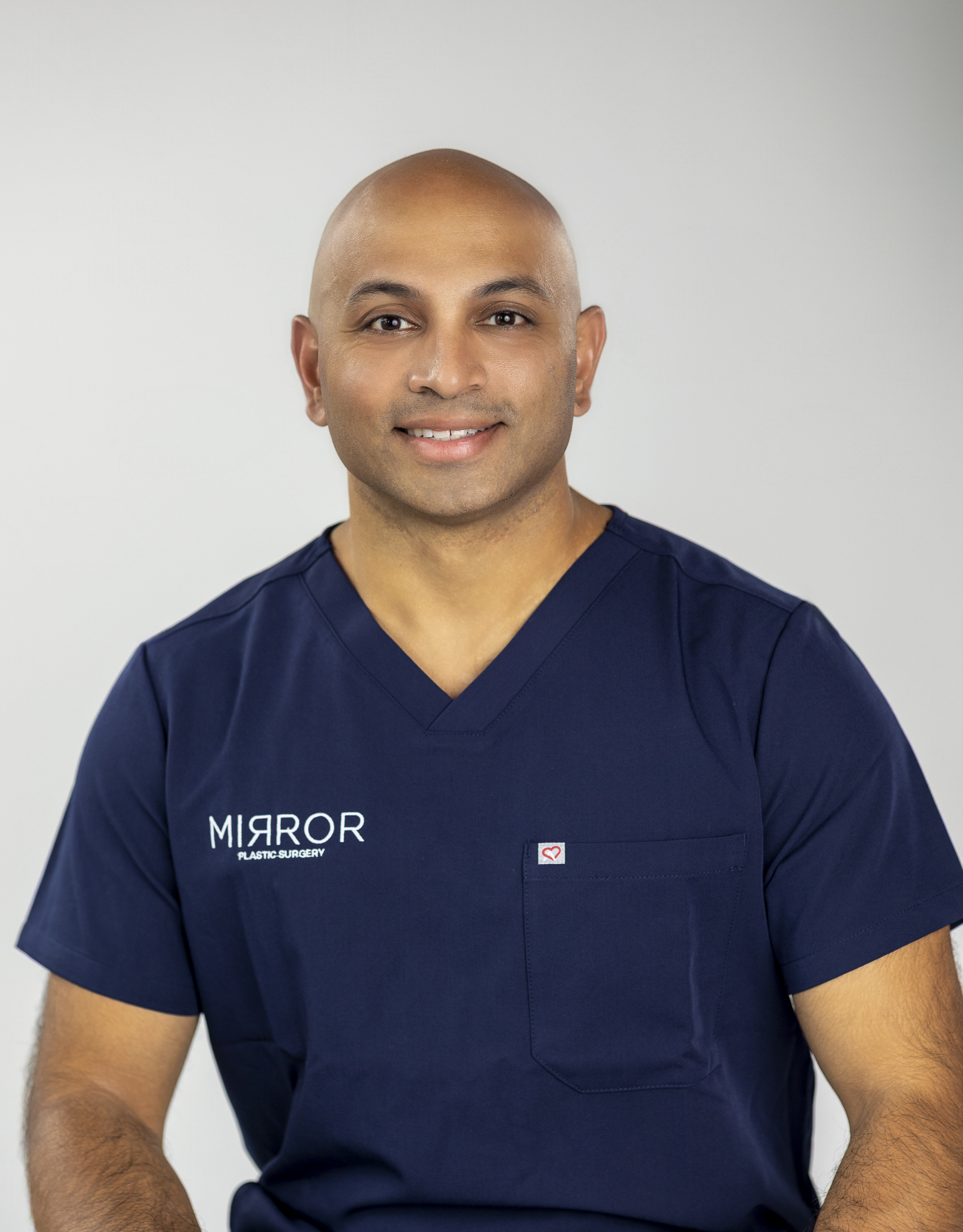
Mirror Plastic Surgery follows a safety-first, function-second, aesthetics-third hierarchy. The practice limits itself to one to two surgeries per day, which keeps the entire clinical team focused on each patient before, during, and after the procedure. Consultations run up to sixty minutes and cover anatomy, goals, risks, and evidence-based treatment options. These standards, including board certification, fellowship training, limited daily volume, and extended consultation time, form the foundation of the safety checklist below.
Step-by-Step Checklist: How to Choose the Best Plastic Surgeon in Tampa
- Verify ABPS certification and Florida licensure. The American Board of Plastic Surgery is the only ABMS-recognized board certifying physicians in plastic surgery. Certification requires completion of an accredited multiyear residency and passage of both written and oral examinations. Confirm certification at certificationmatters.org and verify Florida licensure through the state medical board. Some practitioners hold board certification in other specialties, such as emergency medicine or general surgery, and are frequently denied hospital privileges to practice plastic surgery as a result.
- Confirm Tampa-area hospital privileges. Hospital privileges confirm that a surgeon is authorized to perform specific procedures and can manage complications that require inpatient admission. ABPS requires board-certified plastic surgeons to hold admitting privileges at a hospital in their specialty. Ask which local Tampa Bay hospitals grant the surgeon privileges and whether those privileges cover the specific procedure you are considering.
- Evaluate annual procedure volume and revision rates. Surgeons who perform a higher volume of a specific procedure often have lower complication rates, a pattern seen across many surgical specialties.1 Ask the surgeon directly how many procedures of your specific type they perform each year and what their personal revision rate is.
- Assess accredited facility standards and anesthesia credentials. Accredited surgical facilities are associated with strong safety records. Confirm accreditation by AAAASF, AAAHC, or The Joint Commission. Verify that a board-certified physician anesthesiologist, not a technician, will administer anesthesia. Mirror Plastic Surgery operates exclusively in accredited surgical facilities with board-certified anesthesiologists for every case.
- Review before-and-after photos for similar anatomy and natural results. Request a portfolio of patients with comparable anatomy, age, and procedure type. Look for results that appear natural and proportionate rather than overdone. A surgeon who cannot provide relevant before-and-after photos for your specific procedure warrants further scrutiny.
- Prepare focused questions for a thorough consultation. Consultations shorter than 30 minutes or immediate booking pressure are red flags. A thorough consultation covers medical history, anatomical assessment, technique options, realistic outcomes, risks, recovery expectations, and postoperative care. The operating surgeon, not a patient coordinator, must lead this discussion.
- Cross-check reviews for communication patterns. Platforms such as RealSelf and Google Reviews reveal patterns in how a practice communicates before and after surgery. Look for consistent mentions of unhurried consultations, honest risk discussions, and accessible postoperative support. Recurring complaints about rushed visits or unanswered questions provide meaningful data.
How to Recognize a High-Quality Plastic Surgeon
Evidence-based indicators of surgical quality extend beyond a framed certificate. Procedural volume and specialized training correlate with improved outcomes in plastic surgery.1 Subspecialty fellowship training, such as Dr. Akash’s MEETH aesthetic surgery fellowship, provides focused exposure to advanced techniques that go beyond residency alone.
A good surgeon also demonstrates transparency during consultation. Surgeons who rush through consultations or minimize risks may not be prioritizing patient safety. A safety-focused surgeon provides detailed, thoughtful answers and proactively raises additional safety considerations without prompting.
Additional quality signals include editorial board membership, peer-reviewed publications, participation in professional society committees, and advisory roles with technology companies developing next-generation surgical tools, which all reflect ongoing engagement with the field’s evidence base. Once you have identified a qualified surgeon, the way you communicate during the consultation affects whether you receive appropriate care.
What Not to Say to a Plastic Surgeon During Consultation
Certain phrases and behaviors during a consultation signal misaligned expectations or insufficient preparation, and a safety-focused surgeon will address them directly rather than proceed uncritically.
Avoid framing requests around a specific celebrity’s result or a heavily filtered social media image. Because anatomy is individual, outcomes depend on your existing tissue, skeletal structure, and healing biology, so no surgeon can replicate another person’s result on your body. When a surgeon agrees to copy a celebrity result without discussing these anatomical limits, that surgeon is prioritizing sales over safety.
Avoid minimizing your medical history. Complete disclosure of prior illnesses, surgeries, complications, allergies, anesthesia reactions, current medications, supplements, alcohol and tobacco use enables your surgeon to assess risk accurately, and omissions can have serious consequences. For example, failing to mention GLP-1 medications, blood thinners, or a history of clotting disorders can directly compromise surgical safety.
Avoid requesting multiple procedures combined into a single session without clinical justification. Excessive use of multiple techniques during a single surgery is a leading cause of complications. Mirror Plastic Surgery advises against combining too many procedures at once, because evidence shows this approach can sharply increase complication rates.
Common Misconceptions About Plastic Surgery Consultations in Tampa
Many patients believe that a brief consultation reflects efficiency. In practice, high-volume physicians often conduct shorter visits, which can correlate with reduced delivery of preventive services and lower patient satisfaction, including in surgical settings. The extended consultation time described earlier functions as a clinical necessity for accurate anatomical assessment and informed consent, not a luxury.
Another misconception is that social media results represent typical outcomes. Aggressive social media marketing by high-volume chains often promises minimal discomfort and 24-hour recovery times, claims experts have labeled as misleading. Cosmetic surgery marketing in the United States remains largely unregulated compared with prescription drug advertising.
Patients also sometimes assume that a high daily surgical volume signals experience. The structural risk of ghost surgery, where a different surgeon performs the procedure than the one who conducted the consultation, concentrates in high-volume, multi-surgeon clinics where the named surgeon cannot realistically perform every scheduled case. Consent forms that name “the clinic” or “the medical team” rather than a specific surgeon carry a higher substitution risk.
Checklist You Can Bring to Your Consultation
Before Your Consultation: Documents to Request
- ABPS board certification verification (confirm at certificationmatters.org)
- Florida medical license number and status
- Name and accreditation status of the surgical facility
- Anesthesiologist credentials (board-certified physician anesthesiologist)
- Hospital privileges documentation
Questions to Ask During Consultation
- How many of this specific procedure do you perform each year?
- What is your personal complication and revision rate for this procedure?
- Who administers anesthesia, and what are their credentials?
- Which accredited facility will the surgery be performed in?
- What is your protocol if a complication requires hospital admission?
- What does postoperative follow-up look like, and how do I reach you after hours?
Red Flags to Watch For
- Consultation conducted by a patient coordinator rather than the surgeon
- Pressure to book or place a deposit the same day
- Discounts tied to immediate decisions
- Reluctance to discuss complications or revision rates
- Inability to confirm facility accreditation or hospital privileges
- Promises of minimal recovery times or guaranteed results
- Consent forms naming “the clinic” rather than a specific surgeon
Use this checklist during your consultation with Dr. Akash
How Surgeon Selection Supports Long-Term Well-Being
Plastic surgery outcomes affect both function and appearance. Mirror Plastic Surgery’s function-before-aesthetics philosophy reflects clinical evidence that structural restoration, such as correcting abdominal muscle separation after pregnancy, alleviating back pain from macromastia, or restoring proper eyelid function, produces results that are medically meaningful and visually natural. A surgeon who evaluates anatomy comprehensively rather than addressing isolated cosmetic concerns delivers outcomes that age better and often require fewer revisions.1
Contemporary professional guidance from ASPS, ISAPS, and the GMC emphasizes surgeon-led consent processes, psychological screening, and the surgeon’s discretion to decline procedures when expected benefit is doubtful. Choosing a surgeon who applies these standards protects not only the surgical outcome but also the patient’s broader health trajectory.
Frequently Asked Questions
Can patients with type 2 diabetes have plastic surgery at Mirror Plastic Surgery?
Patients with type 2 diabetes can be candidates for plastic surgery when the condition is well controlled. Uncontrolled blood sugar impairs wound healing, increases infection risk, and elevates cardiovascular and anesthetic risk. Dr. Akash conducts a comprehensive preoperative medical evaluation that includes metabolic assessment and collaborates with the patient’s endocrinologist or primary care physician when improvement is needed before proceeding. Patients with well-managed diabetes who meet clinical thresholds are evaluated individually based on their full health profile, anatomy, and the specific procedure planned.
What is the A1C cutoff for plastic surgery?
Many plastic surgery practices and anesthesia guidelines use an A1C of 7.5% or below as a general threshold for elective surgery, though some procedures and patient profiles may require tighter control. Values above 8.0% are typically associated with significantly elevated wound complication and infection rates. At Mirror Plastic Surgery, Dr. Akash reviews A1C alongside the full metabolic picture, including fasting glucose trends, medication regimen, and any history of diabetic complications, rather than applying a single cutoff in isolation. Patients whose A1C falls outside the target range receive counseling on improvement strategies before a surgical date is scheduled.
What is the hardest plastic surgery to recover from?
Recovery difficulty depends on the extent of anatomical work performed, the patient’s baseline health, and how many procedures are combined. Among common aesthetic surgeries, lower body lift, circumferential body lift, and full abdominoplasty with muscle repair typically involve the most demanding recoveries because of the scope of tissue mobilization and the functional restrictions required during healing. Rhinoplasty, while not physically debilitating, involves a prolonged refinement period of twelve to eighteen months before final results are visible. Dr. Akash discusses realistic recovery timelines, including activity restrictions, swelling progression, and return-to-work expectations, in detail during the consultation so patients can plan appropriately.
What is the revision policy at a concierge practice like Mirror Plastic Surgery?
Mirror Plastic Surgery’s concierge model focuses on minimizing the need for revision through meticulous preoperative planning, evidence-based technique selection, and thorough postoperative monitoring.1 Because Dr. Akash performs only one to two surgeries per day, each patient receives sustained clinical attention throughout the healing process, which enables early identification of any concerns. When revision is clinically indicated, Dr. Akash discusses the situation transparently, including the timing, technique, and realistic expectations for the corrective procedure. Revision policy specifics are addressed individually during consultation, because each patient’s anatomy and procedure type create a unique clinical context.
Conclusion: Choose Safety, Function, and Expertise
Choosing the best plastic surgeon in Tampa requires verifying ABPS board certification, confirming hospital privileges, evaluating annual procedure volume, assessing accredited facility standards, reviewing anatomically relevant before-and-afters, preparing for a thorough consultation, and cross-checking communication patterns across independent review platforms. Each step filters for the safety infrastructure and clinical depth that protect outcomes.
Mirror Plastic Surgery and Dr. Akash represent a deliberate alternative to high-volume mill practices, with Harvard-MIT and Johns Hopkins training, a MEETH aesthetic surgery fellowship, nationally recognized credentials, one to two surgeries per day, extended consultations, accredited facilities, and board-certified anesthesiologists for every case. The practice’s safety-first, function-second, aesthetics-third hierarchy functions as the clinical framework applied to every patient evaluation.
1 Results may vary from person to person. Editorial content, before and after images, and patient testimonials do not constitute a guarantee of specific results.