
Written by: Dr. Akash Chandawarkar, Board Certified Plastic Surgeon, Mirror Plastic Surgery | Last updated: July 10, 2026
Key Facts About Buccal Fat Removal Results
- Buccal fat removal permanently removes deep cheek fat to refine midface contour, so careful patient selection drives long-term success.
- A one-year result can look sculpted, yet aggressive removal in the wrong candidate may create hollow, older-looking cheeks in the forties and fifties.1
- Mirror Plastic Surgery uses conservative, partial removal to maintain a cushion of fat, which helps protect against unpredictable aging changes and future gauntness.
- Results depend heavily on the surgeon’s expertise; Dr. Akash’s Harvard and Johns Hopkins training, combined with a safety-first philosophy, supports detailed, anatomy-based planning for every case.
- If you are considering buccal fat removal, schedule a consultation at Mirror Plastic Surgery for a thorough, anatomy-focused evaluation and to decide whether this procedure or an alternative fits your goals.
How Buccal Fat Removal Interacts With Facial Aging
The buccal fat pad sits in a deep compartment of the cheek, separate from the superficial fat that shifts and thins with age. Superficial facial fat compartments tend to descend and sometimes shrink over time, which can amplify the visual impact of any deep fat removed years earlier. This interaction between deep removal and superficial aging lies at the center of long-term concerns.
Joshua Zeichner, MD, director of cosmetic and clinical research at Mount Sinai Hospital, notes that buccal fat removal can create a sharper, more defined look that many patients in their twenties or thirties prefer. As the face naturally loses volume in the forties, fifties, and beyond, that same reduction can contribute to a skeletonized appearance. A well-executed procedure in the right patient may look sculpted and balanced at one year. In a poorly selected patient, the five-year result can appear hollow and prematurely aged as surrounding tissues continue to deflate.
There is no clear consensus on whether the remaining buccal fat increases, decreases, or stays the same size over decades. This uncertainty drives the conservative, partial removal approach at Mirror Plastic Surgery. Removing only what is necessary preserves a buffer of deep fat that can help absorb unpredictable long-term changes.
Why Some Surgeons Approach Buccal Fat Removal Cautiously
Concerns about long-term hollowing have made many surgeons more cautious about buccal fat removal. A peer-reviewed study in Plastic and Reconstructive Surgery Global Open warned that aggressive resection can produce overly sunken cheeks as age-related volume loss progresses. A 2018 publication in Plastic and Reconstructive Surgery – Global Open also highlighted that long-term data remain limited, especially for today’s younger and larger patient population seeking this procedure.
The difference between aggressive and conservative removal reflects a surgeon’s core philosophy, not just technique. At Mirror Plastic Surgery, Dr. Akash follows a safety-first, function-second, aesthetics-third framework. He focuses on how little fat needs to be removed to create a natural, durable improvement rather than how much can be taken for a dramatic change. Dr. Akash, named to Newsweek’s America’s Best Plastic Surgeons list two years in a row, limits his schedule to one to two surgeries per day so each buccal fat case receives the detailed anatomical assessment it requires.
Find out if you are a candidate through a comprehensive facial assessment at Mirror Plastic Surgery.
How Long Buccal Fat Removal Results Last
Once removed, buccal fat pads do not grow back. The structural change is permanent, even as the rest of the face continues to evolve with weight shifts, natural aging, and changes in skin elasticity. The surgery sets a new baseline, and that baseline then ages along with you.
During the first two weeks, most patients notice swelling, bruising, mild soreness, and some tightness when opening the mouth. These short-term effects usually improve within one to two weeks. The final contour typically becomes clear between three and six months, after deeper swelling resolves. At five to ten years, results can look very different from person to person, depending on whether the original candidate had enough facial volume and supportive anatomy.1
Later in life, some patients benefit from volume-restoring options such as deep plane facelift, fillers, or fat grafting in the superficial fat compartments. These treatments can help maintain or restore balance as aging progresses, although careful candidate selection at the outset remains the most effective way to avoid corrective procedures.
Real Patient Worries About Gauntness and Regret
Many people researching buccal fat removal worry about looking gaunt or skeletal in middle age. That concern has a strong anatomical basis. When surgeons remove too much buccal fat from patients with borderline or already lean facial volume, the face can look hollow in the forties and fifties as natural fat loss continues.
Some patients who had buccal fat removal later seek injectable fillers to rebuild volume in the same area, which often signals that the original surgery removed more fat than their face could spare. Over-resection can create a sunken look that may require fat grafting for meaningful correction, so avoiding that situation matters. A measured, conservative approach guided by deep anatomical knowledge offers the most reliable protection against long-term regret.
How to Tell Good Candidates From Poor Candidates
The table below outlines key anatomical and clinical features that separate appropriate from inappropriate candidates for buccal fat removal, based on published expert guidance.
| Criterion | Good Candidate | Poor Candidate | Clinical Rationale |
|---|---|---|---|
| Facial Volume | Persistent lower-cheek fullness unrelated to weight | Naturally thin face or existing volume loss | Removal in already-slim faces increases the risk of hollowing with age |
| Facial Shape | Rounder, fuller face with good skin elasticity | Naturally long or thin facial structure | Narrow cheeks can look unnaturally gaunt after buccal fat removal |
| Age and Aging Trajectory | Younger adult with stable weight and good skin support | Patient likely to lose significant facial volume with age | Natural fat loss in the forties and fifties compounds surgical removal |
| Lifestyle Factors | Nonsmoker at stable weight with no serious health conditions | Active nicotine use, significant weight fluctuation history | Nicotine impairs blood flow and raises complication risk |
Buccal Fat Removal Recovery Timeline and Swelling Stages
A clear recovery roadmap helps you interpret early changes and avoid misjudging your results too soon. Each stage has its own normal appearance.
- Days 1–3: Swelling and bruising peak, a soft diet is recommended, and intraoral incisions must stay clean with prescribed rinses.
- Days 4–14: Swelling, bruising, mild discomfort, and mouth tightness steadily improve, and most patients feel socially comfortable again by the end of this period.
- Weeks 3–6: Cheek contour looks more refined, although some deep swelling can still blur the final shape.
- Months 3–6: The final contour described earlier becomes fully visible, and photos taken now best represent the true surgical outcome.
- Years 1–5+: Results stay stable in well-selected patients, while normal facial aging continues on its own timeline.1
Get a personalized recovery timeline during your consultation at Mirror Plastic Surgery.
Why Surgeon Expertise Matters for Long-Term Results
Buccal fat removal outcomes depend heavily on the surgeon’s understanding of facial anatomy and aging. Dr. Akash earned his medical degree with Honors from Harvard Medical School, completed a seven-year integrated plastic and reconstructive surgery residency at Johns Hopkins University, and pursued an aesthetic surgery fellowship at Manhattan Eye, Ear and Throat Hospital (MEETH), a highly competitive center for advanced facial surgery. His Newsweek recognition, combined with his role as Next Generation Editor for the Aesthetic Surgery Journal, reflects a career grounded in both clinical practice and peer-reviewed research on procedures such as buccal fat removal.
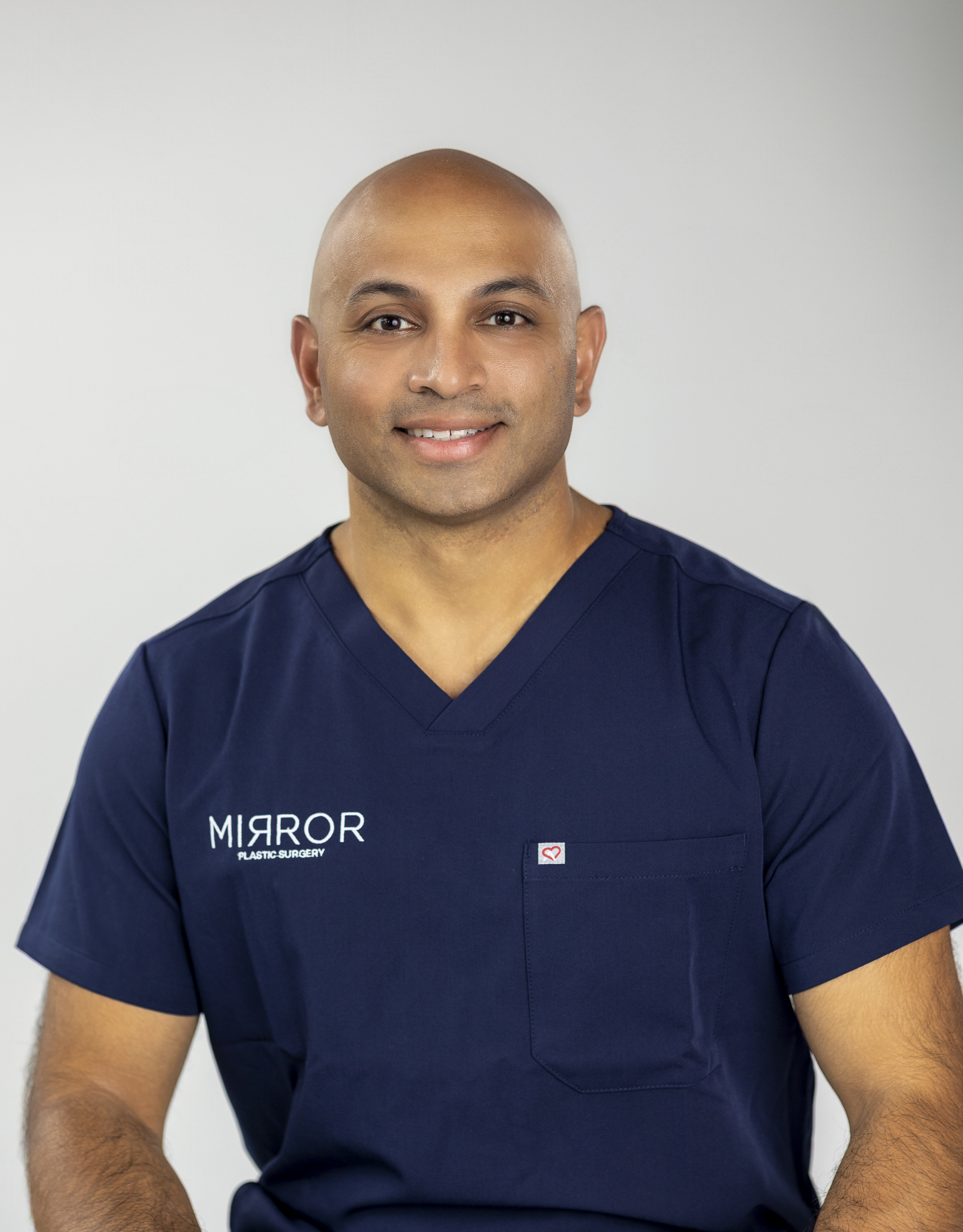
Mirror Plastic Surgery follows a concierge model that limits the practice to one to two surgeries per day. Every buccal fat consultation includes a full facial evaluation that reviews skin elasticity, fat compartment distribution, facial proportions, and long-term aging patterns before any recommendation is offered.
Alternatives When Buccal Fat Removal Is Not the Right Fit
Patients with borderline facial volume, early signs of aging, or naturally lean features usually do better with treatments that shape the face without permanently reducing deep cheek fat. Several evidence-based options can refine midface contour while preserving or adding volume.
- Facial fat transfer: Uses your own fat to sculpt contour while maintaining or increasing volume, which works well for patients with uneven proportions or early hollowing.
- Biostimulatory fillers (for example, Radiesse): Encourage collagen production to improve structure and definition without removing tissue.
- Deep plane facelift or minimally invasive lifts: These procedures address age-related laxity rather than volume loss, as discussed earlier, and can sharpen the midface and jawline in appropriate candidates.
- Chin or cheek augmentation: Implants or fat grafting can rebalance facial proportions and create a more defined midface while keeping cheek volume intact.
- Perioral liposuction: Targets superficial fat around the lower face instead of the deep buccal compartment, offering a more adjustable contour change for select patients.
Frequently Asked Questions
Will buccal fat removal make me look older as I age?
In carefully chosen patients with genuinely full cheeks, good skin elasticity, and stable weight, conservative buccal fat removal does not speed up aging.1 The risk of a prematurely aged or gaunt look mainly appears when surgeons treat patients who already have lean or borderline facial volume, or when they remove too much fat. Because the face naturally loses volume in the forties and fifties, any surgical reduction adds to that process. A thorough pre-operative assessment that considers your long-term aging pattern offers the strongest protection.
Is buccal fat removal permanent?
Yes. Buccal fat pads do not regenerate after removal, so the structural change lasts for life. That permanence makes thoughtful decision-making essential. The visible result still changes over time as your face ages, your weight shifts, and your skin quality evolves. Patients who later develop noticeable volume loss may benefit from fat grafting or filler to restore balance.
What are the risks of buccal fat removal?
Short-term effects include swelling, bruising, mild discomfort, and temporary tightness when opening the mouth, which usually improve within one to two weeks. Less common but more serious risks include infection, hematoma, asymmetry, injury to the facial nerve or salivary duct, and over-resection that creates a gaunt appearance. Conservative technique and strict candidate selection reduce the chance of these problems. Choosing a board-certified plastic surgeon with focused facial surgery training further lowers the risk of significant complications.
How do I know if I am a good candidate?
Ideal candidates have persistent lower-cheek fullness that does not change much with weight, a rounder facial shape, good skin elasticity, stable weight, and no active nicotine use. Patients with naturally thin faces, early signs of volume loss, or a family history of lean facial aging usually are not good candidates. A comprehensive in-person consultation that reviews your anatomy, proportions, skin quality, and long-term aging tendencies remains the only reliable way to confirm candidacy.
What is the recovery timeline for buccal fat removal?
Most patients return to light activity within three to five days and feel comfortable resuming normal social plans within about two weeks as swelling and bruising settle. A soft diet usually continues for one to two weeks to protect the incisions inside the mouth. Some deep swelling can linger for up to three months, so the final contour often becomes clear between three and six months after surgery. Early photos rarely reflect the true result and should not guide your judgment.
Conclusion: Matching the Right Face to the Right Amount of Removal
Buccal fat removal before and after photos reflect more than the procedure itself. They reflect whether the right patient received a carefully measured amount of removal from a surgeon who understands facial anatomy and aging. Over-resection in a poorly selected patient can create gauntness that worsens over time and may require fat grafting to correct. Conservative removal in a well-selected patient can deliver a refined contour that ages in harmony with the rest of the face.
Evidence across expert guidance points to the same conclusion. Long-term outcomes depend on candidacy assessment, surgical restraint, and a philosophy that values how you will look at fifty as much as how you look at thirty. At Mirror Plastic Surgery, every facial procedure starts with that long-range view.
Schedule your evaluation at Mirror Plastic Surgery to discover whether buccal fat removal or a better-suited alternative fits your face and your future.
1 Results may vary from person to person. Editorial content, before and after images, and patient testimonials do not constitute a guarantee of specific results.