
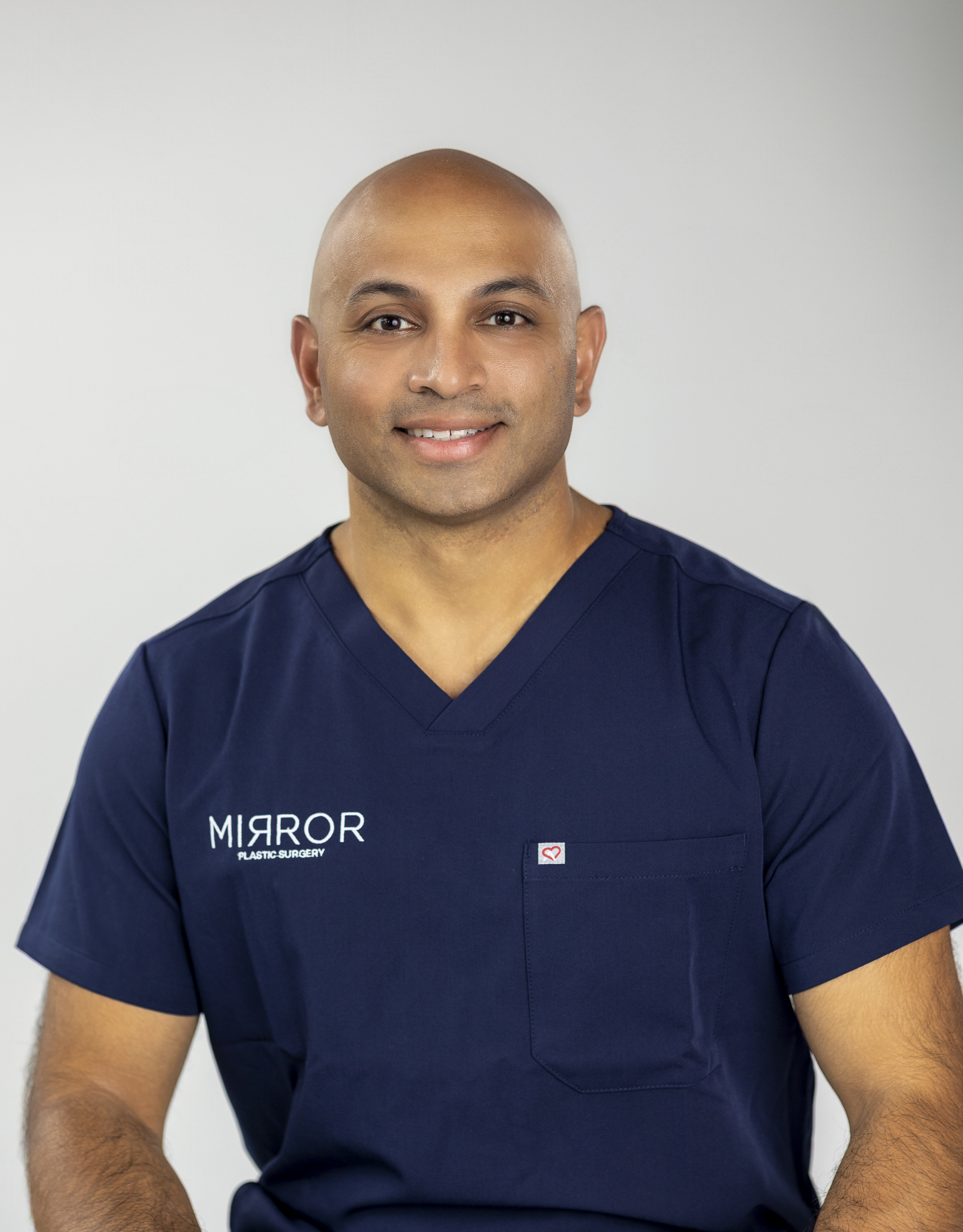
Written by: Dr. Akash Chandawarkar, Board Certified Plastic Surgeon, Mirror Plastic Surgery | Last updated: July 20, 2026
Key Takeaways for St. Petersburg Plastic Surgery Patients
- Elite St. Petersburg plastic surgery depends on ABPS board certification, low surgical volume, and a safety-first philosophy that balances function and aesthetics.
- Dr. Akash at Mirror Plastic Surgery meets these standards with Harvard-MIT and Johns Hopkins training plus consecutive Newsweek recognition.
- Deep-plane facelifts, tummy tucks, and mommy makeovers are among the most demanding procedures, with recovery ranging from weeks to over a year.
- High patient satisfaction grows from realistic expectations, thoughtful psychological screening, and avoiding high-volume practices that dilute individualized care.
- Schedule your personalized consultation at Mirror Plastic Surgery to review credentials, procedure options, and safety protocols with Dr. Akash.
Credentials and Philosophy Comparison Matrix
The table below shows how training depth, daily surgical volume, and practice philosophy shape which procedures a surgeon can safely perform and which warning signs suggest a poor fit for complex aesthetic surgery.
| Credentials | Volume | Best For | Red Flags |
|---|---|---|---|
| ABPS board-certified; Harvard-MIT M.D.; Johns Hopkins 7-year integrated residency; MEETH aesthetic fellowship; Stanford Biodesign fellowship; America’s Best Plastic Surgeons 2024 & 2025 | 1–2 surgeries per day | Facelift, deep-plane facelift, rhinoplasty, mommy makeover, breast revision, complex body contouring | None identified |
| ABPS board-certified; standard residency; no subspecialty fellowship | 4–6 surgeries per day | Straightforward augmentation, minor body contouring | Limited fellowship training, higher daily volume may reduce per-patient focus |
| ABCS-certified only (not ABMS-recognized); residency in unrelated surgical specialty | 8–12+ surgeries per day | Non-surgical or minimally invasive procedures only | ABCS is not recognized by the American Board of Medical Specialties, no plastic surgery residency required |
| Unlicensed or out-of-country credentials; no verifiable U.S. board certification | Variable | Not appropriate for any elective aesthetic surgery | No verifiable U.S. licensure, no accredited facility, no hospital privileges |
Review your credentials checklist with Dr. Akash in a dedicated, hour-long assessment that covers procedure options and safety protocols.
Hardest Plastic Surgery Procedures to Recover From
Recovery difficulty closely tracks tissue depth, operative time, and how many anatomical systems a procedure affects. Three operations consistently demand the most from patients during healing.
Deep-Plane Facelift. Peak swelling and discomfort occur in the first three days, sutures come out between days 7 and 10, and noticeable firmness eases between weeks 4 and 8. Most patients return to desk work at about two weeks and look genuinely refreshed at six to eight weeks. Final results are essentially visible by month 6, with subtle collagen remodeling continuing to 12 months.1 A fellowship-trained surgeon with focused deep-plane experience usually causes less tissue trauma and supports faster healing, and in skilled hands the risk of lasting facial nerve weakness stays very low.
Abdominoplasty (Tummy Tuck). Abdominoplasty carries an overall complication rate of approximately 4%, and that rate can be higher in patients after massive weight loss. The most frequent complications are seroma, surgical site infection, and hematoma. Full tummy tuck patients usually need 10–14 days off work and 4–6 weeks before light exercise, while full scar maturation can take 1–2 years.1
Combined Mommy Makeover. Week one requires complete rest, no lifting over 5–10 lb, and full-time help with childcare. Tummy tuck pain often rates 6–7/10 in the first few days, dropping to 3–4/10 by week 2. Most board-certified plastic surgeons limit operative time to 6–7 hours when combining procedures, because longer surgeries raise the risks of blood clots, infection, and anesthesia complications.
Understanding recovery timelines covers only one side of the decision. Patients also need psychological readiness and a surgeon who values realistic expectations more than case volume.
Most Regretted Plastic Surgeries and How to Avoid Them
Genuine regret after abdominoplasty is relatively uncommon. When regret occurs, it rarely stems from technical surgical failure and more often reflects a mismatch between expectations and the realities of the procedure, recovery, or final result. This pattern appears across aesthetic surgery as a whole.
The primary regret drivers are:
- Unrealistic expectations. The most common driver of dissatisfaction is expecting a flawless result instead of a significant improvement on the patient’s own anatomy.
- High-volume settings. A 2026 narrative review concludes that contemporary professional standards require the operating surgeon to conduct consent conversations personally, a standard that high-volume mills structurally cannot meet at scale.
- Poor patient selection. Body dysmorphic disorder occurs more often in cosmetic surgery clinic populations than in the general population. A 2026 systematic review reports that mental health screening during surgical planning reduces dissatisfaction and improves long-term outcomes.
- Premature result assessment. At least six months, and ideally a full year, should pass before judging the final result of a tummy tuck.
Mirror Plastic Surgery’s hour-long consultation, psychological readiness assessment, and clear safety-function-aesthetics hierarchy address each of these drivers before any surgical plan is finalized.
After understanding regret patterns, many patients want to know which procedures tend to deliver the most durable satisfaction when performed under the right conditions.
Which Plastic Surgery Has the Highest Satisfaction Rate
Patient satisfaction rates for tummy tucks are high in major studies, with one NHS study reporting a 77% satisfaction rate among abdominoplasty patients.1 Many patients describe sustained waist reduction and better core strength at long-term follow-up.1
Deep-plane facelifts can achieve similar satisfaction when performed in the right setting. A well-performed deep-plane facelift maintains meaningful improvement for an average of 10.9 years, with a range from 9.3 to 12.4 years depending on age at surgery, which is significantly longer than the 7–10 year longevity typical of SMAS techniques.1
The consistent variable across high-satisfaction outcomes is not procedure type alone. Results depend on appropriate patient selection, fellowship-trained technique, and a low-volume practice model that allows full perioperative focus on each individual.
These same factors also determine which practice model is appropriate for each type of procedure.
Procedure-to-Clinic Matching Guide for Complex Surgeries
Not every procedure belongs in every practice model. The guide below maps procedure complexity to the care setting that best supports safety and long-term results.
- Deep-Plane Facelift: Requires a fellowship-trained facial surgeon, a low-volume schedule, and an accredited facility with a board-certified anesthesiologist. High-volume mills carry a higher risk of lasting facial nerve weakness when surgeons lack deep-plane training.
- Mommy Makeover: Combined procedures call for strict operative time limits, careful patient selection such as BMI under 30 and non-smoker status, and a surgeon who personally conducts consent. When a board-certified plastic surgeon operates in an accredited facility, major complication rates fall below 1.5%.1
- Breast Revision: Correction of capsular contracture, implant malposition, or animation deformity requires deep anatomical knowledge and hospital privileges for rare complications. High-volume or non-ABPS-certified settings are not appropriate for these cases.
- Rhinoplasty: Structural and functional outcomes depend heavily on subspecialty fellowship training. Dr. Akash is a leading researcher on AI-assisted objective analysis in rhinoplasty and trained under foremost experts during his MEETH fellowship.
Match your goals to the right surgical approach in a consultation that evaluates your anatomy, procedure options, and the practice model your case requires.
Red-Flags Checklist for St. Petersburg Plastic Surgery Practices
Patients can quickly screen local practices by combining credential checks with structural safety factors. The checklist below highlights warning signs that suggest a clinic may not support complex aesthetic surgery safely.
- Surgeon is not certified by the American Board of Plastic Surgery (ABPS), the only ABMS-recognized board for the full range of plastic surgery procedures
- Daily surgical volume exceeds 4–5 cases, which reduces the perioperative focus each complex case receives
- No verifiable aesthetic surgery fellowship training for complex facial or body procedures
- Surgical facility lacks accreditation from AAAHC, JCAHO, or an equivalent body
- Anesthesia is not administered by a board-certified physician anesthesiologist
- Surgeon does not personally conduct the informed consent conversation
- No psychological or BDD screening is performed before surgery
- Surgeon lacks hospital privileges, which provide a safety net for rare complications
- Credentials are not verifiable through a recognized national medical board
- Consultation lasts fewer than 30 minutes and does not include anatomical education
After using this checklist to rule out unsafe options, patients can move into a deeper conversation with qualified surgeons.
Questions to Ask at Your Consultation
The questions below help you confirm that a St. Petersburg plastic surgery practice meets the credential and safety standards discussed earlier.
- Which board certifies you, and is that board recognized by the American Board of Medical Specialties?
- Did you complete a dedicated aesthetic surgery fellowship, and at which institution?
- How many surgeries do you perform per day, and who is your anesthesiologist?
- Is your surgical facility independently accredited?
- Do you hold hospital privileges in case of rare complications?
- How do you screen patients for psychological readiness and body dysmorphic disorder?
- What is your protocol for combining procedures, and how do you limit operative time?
- Will you personally conduct my informed consent conversation, or will it be delegated?
Get answers to every question on this list during Mirror Plastic Surgery’s dedicated, hour-long patient assessment with Dr. Akash.
Frequently Asked Questions
What does ABPS board certification actually mean, and why does it matter?
The American Board of Plastic Surgery is the only plastic surgery board recognized by the American Board of Medical Specialties for the full range of plastic surgery procedures across the body. Certification requires graduation from an accredited medical school, completion of a minimum six-year surgical residency with at least three years devoted solely to plastic surgery, passing comprehensive written and oral board exams, and maintaining ongoing continuing education. It also requires operating in an accredited facility and holding appropriate licensure. Surgeons certified only by the American Board of Cosmetic Surgery do not meet these requirements, because that board is not ABMS-recognized and does not require a plastic surgery residency. Dr. Akash is ABPS board-certified and also holds hospital privileges, a peer-reviewed safety credential that provides a critical backstop in the rare event of a surgical complication.
How does surgical volume per day affect patient outcomes?
A surgeon performing one to two cases per day can dedicate full perioperative attention, before, during, and after surgery, to each patient. Industry benchmarks for full-time cosmetic surgeons run eight to twelve surgical cases per week, which equals roughly two cases per day at the high end of a focused practice. High-volume mills operating at five to ten cases per day compress consultation time, limit intraoperative focus, and reduce the surgeon’s capacity for individualized postoperative monitoring. Mirror Plastic Surgery’s deliberate limit of one to two surgeries per day reflects a structural safety decision, not a marketing claim. Combined with Dr. Akash’s Harvard-MIT, Johns Hopkins, MEETH, and Stanford training, this model creates the conditions under which complex procedures such as deep-plane facelifts, mommy makeovers, breast revisions, and rhinoplasty reach their highest safety and satisfaction profiles.
Which plastic surgery procedures have the longest and most demanding recoveries?
Combined mommy makeovers, full abdominoplasty, and deep-plane facelifts consistently rank as the most demanding recoveries. As noted earlier, abdominoplasty’s 4% complication rate requires careful patient selection and clear counseling about downtime, which often includes 10–14 days off work for desk jobs, 4–6 weeks before light exercise, and up to 1–2 years for full scar maturation. Deep-plane facelift patients experience peak swelling in the first three days, return to desk work around two weeks, and reach their final refined result between three and six months. Combined mommy makeovers require complete rest in week one, full-time childcare assistance, and a staged return to activity over six weeks. Recovery timelines vary by patient age, BMI, smoking status, and the specific techniques used, and Mirror Plastic Surgery evaluates each of these factors in depth during the pre-operative assessment.
What are the most common reasons patients regret plastic surgery, and how can they be avoided?
Regret in plastic surgery most often comes from unrealistic expectations about the final result, premature judgment of an unhealed outcome, poor patient selection in high-volume settings, and inadequate psychological screening. Body dysmorphic disorder appears more frequently in cosmetic surgery clinic populations than in the general population, and patients with undiagnosed BDD usually experience limited benefit and possible worsening of symptoms after surgery. A 2026 systematic review concludes that mental health screening during routine surgical planning reduces dissatisfaction and improves long-term outcomes. Mirror Plastic Surgery addresses these drivers through extended consultations, anatomical education, psychological readiness assessment, and a clear policy of honest, unbiased communication, including advising against procedures when the risk-benefit balance does not favor surgery.
How do I verify that a St. Petersburg plastic surgery practice meets elite safety standards?
Four verifiable factors define a safe, elite practice. First, confirm ABPS board certification through the ABMS public database. Second, verify that the surgical facility holds independent accreditation from AAAHC, JCAHO, or an equivalent body. Third, confirm that a board-certified physician anesthesiologist, not a CRNA operating independently, will administer anesthesia. Fourth, confirm that the surgeon holds hospital privileges, which require peer review and provide a safety net for rare complications. Beyond these structural checks, evaluate whether the surgeon personally conducts the informed consent conversation, performs psychological readiness screening, and limits daily surgical volume to a level consistent with individualized care. Dr. Akash meets every criterion on this list and adds subspecialty fellowship training at MEETH, innovation training at Stanford, and two consecutive years of recognition on Newsweek’s America’s Best Plastic Surgeons list.
1 Results may vary from person to person. Editorial content, before and after images, and patient testimonials do not constitute a guarantee of specific results.