Written by: Dr. Akash Chandawarkar, Board Certified Plastic Surgeon, Mirror Plastic Surgery | Last updated: July 19, 2026
Key Takeaways for 2026 Buttock Enhancement
- Safe buttock enhancement depends on anatomy, technique, and surgeon qualifications, not price, speed, or social media trends.
- Realistic expectations and a stable, healthy lifestyle support safer surgery and longer-lasting results.
- Current 2026 standards call for subcutaneous-only fat placement with real-time ultrasound guidance to reduce serious risks.
- Board-certified plastic surgeons operating in accredited facilities, with careful volume limits and recovery plans, achieve the most reliable outcomes.
- Schedule your personalized consultation at Mirror Plastic Surgery for an evidence-based evaluation tailored to your goals.
The Mirror Plastic Surgery Care Model
Mirror Plastic Surgery follows a concierge medicine model that prioritizes safety first, function second, and aesthetics third. Every patient receives an hour-long initial consultation focused on a detailed, head-to-toe anatomical assessment. The practice performs only one to two surgeries per day so the entire clinical team can stay focused on each patient before, during, and after the procedure.
This low-volume, high-attention approach contrasts with high-volume clinics that may complete five to ten surgeries in a single day. Evidence-based treatment planning, independent supplier relationships, and clear, direct communication guide every recommendation at Mirror Plastic Surgery.
Book a consultation with Dr. Akash to receive a personalized anatomical evaluation and a treatment plan aligned with the 2026 safety standards described in this article.
Meet Dr. Akash: Training, Credentials, and Leadership
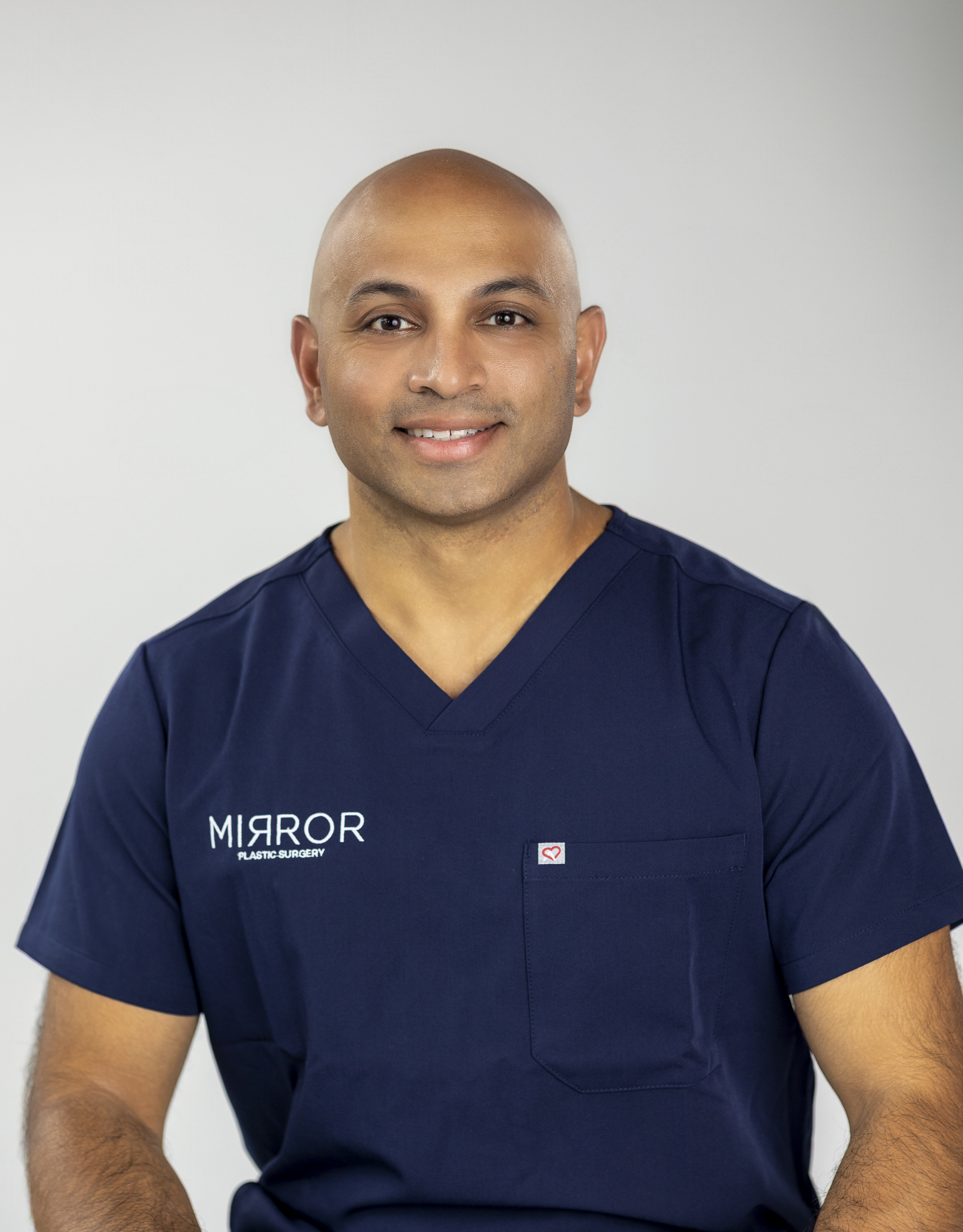
Dr. Akash sets the clinical standard at Mirror Plastic Surgery. His academic path began at MIT, where he studied neuroscience and nuclear engineering, followed by acceptance into the Harvard-MIT Division of Health Sciences and Technology program. He graduated from Harvard Medical School with Honors.
He completed a seven-year integrated plastic and reconstructive surgery residency at Johns Hopkins University, then an aesthetic surgery fellowship at Manhattan Eye, Ear and Throat Hospital (MEETH). This training provided deep experience in complex anatomy and advanced cosmetic techniques.
Dr. Akash is board certified by the American Board of Plastic Surgery and completed a Biodesign Innovation Fellowship at Stanford University. He serves on the Next Generation Editorial Board of the Aesthetic Surgery Journal, has testified before the FDA on breast implant safety, and has been named one of America’s Best Plastic Surgeons by Newsweek for two consecutive years, including 2025. Board certification also grants him hospital privileges, which provide a critical safety net in the rare event that a complication requires hospital-based care.
Essential Terminology for Safer Decisions
Patients benefit from knowing the core vocabulary of buttock enhancement before comparing procedures or providers. These terms help distinguish safe, evidence-based techniques from outdated or risky approaches.
- Brazilian Butt Lift (BBL): A fat-grafting procedure in which fat is harvested via liposuction from areas such as the abdomen, flanks, or back, then processed and injected into the buttocks to add volume and improve contour.
- Gluteal implants: Solid silicone devices placed surgically within or beneath the gluteal muscles to create lasting projection, often used when patients lack enough donor fat for a BBL.
- Ultrasound-guided subcutaneous injection: A technique that uses real-time ultrasound imaging during fat injection to confirm that the cannula tip stays above the gluteal muscle fascia in the subcutaneous layer.
- Subcutaneous plane: The fatty tissue layer located above the gluteal muscle fascia. Current evidence-based BBL protocols keep all injected fat in this layer.
- Volume limits: Published protocols typically report average grafted volumes of 300–600 cc per buttock for standard cases, with higher volumes staged carefully. Consensus recommendations from ASERF, ABCS, and WAGS identify volume restraint as a key safety mechanism in subcutaneous fat grafting.
- Biostimulatory fillers: Injectable products such as poly-L-lactic acid (Sculptra) and calcium hydroxylapatite (Radiesse) that stimulate collagen production to create gradual, moderate volume improvement without surgery or fat transfer.
- AlloClae: A proprietary adipose filler technology available at Mirror Plastic Surgery that supports structure and fat integration in a way that differs from traditional fat transfer or standard biostimulatory fillers.
7-Step Safety Checklist for Buttock Enhancement in 2026
Patients considering any buttock enhancement in 2026 can use the following checklist to evaluate providers and procedures against current safety standards.
- Board-certified plastic surgeon: Confirm that the surgeon is certified by the American Board of Plastic Surgery, not a general or cosmetic surgery board. ABPS-certified surgeons complete years of focused training in anatomy and surgical safety.
- Accredited surgical facility: Ensure the procedure occurs in an accredited operating facility with a board-certified physician anesthesiologist and established emergency protocols.
- Real-time ultrasound guidance: Florida Board of Medicine Rule 64B8-9.009 sets standards of care for office surgery procedures including liposuction but does not mandate continuous ultrasound guidance during gluteal fat grafting. Many safety-focused surgeons now use real-time ultrasound to help confirm that the cannula stays above the muscle fascia throughout injection.
- Subcutaneous-only fat placement: Cadaveric studies of BBL fatalities found fat deep in the gluteus maximus muscle or submuscular space in every fatal case, with no deaths when fat remained exclusively subcutaneous.
- Appropriate volume limits: Exceeding the capacity of the subcutaneous space forces deeper injection or higher pressure, both of which increase pulmonary fat embolism risk. Volume must match each patient’s anatomy.
- Stable BMI and weight: Weight should remain stable for at least six months before BBL surgery because major changes afterward can reduce or unevenly alter gluteal volume. Ideal candidates usually fall within a BMI range of 22 to 30.
- Strict recovery protocols: Commitment to sitting restrictions, compression garments, and activity limits directly affects graft survival and long-term shape. Patients need to understand and accept these requirements before scheduling surgery.
Official Guidelines and 2026 Safety Standards
The 2017 ASERF Task Force report identified a higher mortality rate for BBL compared with other cosmetic procedures, mainly from pulmonary fat embolism linked to intramuscular injection. This finding prompted major changes in technique and regulation.
A 2023 study of South Florida BBL deaths showed that all pulmonary fat embolism cases involved intramuscular fat grafting that violated subcutaneous-only protocols. This evidence ties safety directly to both technique and provider compliance.
Florida’s regulatory framework is among the most detailed in the United States. Rule 64B8-9.009 outlines office surgery standards, including liposuction, but leaves continuous ultrasound guidance as a best-practice recommendation rather than a legal requirement. The Multi-Society Task Force, ASPS, ASERF, ABCS, and WAGS now agree that subcutaneous-only placement with intraoperative ultrasound represents the non-negotiable standard for BBL safety in 2026.
Surgical Augmentation: BBL and Gluteal Implants
Surgical buttock enhancement primarily includes autologous fat grafting (BBL) and gluteal implants. Each option has specific candidacy criteria, functional effects, and durability profiles.
Fat grafting (BBL) serves as the preferred approach for most qualified patients. Autologous fat grafting offers high satisfaction and a low average complication rate when surgeons use subcutaneous-only injection. Candidates need enough donor fat, a BMI generally between 22 and 30, and at least six months of stable weight. Between 60% and 70% of transferred fat typically integrates permanently, while 30–40% is reabsorbed in the first three months as blood supply develops.1 Final shape usually settles by about six months.
Gluteal implants work well for patients who lack sufficient donor fat for a meaningful BBL. Implants create long-lasting enlargement that does not depend on fat survival but may eventually require replacement or revision and carry higher risks of infection, shifting, seroma, and capsular contracture. At Mirror Plastic Surgery, implant placement follows the same precise anatomical planning used for all procedures, with an emphasis on natural transitions and durable results.
Mirror Plastic Surgery also offers BBL with AlloClae, which provides additional structure and supports fat integration in a way that differs from standard fat transfer. This option suits select patients who meet specific anatomical and safety criteria.
Non-Surgical Buttock Enhancement Options
Non-surgical buttock enhancement suits patients seeking moderate improvement, those without enough donor fat for BBL, or those who prefer to avoid surgical recovery. The main categories are biostimulatory fillers and energy-based devices.
Biostimulatory fillers such as Sculptra (poly-L-lactic acid) and Radiesse (calcium hydroxylapatite) stimulate collagen production to create gradual volume. Sculptra BBL uses PLLA injections without fat harvesting, general anesthesia, or incisions, which eliminates fat-embolism risk and keeps complication rates low. Results build over 12–20 weeks and can last 2–3 years, with variation between patients.1 Radiesse provides immediate volume plus collagen stimulation, with results that often last 12–18 months.1 Dr. Akash serves on the advisory board for Merz Aesthetics, the maker of Radiesse, reflecting his experience with these technologies.
Energy-based devices such as Emsculpt Neo use high-intensity focused electromagnetic (HIFEM) contractions combined with radiofrequency heating to improve muscle tone and reduce localized fat. These treatments require periodic maintenance sessions and involve no downtime. They work best for patients who want more tone and subtle contour changes rather than large volume increases.
Non-surgical options involve minimal downtime but produce more modest changes than surgery. The right path depends on anatomy, goals, and health status, which are best assessed during an in-person consultation.
Recovery Protocols and Realistic Timelines
Recovery after surgical buttock enhancement strongly influences long-term results. Patients who follow post-operative instructions closely tend to achieve outcomes near the upper end of the fat retention range discussed earlier.1
Sitting restrictions: Most board-certified plastic surgeons avoid direct sitting on the buttocks for the first 2 to 3 weeks after BBL, then allow gradual, cushioned sitting from weeks 3 to 6, with a full return to normal sitting around week 8. Sustained pressure above about 30 mmHg during early healing can collapse recipient tissue and damage grafts, leading to fat necrosis or oil cysts.
Sleep position: Patients need to sleep on their stomach or side for several weeks after BBL to avoid pressure on transferred fat cells.
Return to activity: High-impact exercise such as running or heavy lifting usually resumes no sooner than two to three months after BBL. Light walking begins almost immediately to support circulation. By two to three months, most healing is complete and surviving fat cells function as a permanent part of the body.1
For gluteal implants, many patients with desk jobs return to work after about 2 to 3 weeks using a pillow or pressure-relief strategy, with full activity allowed around 6 to 8 weeks.
Common Misconceptions About Buttock Enhancement
Intramuscular injection is acceptable if the surgeon is experienced. This belief is incorrect. No reported fat embolism cases involve fat placed only in the subcutaneous plane, while complication rates rise sharply when any fat enters the muscle, reaching 28.7% compared with 4% for subcutaneous-only injection. Experience does not make intramuscular injection safe.
High-volume clinics are safer because they perform more procedures. The 2023 South Florida BBL mortality study showed that all pulmonary fat embolism deaths involved intramuscular fat grafting that violated subcutaneous-only protocols. High case numbers cannot offset unsafe technique.
Recovery is quick and normal activity resumes within days. Surgical BBL requires weeks of strict sitting restrictions and several months before full activity returns. Patients who underestimate recovery demands risk both their results and their safety.
Non-surgical fillers provide the same long-term results as fat grafting. Fillers do not create the same stable volumetric change in the buttocks as implants or fat grafting because the area requires large volumes and tolerates high mechanical load. Non-surgical options serve a different set of goals and patient profiles.
Book a consultation with Dr. Akash to review which approach best matches your anatomy, goals, and lifestyle, without pressure or one-size-fits-all recommendations.
Frequently Asked Questions
Who is not a good candidate for a Brazilian Butt Lift?
Patients with very low BMI often lack enough donor fat for a meaningful BBL result, while patients with significantly elevated BMI face higher anesthetic and surgical risks. Anyone with major weight swings in the past six months is usually advised to reach a stable weight first because changes afterward can distort gluteal volume. Certain bleeding disorders, active infections, or uncontrolled medical conditions can also disqualify patients. A thorough in-person evaluation remains the only reliable way to determine candidacy.
Why does board certification by the American Board of Plastic Surgery matter for buttock enhancement?
Board certification by the American Board of Plastic Surgery (ABPS) confirms that a surgeon has completed an accredited plastic surgery residency, passed demanding written and oral exams, and demonstrated competence across plastic and reconstructive surgery. This training includes the detailed anatomical knowledge needed for safe gluteal fat grafting. Providers without ABPS certification, including some cosmetic surgery board diplomates, may not have equivalent preparation in anatomy or complication management. ABPS certification also supports hospital privileges, which provide an added safety layer if a rare complication requires hospital care.
How long do I need to avoid sitting after a BBL, and why does it matter?
The sitting restriction generally follows the timeline described in the Recovery Protocols section, with the first two to three weeks being the most critical for graft survival. Transferred fat starts out without its own blood supply and needs roughly seven to fourteen days to form new capillaries. Sustained pressure during this window reduces blood flow, increases the risk of fat necrosis and oil cysts, and lowers long-term volume retention. Patients who respect these limits usually see results near the upper end of the previously mentioned retention range.1
What is the difference between Sculptra and a surgical BBL in terms of results and maintenance?
Sculptra uses poly-L-lactic acid to stimulate collagen, creating gradual, moderate volume over 12 to 20 weeks across two to three initial sessions. Results can last 2–3 years and often require maintenance. A surgical BBL transfers living fat that, once vascularized, becomes a lasting part of the body, with about 60–70% of the injected volume typically retained long term and no routine maintenance injections.1 Sculptra suits patients who want subtle enhancement, have limited donor fat, or wish to avoid surgery. Surgical BBL suits patients seeking more dramatic, durable volume who meet safety criteria. The better choice depends on individual anatomy and goals.
Does Mirror Plastic Surgery perform BBL with ultrasound guidance?
Mirror Plastic Surgery uses advanced in-office ultrasound during pre-operative assessment and incorporates ultrasound guidance into surgical planning in line with Florida Board of Medicine requirements and Multi-Society Task Force recommendations. Dr. Akash’s training at Johns Hopkins and MEETH, along with his advisory roles with companies developing new aesthetic technologies, helps keep every procedure aligned with current evidence-based standards. The concierge model, with only one to two surgeries per day, allows the clinical team to focus fully on each patient’s safety and outcome.
Conclusion: Choosing Safe, Natural, Long-Lasting Results
Buttock enhancement in 2026 can be safer and more effective than ever when performed by properly credentialed surgeons using subcutaneous-only fat placement with real-time ultrasound in accredited facilities. This shift in technique has reduced mortality risk by more than 80% compared with older intramuscular methods.1 Non-surgical options expand choices for patients who are not surgical candidates or prefer minimal downtime. The decision between surgical and non-surgical paths, and between fat grafting and implants, requires an individualized anatomical evaluation rather than a generic recommendation.
Patients in the Tampa Bay and St. Petersburg area can access a practice designed around careful, anatomy-driven evaluation. Mirror Plastic Surgery’s commitment to safety first, function second, and aesthetics third serves as the clinical framework for every consultation and procedure.
Book a consultation with Dr. Akash at Mirror Plastic Surgery, located at 780 4th Ave S, St. Petersburg, FL 33701, to begin a personalized, evidence-based review of your buttock enhancement options.
1 Results may vary from person to person. Editorial content, before and after images, and patient testimonials do not constitute a guarantee of specific results.