
Written by: Dr. Akash Chandawarkar, Board Certified Plastic Surgeon, Mirror Plastic Surgery | Last updated: July 19, 2026
Key Takeaways
- Non-surgical cosmetic treatments work on specific anatomical layers, so matching each modality to the right layer drives results.
- Results last different lengths of time: neuromodulators 3–6 months, hyaluronic acid fillers 6–18 months, biostimulatory fillers up to 2 years, and HIFU or RF microneedling about 12–18 months with maintenance.1
- Dynamic wrinkles respond best to neuromodulators, volume loss to fillers or biostimulators, laxity to HIFU or RF microneedling, texture to RF microneedling, and submental fullness to Kybella or energy-based fat reduction.1
- Physician-led anatomical assessment reduces mismatched treatments and improves safety, outcomes, and long-term planning compared with high-volume med-spa models.
- Schedule your personalized consultation at Mirror Plastic Surgery for a physician-led evaluation and treatment plan tailored to your anatomy and goals.
Non-Surgical Facial Treatments and Typical Longevity
Non-surgical cosmetic treatments include injectables, energy-based devices, and topical adjuncts that create aesthetic improvement without general anesthesia or surgical incisions. Minimally invasive procedures represented the majority of total procedural volume in 2024, and over 28 million minimally invasive cosmetic treatments were performed in the U.S. in 2024 alone.
Longevity varies substantially by modality:
- Neuromodulators: 3–6 months
- Hyaluronic acid dermal fillers: 6–18 months
- Biostimulatory fillers (Sculptra, Radiesse): up to 2 years or longer
- Radiofrequency microneedling (Morpheus8): 12–18 months with maintenance
- High-Intensity Focused Ultrasound (HIFU/Ultherapy): 12–18 months per session
Most non-surgical procedures last from several months to two years, while surgical procedures often last 5 to 20 years. This spectrum sets realistic expectations for long-term planning.
Dynamic Lines and Expression Wrinkles
Dynamic lines, including crow’s feet, forehead creases, and glabellar frown lines, develop from repeated muscle contraction. Neuromodulators such as Botox and Dysport remain the standard of care and typically last 3 to 6 months when used to treat dynamic wrinkles.1 Botulinum toxin treatments consistently show high patient satisfaction.
Daxxify, a longer-acting neuromodulator, is used strategically around the brow, eye area, and jawline to reduce maintenance frequency and complement other non-surgical treatments. For patients who find quarterly appointments disruptive, Daxxify reduces visit frequency while maintaining results.
Precise dosing and injection technique by a provider with expert knowledge of facial anatomy is required to minimize risks, including brow ptosis and asymmetry. Anatomical expertise, not product choice alone, drives outcome quality.
Volume Loss, Fillers, and Facial Contouring
Midface volume loss, hollowing under the eyes, and temple deflation are structural changes that require structural solutions. Two categories of injectables address these concerns with different mechanisms and timelines.
| Attribute | Biostimulatory Fillers (Sculptra / Radiesse) | Hyaluronic Acid Fillers |
|---|---|---|
| Mechanism | Stimulate collagen production gradually over weeks to months | Restore lost volume and remodel contours immediately |
| Onset | Peak results at 2–3 months1 | Immediate to a few days |
| Longevity | Sculptra up to 2 years; Radiesse around 1 year or longer | 6–18 months |
| Reversibility | Not reversible | Reversible with hyaluronidase |
| Typical Sessions | Multiple initial sessions; gradual improvement | Often single session per area |
| Patient Satisfaction | Exceeds 90% when performed by experienced injectors1 | 88–92% |
A 2024 peer-reviewed systematic review in Aesthetic Plastic Surgery found that studies on combining biostimulators with botulinum toxin, dermal fillers, and energy-based devices remain sparse and methodologically varied, so definitive recommendations on efficacy or safety are not yet possible. RealSelf data shows increased interest in Sculptra, reflecting a broader patient shift toward regenerative, longer-lasting approaches.
Dr. Akash serves on the advisory board for Merz Aesthetics, the maker of Radiesse, which keeps him closely connected to emerging clinical data and evolving injection protocols for biostimulatory fillers. This perspective helps bridge current research gaps while the evidence base continues to grow.
Book a consultation with Dr. Akash to determine whether biostimulatory fillers, hyaluronic acid fillers, or a combination approach best matches your anatomy and goals.
Skin Laxity, HIFU, and RF Microneedling
Mild to moderate skin laxity, including jowling, brow descent, and neck looseness, responds well to energy-based devices that stimulate collagen remodeling at depth. Two modalities dominate this category.
| Attribute | HIFU / Ultherapy | RF Microneedling (Morpheus8) |
|---|---|---|
| Target Depth | 1.5–4.5 mm, including SMAS layer | 0.2–7.0 mm, mid to deep dermis |
| Sessions Required | Typically 1 session annually | 3–4 sessions spaced 4 weeks apart |
| Downtime | Minimal, with mild erythema resolving in 2–24 hours | 2–3 days |
| Results Timeline | Peak at 3–6 months1 | Visible improvement building over 6–8 weeks per session1 |
| Longevity | 12–18 months | 12–18 months with proper maintenance |
| Best Suited For | Mild to moderate laxity; jawline, neck, brow, décolletage; all skin types | Acne scarring, skin texture, pores, mild to moderate laxity; safer for darker skin tones |
Ideal candidates for non-invasive skin tightening treatments typically have mild to moderate skin looseness; patients with severe laxity may achieve better results through surgical procedures. An honest anatomical assessment at the outset helps avoid underpowered treatments for advanced laxity.
Skin Texture, Sun Damage, and Pores
Florida’s sun exposure accelerates photoaging, which produces uneven pigmentation, enlarged pores, and textural irregularities that volume restoration alone cannot correct. Radiofrequency microneedling is associated with high patient satisfaction rates and a favorable safety profile. This safety advantage reflects its low risk of scarring or permanent pigmentary changes, and reported adverse events are usually mild and transient, most commonly erythema and edema that resolve within hours to a few days.
RF microneedling suits skin-of-color patients particularly well because it is considered one of the safer energy-based options for darker skin types (Fitzpatrick IV–VI).
Collagen remodeling from a full series continues for months after the final session, so visible improvement accumulates beyond the treatment window. Many patients now pair RF microneedling with complementary resurfacing approaches, such as chemical peels or laser treatments, to support longer-lasting rejuvenation.
Submental Fullness and Jawline Definition
Submental fullness, often called a double chin, and loss of jawline definition are common concerns for adults in their 40s and 50s. Deoxycholic acid (Kybella) permanently destroys fat cells in the submental area, though it carries risks of temporary numbness, redness, tingling, and soreness, with paradoxical adipose hyperplasia as a rare complication when protocols are not followed. Most patients require multiple sessions spaced at least one month apart.
Energy-based alternatives, including HIFU at the 4.5–13 mm depth range, address submental fat and skin laxity at the same time. HIFU can reduce submental fullness while also tightening overlying tissue. Candidacy depends on the relative degree of fat versus laxity, so anatomical assessment always comes before any device or injection recommendation at Mirror Plastic Surgery.
How a 60-Minute Anatomical Consultation Shapes Your Plan
The safety-function-aesthetics hierarchy that guides every Mirror Plastic Surgery consultation is a clinical framework, not a slogan. Safety comes first, with contraindications, anatomical risk zones, and complication management pathways defined before any treatment is discussed. Function comes next, with careful evaluation of whether the proposed treatment preserves or restores normal tissue architecture. Aesthetics follow as the natural outcome of safe, functional planning.
A 60-minute consultation at Mirror Plastic Surgery identifies which of the five concern categories, including dynamic lines, volume loss, laxity, texture, or submental fullness, is driving your appearance changes. The visit also clarifies whether a single modality or a stacked protocol fits best and whether your anatomy and health history support treatment at all. This approach avoids the common pitfall in high-volume settings, where treatments are often selected by availability instead of indication.
Book a consultation with Dr. Akash and receive a full anatomical assessment before any treatment is recommended.
Common Misconceptions About Non-Surgical Treatments
Two recurring misconceptions often push patients toward disappointing or short-lived outcomes.
The first misconception is that all non-surgical treatments are equivalent. They differ significantly. HIFU targets the SMAS layer, which is the same fibrous tissue plane addressed in a surgical facelift, while RF microneedling remodels the mid-to-deep dermis. Neuromodulators relax muscle, and biostimulators rebuild collagen. Using a modality that cannot address the anatomical cause of a concern produces weak results, regardless of brand recognition.
The second misconception is that high treatment volume automatically signals expertise. A 5-year institutional review found that revision rates in injectable clinics decreased with increasing provider experience, which reflects accumulated anatomical knowledge and refined assessment skills rather than procedure counts alone. Volume of procedures is not the same as depth of anatomical knowledge or quality of individual patient assessment, so concierge-model practices that limit daily patient load are structured to prioritize careful evaluation over speed.
Why Board-Certified Plastic Surgeon Oversight Matters
The single most important factor for safety in non-surgical facial procedures is selecting a board-certified plastic surgeon, dermatologist, or physician with specialized aesthetic training who operates in an accredited medical facility.
Dr. Akash, recognized by Newsweek as one of America’s Best Plastic Surgeons for two consecutive years including 2025, brings a training background that is rare in any market. His medical education began at MIT in neuroscience and nuclear engineering, continued through the Harvard-MIT Division of Health Sciences and Technology, and culminated in an MD from Harvard Medical School with Honors. His surgical training included a seven-year integrated plastic and reconstructive surgery residency at Johns Hopkins University, followed by an aesthetic surgery fellowship at the Manhattan Eye, Ear and Throat Hospital (MEETH), one of the most competitive programs in the country. He also completed the Stanford University Biodesign Innovation Fellowship, which trained him to evaluate emerging technologies with the same rigor applied to clinical outcomes.
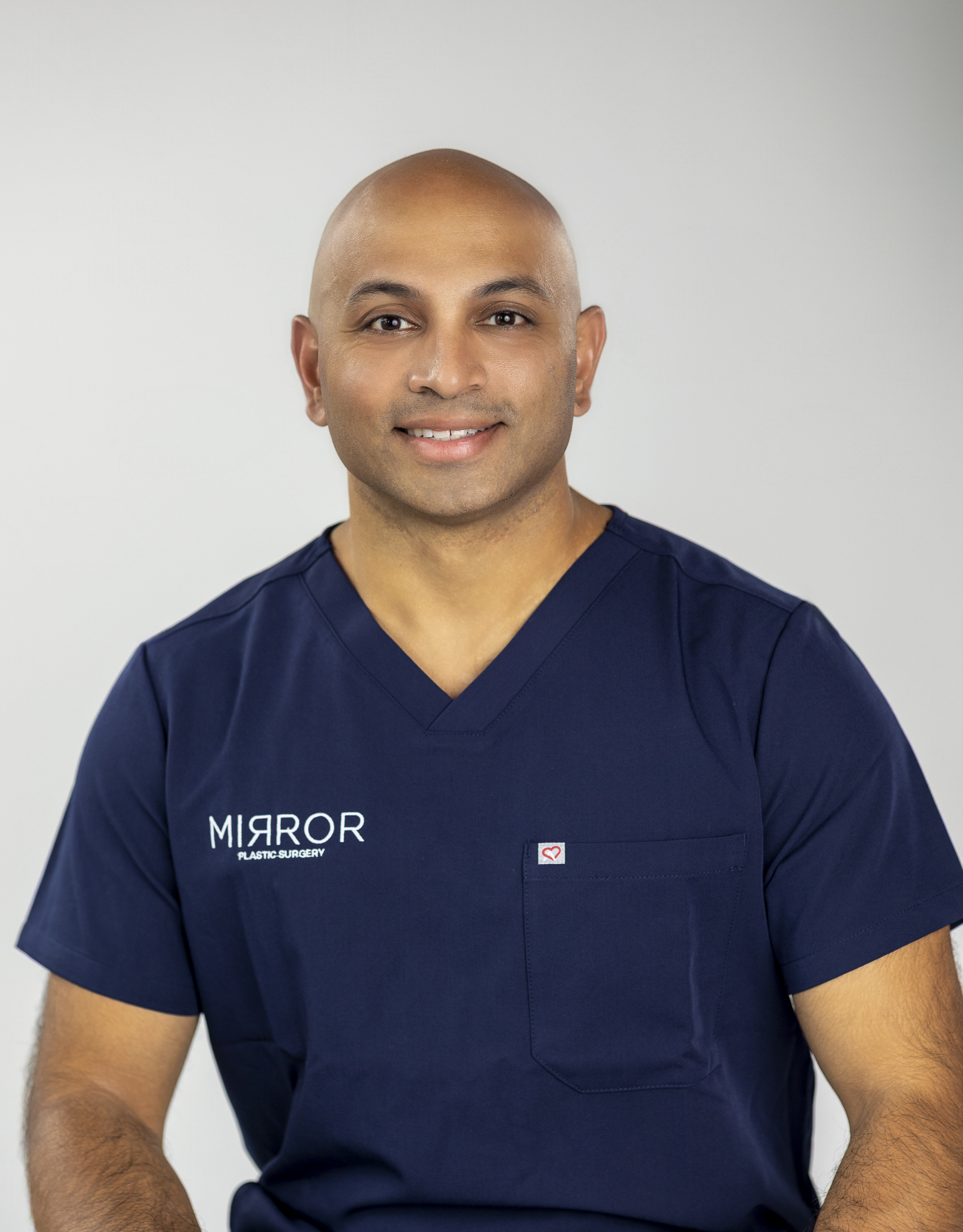
Dr. Akash serves on advisory boards for Merz Aesthetics (Radiesse), Motiva, Tiger Aesthetics, and Cypris Medical, which provides early access to clinical evidence across multiple device and injectable platforms. These roles support evidence-based, supplier-neutral treatment planning. His board certification by the American Board of Plastic Surgery also means that, in the rare event of a complication, he holds privileged hospital access that most non-physician injectors do not.
Book a consultation with Dr. Akash to experience physician-led, anatomically grounded non-surgical care.
Frequently Asked Questions
Am I a good candidate for non-surgical facial rejuvenation?
Most healthy adults with mild to moderate skin laxity, volume loss, dynamic wrinkles, or textural concerns qualify for at least one non-surgical modality. Patients with severe skin laxity, such as significant jowling, heavy neck skin, or pronounced structural descent, often achieve better and more durable results through surgical consultation rather than energy-based devices alone. Contraindications vary by treatment and include active skin infections, autoimmune conditions affecting collagen, pregnancy, and recent use of certain medications. A thorough health history review during consultation clarifies candidacy.
How do I know which treatment is right for my concern?
The right treatment depends on which anatomical layer drives the concern. Dynamic wrinkles from muscle movement respond to neuromodulators. Volume deflation responds to fillers or biostimulators. Structural laxity responds to HIFU or RF microneedling. Textural irregularities respond to RF microneedling or resurfacing. Submental fullness responds to deoxycholic acid or energy-based fat reduction.
Many patients present with overlapping concerns that benefit from a stacked protocol, but the sequencing and combination require anatomical precision to avoid interactions and protect longevity. A physician-led consultation provides that level of planning.
What is the typical recovery time for non-surgical treatments?
Recovery varies by modality. Neuromodulators and most filler treatments involve no meaningful social downtime, and minor bruising or swelling usually resolves within a few days. HIFU produces mild erythema that typically resolves within 24 hours. RF microneedling involves 2–3 days of redness and pinpoint marks, and most patients return to normal activities within that window. Deoxycholic acid injections for submental fullness may cause swelling and tenderness lasting up to two weeks. Combining energy-based treatments in a single session can extend recovery slightly, so your specific protocol and skin type guide realistic downtime expectations.
How long do results last, and when will I need maintenance?
Longevity depends on the modality and on individual factors such as collagen turnover, sun exposure, and lifestyle. Neuromodulators typically require retreatment every 3–6 months, while longer-acting options like Daxxify extend this interval. Hyaluronic acid fillers last 6–18 months. Biostimulatory fillers such as Sculptra can last up to two years. HIFU and RF microneedling results often persist for 12–18 months with good skincare, after which a single maintenance session is usually sufficient. A long-term treatment plan established at the outset, rather than reactive one-off procedures, supports more consistent and cost-effective outcomes.
Is it safe to combine multiple non-surgical treatments in one visit?
Combination protocols are increasingly common and can improve outcomes when sequenced correctly. Not all combinations belong in the same session, however. Energy-based devices, for example, are generally scheduled at least four weeks after biostimulatory filler injections to allow initial collagen synthesis and reduce tissue interactions. Neuromodulators and fillers are frequently combined safely in a single visit.
Physician oversight is the key variable. A provider with deep anatomical knowledge and familiarity with each modality’s mechanism can design a protocol that maximizes benefit and minimizes risk. Combining treatments without this framework increases the chance of adverse interactions or weak results.
Conclusion
Non-surgical facial rejuvenation in St. Petersburg and Tampa offers meaningful, evidence-based options for adults seeking natural, lasting improvement without surgery. The treatments that deliver the strongest outcomes are not the most aggressively marketed ones but the ones selected through a rigorous anatomical assessment that prioritizes safety first, function second, and aesthetics third.
Mirror Plastic Surgery, located at 780 4th Ave S, St. Petersburg, FL 33701, is built on this framework. Every non-surgical consultation with Dr. Akash is a 60-minute, top-to-bottom evaluation designed to match treatment to anatomy, not to a menu or a quota.
Book a consultation with Dr. Akash to receive a personalized, physician-led treatment plan grounded in the latest clinical evidence.
1 Results may vary from person to person. Editorial content, before and after images, and patient testimonials do not constitute a guarantee of specific results.