
Written by: Dr. Akash Chandawarkar, Board Certified Plastic Surgeon, Mirror Plastic Surgery
Key Takeaways for Natural Hair Restoration
- Natural hair restoration can stimulate follicles and reduce DHT when started early, before follicles become fully dormant.1
- Rosemary oil, pumpkin seed oil, and LLLT have the strongest evidence among non-pharmaceutical options, with visible results typically requiring 3–6 months of consistent use.1
- Scalp massage offers limited benefit as an adjunct, while oral nutraceuticals only help when addressing a true deficiency.
- Secretome conditioned-media therapy is an emerging physician-administered option for patients who have maximized at-home treatments for six or more months.
- Determine the best evidence-based plan for your stage of thinning at Mirror Plastic Surgery.
Natural Restoration Potential for Thinning Hair
Therapies for pattern hair loss can stop further loss and regrow thinned hairs, but once hair is completely lost from a bald scalp, no medical treatments are effective. Follicle status determines what is still possible. Hair follicles that stop producing hair become dormant after roughly two years, after which no natural remedy can reactivate them. Early intervention matters for adults with gradual pattern thinning while follicles remain miniaturized rather than fully dormant.
Androgenetic alopecia affects approximately 50% of women and up to 80% of men, with female pattern hair loss tending to progress over time at an unpredictable rate. Adults in their 30s and 40s who notice gradual thinning still have a window for meaningful natural intervention. That window narrows as follicles miniaturize further.
Top Natural Remedies for Hair Thinning in 2026
Most natural treatments for male pattern hair loss require 3–6 months of consistent use before visible results appear, with reduced shedding typically noticed first around 6–8 weeks, followed by improved thickness and new growth at 3–6 months.1 Women with gradual pattern thinning follow a similar timeline. The five treatments with the strongest current evidence are rosemary oil, pumpkin seed oil, scalp massage, LLLT, and Secretome conditioned media, and each acts through a distinct mechanism.
Large, well-designed trials of natural hair loss remedies are rare because they are expensive and there is little commercial incentive to fund them for products that cannot be patented. Interpreting the available data works best when you pay attention to study design, sample size, and whether outcomes were measured objectively or by self-report.
Rosemary Oil vs. Pumpkin Seed Oil for Hair Loss
Rosemary oil and pumpkin seed oil both target the 5α-reductase pathway but differ in delivery route and strength of evidence. Across current trials, rosemary oil performs comparably to 2% minoxidil in head-to-head studies, while pumpkin seed oil shows meaningful benefit yet remains inferior to 5% minoxidil. The 2015 Panahi randomized comparative trial remains the best-documented human clinical study for rosemary oil in androgenetic alopecia, comparing rosemary oil with 2% minoxidil over 6 months in 100 adults with mild to moderate pattern hair loss. Both groups significantly increased hair count from baseline with no statistically significant difference between them. A more recent 2025 Cureus RCT by Patel et al. (n=90, 90 days) found the rosemary-lavender arm produced +57.73% in hair growth rate versus control, though that trial did not include a minoxidil comparison arm.
For pumpkin seed oil, the anchor study is oral rather than topical. Cho et al. 2014 conducted a randomized, double-blind, placebo-controlled trial with 76 men who had mild-to-moderate androgenetic alopecia. The pumpkin seed oil group showed a +40% increase in scalp hair count at 24 weeks versus +10% in the placebo group (p < 0.001).1 That trial established oral efficacy, but many patients prefer at-home topical use. When tested topically against 5% minoxidil in women, the Ibrahim et al. 2021 trial of 60 women with FPHL found that topical pumpkin seed oil produced measurable improvements in hair parameters over 3 months, but 5% minoxidil remained superior overall, positioning pumpkin seed oil as a supportive rather than equivalent option.
No head-to-head controlled trial directly compares pumpkin seed oil with saw palmetto for androgenetic alopecia. Saw palmetto has its own evidence base. A 2025 RCT published in the Journal of Cosmetic Dermatology (Ablon et al., PMC12665258) using a proprietary bioactive fatty acid extract from saw palmetto reported statistically significant improvements in hair density, hair shaft diameter, and hair growth rate at both 90 and 180 days in adults with self-perceived hair thinning.
Scalp Massage and LLLT Evidence
Scalp massage offers the weakest evidence of the five treatments reviewed here. Evidence for scalp massage in pattern hair loss is weak and considerably less convincing than the evidence supporting low-level laser therapy, and mechanical scalp massage is best viewed as an adjunct rather than a primary regrowth treatment. A 2016 pilot study involving nine healthy Japanese men who used a mechanical scalp massage device for four minutes daily over 24 weeks was small, uncontrolled, and device-specific.
LLLT occupies a substantially stronger evidentiary position and delivers more consistent density gains. The Perez et al. 2025 meta-analysis of 38 studies and 3,098 patients found low-level light therapy produced a statistically significant increase in hair density for androgenetic alopecia versus sham devices. A 2026 literature review by Lee et al. analyzing 43 studies published 2023–2025 found that low-level laser therapy increased hair density by 15–40% in androgenetic alopecia, with wavelengths of 630–680 nm demonstrating optimal efficacy.1
The standard protocol for LLLT is now well-defined. Typical treatment uses 650–660 nm red light delivered at approximately 2–4 J/cm² per session via 15–25 minute exposures two to three times per week, with the 2014 Jimenez et al. multicenter RCT demonstrating a mean increase of +19 terminal hairs per cm² after 26 weeks while the control group declined.1 A 2026 prospective trial by Shin et al. found that LLLT produced statistically significant hair density increases from the 4-month mark onward, with cumulative improvements continuing through 12 months of thrice-weekly treatment and no plateau observed.1 Together, these data suggest that LLLT can provide steady, measurable gains for committed users.
Nutritional Deficiencies and Hair Growth
Vitamin B12, biotin, collagen, or any vitamin supplement only help with hair growth when the patient is deficient in that vitamin; there is no research showing that taking extra vitamins improves hair growth in people who already have adequate levels. Correcting a genuine deficiency in iron, zinc, vitamin D, or B12 can meaningfully reduce shedding. Supplementing above normal levels does not accelerate regrowth and, in the case of vitamin A or selenium, high doses can worsen shedding.
Oral nutraceuticals formulated for hair loss provide modest aggregate benefit. A 2026 systematic review and meta-analysis of 14 studies with 967 adults found that commercial oral nutraceuticals produced statistically significant but modest improvements versus placebo in telogen hair density (MD −5.91 hairs/cm²) and anagen hair density (MD 10.48 hairs/cm²), while total hair count showed no significant difference (p=0.06).1 The review concluded these supplements are best considered adjunctive therapy rather than a primary or standalone solution.
When to Consider Advanced Natural Options Like Secretome
At-home treatments such as rosemary oil, pumpkin seed oil, and LLLT reduce DHT or stimulate follicles with light energy, but they rely on consistent use and follicles that still respond to those mechanisms. When these approaches plateau after six months of correct use, a different pathway becomes relevant. Patients who have used topical oils, oral supplements, and LLLT consistently for six or more months with incomplete results are appropriate candidates for advanced conditioned-media therapy. A 2026 systematic review by Behrangi et al. found that conditioned media therapies produced improvements in hair density and thickness.1
Secretome, the bioactive secretion of cultured mesenchymal stem cells, works through paracrine signaling rather than live cell delivery. Conditioned media therapies act primarily through paracrine signaling by delivering bioactive factors secreted by cultured mesenchymal stem cells, while extracellular vesicles function as intercellular messengers carrying proteins, lipids, and nucleic acids that influence hair follicle signaling pathways. The Behrangi et al. 2026 review reported only mild and transient adverse events such as injection-site pain, erythema, or bruising, with no major complications.
Mirror Plastic Surgery offers Secretome therapy using Acorn Biolabs conditioned media, administered as an injection or topical by Dr. Akash within a physician-supervised protocol. This positions Secretome as the next evidence-based step for patients who have maximized at-home options, not a replacement for them.
Determine whether Secretome is appropriate for your stage of thinning and follicle status.
Realistic Expectations and Red Flags
A reasonable evaluation window for natural hair restoration regimens is four to six months of consistent use before judging results, with monthly photos under consistent lighting recommended to track subtle changes objectively. Discontinuing a DHT-blocking treatment allows DHT to resume its effect on follicles, with any gains typically reversing within several months.
Red flags that warrant prompt physician evaluation rather than continued at-home management include:
- Rapid or patchy loss rather than gradual diffuse thinning
- Scalp inflammation, scaling, or tenderness
- Loss at the temples and crown simultaneously before age 30
- No measurable response after six months of consistent, correctly applied treatment
- Shedding that accelerates rather than stabilizes
Success rates really depend on the type of hair loss and on your definition of success, which underscores the value of a physician-led assessment before committing to any protocol. That assessment begins with understanding who is evaluating your case and how they separate evidence from marketing.
About Dr. Akash and Mirror Plastic Surgery
Dr. Akash, named to Newsweek’s America’s Best Plastic Surgeons list for two consecutive years, 2024 and 2025, brings a rigorous scientific foundation to hair restoration. His medical training began at MIT in neuroscience and nuclear engineering, continued through the Harvard-MIT Division of Health Sciences and Technology, and culminated in a Harvard Medical School degree with Honors. His surgical training was completed during a seven-year integrated plastic and reconstructive surgery residency at Johns Hopkins University, followed by an aesthetic surgery fellowship at the Manhattan Eye, Ear and Throat Hospital (MEETH). He additionally completed the Stanford University Biodesign Innovation Fellowship, which trained him to evaluate emerging technologies against clinical evidence rather than marketing claims.
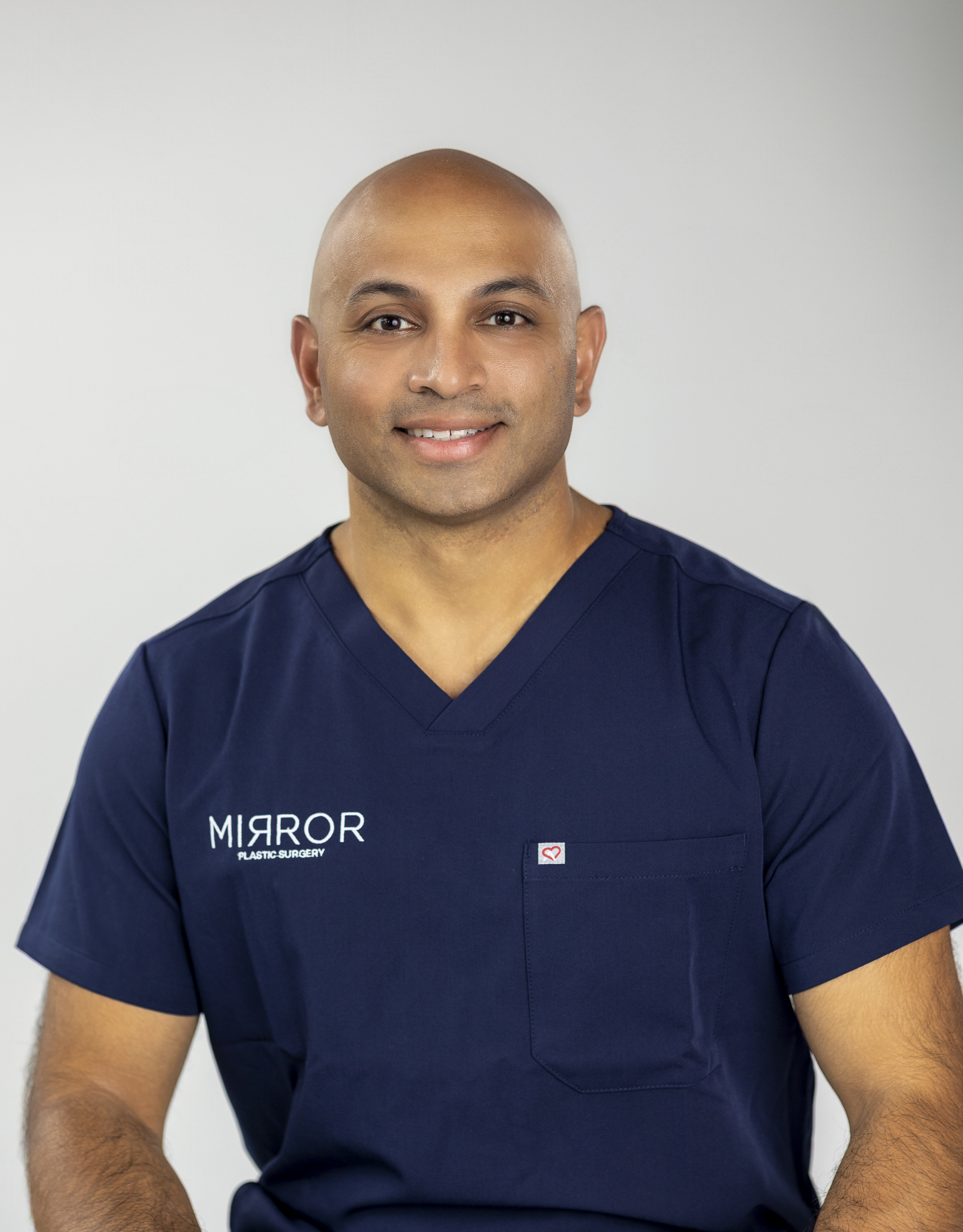
Mirror Plastic Surgery operates on a concierge model that limits the practice to one to two procedures per day, with hour-long consultations that allow a full top-to-bottom assessment. The practice is supplier-neutral, meaning treatment recommendations are driven by evidence and patient anatomy, not vendor relationships. Dr. Akash’s guiding framework, safety first, function second, aesthetics third, applies equally to hair restoration and surgical procedures. The right treatment matches the underlying mechanism, the patient’s follicle status, and a realistic timeline.
Physician’s Recommendation for Tampa Bay Patients
For Tampa Bay adults aged 30–55 with gradual pattern thinning, the evidence supports a staged approach. Topical rosemary oil and oral pumpkin seed oil are reasonable first-line natural options with the strongest at-home evidence bases. LLLT adds a meaningfully stronger effect size and is the only natural modality with FDA-cleared devices and multiple replicated RCTs. Scalp massage is a low-risk adjunct but not a primary treatment. Oral nutraceuticals address deficiency-driven shedding but do not substitute for mechanism-targeted therapy.
For patients who reach this six-month mark without satisfactory results, Secretome conditioned-media therapy offers a physician-administered option with an emerging but growing evidence base. The 2026 Behrangi et al. systematic review supports a favorable safety profile. The earlier intervention begins, the greater the proportion of follicles that remain miniaturized rather than dormant and therefore responsive to treatment.
Frequently Asked Questions
Is Secretome therapy safe, and what side effects should I expect?
Secretome conditioned media therapy has demonstrated a favorable safety profile in clinical studies. As noted in the Behrangi review, adverse events are limited to mild injection-site reactions that resolve without intervention. At Mirror Plastic Surgery, Secretome is administered by Dr. Akash under a physician-supervised protocol, which includes a full pre-treatment assessment to confirm candidacy and rule out contraindications such as active scalp infection or scarring alopecia.
How long does it take to see results from natural hair restoration treatments?
Timelines vary by treatment, but most follow a similar pattern. Reduced shedding is typically the first sign of response, often appearing at 6–8 weeks with DHT-targeting options like rosemary oil or pumpkin seed oil. Measurable density improvements generally require 3–6 months of consistent use, with full results at 12 months. LLLT follows a similar curve, with shedding reduction at 8–12 weeks, visible thickening at 3–6 months, and continued gains through 12 months in responders. Secretome shows early responses within 1–3 months in some patients, with full effect at 6–12 months. Monthly photographs under consistent lighting remain the most reliable way to track subtle changes objectively and to recognize regression if treatment stops.
Who is a good candidate for Secretome therapy at Mirror Plastic Surgery?
The ideal candidate is an adult with gradual androgenetic pattern thinning, such as diffuse crown or midscalp thinning in women or vertex and temporal recession in men, who still has miniaturized follicles rather than fully dormant ones. Patients who have used at-home options such as topical oils, LLLT, or oral supplements consistently for at least six months without achieving satisfactory results are the most appropriate candidates for escalation to Secretome. Patients with active scalp infections, inflammatory scarring alopecias, or complete follicle loss in the treatment area are not candidates. A one-hour consultation with Dr. Akash includes a full scalp assessment to determine candidacy before any treatment is recommended.
Can I combine multiple natural treatments at the same time?
Combining treatments that act through different mechanisms is generally supported by the evidence and is common in physician-supervised protocols. Topical rosemary oil, which inhibits 5α-reductase, can be used alongside LLLT, which relies on photobiomodulation, without interaction, and oral pumpkin seed oil adds a systemic DHT-reducing effect. Scalp massage is a low-risk adjunct to any of these. When Secretome is added, it works through paracrine signaling that is mechanistically distinct from all at-home options, which makes combination use rational. However, adding multiple treatments simultaneously makes it difficult to identify which is producing benefit or causing any adverse response. Dr. Akash’s approach is to assess the patient’s current regimen, identify gaps, and recommend additions in a structured sequence rather than an undifferentiated stack.
When should I see a specialist instead of continuing at-home treatment?
Prompt physician evaluation is warranted if thinning is rapid, patchy, or asymmetric rather than gradual and diffuse, if the scalp shows inflammation, scaling, tenderness, or visible scarring, if shedding accelerates rather than stabilizes after starting a new regimen, or if there has been no measurable response after six months of correctly and consistently applied treatment. These patterns may indicate a diagnosis other than androgenetic alopecia, such as alopecia areata, lichen planopilaris, or telogen effluvium from a systemic cause, that requires a different treatment approach entirely. Early specialist evaluation preserves the most follicles and the widest range of treatment options.
Summary of Natural Hair Restoration Strategy
Natural hair restoration for gradual pattern thinning is supported by a growing but still maturing evidence base. Rosemary oil and pumpkin seed oil offer the strongest at-home data for DHT-mediated thinning. LLLT provides the most replicated evidence among non-pharmaceutical options, with FDA-cleared devices and consistent density gains across multiple meta-analyses. Scalp massage contributes modestly as an adjunct. Secretome conditioned-media therapy represents the next step for patients who have maximized at-home options, with physician-administered delivery and a mechanism, paracrine signaling from mesenchymal stem cell secretions, that is distinct from all topical approaches. Across all modalities, early intervention, consistent use, and realistic timelines shape outcomes.
1 Results may vary from person to person. Editorial content, before and after images, and patient testimonials do not constitute a guarantee of specific results.
