Written by: Dr. Akash Chandawarkar, Board Certified Plastic Surgeon, Mirror Plastic Surgery | Last updated: July 18, 2026
Key Takeaways for Your BBL Recovery
- BBL recovery includes 6–8 weeks of strict restrictions and 3–6 months before final results, with no-sitting rules protecting fat survival.1
- The first 1–3 days bring the highest pain and swelling, so you need 24/7 compression, stomach or side sleeping, and early lymphatic massage.
- Mobility improves between weeks 2–6, with BBL pillow sitting, limited activity, and gradual clearance for light exercise while heavy lifting stays restricted.
- Most patients resume full sitting by weeks 6–8, and long-term results depend on stable weight, nicotine avoidance, and precise surgical technique.1
- Schedule your personalized BBL recovery plan with Dr. Akash at Mirror Plastic Surgery to support a safe, predictable outcome.
1. Days 1–3: Acute Healing Phase
Pain levels reach 5–7 out of 10 in the first 48 hours after BBL, with swelling peaking on days 3–5, driven mainly by cannulation trauma and swelling at the liposuction donor sites, not the buttocks. Most patients describe the feeling as an intense deep-tissue muscular bruise with tightness.
Key protocols during this phase all protect the new fat and keep blood moving. Avoid sitting on the buttocks under any circumstances, with only brief toilet use allowed. Sleep on your stomach or side with pillows for alignment so you avoid pressure on the grafts. Wear the compression garment around the clock, removing it only to shower after 48 hours. Expect some fluid drainage from incision sites during these early days. Take gentle 5–10 minute walks several times daily to promote circulation and reduce DVT risk. Lymphatic drainage massage usually starts 2–3 days after surgery and continues 2–3 times per week for about four weeks.
2. Week 1: Strict Protection Phase
Pain stays moderate as swelling peaks during the first week, and the no-sitting rule remains absolute. Week 1 often feels like the toughest stage because soreness and heavy swelling are normal.
During Week 1, continue sleeping only on your stomach or side. Take short walks every 2–3 hours to lower clot risk and keep stiffness down. Wear your compression garment continuously as directed. Most patients shift from prescription pain medication to over-the-counter acetaminophen by days 8–9. Avoid driving, because pain medication affects reaction time and the pedal position shifts weight onto the buttocks.
3. Weeks 2–3: Early Mobility Phase
Pain eases during week 2 as tissues heal, and your mobility improves in a noticeable way. You still protect the grafts, but daily life starts to feel more manageable.
After the first 10–14 days, your surgeon may allow brief sitting with a BBL pillow placed under the thighs, never under the buttocks. Many desk workers return to work using a standing desk or a strict BBL pillow routine with standing breaks every 30 minutes. Sitting sessions increase gradually by week 3 while you continue using the pillow. Asymmetry from uneven swelling is common and usually settles with time. Lymphatic drainage massage continues to reduce swelling and soften any lumpy areas.
4. Weeks 4–6: Gradual Return to Activity
Swelling drops noticeably by week 4, so you start to see an early version of your shape, though not the final result.1
Activity clearances during weeks 4–6 follow a simple rule: movements that avoid direct buttock pressure and big blood pressure spikes are safer than heavy, high-impact efforts. Low-impact cardio such as stationary biking may be cleared at 4–6 weeks because weight shifts mainly to the legs and seat, not the grafted area. Light housework and longer walks are usually fine since they involve standing or gentle movement. Heavy lifting and high-intensity cardio remain restricted because they raise blood pressure and can disturb healing grafts. Your compression garment often transitions from 24/7 wear to about 12 hours daily around weeks 4–6, depending on your surgeon’s protocol. Physically demanding jobs usually still require time off through this phase.
5. Weeks 7–8: Lifting Most Restrictions
Most patients gain clearance for full sitting without a BBL pillow around weeks 6–8, once the fat has a stable blood supply. The “fluffing” stage, when swelling resolves and fat settles into its more permanent position, usually occurs between weeks 6 and 8.
By week 8, most sitting restrictions are lifted with surgeon approval. Bruising has resolved, and liposuction scars start fading from pink. Upper body resistance training for shoulders, chest, back, and arms often returns around 6–8 weeks as long as you avoid direct gluteal pressure. Squats, lunges, and glute isolation exercises usually stay restricted until weeks 9–12.
Can I Sit After BBL?
The core rule after BBL is not “never sit” but “never put weight directly on the buttocks.” Sustained pressure above roughly 30 mmHg on transplanted fat can reduce graft survival. A properly positioned BBL pillow under the posterior thighs, never under the buttocks, lets the buttocks hang freely and shifts load to the hamstrings. The following timeline shows how sitting restrictions ease as your grafts establish blood supply.
- First 2 weeks: No sitting except brief toilet use.
- Weeks 2–3: Brief BBL-pillow sitting may start, with short sessions as your surgeon advises.
- Weeks 3–4: BBL-pillow sitting up to 20–45 minutes per session with standing breaks.
- Weeks 5–6: Longer BBL-pillow sitting with gradually increasing total daily time.
- Weeks 6–8: Normal sitting usually cleared; some surgeons prefer continued pillow use on hard surfaces through week 12.
For car rides, recline the passenger seat to at least 45 degrees and place the BBL pillow under the thighs. Avoid driving for the first two weeks. For toilet use, place a BBL pillow or donut on the seat, lean slightly forward to shift weight to the thighs, and support yourself with your hands on the seat. Red-flag symptoms requiring immediate contact with your surgeon include fever above 101.5°F, chest pain or shortness of breath, one-sided calf pain, or inability to urinate for more than eight hours.
How Long Until I Return to Work After BBL?
Return-to-work timing depends on how physically demanding your job is. Most patients with sedentary or desk jobs go back around two weeks using a BBL pillow and frequent standing breaks. Jobs that involve lifting or long periods of standing usually require about six weeks off.
For patients combining Lipo 360 with BBL, the overall window is similar, but swelling at donor sites such as the abdomen, flanks, and back can be more intense. This extra tightness makes standing desk setups especially helpful during the first two weeks. The compression garment for Lipo 360 BBL must cover both donor and recipient areas while avoiding pressure on the buttocks.
Before returning to work, confirm that you have key protections in place to stay comfortable and safeguard your results. Make sure you have a BBL pillow at your workstation. Arrange a standing desk or a setup that lets you change positions every 30 minutes. Do not drive to work until you are off prescription pain medication. Confirm surgeon clearance at your follow-up visit.
Book a consultation with Dr. Akash to review your job duties and receive a customized return-to-work plan.
How Painful Is BBL Recovery?
BBL recovery pain is usually manageable and follows a predictable pattern. Critically, patients rarely feel strong pain in the buttocks because fat transfer disrupts deep muscle nerves very little, so discomfort centers on liposuction sites and feels like a deep muscular bruise with tightness.
Pain by phase on a 1–10 scale:
- Days 1–3: The acute pain described earlier (5–7/10) comes from cannulation trauma and swelling and is managed with prescribed medication.
- Days 4–7: Moderate pain as swelling peaks, with most patients transitioning to acetaminophen.
- Week 2: Discomfort decreases and becomes easier to manage, though movement can still feel uncomfortable.
- Week 3 onward: Mild residual tenderness only.
Once you move past the acute pain and strict limits of the first 8 weeks, your attention naturally shifts to how your results will age over the coming years.
What Happens to BBL Results Years Later?
Some transferred fat is reabsorbed in the months after BBL, and long-term survival depends on proper technique, including subcutaneous-only injection. Results usually stabilize within the first 6 months.1
Once fat cells establish a blood supply, usually by about 6 weeks, surviving fat behaves like natural body fat and responds to weight gain, weight loss, and aging. BBL results often last 5–10+ years when patients maintain a stable weight within 10 lb of their surgical weight, while larger fluctuations are a leading cause of volume loss after the 6‑month mark.1
Natural aging still affects the silhouette through gravity-related sagging and reduced skin elasticity, even when transferred fat survives. Maintaining stable weight and a healthy lifestyle gives you the most control over long-term preservation. While long-term results depend on habits you manage over years, your immediate safety in the first weeks requires close attention to warning signs.
Red-Flag Symptoms and Safety Protocols
Current guidelines recommend fat injection only into the subcutaneous layer above the gluteal muscle during BBL to reduce fat embolism risk. Subcutaneous-only grafting has lowered fatal fat embolism risk in BBL by about 80% as of 2026, and intraoperative ultrasound guidance improves safety further.
Contact your surgeon immediately or call 911 for any of the following:
- Fever above 101.5°F
- Chest pain or shortness of breath
- One-sided calf pain or swelling (possible DVT)
- Inability to urinate for more than eight hours
- Sudden increase in pain, redness, or warmth at any incision site
Mirror Plastic Surgery follows a safety-first model, so Dr. Akash performs only one to two surgeries per day. This schedule contrasts with high-volume practices and allows focused attention on each patient. Every BBL at Mirror takes place in an accredited surgical facility with a board-certified physician anesthesiologist. Dr. Akash’s American Board of Plastic Surgery certification also provides hospital access if a rare complication requires higher-level care.
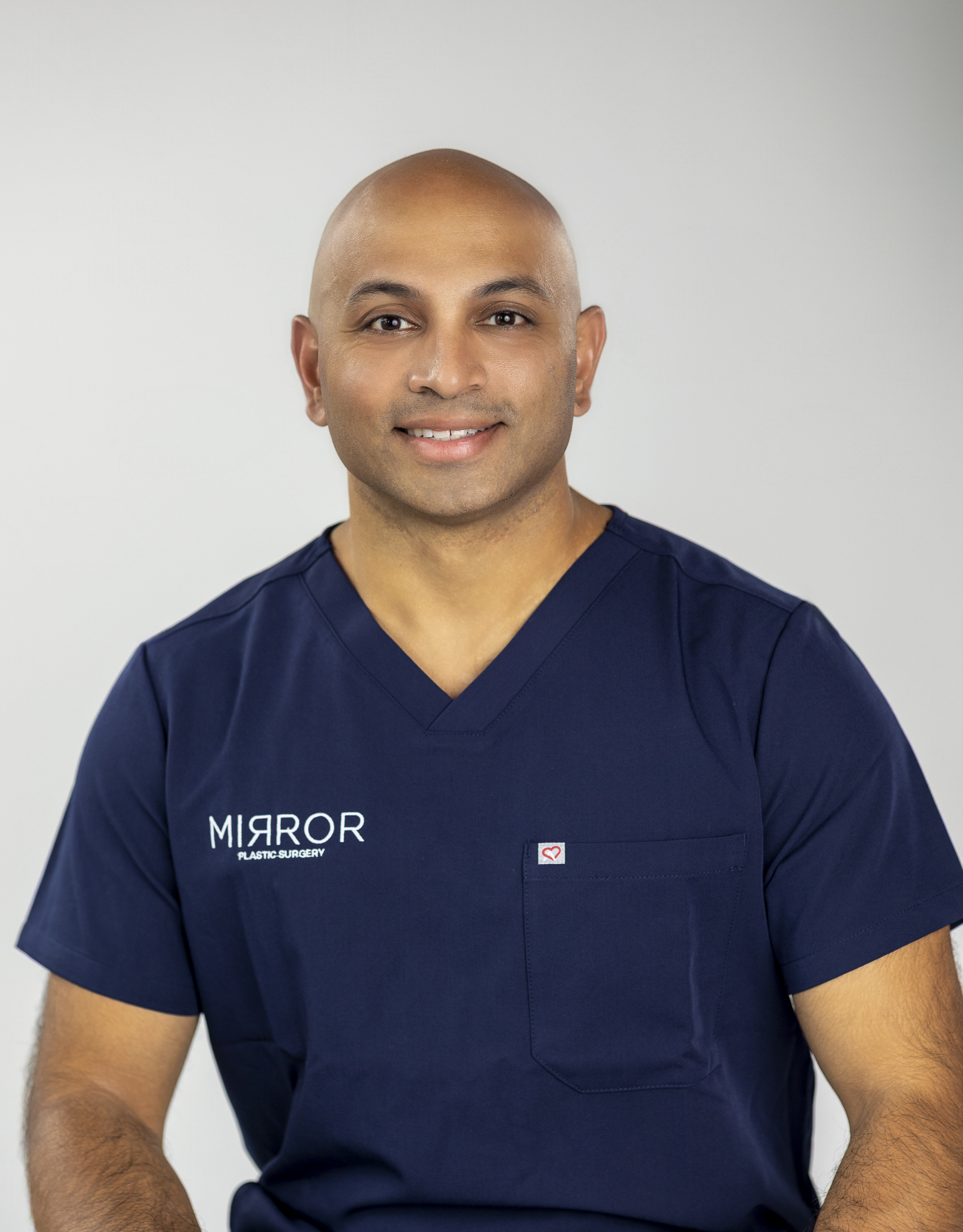
Book a consultation with Dr. Akash to see how these safety protocols apply to your anatomy and goals.
Frequently Asked Questions
How long does BBL recovery actually take before I see final results?
Active restrictions such as no direct sitting, compression garment use, and limited activity last about 6–8 weeks. Final results, meaning fully settled swelling and stable fat, appear between 3 and 6 months after surgery.1 The fluffing phase discussed in the timeline (weeks 6–8) is when the buttocks soften and settle into their permanent shape. Scar maturation at the small liposuction entry points continues for up to 12 months, though scars sit in discreet areas like the lower back or natural folds and are usually only a few millimeters long.
What is the BBL pillow and how long do I need to use it?
A BBL pillow is a firm foam wedge placed under the posterior thighs, not under the buttocks, so body weight shifts to the hamstrings and the grafted tissue hangs freely. Soft memory foam or inflatable donut cushions compress too much and let the buttocks touch the seat. Most patients use the BBL pillow for all seated activities from about day 8 through weeks 6–8, when the surgeon confirms that fat grafts have a reliable blood supply. Some surgeons suggest continued use on hard surfaces through week 12 to support long-term fat retention.
Why does Dr. Akash only perform one to two surgeries per day, and how does that affect my BBL outcome?
Surgeon fatigue and divided attention can raise complication risk. By limiting his schedule to one to two procedures per day, Dr. Akash keeps his full focus, and that of the Mirror Plastic Surgery team, on each patient before, during, and after surgery. For BBL, this matters because fat harvesting, processing, and injection precision directly affect fat survival. Rushed grafting can cause uneven placement, lower graft viability, and contour irregularities. Mirror Plastic Surgery’s concierge model reflects a structural safety choice rather than a marketing slogan.
Can I combine Lipo 360 with BBL, and does it change recovery time?
Lipo 360, or circumferential liposuction of the abdomen, flanks, and back, is often paired with BBL because the harvested fat becomes graft material for the buttocks. Recovery timing is similar to standalone BBL, but swelling across the torso is usually more pronounced. Patients who have Lipo 360 BBL often feel more tightness during the first two weeks and benefit from standing desk setups when returning to work. Dr. Akash evaluates each patient individually to decide whether combining procedures is appropriate, following Mirror Plastic Surgery’s principle of avoiding excessive procedure stacking when it would raise complication risk.
How do I protect my BBL results long-term?
The most controllable long-term factors include weight stability, strict sitting compliance during recovery, and nicotine avoidance. Maintaining the weight stability discussed earlier (within 10 lb of surgical weight) preserves volume because surviving fat cells respond to the same metabolic signals as native fat. Nicotine in any form narrows blood vessels and reduces blood flow to skin and fat grafts, increasing graft loss risk during recovery and later. A protein intake of about 1 gram per pound of body weight daily during recovery supports tissue repair. Once fat cells fully integrate at around 6 months, results remain stable and can last a decade or longer with a healthy lifestyle.
Conclusion: What to Expect from Your BBL Recovery
BBL recovery follows a predictable pattern when you stick to the protocols. The 6–8 week active restriction window is critical because transferred fat starts without its own blood supply and needs pressure-free healing to survive. Final results appear between 3 and 6 months as swelling fades and surviving fat becomes a permanent part of your body.1
At Mirror Plastic Surgery, Dr. Akash applies Harvard-MIT, Johns Hopkins, and MEETH fellowship training to every procedure within a safety-first framework. He limits surgeries to one to two per day and uses subcutaneous-only fat placement with precise technique. Named to Newsweek’s America’s Best Plastic Surgeons list for two consecutive years, Dr. Akash offers individualized, evidence-based care for patients across Tampa Bay.
Book a consultation with Dr. Akash at Mirror Plastic Surgery in St. Petersburg to receive a personalized BBL recovery plan and a clear timeline from day one through final results.
1 Results may vary from person to person. Editorial content, before and after images, and patient testimonials do not constitute a guarantee of specific results.