
Written by: Dr. Akash Chandawarkar, Board Certified Plastic Surgeon, Mirror Plastic Surgery | Last updated: June 30, 2026
Key Takeaways
- Upper blepharoplasty recovery involves clear activity limits that protect delicate eyelid tissues and preserve your surgical results.
- Most desk-job patients return to work within 5–7 days, while physically demanding roles need longer time off and gradual re-entry.
- Exercise, bending, side sleeping, and eye cosmetics stay restricted for 1–6 weeks, depending on the specific activity.
- Occupation-specific guidelines and consistent sun protection in Tampa Bay help reduce swelling, scarring, and complications.
- Schedule your personalized recovery plan at Mirror Plastic Surgery with Dr. Akash, named to Newsweek’s America’s Best Plastic Surgeons 2025 for two years running, for safe, tailored upper eyelid surgery results.
Time Off Work After Upper Blepharoplasty
Most desk-job patients return to remote or light office work within 5–7 days.1 Roles that involve sustained physical exertion, heavy lifting, or prolonged driving require a longer absence. The table below maps restrictions across five recovery windows and includes occupation-specific call-outs.
| Activity / Role | Days 1–3 | Days 4–7 | Week 2 | Weeks 3–4 | Week 6+ |
|---|---|---|---|---|---|
| Desk job / remote work | Rest at home, screen time limited to 15–20 min intervals | Light computer work from home permissible if swelling allows | Full return to desk work, in-office return typically safe | Unrestricted desk activity | Fully unrestricted |
| Frequent driver | No driving, vision and reflexes impaired by swelling and medication | No driving if taking prescription pain medication | Short local drives permissible once off narcotics and cleared by Dr. Akash | Normal driving resumed | Fully unrestricted |
| Weight-lifter | No lifting >5 lbs, complete rest | No resistance training | No weight training | Light resistance only (<50% normal load), no Valsalva maneuvers | Full training resumed after surgeon clearance |
| Runner / cardio athlete | No cardio | No cardio | Flat walking only, no jogging | Light jogging on flat surfaces if swelling resolved | Full running and high-intensity cardio resumed |
| Bending / stooping | Strictly prohibited | Strictly prohibited | Minimize, use knee-bend technique to pick up objects | Occasional bending permissible | Unrestricted |
| Sleeping position | Head elevated 30–45° on two pillows, back only | Head elevated, back only | Head elevation recommended, side sleeping discouraged | Side sleeping permissible if swelling resolved | Any position |
| Makeup / eye cosmetics | None | None | None near incision line | Light makeup on cheeks/brow permissible, avoid lash line | Full makeup after surgeon clearance (~6 weeks) |
| Contact lenses | None | None | None | Glasses only, contacts typically restricted | Contacts resumed after surgeon clearance (~4–6 weeks) |
| Florida sun exposure | Avoid entirely | Avoid entirely | Broad-brim hat + SPF 50 if outdoors, no direct sun on incisions | SPF 50 mandatory, limit midday exposure | Diligent SPF 50 ongoing to prevent scar hyperpigmentation |
Get your personalized return-to-work timeline based on your specific role and anatomy.
Exercise Timeline After Upper Eyelid Surgery
Light walking on flat ground is typically permitted at the start of Week 2. Jogging resumes no earlier than Weeks 3–4. High-intensity training, including weight lifting, CrossFit, hot yoga, and competitive sport, is deferred until Week 6 or surgeon clearance.1
Any activity that raises heart rate significantly increases systemic blood pressure. Higher blood pressure elevates intraocular pressure and raises the risk of hematoma formation at the surgical site. Refer to the weight-lifter and runner rows in the table above for week-by-week specifics.
Safe Sleeping Positions After Blepharoplasty
Side sleeping stays restricted for the first two weeks. Lateral positioning allows gravity to pool edema fluid around the orbital rim and prolongs swelling.
This position also places mechanical pressure on healing incisions. Patients sleep on their back with the head elevated 30–45 degrees, using two standard pillows or a wedge pillow, for the first seven days. By Week 2, head elevation remains recommended even if strict supine positioning becomes less critical. Most patients return to their preferred side by Weeks 3–4 once swelling has substantially resolved, as reflected in the sleeping position row in the master table above.
Why Bending Over Increases Risk After Eye Surgery
Bending at the waist causes a rapid, transient spike in venous pressure that reaches the periorbital vasculature. In the first week after upper blepharoplasty, the small vessels within the surgical field have not yet fully sealed.
A pressure surge can rupture these vessels and produce a retrobulbar hematoma, a rare but vision-threatening emergency. Dr. Akash’s training at Johns Hopkins, one of the world’s foremost centers for oculoplastic and reconstructive surgery, grounds this restriction in vascular anatomy rather than general caution.
The practical rule is simple. If an object is on the floor, bend at the knees and keep the head level. Bending restrictions ease progressively through Week 4 and are fully lifted by Week 6 in uncomplicated recoveries, as shown in the bending row of the master table.
Discuss your anatomy and recovery restrictions with Dr. Akash during a consultation.
Makeup, Contacts, and Sun in the Florida Climate
Eye cosmetics, including mascara, eyeliner, and eyeshadow, stay prohibited near the incision line until approximately Week 6. Pigment or preservative-heavy products near a healing wound increase infection risk and can trigger contact dermatitis that disrupts scar maturation.
Light makeup on the cheeks and brow, away from the lash line, is generally permissible by Weeks 3–4. Contact lenses require the eye to be manipulated open and touched repeatedly, which stresses healing tissue. Most patients resume contacts between Weeks 4–6 after explicit surgeon clearance. Glasses are the required alternative during this period.
Beyond cosmetics and lenses, Tampa Bay patients face an additional recovery consideration: sun exposure. Tampa Bay’s year-round UV index is among the highest in the continental United States.
Ultraviolet radiation stimulates melanocyte activity in immature scar tissue and can produce permanent hyperpigmentation along the incision line. Broad-brim hats and SPF 50 sunscreen are mandatory from Week 2 onward. Diligent sun protection of the periorbital area should continue indefinitely to preserve scar quality. Refer to the Florida sun exposure row in the master table.
When to Call Your Surgeon: Red-Flag Checklist
The following symptoms require immediate contact with Dr. Akash’s office or, after hours, evaluation in an emergency setting:
- Sudden or progressive vision loss or blurring in one or both eyes
- Increasing pain after Day 3 (pain should diminish, not worsen, over time)
- Active bleeding from the incision site that does not stop with gentle pressure
- Rapidly expanding bruising or a firm, tense swelling around one eye
- Fever above 101°F (38.3°C)
- Purulent (yellow or green) discharge from the incision
- Inability to fully close the eyelid beyond the first 48 hours
- Significant asymmetry that appears or worsens after Day 5
Retrobulbar hematoma, the most serious early complication, typically presents within the first 24 hours as escalating pain and proptosis (eye bulging). It is a surgical emergency. Patients who follow activity restrictions, particularly avoiding bending, straining, and vigorous exercise, substantially reduce the conditions that precipitate this event.
Why Choose Dr. Akash for Upper Eyelid Surgery
Dr. Akash is board certified by the American Board of Plastic Surgery and completed specialized fellowship training in aesthetic surgery at the Manhattan Eye, Ear and Throat Hospital (MEETH), one of the most competitive oculoplastic and facial surgery programs in the country. His foundational surgical training took place during a seven-year integrated plastic and reconstructive surgery residency at Johns Hopkins University.
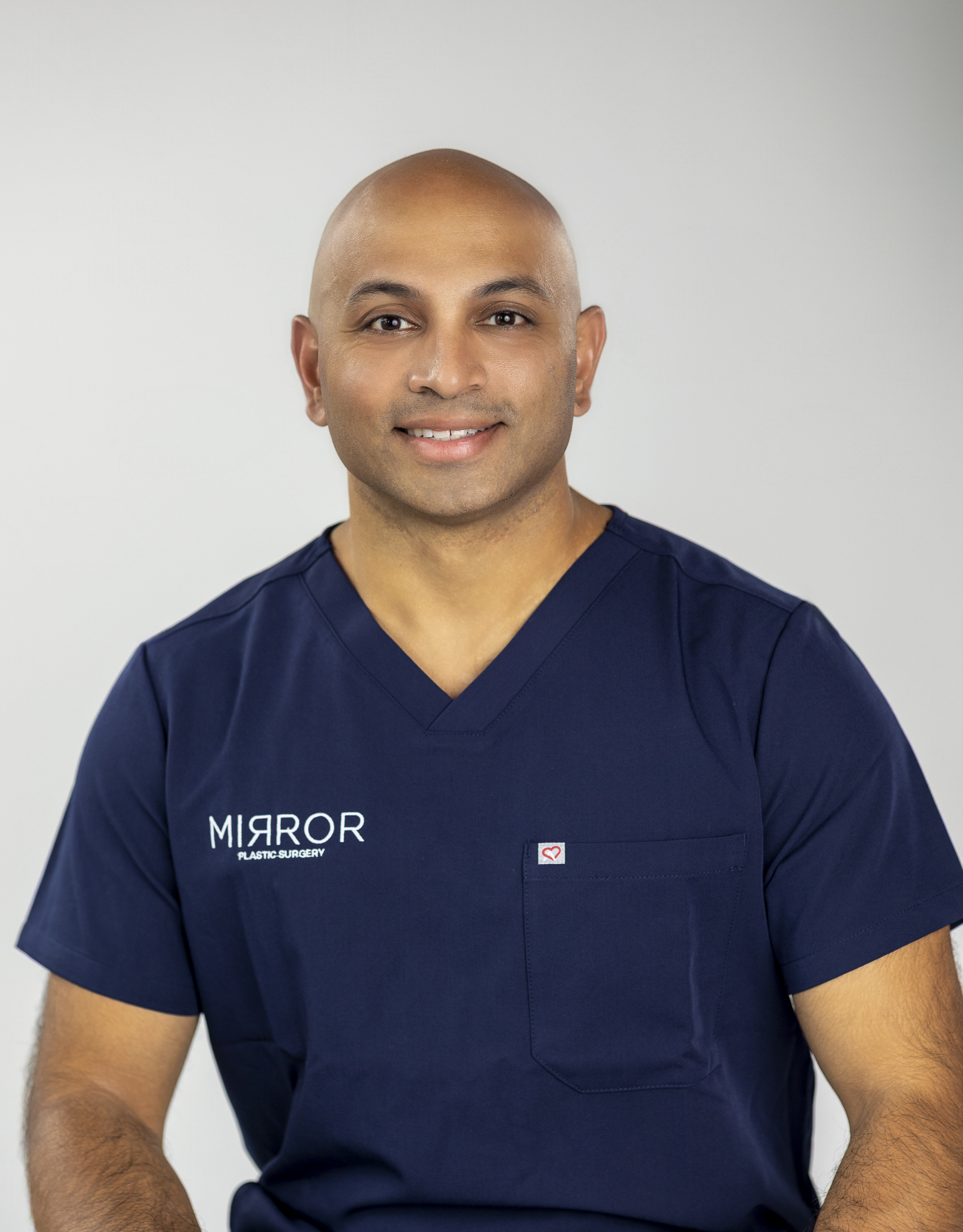
He has been named to Newsweek’s America’s Best Plastic Surgeons list two years in a row, including 2025. At Mirror Plastic Surgery, Dr. Akash performs one to two surgeries per day. This deliberate limit ensures each patient receives his full clinical attention before, during, and after their procedure.
Frequently Asked Questions
Can I fly after upper eyelid surgery, and if so, when?
Short-haul flights under two hours are generally permissible after Day 7 in uncomplicated recoveries, provided swelling is controlled and no prescription narcotics are being taken. Long-haul flights are better deferred until Week 2–3.1 Cabin pressure changes and recirculated dry air can increase ocular dryness and discomfort. Lubricating eye drops and frequent hydration are recommended for any air travel during the first month.
How long does swelling last after upper blepharoplasty?
Approximately 70–80% of visible swelling resolves within the first two weeks. Residual subtle swelling, particularly in the medial corner of the upper lid, can persist for 8–12 weeks. Final results, including full scar maturation, are typically assessed at six months.1 Patients in Tampa Bay should be especially diligent about sun protection and cool compresses during the first two weeks, as heat and humidity can prolong edema.
Is it safe to wear glasses during upper eyelid surgery recovery?
Standard eyeglasses are safe to wear throughout recovery and are the preferred alternative to contact lenses. Frames should rest on the nose bridge rather than the upper lid. Heavy frames that press on swollen tissue may cause discomfort. Lightweight frames or a temporary pair are advisable for the first two weeks.
When does the scar from upper blepharoplasty become invisible?
The incision is placed within the natural upper eyelid crease, which makes it inconspicuous even during early healing. The scar is typically pink for 6–8 weeks, then fades to a fine, pale line by 3–6 months.1 Consistent SPF 50 application and avoidance of direct sun on the incision during the first three months are the most important patient-controlled factors in achieving an imperceptible scar.
Can I resume alcohol consumption after upper eyelid surgery?
Alcohol causes vasodilation and impairs platelet function, both of which increase bleeding risk and prolong swelling. It is contraindicated for at least the first week and should be minimized through Week 2. Alcohol also interacts with prescription pain medications and antibiotic regimens commonly used in the early post-operative period.
Summary: Personalized Recovery in Tampa Bay
Upper eyelid surgery recovery follows a predictable, phased timeline, yet specific milestones for returning to work, exercise, driving, and daily activities vary by occupation, lifestyle, and individual healing. Generic advice does not account for the demands of a Tampa Bay professional who runs five days a week, works under fluorescent office lighting, or spends weekends outdoors.
At Mirror Plastic Surgery, every patient receives an individualized recovery plan built on Dr. Akash’s evidence-based clinical protocols and his specialized training in facial and oculoplastic surgery. Following that plan precisely is the single most controllable factor in achieving safe healing and lasting results.
Schedule your personalized recovery consultation at Mirror Plastic Surgery in St. Petersburg to receive an upper blepharoplasty plan tailored to your anatomy, occupation, and lifestyle.
1 Results may vary from person to person. Editorial content, before and after images, and patient testimonials do not constitute a guarantee of specific results.