
Written by: Ellie Pranckevicius, FNP-BC, Aesthetic Nurse Practitioner & Aesthetic Injector | Facial Restoration & Regenerative Injectable Specialist, Mirror Plastic Surgery | Last updated: March 13, 2026
Key Takeaways
- Safe peptides require more than 99% HPLC-verified purity, lot-specific CoA from ISO labs, and MS identity confirmation to avoid contaminants like heavy metals or bacteria.
- High-risk online vendors create real safety concerns, so prioritize clinician-led programs that use licensed compounding pharmacies and batch-tested peptides.
- The 2026 FDA reclassification restores prescription access to key peptides like BPC-157, which reinforces the value of regulated medical sourcing.
- Red flags include low prices, crypto-only payments, generic CoAs, and no medical guidance; choose practices that offer lab monitoring and 24/7 support.
- Partner with Mirror Plastic Surgery for Glow Stack and other supervised protocols that focus on safety, personalization, and consistent biohacking results.
The Power and Risks of Peptides in 2026 Biohacking
Peptides act as cellular messengers that influence energy production, recovery, weight management, and inflammation control. The gray market for peptides remains largely unregulated and carries significant contamination risk. High-performance liquid chromatography (HPLC) standards show that many online products lack proper purity verification and may contain heavy metals, bacterial contamination, or incorrect concentrations.
The 2026 FDA reclassification moves about 14 peptides, including BPC-157 and Thymosin Alpha-1, from Category 2 back to Category 1. This change restores legal access through licensed compounding pharmacies with valid prescriptions. As a result, sourcing peptides through legitimate medical channels now offers a safer and more predictable path than unverified online vendors.
Safest Sourcing Options for High-Purity Peptides
Your sourcing choice directly affects peptide safety and results. Use this tiered framework from highest to lowest risk.
Tier 1 (Highest Risk): Direct-to-Consumer Online Vendors
These “research use only” suppliers operate in a legal gray area and sell peptides without medical oversight. Investigations by The Washington Post and Good Morning America documented variable purity, unverified sterility, and poor stability protocols from many of these sources.
Tier 2 (Moderate Risk): Research Chemical Companies
Some research suppliers provide certificates of analysis, yet these products are labeled for non-human use and do not follow pharmaceutical-grade manufacturing standards.
Tier 3 (Lower Risk): Licensed Compounding Pharmacies
503A and 503B compounding pharmacies operate under USP 797 and 795 standards with regulatory oversight. Access still requires a valid prescription from a licensed physician.
Tier 4 (Safest): Clinician-Led Peptide Programs
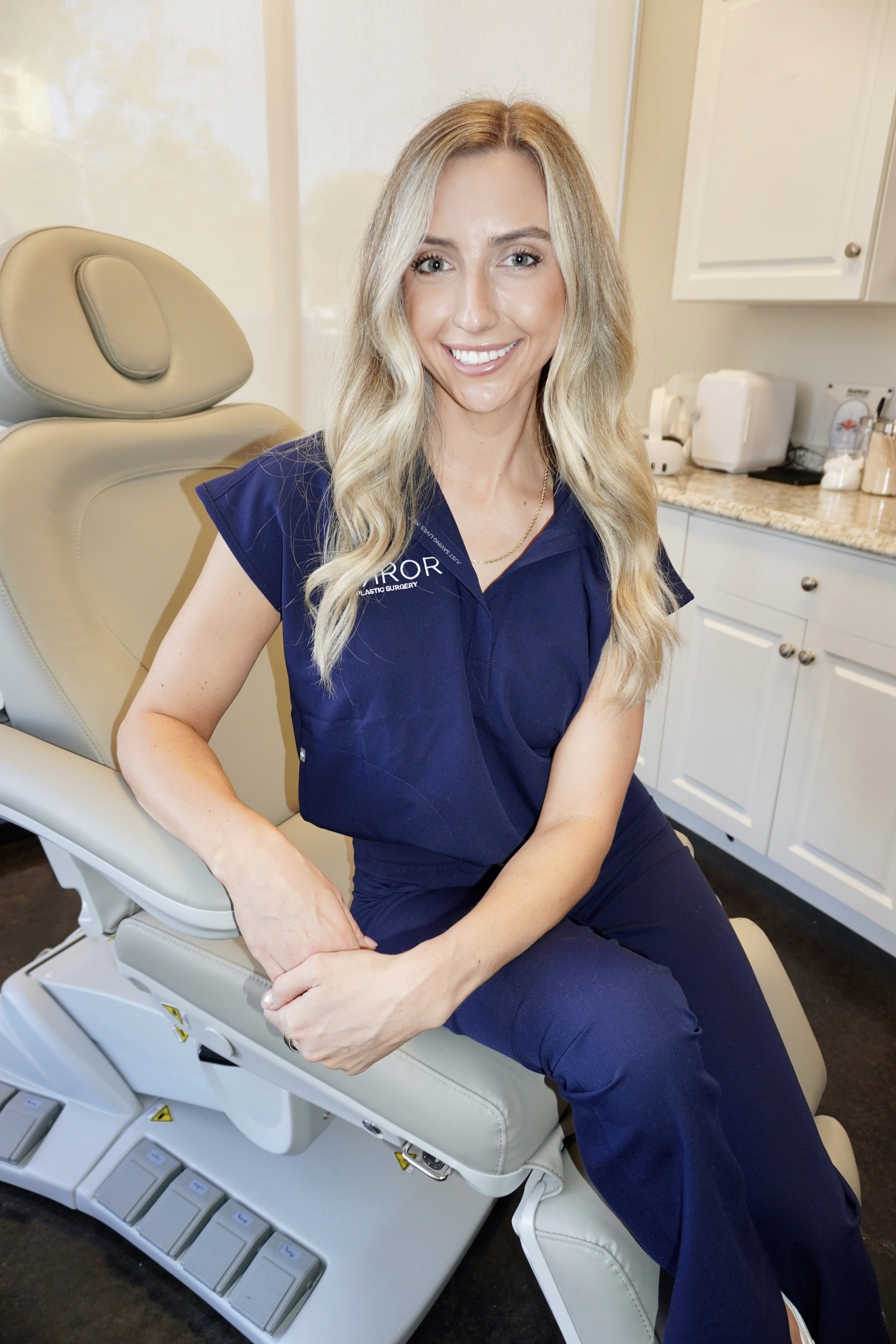
Clinician-led programs provide the safest structure for peptide use. These programs include 30 to 60 minute consultations, lab analysis for thyroid, hormones, and metabolic markers, and batch-tested peptide sourcing from reputable providers. Patients also receive 24/7 text support. Practices like Mirror Plastic Surgery follow a concierge philosophy of safety first, function second, and aesthetics third, led by experienced clinicians such as Ellie Pranckevicius, FNP-BC.
Quality Verification Checklist for Safe Peptides
Use this seven-step process to confirm peptide purity and safety before use.
1. Request a Lot-Specific Certificate of Analysis (CoA)
Every peptide batch should include a dated CoA from an ISO-accredited laboratory. Red flags include vague purity claims, unverifiable testing labs, and “not for human consumption” labels paired with medical claims.
2. Confirm HPLC Purity Above 99%
Reverse-phase HPLC (RP-HPLC) is the gold standard for peptide purity testing. The chromatogram should show a single dominant peak representing more than 99% of the total peak area. Research-grade peptides usually fall between 95 and 98% purity at minimum.
3. Match Identity with Mass Spectrometry (MS)
High-resolution MS methods such as MALDI-TOF or ESI-MS should match the expected molecular weight and isotopic pattern. These tests help detect truncated sequences, deletion variants, and other structural impurities.
4. Confirm Third-Party ISO Laboratory Testing
Testing should come from independent, accredited laboratories. In-house testing alone can create conflicts of interest and less reliable results.
5. Review Stability and Sterility Data
Injectable peptides should include bacterial endotoxin testing, sterility verification, and visual inspection for particulates or discoloration.
6. Check Reconstitution Behavior
High-purity peptides dissolve clearly in bacteriostatic water without cloudiness, clumps, or visible particles.
7. Monitor Results with Follow-Up Labs
Ongoing lab work tracks biomarkers and health indicators to confirm both efficacy and safety over time.
Home Peptide Checks vs Professional Lab Testing
Home Verification (Limited Accuracy):
- Visual inspection for uniform, fine powder consistency
- Dissolution test in bacteriostatic water to confirm clear solution
- Basic temperature stability check during storage
Professional Laboratory Analysis (Mirror’s Approach):
- Comprehensive batch testing by reputable providers with HPLC and MS analysis
- Sterility and endotoxin testing for injectables
- Quantitative purity verification for each lot
- Screening for heavy metal contamination
Book an appointment with Ellie for professionally verified, high-purity peptides supported by full laboratory analysis.
Red Flags That Signal Unsafe Peptide Vendors
Specific vendor behaviors often predict poor quality and higher risk.
- Suspiciously Low Pricing: Quality synthesis and testing cost money, so extremely cheap peptides usually signal shortcuts or contamination.
- Missing or Generic CoA: Legitimate suppliers provide lot-specific certificates with detailed HPLC chromatograms and MS spectra.
- Cryptocurrency-Only Payment: Crypto-only models often indicate vendors operating outside normal regulatory oversight.
- “Research Only” Labels with Medical Claims: This contradiction suggests an attempt to bypass FDA rules while still targeting human use.
- No Customer Support or Medical Guidance: Reputable sources provide dosing guidance, reconstitution instructions, and ongoing support.
Forum reports frequently mention gastrointestinal issues, injection site reactions, and poor results after using low-quality vendors. A transparent medical approach replaces guesswork with direct text access to qualified clinicians, structured education, and continuous monitoring.
Clinician-Guided Biohacking Stacks at Mirror Plastic Surgery
Mirror Plastic Surgery offers curated peptide combinations that match specific biohacking goals.
The Glow Stack (GHK-CU, BPC-157, TB500): This protocol targets systemic inflammation, supports collagen and elastin production, and helps address melasma. Many clients notice healthier hair, smoother skin, and stronger nails within weeks.
GLP-3R Compounding: This newer-generation weight management peptide tends to cause fewer gastrointestinal side effects than older GLP-1 options. It also supports muscle preservation and broader metabolic benefits, including improved insulin resistance.
Recovery Stack (BPC-157, TB500): This stack focuses on muscle, tendon, ligament, and joint repair. Athletes and active patients often use it for faster recovery and injury prevention.
Energy and Longevity (NAD): NAD-based protocols support mitochondrial function, which can increase energy production and promote cellular-level anti-aging effects.
Anxiety and Mood Support (Selank): Selank is a nootropic peptide that acts on brain pathways similar to benzodiazepines but without addiction potential. Many clients use it while transitioning away from traditional pharmaceutical medications.
Client stories include full resolution of autoimmune conditions such as psoriasis, meaningful weight loss with improved lipid panels, and successful transitions from SSRIs and benzodiazepines to peptide-centered anxiety support.
Why Clinician-Led Peptide Protocols Outperform DIY Use
Medical supervision improves both safety and outcomes for peptide biohacking. Ellie focuses on education and explains the physiology behind each recommendation so you understand what you are taking and why it fits your goals. This clarity builds trust and supports better adherence.
The changing 2026 regulatory landscape makes expert guidance even more valuable. Unsupervised use increases the risk of incorrect dosing, drug interactions, contraindications, and missed early warning signs of side effects.
Mirror Plastic Surgery’s concierge model includes 24/7 text access to Ellie, full lab work before starting any protocol, and personalized dosing based on your unique physiology. Ongoing adjustments respond to your lab results, symptoms, and goals, which creates a safer and more predictable experience than DIY experimentation.
Actionable Home Checks and Lab Work Before Peptides
Home Purity Checks:
- Inspect powder for uniform, fine texture without clumps
- Confirm clear dissolution in bacteriostatic water without cloudiness
- Check for vacuum-sealed packaging and appropriate storage temperature
- Verify that batch numbers match the CoA documentation
Recommended Pre-Treatment Labs:
- Comprehensive metabolic panel
- Thyroid function tests (TSH, T3, T4)
- Hormone panels for testosterone, estrogen, and cortisol
- Inflammatory markers such as CRP and ESR
- Liver and kidney function assessment
Common Peptide Misconceptions:
- Peptides support far more than weight loss and can target inflammation, recovery, anxiety, energy, and anti-aging.
- Meaningful results usually require consistency and, in many cases, maintenance protocols.
- Individual responses vary widely based on genetics, lifestyle, and overall health.
2026 Peptide Trends and Your Next Step
New peptide applications now focus on mitochondrial support, fertility enhancement with Kisspeptin, and advanced delivery systems that improve absorption. Modified KPV variants and nanoparticle delivery systems sit at the leading edge of targeted peptide therapy.
The future of biohacking centers on personalized, medically supervised protocols that blend current peptide research with full health assessment and ongoing monitoring. Instead of gambling on unverified online products, you can work with qualified practitioners who guide each step of your peptide journey.
Schedule your consultation with Ellie today to design a personalized peptide plan that reflects your health profile and biohacking goals.
Frequently Asked Questions
How to test purity of peptides?
The most reliable approach combines HPLC analysis showing more than 99% purity with mass spectrometry confirmation of molecular identity. Look for lot-specific certificates of analysis from ISO-accredited laboratories. At Mirror Plastic Surgery, all peptides come from suppliers that provide third-party testing, including sterility, endotoxin, and heavy metal screening. Home testing remains limited to visual inspection and dissolution checks, which cannot detect molecular-level impurities.
What is the most trustworthy peptide company?
The most trustworthy path uses clinician-led programs instead of direct-to-consumer vendors. Licensed compounding pharmacies operating under 503A and 503B regulations with valid prescriptions maintain the highest safety standards. Mirror Plastic Surgery partners with reputable providers that perform rigorous batch testing and maintain strict quality controls. This medical model supports proper dosing, quality assurance, and ongoing safety monitoring that typical online vendors cannot match.
Are peptides safe for biohacking?
Peptides can be safe for biohacking when sourced through regulated medical channels and used under professional supervision. The main risks come from unregulated online products that may contain contaminants, incorrect concentrations, or mislabeled compounds. Medical oversight ensures appropriate candidate selection, dosing, monitoring, and quality-controlled sourcing. Many peptides have strong clinical data supporting their safety when used correctly.
Is 99% purity good for peptides?
Purity at 99% represents excellent quality for therapeutic peptides when verified with third-party HPLC and mass spectrometry. Research-grade peptides usually range from 95 to 98% purity, so 99% exceeds common standards. Purity alone does not guarantee safety, so the CoA should also confirm sterility, acceptable endotoxin levels, and absence of heavy metal contamination. The remaining 1% should consist of expected synthesis byproducts rather than harmful impurities.
What are the risks of using peptides without medical supervision?
Using peptides without medical supervision increases the risk of counterfeit or contaminated products, incorrect dosing, and serious drug interactions. People may unknowingly use peptides that conflict with existing health conditions or medications. Poor storage, reconstitution, or injection technique can also cause infections or tissue damage. Medical supervision provides screening, safe protocols, quality sourcing, and structured monitoring throughout treatment.
Your Safest Biohacking Path Starts Here
Safe peptide biohacking depends on more than finding a low price. The seven-step verification checklist, awareness of current regulations, and recognition of vendor red flags create a strong foundation for smart decisions. Partnering with qualified medical professionals then adds the final layer of safety and precision.
A concierge peptide program combines clinical expertise with a safety-first mindset. Personalized protocols, lab-verified peptides, and 24/7 support help you pursue your biohacking goals while protecting your long-term health.
Book an appointment with Ellie today to begin your journey with safe, high-purity peptides under expert medical supervision.
Contact Information:
Phone: 727-361-6515
Email: hello@mirrorplasticsurgery.com
Address: 780 4th Ave S, St. Petersburg, FL 33701
Instagram: @mirrorplasticsurgery, @dr.akashplasticsurgery, @perfectlyplastics
Disclaimer: Results may vary from person to person. Editorial content, before and after images, and patient testimonials do not constitute a guarantee of specific results.
Disclaimer: Peptide therapy is intended for wellness and optimization purposes and is not prescribed to diagnose, treat, cure, or prevent disease unless specifically stated. Many peptides are not FDA-approved and may be used off-label. Some have limited long-term safety data, with a potential for unknown risks, complications, or desensitization with prolonged use.