
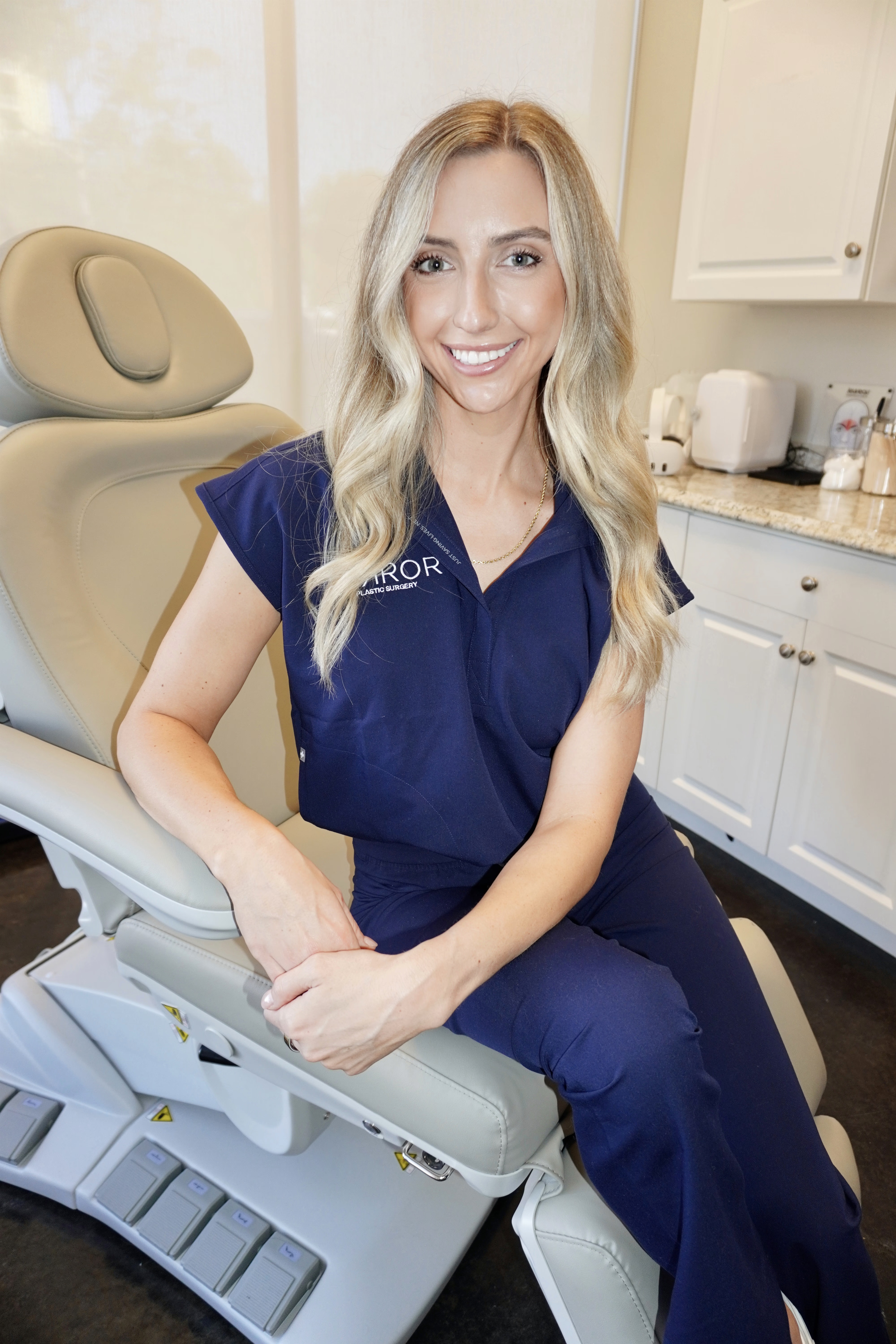
Written by: Ellie Pranckevicius, FNP-BC, Aesthetic Nurse Practitioner & Aesthetic Injector | Facial Restoration & Regenerative Injectable Specialist, Mirror Plastic Surgery
Key Takeaways
- Physician-supervised collagen peptide therapy delivers stronger skin benefits than OTC supplements, including better elasticity, hydration, and wrinkle reduction.
- GHK-Cu peptides stimulate collagen I, collagen III, and elastin production, with clinical trials showing up to 55.8% wrinkle volume reduction in 8 weeks.
- Personalized protocols with medical oversight support safety, proper dosing, and sustained results while reducing the risks of unsupervised use.
- Mirror’s Glow Stack combines GHK-Cu, BPC-157, and TB500 to support anti-aging, calm inflammation, and promote faster healing.
- Experience transformative skin health with Mirror Plastic Surgery’s concierge peptide therapy, and book your consultation with Ellie today.
Meet Your Nurse Practitioner: Ellie Pranckevicius
Ellie Pranckevicius, FNP-BC, blends esthetician training with advanced nursing expertise to guide patients through peptide therapy. She holds a Bachelor’s in Health Science from Boston University and a Master’s in Nursing from the University of South Florida. Her four years in the Neuroscience ICU at Tampa General Hospital give her a deep understanding of both complex physiology and patient safety. Ellie explains the science behind each personalized peptide protocol in clear, practical terms and collaborates with Dr. Akash Chandawarkar when surgical treatment can enhance results.
Why Physician Supervision Matters for Collagen Peptide Therapy
Physician oversight helps keep collagen peptide therapy safe and effective because peptides influence multiple body systems. Medical supervision includes a personalized evaluation, with review of medical history and current medications to identify contraindications and adjust dosing. The following comparison highlights how physician-supervised protocols differ from unsupervised or OTC options across several key factors.
|
Attribute |
Physician-Supervised (Mirror Glow Stack) |
OTC/Unsupervised |
|
Dosing |
Personalized based on labs and medical history |
One-size-fits-all approach |
|
Results |
Superior outcomes with sustained benefits |
Temporary improvements, rapid decline |
|
Safety |
Ongoing monitoring, contraindication screening |
No medical oversight or quality assurance |
|
Personalization |
Tailored protocols for individual needs |
Generic formulations |
The GHK-Cu peptide stimulates collagen I and III synthesis while reducing inflammation, which makes it especially useful for melasma and age-related collagen decline when used under medical guidance.
7 Proven Benefits of Physician-Supervised Collagen Peptide Therapy for Skin
1. Enhanced Skin Elasticity and Firmness
GHK-Cu peptides directly stimulate collagen and elastin production in dermal fibroblasts. Clinical trials demonstrate significant improvements in skin thickness and elasticity within eight weeks of supervised treatment. This copper peptide activity increases structural protein synthesis, which leads to noticeably firmer and more resilient skin.
2. Deep Hydration and Moisture Retention
Supervised collagen peptide therapy supports deeper, longer-lasting skin hydration through several biological pathways. Bioactive collagen peptides showed a 20.12% decrease in transepidermal water loss and 17.39% increase in moisture content compared to placebo. This sustained hydration stands in contrast to OTC supplements, which often lose effectiveness once you stop taking them. Book an appointment with Ellie to design a hydration-focused peptide plan tailored to your skin.
3. Wrinkle Reduction and Fine Line Smoothing
Wrinkle reduction often provides the most noticeable visual change with supervised peptide therapy. Randomized controlled trials show 55.8% reduction in wrinkle volume and 32.8% reduction in wrinkle depth with twice-daily GHK-Cu application over eight weeks. This previously mentioned wrinkle reduction data highlights how physician-supervised protocols can outperform unregulated products that lack dosing control and quality oversight.
4. Accelerated Wound Healing and Scar Minimization
GHK-Cu supports faster wound healing by promoting angiogenesis and healthy collagen remodeling. The peptide encourages organized tissue repair, which helps limit thick or raised scar formation. This effect becomes especially valuable after procedures, where supervised peptide protocols can support smoother healing and more refined aesthetic results.
5. Improved Collagen and Elastin Production
Physician-supervised peptide therapy targets the root drivers of skin aging by activating fibroblasts. These protocols increase collagen I and III synthesis and also promote elastin production. This combined support for structural proteins strengthens skin architecture, improves bounce, and helps skin better withstand daily stress over time.
6. Reduced Inflammation for a More Even Skin Tone
Chronic inflammation speeds up visible aging and contributes to uneven pigmentation. Supervised peptide protocols such as Mirror’s Glow Stack pair anti-inflammatory peptides like BPC-157 and TB500 with collagen-stimulating GHK-Cu to address both inflammation and structural repair at once. This coordinated approach can improve overall tone, calm redness, and support conditions such as melasma.
7. Long-Term Anti-Aging Benefits That Build Over Time
Physician-supervised collagen peptide therapy supports long-term anti-aging by improving skin at the cellular level rather than masking surface concerns. These protocols enhance mitochondrial function and reduce oxidative stress, which in turn helps maintain steady collagen production over time. This cellular repair often leads to visible changes quickly, with many patients noticing early improvements within 1 to 4 weeks and continued gains over several months of supervised care.
Book an appointment with Ellie to begin a structured long-term anti-aging plan.
Real Patient Results and Treatment Timelines at Mirror
Mirror Plastic Surgery patients often report visible improvements within the first week of a supervised Glow Stack protocol. One patient with chronic psoriasis experienced a complete reversal of inflammatory symptoms within four weeks of a personalized peptide plan. Post-surgical patients frequently show faster healing, less inflammation, and more refined scars when peptides support their recovery. These outcomes highlight the difference that medically supervised treatment can make compared with unsupervised or generic options.
FAQ: Collagen Peptides and Physician-Supervised Glow Stack
Does taking collagen peptides actually help your skin?
Collagen peptides can meaningfully improve skin when they are properly supervised and formulated. Clinical trials show measurable gains in elasticity, hydration, and wrinkle reduction with physician-supervised GHK-Cu protocols. Medical oversight also helps ensure correct dosing, reliable sourcing, and personalized plans that reflect each patient’s physiology and health history.
How long does it take to see results from collagen peptides?
Most patients in physician-supervised programs notice early changes within 1 to 4 weeks, as described in the benefits section above. Hydration, glow, and overall radiance often appear first. Structural improvements in elasticity and firmness usually build over 8 to 12 weeks of consistent use. Ongoing treatment supports sustained benefits, while stopping therapy can allow skin to gradually drift back toward baseline.
What are the best peptides for skin tightening?
GHK-Cu currently has the strongest clinical evidence for skin tightening through direct stimulation of collagen and elastin. Mirror’s Glow Stack combines GHK-Cu with BPC-157 and TB500 to support a broader range of anti-aging effects. This targeted combination addresses inflammation, structural repair, and cellular regeneration at the same time.
Are collagen peptides safe for autoimmune conditions like EDS or lupus?
Patients with autoimmune conditions need careful physician supervision when using collagen peptides. Comprehensive lab work and a detailed medical history review help shape protocols that respect each person’s underlying diagnosis and medications. With this level of monitoring and adjustment, many patients with autoimmune disorders can safely benefit from supervised peptide therapy.
How do peptides compare to over-the-counter collagen supplements?
Physician-supervised peptides typically provide more durable, safer, and more consistent results than OTC collagen supplements. OTC products often lose their effect quickly once you stop taking them, while supervised protocols aim to maintain improvements through precise dosing and quality control. Medical oversight also adds safety screening and individualized planning that generic supplements cannot offer.
Physician-supervised collagen peptide therapy delivers stronger and more reliable results than OTC options through personalized protocols, quality assurance, and ongoing medical support. Mirror Plastic Surgery offers comprehensive peptide therapy throughout the United States, including remote consultations for patients in Alaska and Hawaii.
Ready for radiant skin? Book with Ellie at 727-361-6515 or hello@mirrorplasticsurgery.com. Visit us at 780 4th Ave S, St. Petersburg, FL 33701, or follow @mirrorplasticsurgery on Instagram.
Disclaimer: Results may vary from person to person. Editorial content, before and after images, and patient testimonials do not constitute a guarantee of specific results.
Disclaimer: Peptide therapy is intended for wellness and optimization purposes and is not prescribed to diagnose, treat, cure, or prevent disease unless specifically stated. Many peptides are not FDA-approved and may be used off-label. Some have limited long-term safety data, with a potential for unknown risks, complications, or desensitization with prolonged use.