
Written by: Ellie Pranckevicius, FNP-BC, Aesthetic Nurse Practitioner & Aesthetic Injector | Facial Restoration & Regenerative Injectable Specialist, Mirror Plastic Surgery | Last updated: July 17, 2026
Key Takeaways
- Personalized concierge peptide therapy at Mirror Plastic Surgery uses comprehensive lab analysis and direct practitioner access to create individualized protocols instead of standardized, menu-style options.
- Every clinical decision, including peptide selection, dosing, stack design, and monitoring, is guided by the patient’s lab results, health history, and goals rather than fixed offerings.
- Root-cause lab panels identify contraindications and metabolic status, while sourcing from licensed, batch-tested compounding pharmacies supports safety and consistent quality.
- Custom peptide stacks are built from medical history and lab findings, and protocols are adjusted through direct 24/7 access to the lead practitioner for ongoing support.
- Patients who want a physician-supervised alternative to medical spas can schedule a consultation to begin a lab-driven peptide protocol.
How Concierge Peptide Therapy Differs From Med-Spa Menus
Concierge peptide therapy at Mirror Plastic Surgery centers every clinical decision on the individual patient. Peptide selection, dosing, stack design, and monitoring cadence follow the patient’s lab results, health history, and goals instead of a pre-set menu. Laboratory testing plays a central role in personalizing peptide therapy, with practitioners ordering blood tests to assess hormone levels, metabolic markers, and inflammatory indicators. These data points reveal imbalances, establish baselines, and guide safe dosing. This approach contrasts with settings where patients choose peptides based on preference or promotional packaging.
At our practice in St. Petersburg, Florida, this philosophy shapes every part of the experience. The clinic limits daily patient volume so each person, surgical and non-surgical, receives focused attention from the clinical team before, during, and after treatment.
Med-Spa Peptide Menus vs. Concierge Peptide Therapy
The comparison below shows how a menu-driven model differs from a concierge program across key aspects of care, including intake, labs, sourcing, and ongoing access.
| Feature | Menu-Driven Med Spa | Concierge Peptide Program | Our Practice |
|---|---|---|---|
| Intake process | Questionnaire or brief consult | Full health history, chronic conditions, medications, contraindications reviewed | 30–60 minute one-on-one consultation with board-certified NP |
| Lab analysis | Often absent or optional | Baseline CBC, CMP, IGF-1, hormone panels before prescribing; rechecks every 3–6 months | Thyroid, liver, kidney, diabetes markers, and hormone panels ordered or reviewed before protocol design |
| Protocol design | Fixed menu; patient selects from available options | Personalized stacking based on genetic predisposition, health goals, and metabolic profiles | Custom peptide stacks built from lab results and individual goals |
| Sourcing standard | Variable; some clinics source from unverified or gray-market suppliers | Licensed 503A or 503B compounding pharmacies with certificates of analysis | Reputable providers with rigorous batch testing |
| Ongoing access | Scheduled visits only | Telemedicine platforms with full remote management including protocol adjustment | 24/7 direct text access to lead NP; telemedicine available nationwide |
| Physician oversight | Oversight varies considerably by state; often less rigorous than physician offices | Active medical director review; documented clinical rationale per patient | Board-certified NP supervised by Harvard/Johns Hopkins-trained plastic surgeon |
Why Root-Cause Lab Panels Matter for Safety
Without physician supervision and baseline labs, generic protocols ignore individual metabolic status, body composition, medication interactions, and contraindications, which creates dosing risk. Absolute contraindications exist for several peptide classes. Growth hormone secretagogues are contraindicated in active malignancy, uncontrolled diabetes, active proliferative diabetic retinopathy, and untreated pituitary tumors. Patients with severe kidney or liver disease can experience unpredictable changes in peptide pharmacokinetics.
For growth hormone secretagogue protocols, baseline IGF-1 is measured before therapy, with follow-up at six weeks targeting the upper third of the age-adjusted reference range, plus monitoring of fasting insulin and HbA1c at baseline and three months. Inflammatory marker tracking, including cytokines and C-reactive protein, is becoming standard for anti-inflammatory peptide protocols. Hormonal panel optimization covering IGF-1, testosterone, and cortisol now appears in many advanced monitoring frameworks.
At our practice, patients who do not arrive with recent labs receive orders for appropriate panels before any protocol is designed. This step forms the clinical foundation for safe and effective peptide therapy.
How Our Team Builds Custom Peptide Stacks
Protocol design at Mirror Plastic Surgery starts with a detailed review of medical history, current medications, and lab results. The lead practitioner then constructs individualized stacks that target each patient’s specific concerns. Examples of available protocols include:
- The Glow Stack (GHK-Cu, BPC-157, TB-500): Targets systemic inflammation, melasma, and collagen and elastin production for improved skin, hair, and nail health.1
- GLP-3R compounding for weight loss: A newer-generation peptide similar to GLP-1, reported to carry fewer gastrointestinal side effects, less risk of muscle wasting, and broader indications including insulin resistance and cardiovascular risk factors.1
- NAD+ (Nicotinamide Adenine Dinucleotide): Targets cellular mitochondria for energy production and anti-aging effects.1
- Sermorelin/Ipamorelin (GHRPs): Stimulates natural growth hormone production to support muscle retention and fitness goals.1
- Selank: A nootropic peptide for anxiety and depression that acts on similar brain pathways as benzodiazepines without the dependency component.1
- KPV: Targets gut microbiome inflammation, with potential relevance to Irritable Bowel Disease.1
- PT-141 (Bremelanotide): FDA-approved for hypoactive sexual desire disorder in premenopausal women, also used for libido enhancement.1
- Kisspeptin: A fertility peptide showing promise in IVF trial outcomes.1
Stack design evolves over time. Ongoing monitoring forms a core part of personalized peptide care, with practitioners regularly assessing symptom changes, lab values, and side effects to refine protocols and support long-term safety.
Begin your lab-driven protocol design with a comprehensive consultation.
Direct-Access Monitoring and Ongoing Support
Concierge peptide therapy stands apart from a standard med-spa visit through what happens after the initial consultation. At Mirror Plastic Surgery, patients have direct 24/7 text access to the lead practitioner for questions, side-effect reporting, and refill requests. This contact goes straight to the practitioner managing the protocol, not to a chatbot or general intake line.
The entire process, including consultation, lab review, protocol design, prescription, and shipping, can occur in person at the St. Petersburg clinic or remotely across all 50 states, including Hawaii and Alaska. A valid telehealth peptide therapy process includes patient intake and medical history, a licensed physician or nurse practitioner conducting a video or phone consultation, review of remotely ordered labs, and sending the prescription to a licensed 503A or 503B compounding pharmacy that ships directly to the patient. Our model follows each of these standards.
Red flags for unsafe telehealth peptide providers include no real-time consultation before prescribing, no request for medical history or current medications, no lab work ordered or reviewed, and shipping from sources other than licensed pharmacies. Patients can use this checklist when evaluating any peptide provider.
Sourcing, Batch Testing, and Quality Assurance
Sourcing for peptide therapy directly affects patient safety. Third-party analyses of peptides from unregulated sources have documented incorrect peptide identity, dosing errors with actual potency ranging from 50 to 200 percent of labeled concentration, bacterial endotoxin contamination, heavy metal contamination, oxidation and degradation products, and non-sterile preparations.
Peptide products purchased online from non-pharmaceutical sources have also contained inaccurate quantities of the listed compound or unlisted contaminants. Many people who self-direct peptide use operate in this environment.
Mirror Plastic Surgery sources exclusively from reputable compounding pharmacies that provide batch-specific certificates of analysis. Key compliance requirements for peptide programs include maintaining valid prescriber licensing, documenting patient consent, ensuring proper storage and handling, reporting adverse events, and ordering exclusively from licensed 503A or 503B pharmacies. Providers offering peptides should obtain products from established compounding pharmacies that supply a certificate of analysis to verify quality and source.
The regulatory landscape for peptide compounding continues to evolve. Effective April 22, 2026, the FDA removed twelve peptides from its Category 2 restricted compounding list after the original nominating companies withdrew their nominations, which eased some earlier restrictions on compounding these substances. Removal from Category 2 does not equal FDA drug approval and does not automatically clear a peptide for compounding under Section 503A. The FDA’s Pharmacy Compounding Advisory Committee plans to review seven peptides, including BPC-157, KPV, TB-500, MOTS-C, Emideltide/DSIP, Semax, and Epitalon, for Section 503A compounding eligibility during its July 23–24, 2026 meeting. Our practice tracks these developments so that every protocol remains compliant.
Realistic Timelines, Maintenance, and Outcome Variability
Peptide therapy functions as a course of treatment rather than a single-session intervention. Most peptide protocols run 8–12 weeks initially to allow adequate time for the body to respond, after which many patients transition to lower maintenance doses or periodic cycles. Growth hormone secretagogue protocols are typically structured as 3–6 months on followed by 1–2 months off, with body-composition and recovery effects becoming visible at 8–12 weeks1.
Several misconceptions about peptide therapy deserve direct clarification because they shape expectations about timelines and results:
- Peptides are only for weight loss. Weight management represents one application. Our protocols also address systemic inflammation, autoimmune conditions, post-surgical recovery, collagen production, anxiety, energy, sexual wellness, and fertility support, each with its own response timeline.
- Everyone sees the same results. Outcomes vary significantly based on genetics, diet, lifestyle, the specific peptide protocol, and baseline health status. This variability explains why some patients see changes within a few weeks while others need several months, which makes individualized lab-driven design essential.1
- Stopping peptides has no consequences. Benefits fade when therapy stops, similar to pausing any health regimen.1 Many patients use a maintenance protocol to sustain results after an initial course.
- Preclinical animal data translates directly to humans. For peptides such as BPC-157, the human evidence base remains limited, with no published peer-reviewed randomized controlled trial for any indication as of 2026. Physician-supervised use with clear informed consent remains essential.
Core Peptide Concepts and Definitions
- Peptides: Short chains of amino acids that act as biological signaling molecules, directing specific cellular processes such as inflammation modulation, tissue repair, hormone release, and metabolic regulation.
- Custom peptide stacks: Combinations of two or more peptides prescribed together to address multiple overlapping goals, such as pairing an anti-inflammatory peptide with a collagen-stimulating peptide for post-surgical recovery and skin health.
- Reconstitution: The process of mixing a lyophilized peptide powder with bacteriostatic water to create an injectable solution at the correct concentration. Proper technique supports dosing accuracy and sterility.
- Batch testing / Certificate of Analysis (COA): Industry standards now require minimum 98% HPLC purity, mass spectrometry confirmation, endotoxin testing, heavy metals screening, and sterility testing for injectable formulations. A COA documents that a specific production batch meets these standards.
- 503A compounding pharmacy: A traditional compounding pharmacy that prepares patient-specific prescriptions regulated primarily by state pharmacy boards under the FD&C Act, requiring an individual prescription for each named patient.
- 503B outsourcing facility: An FDA-registered and inspected facility that compounds medications in bulk for office use under direct FDA oversight with current Good Manufacturing Practice requirements.
Clinical Workflow at Our Practice
- Consultation: A 30–60 minute one-on-one session with the lead practitioner covering full medical history, current medications, health goals, and any prior peptide or pharmaceutical experience.
- Lab review: The practitioner reviews existing lab results and confirms they cover the markers needed for the proposed protocol. Additional panels are ordered when gaps appear.
- Protocol design: A custom peptide stack and dosing schedule are built from the lab results and consultation findings, with peptides sourced from batch-tested, licensed compounding pharmacies.
- Education: The lead practitioner provides detailed instructions for reconstitution and self-administration, often with video demonstrations, so patients understand both how to use each medication and why it is included.
- Ongoing support: Direct practitioner access continues throughout treatment, with follow-up lab panels and protocol adjustments at clinically appropriate intervals.
This five-step workflow keeps every clinical decision documented, every protocol individualized, and every patient connected to expert guidance. Start your personalized clinical workflow today.
Industry Trends Favoring Supervised Personalization
Google searches for “are peptides safe” jumped 652% year-over-year from March 2025 to February 2026, reflecting rising patient concern over safety and quality that pushes demand toward verified, physician-supervised peptide sources. This concern now appears in mainstream settings. Nearly half (48%) of physicians surveyed in Sermo’s Barometer 45 reported that patients have disclosed using non-FDA-approved peptides.
Peptide therapy is shifting toward individualized treatment protocols based on genetic, metabolic, and lifestyle factors, including receptor polymorphism screening for GLP-1 and growth hormone receptors plus metabolic enzyme profiling to predict individual response and guide dosing. Advanced monitoring, such as continuous glucose monitoring for GLP-1 dosing, inflammatory marker tracking, and hormonal panel optimization, is becoming standard in leading programs.
An emerging precision medicine layer integrates blood biomarkers, hormone panels, continuous glucose monitoring, and wearable metrics with individualized interventions including peptides to deliver personalized care outside traditional reimbursement pathways. The patients driving this demand tend to be research-aware and unwilling to accept one-size-fits-all protocols, which aligns with the concierge model at Mirror Plastic Surgery.
Regulatory pressure is also tightening expectations for compliance. The FDA sent 30 warning letters to telehealth companies on a single day in March 2026 regarding advertising of compounded weight-loss products. State enforcement actions have included asset freezes, clinic closures, license suspensions, and six-figure settlements against providers using research-grade peptides or operating without adequate supervision.
Meet the Practitioners Behind Your Care
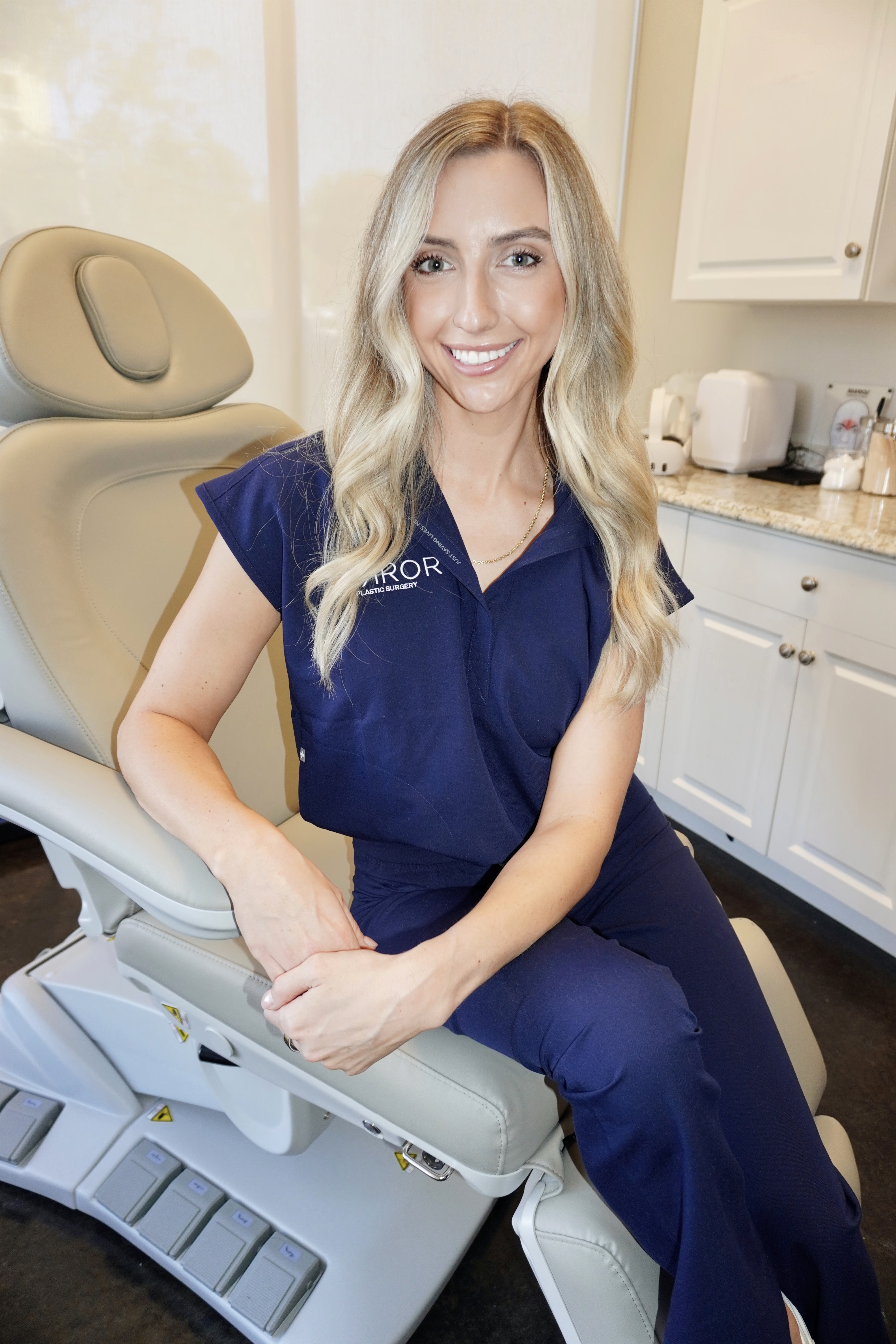
Our lead practitioner, FNP-BC serves as the primary clinician for peptide therapies and non-surgical aesthetics at Mirror Plastic Surgery. A board-certified Family Nurse Practitioner, she earned her Bachelor’s in Health Science from Boston University on the premedical track, completed an aesthetics licensure program, and obtained both her Bachelor’s and Master’s in Nursing from the University of South Florida. She spent four years in the Neuroscience ICU at Tampa General Hospital managing complex patients, which gave her a deep understanding of physiology, metabolic health, and the body’s capacity for recovery. Her combination of esthetician training and advanced nursing expertise allows her to connect cosmetic goals with the clinical science required to pursue them safely.
Our supervising physician, MD founded the practice and serves as supervising physician for all clinical programs, including peptide therapy. A Harvard-educated physician and Johns Hopkins-trained plastic surgeon, he completed fellowship training in aesthetic surgery at the Manhattan Eye Ear & Throat Hospital (MEETH)/Lenox Hill Hospital and medical device innovation training at Stanford University. His background in complex surgery, innovation, and outcomes-focused care informs the protocols, safety standards, and oversight applied to every peptide treatment.
Frequently Asked Questions
Are peptides FDA-approved, and is it legal to prescribe them?
Peptide legal status in the United States depends on the specific compound. Some peptides, including semaglutide, tesamorelin, and bremelanotide, are FDA-approved prescription drugs with defined indications. Many wellness peptides are not FDA-approved but may be legally compounded by licensed 503A or 503B pharmacies when they appear on the FDA’s approved bulk drug substance list and a valid patient-specific prescription exists. Peptides labeled “research use only” are not approved for human administration. Mirror Plastic Surgery sources exclusively from licensed, batch-tested compounding pharmacies and operates under physician supervision, so every protocol follows applicable federal and Florida state standards.
What are the real risks of using peptides without medical supervision?
The risks of unsupervised peptide use are documented in third-party testing. Research-grade products have shown the contamination and potency issues detailed earlier in this article, which include both dosing variability and sterility concerns. Without baseline labs, clinicians cannot identify contraindications such as active malignancy, uncontrolled diabetes, or severe kidney or liver disease that make certain peptides dangerous for specific individuals. Without ongoing monitoring, dosing errors go unnoticed and protocols never adjust. Physician-supervised concierge care addresses each of these gaps through labs, oversight, and verified sourcing.
How long does a peptide therapy protocol typically last, and when will I see results?
Protocol duration varies by peptide and treatment goal. Most initial courses run 8–12 weeks, with growth hormone secretagogue protocols often structured as 3–6 months on followed by 1–2 months off. Initial effects for healing and sleep support can appear within 2–4 weeks. Body composition and skin improvements usually develop over 1–3 months. Broader anti-aging and optimization benefits tend to emerge at 3–6 months with consistent adherence.1 After an initial course, many patients move to a maintenance protocol rather than stopping completely, because benefits diminish when therapy ends.
Will my results be the same as someone else’s?
Results from peptide therapy differ from person to person. Genetics, diet, lifestyle, baseline health status, and the specific protocol all influence outcomes.1 This variability explains why a personalized, lab-driven approach often produces better results than a menu-driven one. Mirror Plastic Surgery’s process, which includes comprehensive consultation, lab panel review, custom stack design, and ongoing monitoring, is designed to account for individual physiology instead of assuming a uniform response.
Can Mirror Plastic Surgery provide peptide therapy if I live outside Florida?
Mirror Plastic Surgery can provide peptide therapy to patients in all 50 states, including Hawaii and Alaska. The team conducts video or phone consultations, reviews remotely ordered labs, and works with licensed compounding pharmacies that ship directly to the patient. Patients also have 24/7 direct text access to the lead practitioner throughout their protocol, regardless of location.
Conclusion
The gap between a menu-driven med-spa peptide visit and a physician-supervised concierge peptide program reflects differences in clinical rigor, sourcing integrity, and patient safety. Root-cause lab panels identify who should and should not receive a given protocol. Custom stacks address the actual drivers of a patient’s concerns instead of the most popular items on a price list. Batch-tested sourcing from licensed compounding pharmacies reduces the contamination and potency risks documented in gray-market products. Direct, ongoing practitioner access allows protocols to adjust as the patient’s body responds instead of remaining static until the next visit.
Mirror Plastic Surgery operates on the principle that every patient deserves the full attention of a qualified clinical team. For peptide therapy, that principle means a board-certified NP with ICU and aesthetics experience guiding care from initial lab review through long-term maintenance, under the supervision of a Harvard-educated, Johns Hopkins-trained plastic surgeon.
Schedule your consultation to discuss a personalized peptide protocol.
Disclaimer: Many peptides discussed in this article are not FDA-approved for the indications described. Compounded peptides are not FDA-evaluated for safety, efficacy, or quality. Regulatory status of specific peptides is subject to change; our practice monitors FDA guidance continuously. Individual results vary and are not guaranteed. This content is for informational purposes only and does not constitute medical advice. Consult a qualified healthcare provider before beginning any peptide therapy program.
1 Results may vary from person to person. Editorial content, before and after images, and patient testimonials do not constitute a guarantee of specific results.
Peptide therapy is intended for wellness and optimization purposes and is not prescribed to diagnose, treat, cure, or prevent disease unless specifically stated. Many peptides are not FDA-approved and may be used off-label. Some have limited long-term safety data, with a potential for unknown risks, complications, or desensitization with prolonged use.