
Written by: Ellie Pranckevicius, FNP-BC, Aesthetic Nurse Practitioner & Aesthetic Injector | Facial Restoration & Regenerative Injectable Specialist, Mirror Plastic Surgery | Last updated: July 9, 2026
Key Takeaways
- Supervised peptide therapy at Mirror Plastic Surgery uses lab-guided protocols to address chronic inflammation, anxiety, low energy, and skin aging with more precision than conventional treatments alone.
- Key peptides such as Selank, NAD+, GHK-Cu, Sermorelin, and Ipamorelin target specific pathways for mental clarity, cellular energy, collagen production, and growth hormone support.
- Every protocol at Mirror Plastic Surgery begins with a detailed consultation, comprehensive lab review, and custom stack design, followed by ongoing monitoring and dose adjustments.
- Unsupervised peptide use carries documented risks including contamination, hormonal imbalance, and legal concerns, so physician oversight and licensed sourcing are essential for safety.
- Patients who want a personalized, lab-guided peptide protocol can book a consultation at Mirror Plastic Surgery.
Holistic Peptide Therapy at Mirror Plastic Surgery
Peptides are short chains of amino acids that act as signaling molecules, instructing cells and tissues to perform specific functions. Because they are structurally similar to the body’s own regulatory compounds, they can be designed to target discrete pathways, such as growth hormone secretion, collagen synthesis, gut barrier repair, or neurotransmitter modulation, with relatively high precision.
Interest in integrated peptide protocols has grown among people who feel conventional treatments do not fully address complex, overlapping concerns. A person managing both systemic inflammation and anxiety, for example, may not find that a single pharmaceutical addresses both dimensions. Holistic peptide programs at Mirror Plastic Surgery address hormone balance, metabolic health, gut function, stress response, sleep quality, nutrition, and lifestyle factors as part of a root-cause strategy rather than symptom suppression.
This systems-level approach distinguishes integrated protocols from single-indication prescribing and helps align treatment with each patient’s broader health goals.
Peptides That Support Anxiety Relief and Mental Clarity
Selank and NAD+ are the two peptides most frequently discussed at Mirror Plastic Surgery in the context of mental health. Their mechanisms differ, and the strength and origin of the evidence supporting each also differ.
Selank is a synthetic heptapeptide derived from the immune molecule Tuftsin. Its anxiolytic effects appear to involve several mechanisms, including positive allosteric modulation of GABA-A receptor binding, homeostatic effects on NMDA glutamate receptors, increased enkephalin concentration via opioid system action, monoamine neurotransmitter balancing, and immunomodulating anti-inflammatory actions. In a randomized trial, Selank produced anxiolytic effects comparable to phenazepam on standard rating scales.
Head-to-head comparisons against medazepam and phenazepam showed that Selank matched benzodiazepines for anxiety reduction but did not cause sedation, muscle weakness, memory impairment, or dependence. The evidence base for Selank consists primarily of Russian-language clinical trials. No Western randomized controlled trials have replicated these findings as of 2026, and the human trials are limited by small sample sizes, lack of blinding, and limited randomization.
As of April 2026, the FDA classifies Selank as a Category 2 bulk drug substance under Section 503A. This classification restricts its use in compounding pharmacies while review is ongoing, and Selank has no FDA-approved indication.
While Selank focuses on anxiety through neurotransmitter modulation, NAD+ (Nicotinamide Adenine Dinucleotide) approaches mental clarity through cellular energy metabolism. NAD+ is a coenzyme present in every cell. It supports cellular energy production, brain signaling, DNA repair, and neurotransmitter function.
NAD+ supports sirtuin activity, which influences inflammation, oxidative stress, and mitochondrial function, all factors linked to depression. Preclinical research is more robust than current human evidence, which remains preliminary and requires more controlled trials. NAD+ therapy is not FDA-approved for mental health conditions, and no standardized protocols exist. At Mirror Plastic Surgery, NAD+ is viewed as a supportive metabolic intervention rather than a standalone psychiatric treatment.
Peptides Used for Energy, Skin Health, and Visible Aging
Several peptides used at Mirror Plastic Surgery target the mitochondrial and endocrine pathways most associated with energy decline and visible aging. The three most commonly prescribed peptides in this category each address different aspects of cellular energy and tissue regeneration.
- NAD+ targets cellular mitochondria directly and supports ATP production and DNA repair. Results vary by individual, delivery method, and baseline NAD+ levels.1 Oral NAD+ supplements have relatively low bioavailability compared with IV infusion or intramuscular injection, which limits clinical impact.
- GHK-Cu (Copper Peptide) stimulates collagen and elastin synthesis, supports skin barrier integrity, and has demonstrated activity in hair and nail rejuvenation. It can be used individually or as part of combination stacks that target systemic inflammation and skin aging.
- Sermorelin and Ipamorelin are growth hormone-releasing peptides. They support the body’s natural growth hormone signaling through the pituitary gland rather than introducing synthetic human growth hormone, which can suppress natural production. CJC-1295 and Ipamorelin reliably increase GH and IGF-1 levels in humans, and elevated levels carry established risks including metabolic syndrome, cancer risk, and cardiovascular complications, so lab monitoring remains essential.1
Realistic expectations help patients stay grounded. Individual responses to these peptides vary based on genetics, baseline hormone levels, lifestyle, and protocol adherence.1 No peptide reverses aging. A more accurate description is support for cellular function within an individual’s existing physiology.
Your Peptide Therapy Journey at Mirror Plastic Surgery
At Mirror Plastic Surgery, the peptide therapy journey follows a structured, lab-informed sequence that keeps safety and personalization at the center.
- Initial Consultation: A 30–60 minute session reviews full medical history, current medications, symptoms, and wellness goals. This visit functions as a clinical evaluation designed to identify root causes rather than surface complaints.
- Lab Review and Ordering: For weight management, inflammatory conditions, or hormonal concerns, relevant panels are reviewed or ordered. These typically include thyroid markers, liver and kidney function, diabetes indicators, and hormone panels. Lab data informs every subsequent decision.
- Protocol Design: Custom peptide stacks are built around individual findings. Common combinations include the Glow Stack (GHK-Cu, BPC-157, TB-500) for systemic inflammation and collagen support, KPV for gut microbiome inflammation, GLP-3R compounding for weight management and insulin resistance, and Selank or NAD+ for anxiety and energy when clinically appropriate.
- Administration Guidance: Patients receive detailed instructions for reconstitution and self-administration, often with video demonstrations. Injectable subcutaneous administration provides higher and more predictable bioavailability, more precise dosing, and reduced variability in absorption compared to oral routes.
- Ongoing Monitoring: Lab markers and symptom response are tracked over time. Protocols are adjusted based on results rather than fixed to a predetermined schedule.
- Maintenance: Sustained benefits usually require continued use. As with any health regimen, discontinuation typically leads to a return of the underlying condition being managed. Maintenance protocols are designed to be sustainable and proportionate to each patient’s goals.
The entire process, from consultation through prescription and shipping, is available in person at the St. Petersburg, Florida clinic or remotely across the United States, including Hawaii and Alaska.
Risks Linked to Unsupervised Peptide Use
The commercial peptide market has expanded far faster than the clinical evidence supporting it. ECRI and ISMP have documented clinical safety signals across the peptide class, including a halted clinical trial following a fatal cardiac event, case reports of melanoma and kidney dysfunction, and a documented death following intravenous administration.
Analytic testing of peptide products sold on the gray market has shown variable purity levels and contamination issues that can exceed established toxicity thresholds for injectable drugs. For context, the majority of published studies on BPC-157 have been conducted in animals, with limited published human safety and efficacy data.
Additional documented risks of unsupervised use include:
- Mislabeled, contaminated, under-dosed, or entirely different compounds that bypass manufacturing and safety safeguards required for prescription products.
- Hormonal imbalances, water retention, changes in blood sugar levels, organ strain on the liver or kidneys, increased infection risk, and unknown long-term health effects.
- Unknown long-term immune effects, including potential anti-drug antibody formation that may neutralize the peptide or provoke unintended immune reactions.
- Legal exposure when importing peptides without a prescription, which may violate local laws and place users in legal grey zones.
A federal policy change in April 2026 altered the regulatory classification of 12 peptides without adding new clinical evidence and should not be interpreted as a safety endorsement. Regulatory reclassification differs from clinical validation.
Why Supervision Improves Safety and Personalization
Safe peptide therapy at Mirror Plastic Surgery rests on four core requirements. These include selection of an appropriate peptide with established data, physician prescription and monitoring for contraindications and response, sourcing exclusively from licensed U.S. 503A and 503B pharmacies, and baseline plus periodic labs with dose titration.
These requirements exist because each one addresses a specific failure pattern seen with unsupervised use, including contamination, overlooked contraindications, hormonal drift, and product quality problems. Mirror Plastic Surgery’s concierge model integrates all four elements into every protocol from the initial consultation forward.
Peptides at Mirror Plastic Surgery are sourced from reputable providers with rigorous batch testing, which supports product quality, purity, and accurate dosage. This approach directly addresses the contamination and mislabeling risks documented in gray-market products. Contraindications, including pregnancy, certain cancer histories, and specific cardiac or endocrine conditions, are screened during the initial evaluation before any protocol begins.
The concierge structure also means that the practitioner is available via text or scheduled telemedicine for ongoing questions, dose adjustments, and refill requests. Peptide therapy is not used in isolation. It is integrated into a broader personalized plan that includes comprehensive intake, targeted lab testing, personalized treatment planning, and ongoing monitoring.
Meet Your Peptide Practitioner, Ellie Pranckevicius, FNP-BC
Ellie Pranckevicius is a board-certified Family Nurse Practitioner and the lead practitioner for peptide therapies and non-surgical aesthetics at Mirror Plastic Surgery. She holds a Bachelor’s in Health Science from Boston University, completed an aesthetics licensure program, and earned both her Bachelor’s and Master’s in Nursing from the University of South Florida.
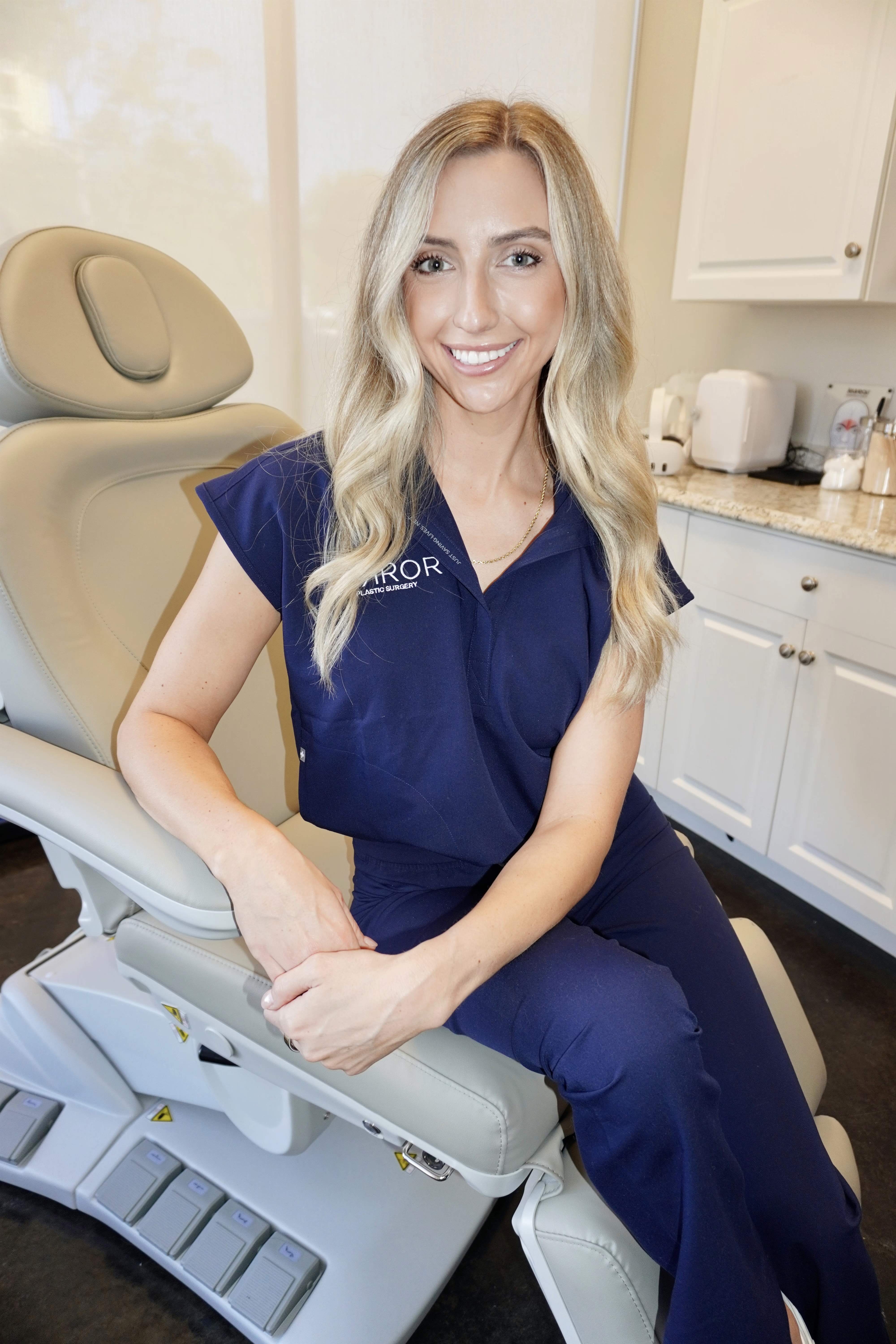
Her clinical foundation includes four years in the Neuroscience ICU at Tampa General Hospital, where she managed complex patients and developed a deep understanding of physiology, metabolic health, and the body’s capacity for recovery. That critical-care background shapes how she evaluates peptide candidates, viewing them as individuals with distinct physiological profiles that require careful assessment.
Ellie began her career at a high-end medical spa in Boston, which gives her a dual perspective that bridges aesthetic goals with clinical science. Her approach to patient care is rooted in education. She explains the physiology behind each recommendation in accessible terms so patients understand not just what they are taking, but why.
She is known for telling patients when a service or product is not yet necessary for them, a level of transparency that reflects Mirror Plastic Surgery’s broader commitment to safety first, function second, and aesthetics third. When surgical intervention complements a patient’s goals, Ellie’s work can be supported by Dr. Akash Chandawarkar, MD, a Harvard-educated physician, Johns Hopkins-trained plastic surgeon, and fellowship-trained aesthetic surgeon at Manhattan Eye Ear & Throat Hospital.
Frequently Asked Questions About Peptide Therapy
Are peptides FDA-approved, and is it legal to use them?
FDA approval status for therapeutic peptides varies considerably. Some peptides, including insulin, GLP-1 receptor agonists such as semaglutide, and bremelanotide, are fully FDA-approved for specific indications. Many peptides used in functional and integrative medicine are prescribed off-label or compounded by licensed 503A or 503B pharmacies under a physician’s prescription.
A smaller category of peptides sold online as “research chemicals” are not approved for human use and carry the highest legal and safety risks. At Mirror Plastic Surgery, every peptide offered is evaluated for its regulatory status, evidence base, and clinical appropriateness before being included in a patient protocol.
What side effects should I expect from supervised peptide therapy?
Under medical supervision with sourcing from licensed pharmacies, common side effects are generally mild and manageable. These may include:
- Injection-site reactions such as redness, soreness, or bruising
- Transient nausea, particularly with GLP-1 pathway peptides
- Headache or mild fatigue during initial dosing
- Temporary water retention
These effects are typically addressed through site rotation, slow dose titration, and follow-up adjustments. More serious risks, including hormonal imbalances, organ strain, or immune reactions, are associated primarily with unsupervised use of unverified products. Ellie reviews each patient’s medical history and lab results to identify and mitigate individual risk factors before any protocol begins.
Who is a good candidate for peptide therapy?
Peptide therapy is most appropriate for adults who have a clearly identified health concern, are not pregnant or breastfeeding, and do not have contraindicated conditions such as active cancer, a personal or family history of medullary thyroid carcinoma, or uncontrolled endocrine disorders. Good candidates are also willing to participate in the full supervised process, including lab work, ongoing monitoring, and maintenance protocols, rather than seeking a one-time intervention.
The initial consultation with Ellie is designed to determine candidacy based on individual health history, current medications, and specific goals.
How long does it take to see results, and what happens if I stop?
Timelines vary by peptide and condition. Some patients report initial changes within the first week, while others require several weeks of consistent use before meaningful shifts occur. Results are influenced by genetics, lifestyle, baseline health status, and protocol adherence.1
If peptide therapy is discontinued, benefits typically diminish over time, similar to stopping any health regimen.1 For conditions involving chronic inflammation or hormonal signaling, the underlying physiology usually returns to its prior state without ongoing management. Maintenance protocols at Mirror Plastic Surgery are designed to be sustainable and are adjusted based on how each patient responds over time.
Can peptide therapy be combined with other treatments?
Peptide therapy can be combined with other treatments, and thoughtful integration often produces the most meaningful outcomes. Peptides function as signaling molecules that amplify, rather than replace, the effects of balanced nutrition, physical activity, and other medical or aesthetic treatments.
At Mirror Plastic Surgery, peptide protocols can complement post-surgical recovery, non-surgical aesthetic treatments, and lifestyle interventions. For patients whose goals include both systemic wellness and aesthetic improvement, Ellie’s work can be coordinated with Dr. Chandawarkar’s surgical expertise when appropriate. Combinations are guided by clinical judgment and lab data, not by patient-directed stacking without oversight.
Considering Supervised Peptide Therapy
Supervised peptide therapy offers a meaningful option for people whose health concerns, such as chronic inflammation, anxiety, low energy, skin aging, or weight management, have not been fully addressed by conventional approaches alone. The evidence base for individual peptides ranges from well-established to preliminary, and clear communication about that range supports informed consent.
Current evidence consistently shows that the source, structure, and supervision of care influence outcomes as much as the peptides themselves. Mirror Plastic Surgery’s concierge peptide program, led by Ellie Pranckevicius, is built on lab-guided personalization, batch-tested sourcing, and direct ongoing practitioner access.
Every protocol begins with a thorough evaluation and is adjusted based on how each individual responds rather than a standardized template. Decisions about peptide therapy require qualified medical assessment. Patients who want to explore whether a supervised protocol fits their health profile can start with a direct conversation with a practitioner who will review their history, labs, and goals before recommending anything.
Book an appointment with Ellie at Mirror Plastic Surgery to begin that conversation.
1 Results may vary from person to person. Editorial content, before and after images, and patient testimonials do not constitute a guarantee of specific results.
Peptide therapy is intended for wellness and optimization purposes and is not prescribed to diagnose, treat, cure, or prevent disease unless specifically stated. Many peptides are not FDA-approved and may be used off-label. Some have limited long-term safety data, with a potential for unknown risks, complications, or desensitization with prolonged use.