
Written by: Ellie Pranckevicius, FNP-BC, Aesthetic Nurse Practitioner & Aesthetic Injector | Facial Restoration & Regenerative Injectable Specialist, Mirror Plastic Surgery | Last updated: June 16, 2026
Key Takeaways
-
Neuroprotective peptides are short amino-acid chains studied in animals for reducing neuroinflammation, supporting neuronal repair, and modulating mood pathways.
-
Frequently used compounds include BPC-157 for angiogenesis and tissue repair, Selank for BDNF-linked calming effects, and GLP-1R agonists associated with dopaminergic preservation.
-
Current evidence remains almost entirely preclinical, with no completed controlled human trials for brain injury or neuropsychiatric indications as of mid-2026.
-
Responsible use relies on lab-guided protocols, verified sourcing from compounding pharmacies, and ongoing medical supervision to balance potential benefits with unknown long-term risks.
-
Patients interested in personalized neuroprotective peptide care can schedule a consultation with Ellie Pranckevicius, FNP-BC at Mirror Plastic Surgery for evidence-based evaluation and treatment planning.
How Neuroprotective Peptides Support Brain Health
Neuroprotective peptides are short chains of amino acids that interact with neural tissue to preserve neuronal structure, reduce inflammatory signaling, or support cellular repair. Their proposed roles span a wide range of concerns.
They may attenuate neuroinflammation after injury, modulate the stress-response axis involved in anxiety, promote angiogenesis that sustains oxygen delivery to brain tissue, and activate neurotrophic pathways that govern neuronal survival and plasticity.
Many peptides appear to act on specific molecular targets in preclinical models, rather than behaving like broad-spectrum pharmaceuticals. This specificity is one reason individualized, lab-guided protocols matter. The evidence base remains largely preclinical, so responsible use requires medical supervision to weigh potential benefits against unknown long-term risks in humans.
Ellie Pranckevicius, FNP-BC: Neuro-Focused Peptide Care
Ellie Pranckevicius, FNP-BC, leads peptide therapies at Mirror Plastic Surgery. She is a board-certified Family Nurse Practitioner with degrees from Boston University and the University of South Florida. Ellie spent four years in the Neuroscience ICU at Tampa General Hospital managing complex neurological cases, which gives her a direct, physiologically grounded perspective on brain health and recovery.
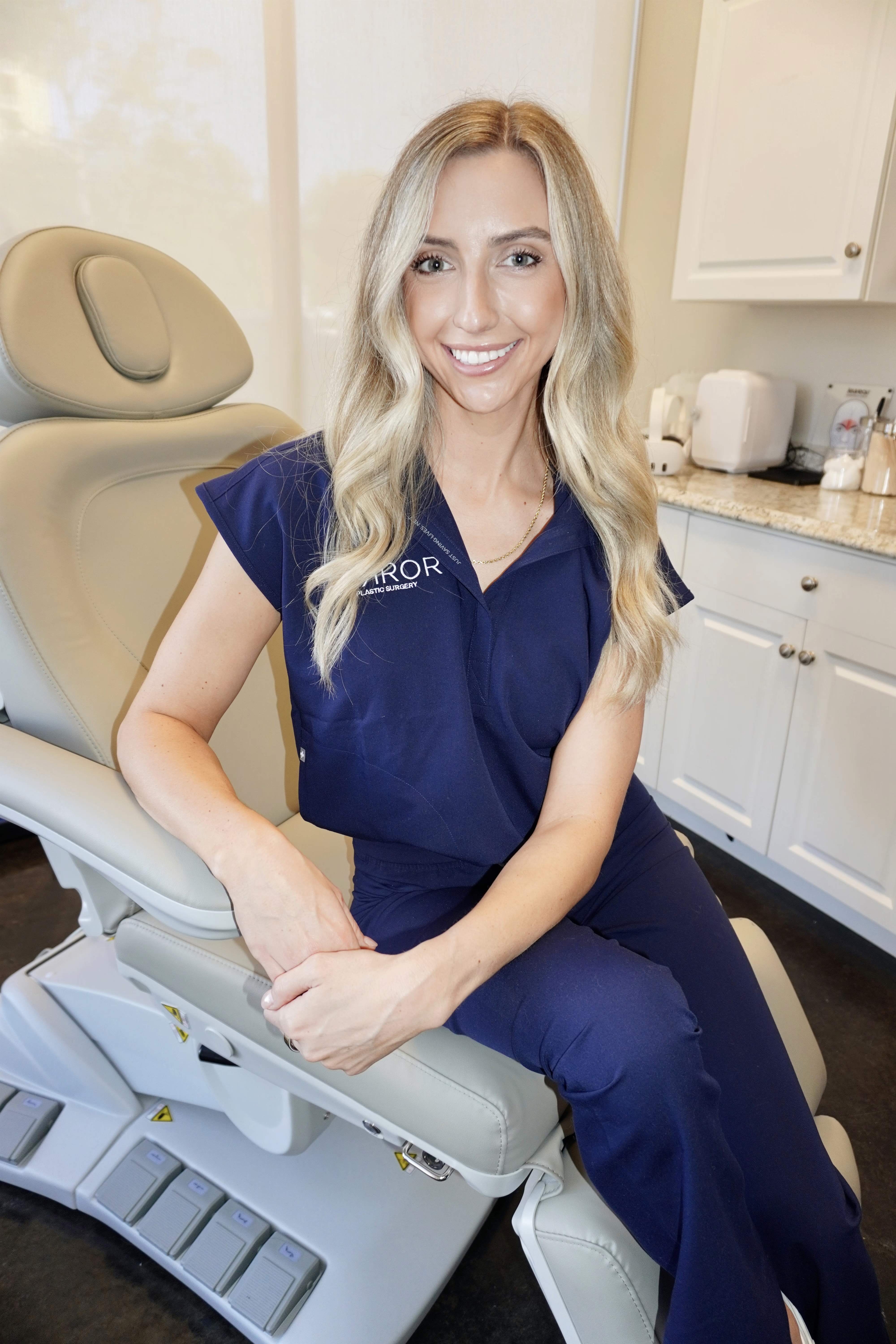
She began her career in high-end medical aesthetics in Boston, and that dual background in clinical nursing and aesthetic science informs every protocol she designs. Ellie centers her approach on education. She explains the mechanism behind each recommendation in plain language so patients understand not just what they are taking, but why.
Book an appointment with Ellie to discuss a lab-guided neuroprotective peptide protocol tailored to your health profile.
Core Neuroprotective Terms Explained
Neuroinflammation refers to activation of the brain’s immune cells, primarily microglia and astrocytes, in response to injury, infection, or chronic metabolic stress. Sustained neuroinflammation is associated with cognitive decline, mood disorders, and progression of neurodegenerative disease.
Nootropic peptides are peptides studied for their capacity to improve cognitive function, memory consolidation, or mood regulation. They often act through neurotrophic or neurotransmitter-modulating mechanisms.
Growth-hormone-releasing peptides (GHRPs) are peptides that stimulate the pituitary gland to secrete growth hormone. Growth hormone then supports tissue repair, metabolic function, and, in some preclinical models, neuronal health. Sermorelin and Ipamorelin are the most commonly used GHRPs in clinical wellness settings.
Neuroprotective Peptides Used at Mirror Plastic Surgery
The following six peptides or peptide classes appear most frequently in neuroprotection-related preclinical literature and are offered within Mirror Plastic Surgery’s concierge program. Evidence strength varies considerably across compounds.
The table below summarizes each peptide’s proposed mechanism and the strongest preclinical finding to date, showing how different compounds target distinct aspects of neuroprotection, including vascular repair, neurotrophic signaling, inflammation control, and metabolic support.
|
Peptide |
Proposed Mechanism |
Key Preclinical Finding |
Source |
|---|---|---|---|
|
BPC-157 |
VEGFR2-Akt-eNOS pro-angiogenic signaling, FAK-paxillin connective-tissue repair, cytoprotection |
BPC-157 counteracted hippocampal ischemia/reperfusion injury, resolved neuronal damage, and improved locomotion and coordination after bilateral carotid artery clamping in rats1 |
Vukojević et al., 2020 |
|
Selank |
BDNF/TrkB upregulation, HPA-axis modulation, GABAergic neurotransmission support |
Regulates hippocampal BDNF expression in rats1 |
Agapova et al., 2008 |
|
Sermorelin / Ipamorelin |
Growth-hormone secretagogue, downstream IGF-1 signaling supporting neuronal metabolism |
Preclinical models link GH-axis stimulation to improved synaptic plasticity and reduced oxidative stress markers, with no dedicated human neuroprotection trials completed1 |
General preclinical literature |
|
KPV |
Alpha-MSH-derived tripeptide, NF-κB inhibition, gut-brain axis anti-inflammatory signaling |
General preclinical literature |
|
|
NAD⁺ |
Mitochondrial co-enzyme supporting ATP synthesis, DNA repair via PARP/sirtuins, and oxidative-stress reduction |
Nature, 2026 Parkinson’s peptide study |
|
|
GLP-1R Agonists / GLP-3R |
PI3K/Akt, MAPK/ERK, cAMP/PKA–CREB pathways, dopaminergic neuron survival, microglial anti-inflammatory signaling |
Pooled analysis of three cardiovascular outcome trials (n=15,820) associated GLP-1 receptor agonists (liraglutide or semaglutide) with an HR of 0.47 for dementia diagnosis versus placebo1 |
Nørgaard et al., 2022 |
Is BPC-157 Neuroprotective?
BPC-157 (Body Protective Compound 157) is among the most studied peptides in preclinical neuroprotection research. A 2026 peer-reviewed review by Matek et al. in Pharmaceuticals (Basel) describes BPC-157 as a multi-modal peptide with preclinical evidence for recovery across tendon, ligament, muscle, peripheral nerve, and central nervous system injury models.
In rat studies, BPC-157 supported recovery of ischemia and reperfusion-related hippocampal neuronal injury, reduced necrosis and edema, preserved cortical architecture, and improved motor and behavioral outcomes after injury.1
The evidence base has a critical limitation. A 2025 systematic review by Vasireddi, Hahamyan, Salata et al. in HSS Journal synthesized 36 studies on BPC-157, including 35 preclinical animal studies and one uncontrolled human chart review, and documented zero completed controlled human efficacy trials for any indication. All controlled efficacy evidence therefore remains in animal models, so supervised use with realistic expectations is essential.
Choosing Peptides for Brain Injury Recovery
No single peptide has been validated in controlled human trials as a treatment for brain damage. The preclinical literature suggests that BPC-157, neurotrophic peptide mixtures, and GLP-1R agonists each address different aspects of neuronal injury. BPC-157 primarily supports angiogenesis and tissue repair. Neurotrophic mixtures focus on neurotrophic signaling. GLP-1R agonists appear to support dopaminergic preservation.
An exploratory open-label study of 17 Parkinson’s disease patients treated with a neurotrophic peptide mixture reported a 16% improvement in daily activity and 11% improvement in cognition, though the authors note that larger controlled trials are needed.1 Individualized assessment, including neurological history, current medications, and lab panels, remains the only responsible starting point for any brain-recovery protocol.
What BPC-157 May Do in the Brain
Preclinical research identifies the pro-angiogenic and connective-tissue repair pathways outlined earlier as BPC-157’s primary mechanisms. In animal models, these pathways translate to improved blood vessel formation in injured neural tissue, reduced inflammatory cell infiltration, and preservation of neuronal architecture.1
The 2026 Matek et al. review notes that BPC-157 appears to integrate angiogenic, cytoprotective, and reparative mechanisms simultaneously, which may explain its broad preclinical activity across tissue types. Researchers have not yet confirmed these mechanisms in controlled human physiological studies.
Peptides That Target Anxiety and Depression
Selank is the most studied nootropic peptide for anxiety and mood. Unlike benzodiazepines, which carry dependence risk and cognitive side effects with long-term use, Selank works through neurotrophic and stress-modulating pathways.
Selank’s hippocampal BDNF effects, documented in the table above, form the mechanistic basis for its anxiolytic profile. It also modulates the HPA axis and stress-related neuropeptides to protect against stress-induced structural brain changes, and its GABAergic activity produces calming effects without the receptor downregulation associated with benzodiazepine dependency.
GLP-1R agonists add another dimension to mood support. A meta-analysis of randomized controlled trial data from 107,860 adults found that GLP-1 medicines were associated with higher mental health-related quality of life and improvements in emotional eating behavior without increasing rates of psychiatric adverse events or depressive symptoms.1
Mirror Plastic Surgery’s patients have, in some cases, transitioned from pharmaceutical SSRIs and benzodiazepines to nootropic peptide protocols under Ellie’s direct supervision. That process requires careful tapering and ongoing lab monitoring.
Peptides in Post-Surgical and Post-Injury Brain Recovery
Peptides occupy a supportive, adjunctive role in post-surgical and post-injury recovery. BPC-157’s anti-inflammatory and pro-angiogenic properties, Selank’s neuroprotective BDNF effects, and NAD⁺’s mitochondrial support all address physiological processes relevant to healing.
Matek et al. document improved functional outcomes in rat spinal cord and peripheral nerve injury models treated with BPC-157.1 At Mirror Plastic Surgery, post-surgical peptide protocols are designed to complement, not replace, standard surgical aftercare, with coordination directly with the surgical team when needed.
Schedule a post-surgical recovery consultation with Ellie to explore whether a peptide protocol is appropriate for your recovery plan.
Important Considerations: Safety, Sourcing, and Supervision
Neuroprotective peptides are not FDA-regulated drugs. This status does not make them inherently dangerous, but it shifts the burden of quality assurance to the sourcing and prescribing provider. BPC-157 exhibits a plasma half-life of under 30 minutes in animal pharmacokinetic studies, and no human pharmacokinetic data have been published, so dosing protocols are extrapolated from animal models. Batch testing by a reputable compounding pharmacy is the minimum standard for verifying purity and concentration.
Common misconceptions include the belief that peptides are exclusively for weight loss, even though they address neuroinflammation, anxiety, recovery, and cellular energy, and the assumption that results are permanent. This permanence assumption is particularly problematic because, like any health intervention, peptide benefits require maintenance, and stopping treatment typically returns the body toward baseline.
Understanding this maintenance requirement is essential for evaluating contraindications, which vary by peptide and individual health profile and include certain autoimmune conditions, active malignancies, and interactions with existing medications.
As Jan Stritzke, MD, medical director at Lanserhof Sylt, states: “DIY peptide mixes and unregulated antiaging hacks are not the future. Evidence-based therapies supervised by physicians are.” Purchasing peptides from unverified online retailers bypasses every safety checkpoint that supervised care provides.
How Mirror Plastic Surgery’s Concierge Model Works
Mirror Plastic Surgery’s peptide program begins with a 30–60 minute consultation with Ellie, during which medical history, current medications, and health goals are reviewed in full. When indicated, comprehensive lab panels, including thyroid, liver, kidney, hormone, and metabolic markers, are ordered or reviewed before any protocol starts. Peptides are sourced exclusively from compounding pharmacies with documented batch testing.
Once a protocol is underway, patients have direct text access to Ellie for questions, dosing adjustments, and refill requests. The entire process, including consultation, prescription, and shipping, is available remotely across the United States, including Hawaii and Alaska, along with in-person visits at the St. Petersburg, Florida clinic.
Frequently Asked Questions
Are neuroprotective peptides legal to use in the United States?
Most peptides used in wellness and recovery contexts are legal to obtain with a prescription or through a licensed compounding pharmacy.
They are not FDA-approved drugs, which means they are not subject to the same regulatory oversight as pharmaceuticals. The primary legal and safety risk lies in purchasing from unregulated online sources without medical supervision, not in the peptides themselves when obtained through a licensed provider.
How long does it take to notice effects from peptides like Selank or BPC-157?
Timelines vary significantly by peptide, indication, and individual physiology. Some patients report changes in anxiety or sleep quality within the first week of Selank use.
Anti-inflammatory effects from BPC-157 may be noticed within days to weeks in some cases. Cognitive or neuroprotective benefits, if they occur, typically require longer, consistent use.1 No timeline is guaranteed, and outcomes depend on lab results, dosing accuracy, and overall health status.
Do I need to stay on peptides indefinitely to maintain brain health benefits?
Maintenance protocols are generally necessary to sustain benefits. Stopping a peptide regimen typically results in a gradual return toward baseline, similar to discontinuing any health intervention. Ellie designs protocols with long-term sustainability in mind, including periodic reassessment and lab monitoring to determine whether continuation, adjustment, or tapering is appropriate for each patient.
Can neuroprotective peptides replace my current anxiety or depression medication?
Peptides are not a replacement for prescribed psychiatric medications without direct physician oversight and a carefully managed transition plan.
Some Mirror Plastic Surgery patients have successfully reduced or discontinued SSRIs or benzodiazepines in coordination with their prescribing physicians while using nootropic peptides like Selank. This process requires medical supervision, gradual tapering, and ongoing monitoring, and it is never a decision made unilaterally or without lab guidance.
Will my results be the same as someone else using the same peptide protocol?
Results from peptide therapy are highly individual. Genetics, baseline inflammatory markers, diet, sleep, stress load, and concurrent medications all influence how a person responds. This variability is why Mirror Plastic Surgery does not offer one-size-fits-all protocols. Every plan is built from a patient’s specific lab results and health history.
Conclusion: Using Neuroprotective Peptides Wisely
The preclinical evidence for neuroprotective peptides, spanning BPC-157’s angiogenic and cytoprotective mechanisms, Selank’s BDNF-driven anxiolytic profile, GLP-1R agonists’ dopaminergic neuroprotection, and NAD⁺’s mitochondrial support, represents a promising frontier in brain health. The evidence base is real, and it is also incomplete. That gap between preclinical promise and clinical confirmation is precisely where medical supervision becomes non-negotiable.
Informed decision-making means understanding what the science currently supports, what it does not, and what individualized lab data reveal about your specific physiology. Mirror Plastic Surgery’s concierge model exists to bridge that gap with qualified oversight, verified sourcing, and direct practitioner access at every step.
Book an appointment with Ellie to begin a medically supervised, evidence-based neuroprotective peptide evaluation tailored to your brain health goals.
1 Results may vary from person to person. Editorial content, before and after images, and patient testimonials do not constitute a guarantee of specific results.
Peptide therapy is intended for wellness and optimization purposes and is not prescribed to diagnose, treat, cure, or prevent disease unless specifically stated. Many peptides are not FDA-approved and may be used off-label. Some have limited long-term safety data, with a potential for unknown risks, complications, or desensitization with prolonged use.