
Written by: Ellie Pranckevicius, FNP-BC, Aesthetic Nurse Practitioner & Aesthetic Injector | Facial Restoration & Regenerative Injectable Specialist, Mirror Plastic Surgery
Key Takeaways
- NAD+ is a coenzyme, while peptides are signaling molecules. “NAD peptide treatments” combines two distinct therapies often used together.
- 2025–2026 research shows NAD+ precursors raise biomarkers and can support endurance or insulin sensitivity, yet broader clinical benefits remain mixed and outcome-specific.1
- The FDA has issued recalls and warnings for compounded NAD+ injectables because of contamination risks, which highlights the need for verified sourcing and medical oversight.
- Medical supervision with baseline labs, personalized dosing, and adverse-event monitoring is essential for safety and meaningful results.
- Residents of the St. Petersburg and Tampa Bay area can schedule a consultation at Mirror Plastic Surgery for evidence-based, medically supervised NAD+ and peptide care tailored to their health profile.
Background: How NAD+ and Peptides Work Together
What NAD+ Does and How Levels Change With Age
NAD+ is a coenzyme present in every living cell. It carries electrons in mitochondrial energy production and serves as a substrate for enzymes involved in DNA repair and cellular stress responses, including sirtuins and PARPs. Research indicates NAD+ levels can drop by roughly 40–50% between a person’s 20s and 50s, but this decline is not universal across all tissues and populations; it varies by tissue type and is influenced by factors such as gender, a change associated with fatigue, cognitive fog, and slower recovery.
That figure warrants scrutiny. A 2026 Nature Metabolism study measuring whole-blood NAD+ in more than 300 people across multiple independent human cohorts found that whole-blood NAD+ levels were stable across age, with age explaining only a negligible fraction of variation, and attributed earlier reports of decline largely to pre-analytical handling artifacts such as freeze-thaw cycles. The picture is therefore more complex than a simple linear decline. The claim of a “50 percent decline by middle age” reflects specific tissues and study populations, rather than a uniform body-wide decline. Both perspectives help clinicians design individualized protocols.
How Peptides Differ From NAD+
Peptides are short chains of amino acids, typically 2 to 40 residues, that act as targeted signaling molecules. They bind specific receptors to trigger defined biological responses. NAD+ participates in over 500 enzyme-dependent reactions as a redox cofactor cycling between oxidized and reduced states, while peptides such as BPC-157, GHK-Cu, and Sermorelin each act on narrow, receptor-directed targets.
The two categories are mechanistically distinct yet complementary. NAD+ supports the cell’s energy and maintenance infrastructure broadly. Peptides direct specific tissue-level responses. They serve different roles, and that distinction matters when evaluating any protocol that combines them.
Research Findings: What 2025–2026 Studies Show
Cellular Energy and Mitochondrial Function
NAD+ therapy has a clear biological rationale for energy support. NAD+ is essential for ATP production in mitochondria, and lower levels correlate with reduced cellular energy output. Human clinical evidence paints a more nuanced picture. A 2026 systematic review in Molecular Biology Reports found that NAD+ precursor supplementation reliably raises NAD-related biomarkers, yet effects on physical function, fatigue, and other wellness outcomes are mixed, endpoint-specific, or null.
A 2026 network meta-analysis in Frontiers in Nutrition synthesizing 27 studies found that NMN showed dose-dependent improvements in endurance performance but no significant effect on perceived fatigue or sleep quality overall.1 The evidence therefore supports a selective impact on endurance-related performance rather than a broad subjective energy benefit.
Cognitive Support and Neuroprotection
High-energy brain cells depend on NAD+, and animal models show that restoring NAD+ can reduce neuroinflammation. Human data remains more cautious. A 12-week clinical trial led by Christopher Martens at the University of Delaware found that nicotinamide riboside (NR) was well-tolerated and increased blood NAD+ in older adults with mild cognitive impairment, yet did not significantly improve cognitive function, cardiovascular function, or whole-brain blood flow.
The 2026 Frontiers in Nutrition meta-analysis found that NADH produced the strongest improvement in cognitive performance (SMD = 1.50), particularly in cognitively impaired cohorts1, although this result was sensitive to influential studies. Biomarker improvement and clinical cognitive benefit remain separate questions, and responsible providers explain that difference clearly.
Metabolic Health and Insulin Sensitivity
The strongest human metabolic evidence in the NAD+ field comes from oral precursor research. A 2021 randomized, placebo-controlled trial published in Science found that 250 mg/day of NMN improved muscle insulin sensitivity in prediabetic postmenopausal women over 10 weeks1, although other researchers questioned the strength and interpretation of this finding.
A 2026 meta-analysis in Nutrients found no significant effects of oral NMN on fasting glucose or HbA1c, but observed a slight decrease in diastolic blood pressure1, which suggests a preliminary vascular-metabolic signal. A 2022 meta-analysis in Nutrition & Metabolism showed lipid improvements primarily in patients with cardiovascular disease or dyslipidemia, rather than in healthy individuals.1
DNA Repair, Longevity, and Skin Vitality
NAD+ serves as a substrate for sirtuins and PARPs, enzymes central to DNA repair and cellular stress responses. Animal studies show lifespan extension in mice. A 2026 review in Molecular Biology Reports concluded that NAD+ supplementation is “not yet proven as a general anti-aging or neuroprotective therapy.” No human trial has demonstrated lifespan extension.
For skin and vitality, NAD+ supports cellular turnover, while peptides such as GHK-Cu directly target collagen production. A 2026 narrative review in Frontiers in Aging concluded that current evidence on IV NAD+ therapy is “preliminary and insufficient to support routine clinical or wellness use,” and that robust conclusions about efficacy, optimal dosing, and long-term safety remain unavailable.
Regulatory Landscape: FDA Actions and Safety Signals
How the FDA Views Compounded NAD+
NAD+ has no FDA approval for any medical indication. Compounded NAD+ injections are prepared by licensed pharmacies under 503A or 503B pathways, yet they have not undergone FDA premarket review for safety or effectiveness. In October 2025, the FDA issued a Class I recall, its most serious category, for compounded NAD+ injectable products from a specific compounding pharmacy due to endotoxin contamination, which can cause fever, organ damage, and septic shock.
In a January 2026 Warning Letter to that pharmacy, the FDA explicitly stated that NAD+ does not appear on the 503B Bulks List, which makes bulk compounding for office use a direct violation of federal law. The FDA’s October 2024 reminder warned compounders not to use food-grade NAD+ in sterile products and cited adverse event reports of severe chills, shaking, and vomiting consistent with endotoxin exposure.
Peptide Regulation and the 2026 Advisory Vote
Most peptides do not hold FDA drug approval. In July 2026, the FDA’s Pharmaceutical Compounding Advisory Committee voted to add six of seven peptides to the 503A Bulk Drug Substance List despite FDA scientists recommending against all of them, and the Partnership for Safe Medicines warned this could “legitimize compounds lacking adequate clinical evidence.” This advisory vote remains subject to formal rulemaking and does not equal FDA approval. Compounding status does not confer approval, and an advisory vote does not guarantee safety without supervision.
Analysis: Why Medical Supervision Matters
What Comprehensive Medical Supervision Includes
Proper medical oversight for NAD+ and peptide therapies encompasses several core elements that work together to protect patients.
- Comprehensive consultation reviewing full medical history
- Baseline laboratory testing (comprehensive metabolic panel, CBC, lipid panel, and hormone panels as indicated)
- Systematic screening for contraindications
- Personalized dosing protocols
- Monitoring for adverse reactions during and after administration
- Sourcing exclusively from compounding pharmacies with documented batch testing and endotoxin screening
This standard guides Ellie Pranckevicius at Mirror Plastic Surgery. Her four years in the Neuroscience ICU at Tampa General Hospital built a clinical foundation in physiology and metabolic health that few wellness providers can match. Her esthetician background adds an understanding of the aesthetic goals patients bring alongside their health objectives.
Schedule a consultation with Ellie to receive a personalized protocol built on your lab results, medical history, and specific goals.
Risks When Treatment Lacks Oversight
A New York woman died after receiving an NAD+ injection at a Bronx wellness center from an individual accused of practicing medicine without a license, which illustrates the potential consequences of unsupervised access. Beyond that extreme, the FDA has received adverse event reports of severe chills, shaking, and vomiting consistent with endotoxin exposure from injectable NAD+ compounded from food-grade ingredients. Online peptide retailers provide no third-party quality testing, no screening for drug interactions or contraindications, and no clinical oversight if complications arise.
Side Effects and Contraindications to Discuss
Common side effects of NAD+ injections include nausea, flushing, headache, injection site reactions, and fatigue. These reactions are typically dose-dependent and temporary. A 2026 retrospective chart review found that all six IV NAD+ recipients reported moderate-to-severe abdominal cramping, nausea, and chest pressure during infusion, with symptoms ceasing upon completion. Clinicians primarily manage these reactions by slowing the infusion rate.
Absolute contraindications include active malignancy, known hypersensitivity to NAD+ or niacin derivatives, and concurrent PARP inhibitor use. PARP inhibitors (olaparib, niraparib, rucaparib) are directly antagonized by IV NAD+, which makes concurrent use an absolute clinical contraindication. Relative contraindications include pregnancy and breastfeeding, uncontrolled hypertension, severe renal or hepatic impairment, and unstable cardiovascular disease. Pre-treatment ECG is recommended for patients over 50 or with any cardiac history.
Comparing NAD+ Therapy With Oral Precursors
Oral NMN has 12+ published randomized controlled trials and oral NR has 10+, while injectable NAD+ has zero published RCTs. A 2026 head-to-head trial in Nature Metabolism found that NMN and NR comparably raised blood NAD+ by approximately 130–150% over 14 days. No head-to-head trial has shown that injectable NAD+ produces superior clinical outcomes compared with oral precursors.
The evidence base for oral precursors is stronger. Injectable NAD+ under medical supervision offers a different route that some patients prefer, especially those who did not respond adequately to oral supplementation or who are pursuing intensive short-term protocols. A qualified provider should guide the choice between routes based on individual health profile, goals, and tolerance.
Recommendations: Choosing a Medically Supervised Provider
Patients can protect themselves by asking targeted questions that separate clinically rigorous practices from high-volume wellness operations.
- What are your credentials and clinical experience with NAD+ and peptide therapy?
- Do you require baseline lab testing before initiating treatment?
- How do you source your products, and can you verify third-party batch testing and endotoxin screening?
- What is your protocol for monitoring side effects during and after administration?
- What follow-up care and ongoing support do you provide?
Several red flags signal elevated risk. Providers who skip baseline labs cannot personalize dosing or screen for safety. Offering identical protocols to every patient suggests a one-size-fits-all approach instead of individualized care. Inability to name the compounding pharmacy raises sourcing concerns, while claims of FDA approval or guaranteed outcomes misrepresent the regulatory status of these therapies. Providers who cannot state the ingredients and doses in their preparations, or who lack a licensed clinician present during infusion, present serious safety risks.
Why Mirror Plastic Surgery Aligns With These Standards
For residents of the St. Petersburg and Tampa Bay area, Mirror Plastic Surgery exemplifies the standards outlined above: concierge medicine, personalized protocols, and rigorous clinical oversight. Peptide and NAD+ therapies at Mirror are led by Ellie Pranckevicius, FNP-BC, a board-certified Family Nurse Practitioner whose background fits the demands of this work.
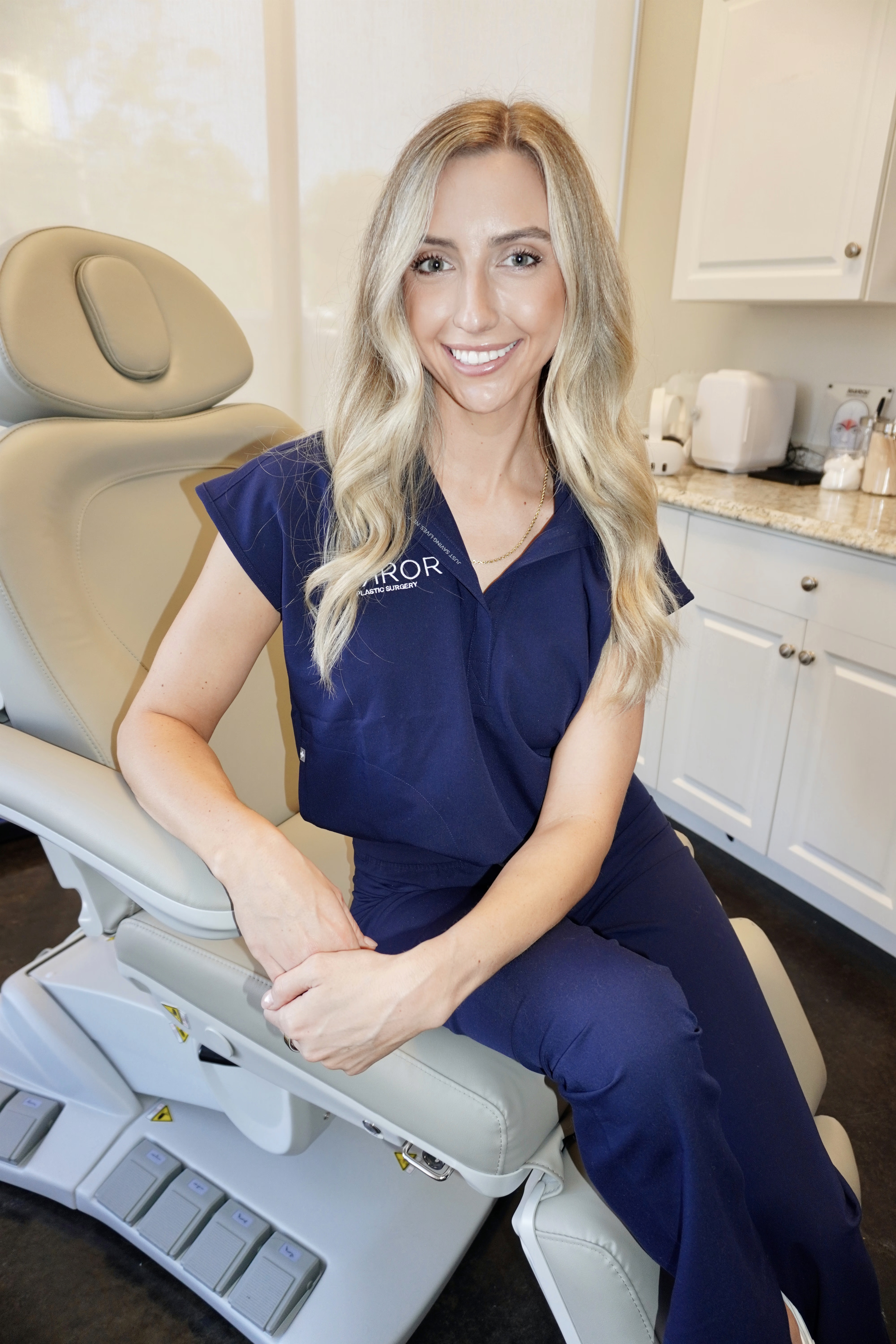
Ellie’s educational path, which includes a premedical Bachelor’s in Health Science from Boston University, aesthetics licensure, and both Bachelor’s and Master’s degrees in Nursing from the University of South Florida, provides a rare combination of scientific grounding and aesthetic expertise. Her four years in the Neuroscience ICU at Tampa General Hospital gave her deep experience managing complex patients, which shapes how she evaluates physiology, metabolic health, and the body’s capacity for recovery. Early work at a high-end medical spa in Boston refined her understanding of skin physiology and aesthetic assessment before she pursued nurse practitioner credentials.
Ellie’s approach reflects Mirror Plastic Surgery’s broader philosophy. Patients receive 30–60 minute consultations, comprehensive lab analysis, and protocols tailored to individual health profiles. The practice uses reputable compounding pharmacies with batch testing and offers 24/7 direct access via text. Services are available in person in St. Petersburg and remotely across the United States. When surgical needs accompany wellness goals, Ellie collaborates with Dr. Akash Chandawarkar, a Harvard-educated physician, Johns Hopkins-trained plastic surgeon, and fellowship-trained aesthetic surgeon at Manhattan Eye Ear & Throat Hospital.
Talk to Ellie about whether medically supervised NAD+ or peptide therapy fits your health profile.
Conclusion
NAD+ and peptide therapies offer promising yet still-evolving benefits for energy, cognition, metabolic health, and cellular aging.1 The evidence base for injectable NAD+ remains limited, with no published randomized controlled trials, while oral precursors such as NMN and NR have stronger but still mixed human data. Current evidence on IV NAD+ therapy remains preliminary and insufficient to support routine clinical or wellness use without rigorous medical oversight. FDA actions, including the 2025 Class I recall of contaminated NAD+ injectables and the January 2026 Warning Letter, highlight why medical supervision and quality sourcing serve as essential safeguards.
The distinction between NAD+ and peptides clarifies what each therapy can realistically provide. For residents of the St. Petersburg and Tampa Bay area seeking evidence-based, medically supervised care, Mirror Plastic Surgery offers clinical rigor, personalized protocols, and concierge support that help make these therapies both safer and more effective. Begin your journey with confidence by scheduling a consultation with Ellie.
Frequently Asked Questions
Are NAD+ treatments FDA-approved?
NAD+ currently has no FDA approval for any specific medical indication. Compounded NAD+ injections are prepared by licensed pharmacies under 503A or 503B compounding pathways, yet they have not undergone FDA premarket review for safety or effectiveness. Uses such as anti-aging, energy enhancement, and cognitive improvement remain off-label applications. As detailed earlier, the FDA’s recall and Warning Letter emphasize how crucial sourcing and supervision are for any NAD+ therapy.
What is the downside of taking NAD+?
Common side effects of NAD+ injections include nausea, flushing, headache, injection site reactions, and fatigue, which are usually mild, dose-dependent, and temporary. IV infusions can cause more significant reactions such as chest pressure, rapid heart rate, and abdominal cramping, which clinicians manage by slowing the infusion rate. More serious concerns include a theoretical tumor-growth risk in individuals with active or prior cancer, because NAD+ supports cell proliferation broadly, direct antagonism with PARP inhibitor chemotherapy drugs, and the absence of long-term human safety data beyond roughly eight weeks in published trials. Contraindications include active malignancy, pregnancy and breastfeeding, PARP inhibitor use, severe liver or kidney disease, and unstable cardiovascular disease. A thorough medical evaluation with baseline labs should precede any NAD+ therapy.
What is the difference between NAD+ and NMN?
NAD+ is the coenzyme that participates directly in cellular energy production and DNA repair. NMN (nicotinamide mononucleotide) is a precursor that the body converts into NAD+ through enzymatic pathways. Because oral NAD+ is largely broken down in the gut before meaningful absorption, supplementation typically relies on precursors such as NMN and NR (nicotinamide riboside), which are absorbed more effectively and raise blood NAD+ levels in human trials. A 2026 Nature Metabolism head-to-head trial found NMN and NR comparably effective at raising blood NAD+ by approximately 130–150% over 14 days. Injectable NAD+ bypasses digestive breakdown but, as noted, lacks the randomized controlled trial evidence available for oral precursors. A qualified provider should guide the choice between these approaches based on individual health profile and goals.
Can I take NAD+ if I have a chronic condition?
Suitability depends on the specific condition and requires evaluation by a qualified clinician. NAD+ therapy is contraindicated in active cancer because elevated NAD+ could support tumor cell growth and counteract PARP inhibitor chemotherapy. It is also contraindicated during pregnancy and breastfeeding due to the absence of safety data, and in patients currently taking PARP inhibitor drugs due to direct pharmacological antagonism. Clinicians apply caution and require medical clearance for individuals with severe liver or kidney disease, unstable cardiovascular disease, uncontrolled hypertension, a history of cardiac arrhythmias, and those taking anticoagulants or blood pressure medications. Anyone with a current or prior cancer diagnosis should consult their oncology team before considering any NAD+ product. A comprehensive consultation with baseline lab work provides the appropriate starting point for anyone with a chronic health condition.
How long do the benefits of NAD+ therapy last?
Published human trials are predominantly short-term, typically 2 to 14 weeks, so long-term durability data does not yet appear in the peer-reviewed literature. A 2026 review in Molecular Biology Reports noted that NAD+ responses to supplementation are nonlinear and influenced by dose, age, and metabolic state, operating within a complex regulatory system rather than a simple dose-response relationship. Most clinicians recommend maintenance protocols to sustain any benefits achieved, although optimal dosing schedules and frequencies have not been established in clinical trials. Individual responses vary significantly based on genetics, baseline NAD+ status, lifestyle factors, and the specific protocol used, which makes personalized assessment and ongoing monitoring central to responsible care.
Disclaimer
This article is for informational purposes only and does not constitute medical advice. NAD+ and peptide therapies are not FDA-approved for the wellness and anti-aging indications discussed. Results vary by individual. The evidence base for injectable NAD+ remains limited, and long-term safety data beyond eight weeks is not available in published human trials. Always consult a qualified healthcare provider to determine whether these therapies are appropriate for your specific health profile. Mirror Plastic Surgery provides medically supervised care, yet individual outcomes cannot be guaranteed.
1 Results may vary from person to person. Editorial content, before and after images, and patient testimonials do not constitute a guarantee of specific results.
Peptide therapy is intended for wellness and optimization purposes and is not prescribed to diagnose, treat, cure, or prevent disease unless specifically stated. Many peptides are not FDA-approved and may be used off-label. Some have limited long-term safety data, with a potential for unknown risks, complications, or desensitization with prolonged use.