
Written by: Dr. Akash Chandawarkar, Board Certified Plastic Surgeon, Mirror Plastic Surgery
Key Takeaways
- Hip dips are a normal anatomical feature driven by skeletal structure and cannot be fully eliminated by any treatment.
- Dermal fillers used for hip dips are off-label and come with specific regulatory and safety considerations.
- Surgical fat transfer can create long-lasting change, with 60–80% fat retention and a 14.6% complication rate in qualified hands.1
- Non-surgical fillers such as Sculptra and Radiesse give temporary improvement for 1–2 years, need maintenance, and cannot be dissolved.
- Get an honest anatomy-based assessment with Dr. Akash at Mirror Plastic Surgery to see which option, if any, fits your goals.
Hip Dip Anatomy: Why Adding Volume Changes the Contour
Hip dips come from your underlying skeleton. They are primarily determined by skeletal structure. The key factors are the distance between the iliac crest and the greater trochanter, and the angle of the femur. The dip sits over the gluteus medius muscle and has naturally thin subcutaneous fat. A wider pelvis, higher iliac crest, or longer femoral neck creates a larger gap and a more visible dip.
The exercise myth needs clear correction. Building the gluteus medius can actually accentuate the dip because muscle growth cannot change bone geometry. Increased muscle definition makes the skeletal gap easier to see. Adam Taylor, Professor of Anatomy at Lancaster University, states: “The honest answer is that short of surgery, hip dips cannot be eliminated. They are a feature of your skeleton, and no amount of gym work will move your bones.”
No treatment can erase hip dips completely. Volume addition with fat or filler can soften the contour and create a smoother transition. This same anatomy explains why so‑called “fat-dissolving” injections do not help. Hip dips are not caused by fat, so removing fat does not correct the indentation.
Surgical Options: Fat Transfer and Implants
Fat Transfer (Lipofilling)
Fat transfer uses liposuction to harvest fat from areas such as the abdomen or thighs. The fat is processed, then injected into the hip dip area. This is a true surgery that involves anesthesia and small incisions. Fat retention rates are 60–80% in most patients, can drop to 50% or less in smokers or patients with poor skin quality, and can reach 80–90% in ideal candidates.1
To compensate for expected resorption, surgeons usually overfill by 20–30%. Final contour becomes clear at about 3–6 months. The safety profile of this approach is supported by a 2026 peer-reviewed study of 112 patients undergoing stem cell-enriched gluteal and hip fat grafting. That study reported a 14.6% overall complication rate, with 7.8% minor contour irregularities and 5.6% seromas treated by needle aspiration, and no serious adverse events when fat stayed in the subcutaneous plane.
Patient satisfaction was high. In that study, 92% of patients reported subjective satisfaction, and 97.6% showed improvement on the Global Aesthetic Improvement Scale.1 Recovery usually involves 1–2 weeks off work. Patients wear compression garments over liposuction areas for about one month and avoid vigorous exercise for 4–6 weeks.
Hip Implants
Hip implants use solid silicone prosthetics placed over the hip bone. This option is less common and more invasive. Implant-based procedures carry complication rates around 30.5%, compared with roughly 10.5% for fat grafting. Risks include implant malposition, capsular contracture, implant palpability, and a longer recovery of 4–8 weeks.
Results are permanent and can create significant contour change.1 They may feel less natural than fat transfer, and only a small number of surgeons offer this procedure due to the complexity and risk profile.
Non-Surgical Options: Biostimulators and Fillers
Biostimulatory Fillers (Sculptra, Radiesse)
Sculptra (poly-L-lactic acid, PLLA) and Radiesse (calcium hydroxylapatite, CaHA) stimulate your own collagen over time. Results build gradually over 3–6 months. In current FDA labeling, these products are cleared for specific facial and hand uses, not for hip dips or body contouring. Sculptra is FDA-approved for facial indications only, and Radiesse is FDA-approved for facial wrinkles, hand augmentation, décolletage wrinkles, and jawline contour. Use in the hip dip area represents off-label treatment.
A 2026 multicenter retrospective study of 498 subjects treated with PLLA-SCA across 9 US sites found that the gluteal region was the most commonly treated nonfacial area, accounting for 60.3% of sessions. Only one subject (0.2%) developed a nodule in the hip dip area, and no serious adverse events were reported.
Sculptra results usually last 1–2 years. Radiesse often lasts 12–18 months.1 Both products need maintenance sessions, and neither can be dissolved with hyaluronidase. This limitation makes provider expertise and conservative dosing especially important. Sculptra treatment for hip dips typically involves 2–3 sessions and 10–20 total vials.
Hyaluronic Acid Fillers
Hyaluronic acid (HA) fillers give immediate volume and contour. Results usually last 6–18 months and can be reversed with hyaluronidase, which makes this category more forgiving for cautious patients. HA “body fillers” such as HYAcorp hold CE marks in Europe but are not FDA-approved in the United States and cannot be legally imported.
Risks include vascular occlusion and skin necrosis. However, the lateral hip area contains only tiny superficial vessels averaging under 0.9 mm. These vessels are far smaller than the inferior gluteal vein, which can reach 13.65 mm and is implicated in BBL fatalities. When a skilled provider injects with a blunt cannula in the subcutaneous plane, the risk of vascular injury is lower, though never zero.
Treatments That Do Not Correct Hip Dips
“Fat-dissolving” injections do not correct hip dips because the indentation comes from bone structure, not fat. Clinics that promise dramatic non-surgical changes with these injections often gloss over anatomy and regulatory realities.
FDA Safety Warnings: Key Safety Facts Before You Proceed
The FDA has not approved any dermal filler for hip dip reduction or buttock augmentation. The agency has issued specific cautions about fillers for body contouring. The FDA has specifically warned against injectable fillers for body contouring, citing risks such as vascular occlusion, tissue necrosis, embolism, and death. Injectable silicone is not approved by the FDA for aesthetic body contouring and can cause permanent injury, disfigurement, stroke, or death.
An analysis of the FDA’s MAUDE database identified 22,242 total adverse-event reports for dermal fillers. Sculptra accounted for 1,553 reports and Radiesse for 596. Common events included delayed-onset nodules, localized infections, and skin necrosis from vascular occlusion.
Importantly, the risk profile of hip dip filler differs from BBL fat transfer. Because the lateral trochanteric depression is injected in the subcutaneous plane where vessels average under 0.9 mm, the chance of entering a large vessel is lower. The inferior gluteal vein in deep muscular planes can reach 13.65 mm. This size difference helps explain the estimated BBL mortality rate of 1 in 3,000 to 1 in 15,000 surgeries. Any procedure should be performed by a board-certified plastic surgeon in an accredited facility.
With these safety considerations in mind, it helps to see the main options side by side.
Comparison Table: Surgical vs. Non-Surgical Options at a Glance
The table below highlights the core tradeoffs. Surgical options provide permanence with more downtime and higher upfront risk. Non-surgical fillers involve less downtime but temporary results, repeat treatments, and off-label use.
Cost Analysis: The 10-Year Financial Picture
Cost depends on your surgeon, location, and how much correction you need. A personalized quote comes during consultation. Still, the long-term pattern is clear. Surgical fat transfer is usually a single major expense, while non-surgical fillers create recurring costs over many years.
Modeled over 10 years, the number of treatment cycles shows how those costs add up:
- Sculptra: 4–5 treatment cycles
- Radiesse: 6–8 cycles
- HA fillers: 6–8 cycles
Fillers begin to look cost-effective only at the 5–7 year mark, and only for patients who feel comfortable with temporary results. Anyone under 40 who expects to maintain results long term should consider this math carefully before choosing fillers.
Beyond cost, the recovery experience differs significantly between surgical and non-surgical paths.
Recovery and Downtime: What Each Path Demands
Surgical recovery requires planning and support. Patients wear compression garments over liposuction areas for about one month. They avoid vigorous exercise for several weeks. Final results appear at 3–6 months as swelling resolves and transferred fat stabilizes.
Non-surgical recovery is usually brief. Most patients notice mild bruising or swelling for 1–2 days. However, biostimulator results develop gradually over 3–6 months. Multiple sessions are often required before the final outcome is visible.
How to Choose: Matching Options to Your Goals
- Desired permanence: Fat transfer offers a long-lasting, natural-looking change for patients willing to have surgery. Non-surgical fillers give temporary improvement with minimal downtime and carry off-label regulatory status.
- Budget: Consider the 10-year cost, not just the first session. Surgery costs more upfront but can be more economical over time for patients who would otherwise maintain fillers for many years.
- Risk tolerance: Surgery involves anesthesia and procedural risks. Biostimulatory fillers can create nodules that do not respond to hyaluronidase. HA fillers are reversible but short-lived.
- Downtime: If 1–2 weeks off work is unrealistic, non-surgical options cause less disruption, though results take months to fully develop.
- Aesthetic goals: Surgical fat transfer can add more volume and suits moderate-to-pronounced depressions. Fillers often work best for mild-to-moderate dips in patients with good skin elasticity.
Be cautious with clinics that promise dramatic changes using only non-surgical fillers. They may be minimizing anatomical limits and regulatory concerns. A reputable provider will explain when treatment does not fit your anatomy or goals.
Schedule your consultation to discuss your goals with Dr. Akash and receive an unbiased, evidence-based recommendation.
Why a Board-Certified Plastic Surgeon Matters for Hip Dip Treatment
Hip dip correction, whether surgical or non-surgical, calls for detailed anatomical knowledge. This is especially true for off-label injections, where the exact plane and technique directly affect safety. Dr. Akash brings strong training and experience to each assessment:
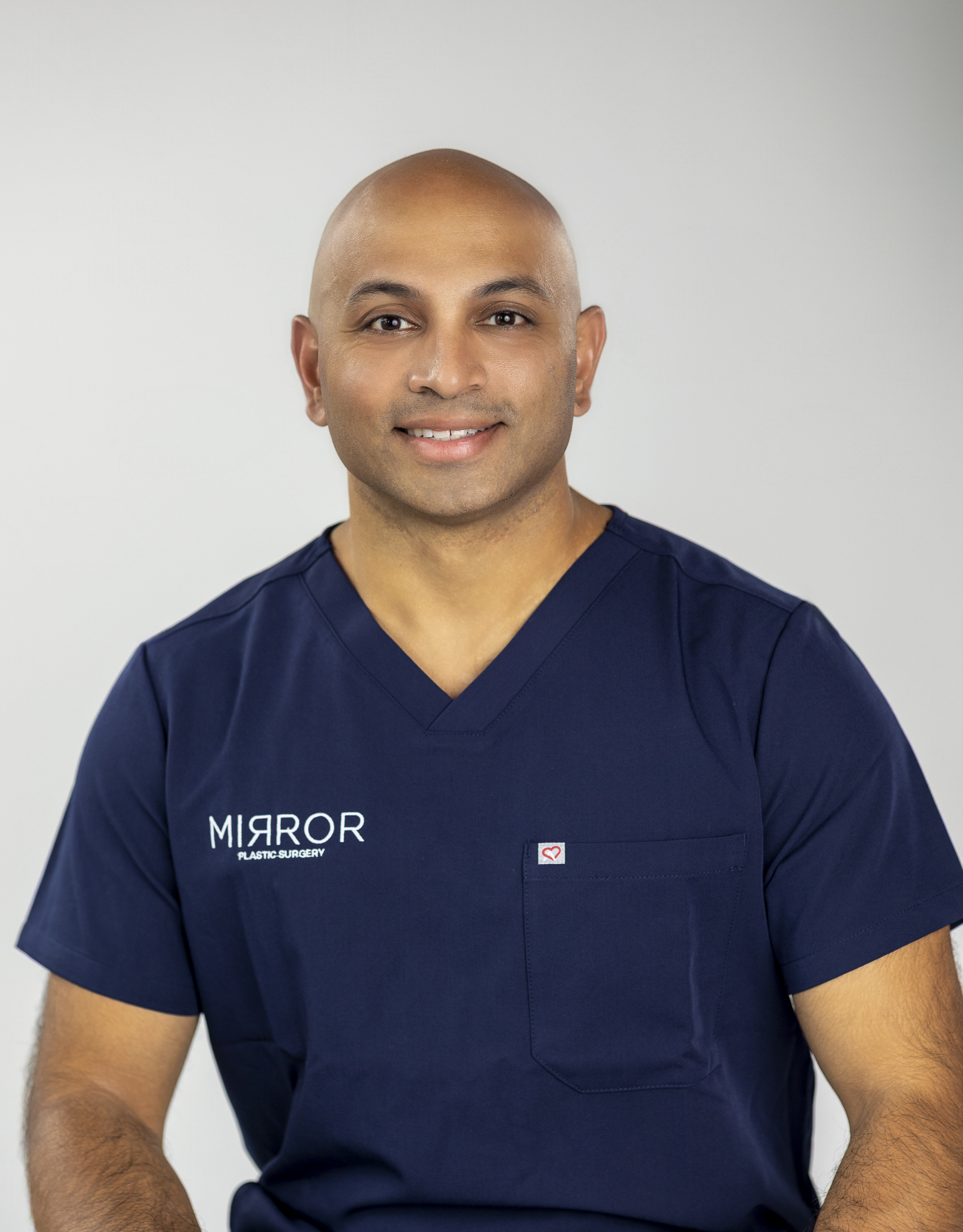
- Harvard Medical School graduate (Harvard-MIT HST program), graduated with Honors
- Seven-year integrated plastic and reconstructive surgery residency at Johns Hopkins University
- Aesthetic surgery fellowship at Manhattan Eye, Ear & Throat Hospital (MEETH)
- Stanford Biodesign Innovation Fellow
- Named to Newsweek’s America’s Best Plastic Surgeons 2025 for two consecutive years
- Advisory board member for Motiva, Merz Aesthetics, and Cypris Medical
- Selected to testify before the FDA on implant safety
Mirror Plastic Surgery follows a Safety, Function, Aesthetics philosophy. Consultations last up to one hour, and the practice schedules only 1–2 surgeries per day. Recommendations are supplier-neutral and grounded in current evidence. If treatment is not the right choice for you, Dr. Akash will say so clearly.
Conclusion: Choosing a Confident Path Forward
Surgical options such as fat transfer and implants provide permanent results but require meaningful downtime and higher upfront cost. In contrast, non-surgical options like Sculptra, Radiesse, and HA fillers involve minimal downtime yet deliver temporary results, accumulate costs over time, and rely on off-label use. The most important decision is selecting a provider who offers an honest, anatomy-based assessment instead of a one-size-fits-all sales approach.
If you are considering hip dip reduction, request a consultation with Dr. Akash at Mirror Plastic Surgery in St. Petersburg, FL. You will receive a thorough, evidence-based evaluation tailored to your anatomy, goals, and long-term well-being.
Mirror Plastic Surgery | 780 4th Ave S, St. Petersburg, FL 33701 | 727-361-6515 | hello@mirrorplasticsurgery.com
Frequently Asked Questions
Can you realistically get rid of hip dips?
No treatment can remove hip dips entirely. They come from the natural gap between the iliac crest and the greater trochanter, which surgery and non-surgical treatments cannot change. Volume-adding options such as fat transfer or injectable fillers can soften the indentation and smooth the contour. The underlying skeletal architecture remains the same. Any provider promising complete elimination is ignoring basic anatomy. Aiming for noticeable improvement, not perfection, leads to more satisfying outcomes.
Is Sculptra worth it for hip dips?
Sculptra can give gradual, temporary improvement in mild-to-moderate hip dips, and it suits patients who prefer to avoid surgery. A complete plan usually requires 10–20 vials across 2–3 sessions, with results developing over 3–6 months and lasting about 1–2 years before maintenance. Sculptra nodules cannot be dissolved with hyaluronidase, so provider skill and proper dilution are critical.
Modeled over a decade, cumulative Sculptra costs can exceed the one-time cost of surgical fat transfer. For patients not ready for surgery, Sculptra can be reasonable when a qualified provider explains its off-label status, cost, and realistic limitations.
Is hip dip surgery risky?
Hip dip surgery carries risks such as infection, anesthesia complications, fat reabsorption, and asymmetry, as with any operation. When fat transfer is performed by a board-certified plastic surgeon using subcutaneous-only fat placement, the risk profile is more favorable. As noted earlier, the 2026 study found a 14.6% complication rate, mostly minor issues like contour irregularities and seromas, and no serious adverse events.
Hip implants carry a much higher complication rate, as discussed earlier, and represent a more complex, higher-risk option. Choosing a board-certified plastic surgeon with hospital privileges and body-contouring experience remains the strongest risk-mitigation step.
What are the alternatives to hip dip surgery?
The main non-surgical alternatives are injectable biostimulators such as Sculptra and Radiesse, along with hyaluronic acid fillers. All of these options are temporary and require maintenance sessions. They are used off-label for hip dips. Exercise can build surrounding gluteal muscle but cannot change bone structure and may accentuate the dip by increasing muscle definition over the skeletal gap.
Energy-based body contouring devices can soften mild contour irregularities but cannot replace volume. For mild cases, or for patients who prefer not to pursue procedures, accepting hip dips as a normal anatomical feature is always a valid choice.
How does the cost of hip dip surgery compare to fillers over time?
The upfront cost of surgical fat transfer is higher than a single filler session. Over time, surgery often becomes more economical for patients who would otherwise maintain fillers for many years. Surgical fat transfer is a one-time procedure, while non-surgical fillers require repeat treatment every 1–2 years for biostimulators and every 6–18 months for HA fillers.
Modeled over 10 years, cumulative filler costs vary by product and frequency. Fillers begin to appear cost-effective only at the 5–7 year mark, and only for patients comfortable with temporary results. A personalized surgical quote is provided during consultation, since pricing depends on surgeon, location, and the amount of contour change needed.
Medical Disclaimer
This information is for educational purposes only and does not replace a consultation with a qualified plastic surgeon. Every patient is unique, and results can vary. Dr. Akash and Mirror Plastic Surgery focus on evidence-based, safety-first care.
1 Results may vary from person to person. Editorial content, before and after images, and patient testimonials do not constitute a guarantee of specific results.