

Written by: Ellie Pranckevicius, FNP-BC, Aesthetic Nurse Practitioner & Aesthetic Injector | Facial Restoration & Regenerative Injectable Specialist, Mirror Plastic Surgery
Key Takeaways
- Medical spas focus on aesthetic procedures under medical oversight, while wellness centers emphasize holistic lifestyle interventions without physician supervision.
- Regulatory gaps exist in most states, with only 12 states having med-spa regulations as of 2025, which makes provider credentials and clinical oversight critical safety factors.
- Concierge hybrid models like Mirror Plastic Surgery combine aesthetic treatments with medically supervised peptide protocols and lab-guided care for both appearance and systemic health goals.
- Peptide therapy requires proper sourcing, regulatory compliance, and clinical oversight, because online products often lack cGMP standards and third-party testing.
- Patients seeking integrated care for both aesthetic and systemic health concerns can schedule a consultation at Mirror Plastic Surgery for personalized, lab-guided treatment plans.
How Med Spas, Wellness Centers, and Mirror’s Hybrid Model Compare
70% of U.S. med spas lack any physician-practice affiliation, and oversight varies sharply by state.Injectables, lasers, microneedling, chemical peels, and IV therapy, which are classified as medical acts in states such as New Jersey under N.J.S.A. 45:9-2.Only 12 states had any med-spa regulations as of the 2025 Dermatologic Surgery study, and Indiana SB 282, effective July 1, 2026, is the first of a wave of similar bills expected in Florida, Iowa, Arizona, and Colorado.
| Dimension | Medical Spa | Wellness Center | Concierge Hybrid Model (Mirror Plastic Surgery) |
|---|---|---|---|
| Medical Oversight | Typically no licensed physician on staff, and lifestyle coaches and certified practitioners guide programming. | Board-certified FNP with ICU background, with a Harvard and Johns Hopkins-trained surgeon available for surgical complement. | |
| Allowable Services | Nutrition coaching, stress management, movement therapy, and mindfulness, which are generally not classified as medical acts. | Aesthetic procedures plus medically supervised peptide protocols, lab panels, and concierge follow-up. | |
| Licensing Requirements | Governed primarily by individual practitioner licensure, such as dietitian, counselor, or fitness professional, with no unified federal standard. | Operates under Florida medical-practice law with FNP prescriptive authority and physician oversight. | |
| Primary Outcome Focus | Appearance correction, including skin texture, volume, pigmentation, and body contour. | Systemic lifestyle change, including weight, stress, sleep, and metabolic markers. | Both aesthetic goals and root-cause systemic health addressed through personalized peptide protocols and lab-guided care. |
How Med Spas and Wellness Centers Differ in Practice
The core distinction between a med spa and a wellness center is the presence of medical licensure and the scope of interventions offered. A medical spa operates under a physician’s medical license, or is required to in regulated states, and delivers procedures that carry clinical risk, including vascular occlusion from injectables or burns from laser devices. Treatments typically offered at med spas are safest when performed by specialists in plastic surgery, facial plastic surgery, or dermatology.
A wellness center, by contrast, delivers services that fall outside the practice of medicine as defined by most state statutes. Nutrition counseling, yoga instruction, and mindfulness coaching do not require a physician’s license. The tradeoff is that wellness centers cannot order labs, prescribe compounds, or administer injectables, which limits their ability to address conditions with a measurable physiological component.
The regulatory gap between the two settings is significant. A 2025 study published in Dermatologic Surgery found that 36 U.S. states have no medical-spa-specific laws or regulations, and 44 states lack patient-protection requirements specific to medical spas. The safety consequences are real, as shown when a 27-year-old New York woman died after receiving an intravenous NAD+ infusion at a Bronx wellness center, prompting criminal charges and underscoring safety differences between medically supervised settings and less-regulated wellness centers.
What Typically Qualifies as a Wellness Center
A wellness center usually operates as a facility that provides non-medical health promotion services. No single federal definition governs the term, so offerings vary, but most centers focus on lifestyle and behavior change rather than medical treatment.
- Nutrition and dietary coaching
- Stress reduction and mindfulness programming
- Movement, yoga, or physical therapy adjuncts
- Sleep hygiene education
- Lifestyle-based weight management support
Because wellness centers are not classified as medical facilities in most jurisdictions, they are not subject to the physician-supervision requirements that apply to med spas in regulated states. This status also means they cannot legally administer prescription compounds, order diagnostic labs, or perform procedures classified as medical acts. Consumers evaluating a wellness center should confirm that any injectable or prescription service offered is backed by a licensed prescriber and a documented clinical relationship.
Choosing Your Setting by Goal: Appearance, Systemic Health, or Both
The appropriate setting depends on your primary objective, so aligning your goals with the right model prevents frustration and safety risks.
A medical spa is appropriate when the primary goal is:
- Reducing visible lines, wrinkles, or volume loss with injectables
- Improving skin texture, tone, or pigmentation with laser or energy devices
- Body contouring or non-surgical fat reduction
- Hair restoration with PRP or similar modalities
A wellness center is appropriate when the primary goal is:
- Building sustainable dietary habits to reduce inflammatory markers
- Developing a structured stress-management or sleep protocol
- Complementing medical care with lifestyle coaching
- Accountability and behavioral support for weight management
A concierge hybrid model is appropriate when the primary goal is:
- Addressing both aesthetic concerns and a root-cause systemic issue simultaneously
- Managing chronic inflammation, autoimmune conditions, or metabolic dysfunction with medical-grade oversight
- Accessing peptide protocols that require lab analysis, prescriptive authority, and ongoing clinical monitoring
- Recovering from surgery while also optimizing skin quality and energy
Why Medically Supervised Peptide Therapy Bridges the Gap
Medical spas are expanding from surface-level cosmetic care into longevity and regenerative offerings such as peptide therapy, GLP-1 strategies, NAD+ IV therapy, and hormonal optimization to treat root causes of aging. This shift reflects a patient population that no longer separates appearance from systemic health.
Amanda Kahn, MD, New York internist and longevity physician, describes peptides as compounds that “mimic natural processes that influence inflammation, tissue repair, collagen production, immune signaling, metabolism and hormones.” When guided by biomarker testing and clinical judgment, peptide protocols can address goals that neither a traditional med spa nor a standalone wellness center can manage alone.
Mirror Plastic Surgery’s concierge peptide program follows this integrated premise. Every protocol begins with a comprehensive consultation and, where indicated, a full lab panel that includes thyroid, liver, kidney, diabetes markers, and hormone panels before any compound is recommended.
Meet the Lead Peptide Clinician at Mirror Plastic Surgery
The lead peptide clinician holds a Bachelor’s in Health Science from Boston University on the premedical track, an aesthetics licensure program, and both a Bachelor’s and Master’s in Nursing from the University of South Florida. She spent four years in the Neuroscience ICU at Tampa General Hospital managing complex patients, which grounds her understanding of physiology, metabolic health, and recovery capacity.
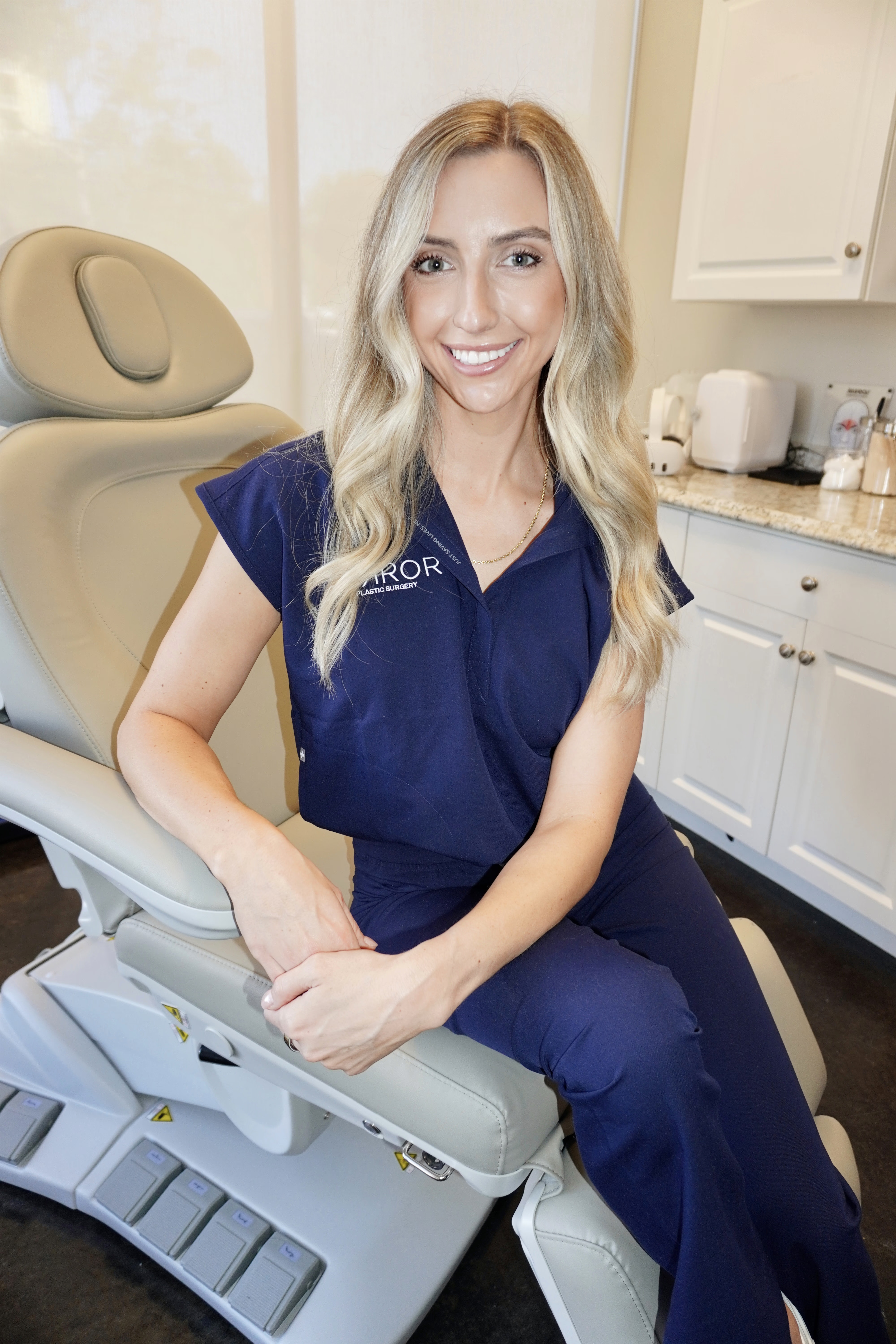
She began her career at a high-end medical spa in Boston and developed expertise in skin physiology and aesthetic assessment before pursuing her nurse practitioner credentials. That dual background, combining esthetician training with advanced clinical medicine, is rare in the peptide space and directly supports patients whose goals span both appearance and systemic health.
Her approach to care mirrors the practice’s concierge philosophy. Consultations run up to an hour, protocols are built from lab results rather than assumptions, and patients have direct text access throughout their treatment. When surgical intervention is appropriate, her work is complemented by a Harvard-educated physician, Johns Hopkins-trained plastic surgeon, and fellowship-trained aesthetic surgeon at Manhattan Eye Ear & Throat Hospital and Lenox Hill Hospital.
Peptide Categories, Regulation, and How Mirror Stays Compliant
The peptide landscape underwent significant regulatory tightening between 2024 and 2026. The FDA moved BPC-157, CJC-1295, ipamorelin, TB-500 and other peptides to Category 2 of the 503A list in late 2023, which prohibited compounding, and in 2026 it began removing many of them from Category 2. Simultaneously, the FDA’s Pharmacy Compounding Advisory Committee met in July 2026 to review whether seven popular peptides, including BPC-157, TB-500, and Semax, could be added to the 503A Bulks List.
Peptides used to diagnose, treat, or prevent disease are classified as prescription drugs and fall under the practice of medicine, which triggers state-level medical and pharmacy oversight. Before any peptide is recommended at Mirror Plastic Surgery, Ellie confirms the compound’s regulatory status, reviews state-specific restrictions, and verifies that the route of administration falls within her scope of practice.
Mirror Plastic Surgery sources peptides exclusively from suppliers with documented batch testing and cGMP-compliant manufacturing. Direct-to-consumer online peptide products frequently exhibit improper dosing, chemical impurities, and storage degradation due to lack of cGMP standards and temperature controls during shipping, and medically supervised sourcing removes those specific risks.
Step-by-Step Concierge Peptide Care at Mirror
- Initial consultation (30–60 minutes): Ellie reviews full medical history, current medications, and health goals, and lab panels are ordered or reviewed if not recently completed.
- Lab analysis: Results covering thyroid, liver, kidney, diabetes markers, and hormone panels inform the protocol, and inflammatory markers guide peptide selection for systemic conditions.
- Custom protocol design: A personalized peptide stack is built based on lab findings, goals, and risk profile, rather than a templated menu.
- Sourcing and dispensing: Peptides are sourced from batch-tested, reputable suppliers, and patients receive detailed reconstitution and self-administration instructions, including video demonstrations.
- Ongoing concierge support: Patients have direct text access to Ellie for questions, dosing adjustments, and refill requests, and telemedicine appointments are available for formal follow-up.
- Protocol reassessment: Labs and symptom response are reviewed at defined intervals, and the stack is adjusted as the patient’s physiology responds.
2026 Trends Shaping Med Spas, Peptides, and Patient Choice
Patients at medical spas increasingly request services addressing both appearance and internal health, including longevity, peptides, exosomes, hormonal health, hair restoration, and PDGF, which shows demand for integrated wellness offerings. This demand is outpacing the regulatory frameworks designed to govern it.
The Connecticut Attorney General has used consumer-protection enforcement against peptide therapies in medical spas, while Alabama, Ohio, Texas, and California have pursued actions through medical and pharmacy boards rather than attorneys general. Enforcement actions have included penalties against distributors and clinic closures for administering research-grade peptides.
For Florida residents, the regulatory trajectory is clear. Indiana SB 282 is described as the first of a series of nearly identical bills expected to regulate medical spas and GLP-1 medications in Florida, Iowa, Arizona, and Colorado. Choosing a provider already operating under rigorous clinical standards positions patients ahead of that regulatory curve.
Risks, Misconceptions, and How Mirror Prioritizes Safety
Several misconceptions circulate in the peptide and wellness space that carry real clinical consequences, and they cluster around legal status, provider qualifications, and assumptions about safety.
The first group involves legal classification. “Research Use Only” labels provide legal protection for providers. The FDA has stated that such labels are legally meaningless when marketing context demonstrates intent for human therapeutic use. A related belief claims that peptides are supplements, not drugs. Peptides used to treat or prevent disease are classified as prescription drugs under state medical and pharmacy oversight.
The second group involves who should administer peptides and how they are sourced. Some people assume that any licensed provider can safely administer peptides. There is no standardized certification or training required prior to treating aesthetic patients at U.S. medical spas, which makes provider credentialing and clinical background a critical patient-safety variable. Another misconception claims that online peptide sources are equivalent to clinical sources. Jessie Cheung, MD, notes that “Interest in peptides has outpaced regulation,” with risks tied to sourcing, dosing, and lack of medical oversight.
The final group involves blanket safety assumptions. Many patients believe that peptides are universally safe for all patients. Amanda Kahn, MD, cautions that peptides should be avoided by patients with active cancer, recent cancer history, or elevated cancer risk due to effects on cell proliferation.
Frequently Asked Questions
Are peptides FDA-approved, and is it legal to use them?
Many peptides are not individually FDA-approved for human use, though some, such as certain GLP-1 receptor agonists, have received approval for specific indications. The regulatory status of a given peptide depends on whether it has been approved for any human use, whether the intended application is on-label or off-label, and whether it is being compounded through a licensed pharmacy. As discussed in the regulatory section, the July 2026 advisory committee review resulted in recommendations against compounding for several popular peptides. At Mirror Plastic Surgery, Ellie reviews the current regulatory status of every compound before recommending it and sources only from suppliers with documented batch testing. The main risk in the peptide space comes from obtaining compounds from unvetted sources without clinical oversight.
What is the difference between buying peptides online and receiving them through Mirror Plastic Surgery?
Online peptide products frequently lack cGMP manufacturing standards, third-party purity testing, and temperature-controlled shipping, and each of these factors affects potency and safety. There is no clinical relationship, no lab baseline, and no dosing guidance tailored to individual physiology. At Mirror Plastic Surgery, every peptide protocol begins with a comprehensive consultation and, where appropriate, a full lab panel. Peptides are sourced from reputable suppliers with batch testing, and Ellie is available via direct text throughout the protocol for dosing questions, side-effect monitoring, and adjustments. That level of oversight is structurally unavailable through a direct-to-consumer purchase.
How long does it take to see results from peptide therapy?
Timelines vary by compound, indication, and individual physiology, so expectations must be personalized. Clients managing acute inflammation or water retention have reported initial changes within the first week.1 Anti-aging peptides targeting collagen and elastin production, such as GHK-Cu, typically require several weeks to months of consistent use before structural skin changes become visible.1 Energy-focused compounds like NAD may produce subjective improvements in vitality more quickly.1 Ellie sets realistic, individualized expectations during the initial consultation based on lab findings and the specific peptide stack selected, and genetics, lifestyle, and baseline health status all influence outcomes.
Will the benefits disappear if I stop taking peptides?
Stopping a peptide protocol usually results in a gradual return toward baseline, similar to stopping any health intervention.1 For patients managing chronic inflammation or autoimmune conditions, the underlying immune dysregulation will likely reassert itself without ongoing support.1 For anti-aging or collagen-focused protocols, the rate of decline depends on lifestyle factors and the degree of structural improvement achieved. Mirror Plastic Surgery designs maintenance protocols to sustain outcomes over time, and Ellie reviews each patient’s response at defined intervals to determine whether the protocol should be continued, adjusted, or tapered.
Can peptide therapy complement a surgical procedure at Mirror Plastic Surgery?
Peptide therapy can complement surgical procedures at Mirror Plastic Surgery in a coordinated way. Post-surgical peptide protocols are a structured offering at the practice, and compounds such as BPC-157 and TB-500 target soft tissue inflammation and wound repair, which can support recovery following surgical procedures.1 Because Dr. Akash Chandawarkar and Ellie Pranckevicius work within the same practice, the surgical and peptide care plans are coordinated rather than siloed. patients recovering from body contouring, facial surgery, or breast procedures can receive a peptide protocol timed to their surgical timeline, with Ellie monitoring inflammatory markers and healing response throughout.1
Conclusion: How to Make a Safe, Personalized Choice
Medical spas and wellness centers serve distinct purposes, and neither setting alone addresses the full spectrum of concerns that health-conscious adults in 2026 bring to a provider. A medical spa delivers clinically supervised aesthetic correction, and a wellness center supports lifestyle-based systemic change. The gap between them, which involves medically supervised, root-cause-targeted, appearance-aware care, is where Mirror Plastic Surgery’s concierge peptide model operates.
Choosing a provider in this space requires verifying clinical credentials, understanding the regulatory status of any compound being recommended, confirming that sourcing meets quality standards, and ensuring that ongoing supervision is built into the model rather than offered as an afterthought. Mirror Plastic Surgery meets each of those criteria through Ellie Pranckevicius’s clinical background, lab-guided protocol design, batch-tested sourcing, and direct concierge access throughout the patient journey.
Book an appointment with Ellie to receive a comprehensive consultation, lab-guided protocol design, and ongoing concierge support tailored to your appearance and systemic health goals.
1 Results may vary from person to person. Editorial content, before and after images, and patient testimonials do not constitute a guarantee of specific results.
Peptide therapy is intended for wellness and optimization purposes and is not prescribed to diagnose, treat, cure, or prevent disease unless specifically stated. Many peptides are not FDA-approved and may be used off-label. Some have limited long-term safety data, with a potential for unknown risks, complications, or desensitization with prolonged use.
