

Written by: Ellie Pranckevicius, FNP-BC, Aesthetic Nurse Practitioner & Aesthetic Injector | Facial Restoration & Regenerative Injectable Specialist, Mirror Plastic Surgery
Key Takeaways: Med Spas, Peptides, and Safety in Florida
- Day spas focus on relaxation and surface-level pampering by licensed estheticians, while med spas provide corrective clinical treatments under physician oversight.
- Med spa services cost more because of medical equipment, licensed professionals, and regulatory compliance, with pricing tied to provider credentials and treatment complexity.
- Choosing a reputable med spa in Florida requires checking physician licensure, AHCA registration, and real medical supervision before any clinical procedure.
- Med spa treatments offer progressive, longer-lasting results for anti-aging, inflammation, and metabolic concerns compared with the temporary benefits of day spa services.1
- Schedule a personalized consultation at Mirror Plastic Surgery to explore safe, lab-guided peptide and aesthetic options tailored to your goals.
Med Spa Pricing Compared to Day Spas
Med spa services sit in a higher price range than day spa treatments because they involve clinical equipment, physician oversight, medical supplies, and formal consultations. A standard 60-minute massage or facial at a day spa usually costs less than med spa treatments, and even a full bundled spa day often remains below the price of a single advanced medical procedure. Med spa treatments typically fall into a higher per-service bracket.
Within the med spa category, service complexity drives the cost. The simplest treatments, such as botulinum toxin injections, are usually priced per unit and repeated every three to four months. More complex protocols, such as peptide therapy for fat reduction, tissue healing, or metabolic support, require a good-faith exam and bloodwork in addition to the monthly protocol cost. Device-based treatments like fractional laser resurfacing and RF microneedling fall in the middle, with pricing set per session rather than ongoing monitoring.
Provider credentials also influence pricing. Board-certified dermatologists or plastic surgeons often charge more than nurse injectors at chain med spas because they tend to have lower complication rates and stronger aesthetic judgment. Geography plays a role as well. Major metropolitan areas often price above the U.S. median, while secondary markets such as Tampa usually run below. At Mirror Plastic Surgery, each patient receives a personalized quote during consultation based on individual goals and protocol needs.
Safety Checklist for Choosing a Florida Med Spa
Provider credentials matter more than any single treatment choice when you select a medical spa for results-driven procedures. Use the following checklist as a starting point for Florida med spa verification.
- Verify that the medical director holds an active MD or DO license in Florida through the Florida Department of Health license lookup.
- Confirm that the clinician performing your treatment has documented credentials specific to that procedure.
- Ask whether the facility is registered with the Agency for Health Care Administration (AHCA) and maintains HIPAA-compliant medical records.
- Confirm that a face-to-face physician evaluation, including a full medical history review, is required before injectables. Telehealth consultations do not meet this Florida requirement.
- Request the FDA clearance status and brand name of any device used in your treatment.
- Confirm that the facility uses single-use needles, sterile technique, proper disposal protocols, and has written emergency procedures with staff trained to manage adverse reactions.
- Stay cautious with titles such as “certified laser technician” or “medical aesthetician,” because few states issue these certifications and the titles may suggest a broader scope of practice than the law allows.
Florida patients should treat certain patterns as red flags. Any arrangement where a physician appears on paperwork but never meets or examines patients signals noncompliance. Florida law requires the supervising physician to be present or immediately available during procedures, not just listed on forms. Laser and light-based hair removal in Florida may be performed by physicians, PAs, ARNPs, or licensed electrologists who meet specific training requirements, while estheticians cannot legally operate medical-grade lasers.
When Med Spas Provide More Value Than Day Spas
The value of a med spa compared with a day spa depends on your goals. Day spa results are typically immediate but short-lived, producing a temporary glow that may last only a few days, while med spa results are progressive, cumulative, and longer-lasting.1 For relaxation and basic maintenance, a day spa works well. For measurable skin correction, inflammation management, weight support, or anti-aging outcomes, a med spa offers the clinical structure needed to pursue those results safely.
Safety also belongs in every value discussion. Treatments that affect living layers of skin or body tissue, including Botox, dermal fillers, laser hair removal, and prescription weight-loss treatments, are classified as the practice of medicine in most states and require a licensed physician to hold ultimate responsibility. Receiving these services outside a medically supervised setting introduces legal and clinical risk that no discount can justify.
Patients managing chronic inflammation, autoimmune conditions, or metabolic concerns gain access to options at med spas that day spas cannot offer. Medically supervised peptide therapies fall into this category. A 2026 systematic review and meta-analysis in Frontiers in Medicine found that oral and topical peptides can improve skin hydration and brightness while reducing wrinkles, with minimal adverse events reported.1 That evidence base depends on clinical sourcing, dosing oversight, and lab-guided protocols, which are unavailable through day spas or unsupervised online purchases.
How to Prepare Safely Before a Med Spa Visit
Preparation before a med spa visit supports both safety and results, especially for patients starting peptide protocols or injectable treatments. The following guidelines apply broadly, but your provider may give additional instructions based on your specific plan.
- Share your full medical history, current medications, and supplement list so your provider can assess drug interactions and contraindications before any clinical treatment.
- Avoid blood-thinning medications, alcohol, and high-dose fish oil or vitamin E supplements for at least 48 to 72 hours before injectable treatments, unless your provider gives different directions.
- Stop using retinoids, exfoliating acids, or other active skincare on the treatment area for 24 to 48 hours before laser or microneedling procedures.
- Avoid sun exposure and tanning for at least two weeks before laser treatments, because active tans increase the risk of burns and hyperpigmentation.
- For peptide therapy initiation, complete all required lab panels before starting a protocol. Many med spas now use diagnostic data from inflammatory profiling and metabolic labs to design personalized peptide treatment plans, and baseline labs are essential for safe dosing.
- Skip peptide purchases from online retailers before your consultation. As discussed earlier, safe peptide use depends on clinical sourcing and lab-guided protocols, which unsupervised online vendors cannot provide.
Ellie Pranckevicius: Clinical and Aesthetic Expertise at Mirror Plastic Surgery
Peptide therapies and non-surgical aesthetics at Mirror Plastic Surgery are led by Ellie Pranckevicius, FNP-BC, a board-certified Family Nurse Practitioner with advanced clinical and aesthetic training. Ellie earned her Bachelor’s in Health Science from Boston University on the premedical track, completed a rigorous aesthetics licensure program, and then obtained both her Bachelor’s and Master’s in Nursing from the University of South Florida. She spent four years in the Neuroscience ICU at Tampa General Hospital, where she developed deep expertise in physiology, metabolic health, and complex patient recovery. That experience shapes how she builds and monitors peptide protocols.
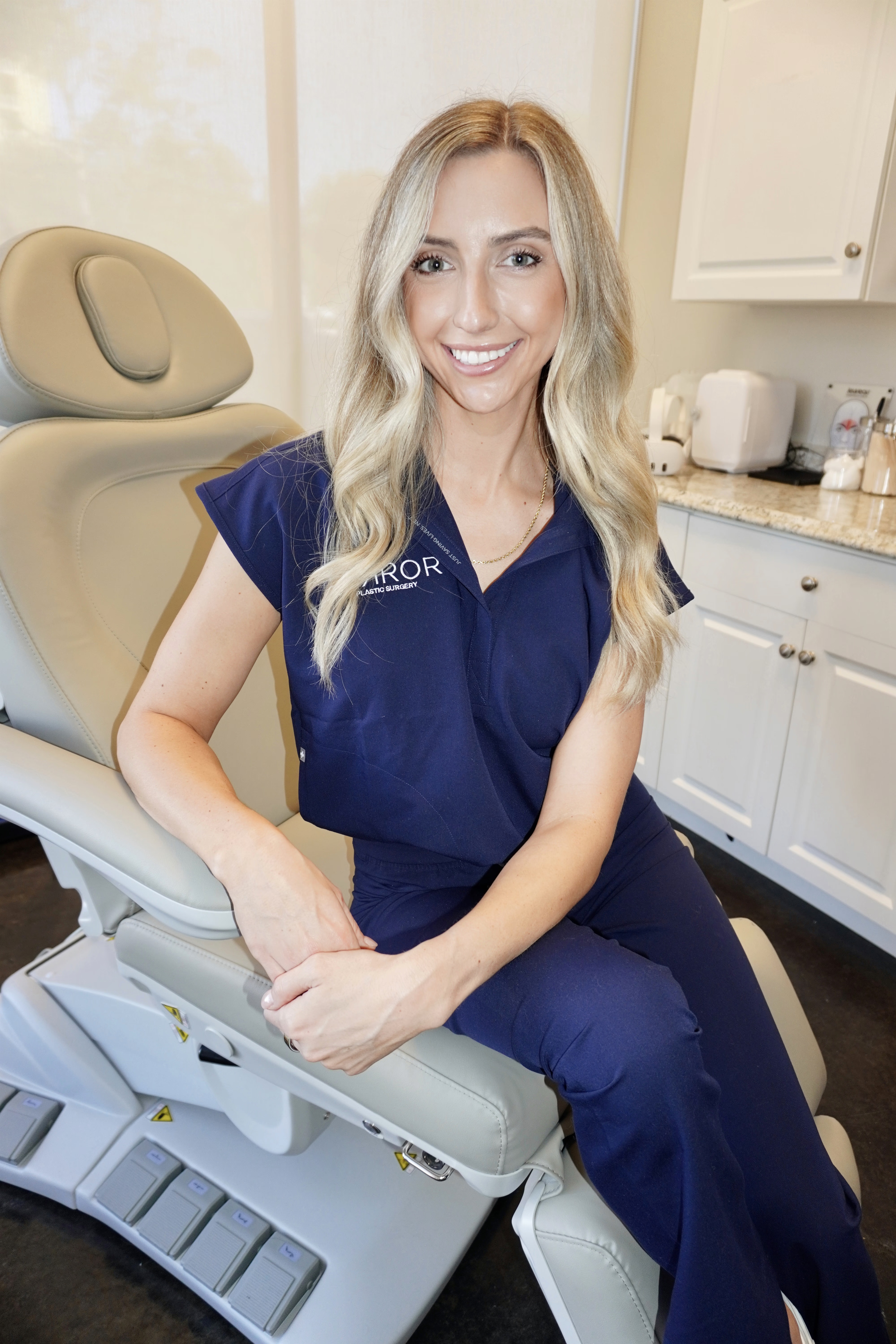
Ellie began her career at a high-end medical spa in Boston, which gives her a rare dual perspective among nurse practitioners. She understands the aesthetic outcomes patients hope to see and the clinical science required to reach those outcomes safely. Her care style centers on education and transparency. She explains the physiology behind each recommendation in clear language so patients understand what they are taking and why. She also tells patients when a service is not yet necessary, prioritizing long-term results over short-term revenue.
Every peptide patient at Mirror Plastic Surgery receives a 30 to 60 minute consultation, a detailed review of medical history and lab panels, and a custom peptide stack tailored to their profile. Relevant labs may include thyroid, liver, kidney, diabetes markers, and hormone panels. Patients also receive direct 24/7 access to Ellie via text for ongoing support. Peptides are sourced from reputable providers with rigorous batch testing, which addresses the quality-control gap that makes unsupervised online purchasing risky. When surgical needs arise, Ellie’s work coordinates with Dr. Akash Chandawarkar, MD, a Harvard-educated, Johns Hopkins-trained, fellowship-trained aesthetic plastic surgeon.
Decision Guide: Matching Your Goals to the Right Provider
This decision guide links common concerns to the type of provider best equipped to address them. Use it to clarify when a day spa is enough and when medical oversight becomes essential.
- Relaxation, stress relief, temporary skin glow: A licensed day spa is appropriate and sufficient for massage, basic facials, and short-term pampering.
- Anti-aging, collagen loss, skin laxity, texture correction: A med spa with physician oversight is required. Treatments such as RF microneedling, fractional laser, and injectables extend beyond esthetic scope and involve medical risk.
- Chronic inflammation, autoimmune conditions: Medically supervised peptide therapy, including options like BPC-157 for systemic inflammation or KPV for gut microbiome inflammation, requires a licensed prescriber, lab analysis, and ongoing clinical monitoring.
- Weight management: GLP-1 adjacent and newer-generation peptide protocols require physician oversight and metabolic lab review. GLP-1 medications and peptide therapy are prescription-only medical treatments that must be ordered and supervised by a licensed prescriber.
- Energy, cellular anti-aging: NAD+ and mitochondria-targeting peptides require clinical sourcing and dosing oversight that day spas and online retailers cannot provide.
- Anxiety, mood, neurological health: Nootropic peptides such as Selank act on brain pathways and require a clinical assessment of current medications and psychiatric history before starting treatment.
Common Misconceptions About Med Spas and Peptides
Misconception: Peptides are only for weight loss. Peptide therapies address a wide range of concerns, including systemic inflammation, post-surgical recovery, collagen and elastin production, energy, sexual wellness, fertility support, and neurological health. Weight management represents only one application.
Misconception: Any business calling itself a med spa is medically supervised. The term “medical spa” or “med spa” is not a regulated designation in most states, so any business can use it in marketing without meeting specific staffing, oversight, or credentialing standards. Florida patients must independently verify AHCA registration, active physician licensure, and compliant supervision arrangements.
Misconception: Peptides are FDA-approved and uniformly safe from any source. Many peptides are not FDA-regulated. A 2026 narrative review in the Journal of Sports Medicine reported that some peptides show significant therapeutic and regenerative potential, but indications, dosing, frequency, duration, and long-term safety data remain unclear, and more research is needed before broad clinical recommendations. The main risk comes from unsupervised sourcing and dosing. Medically supervised protocols with batch-tested products directly address this concern.
Misconception: Med spa results are immediate like day spa results. As noted earlier, med spa treatments produce progressive, cumulative changes rather than instant, short-lived effects. Peptide therapies and corrective aesthetic treatments require consistent maintenance protocols to sustain outcomes, similar to any structured health regimen.
Frequently Asked Questions
Are peptides FDA-approved?
Many peptides are not FDA-regulated, yet they are widely used in clinical and research settings worldwide, with some compounds studied in trials for more than a decade. The primary risk with peptide therapy comes from unregulated sources that lack quality control and medical supervision. At Mirror Plastic Surgery, Ellie Pranckevicius conducts an in-depth consultation that may include lab panels, sources peptides only from providers with documented batch testing, and offers ongoing medical support before, during, and after therapy. This supervised model closes the safety gap created by unsupervised online purchasing.
What does Florida law require from a med spa before I receive treatment?
Florida medical spas operate under Chapter 458 of the Florida Medical Practice Act. The key requirements, including AHCA registration, face-to-face physician evaluations before injectables, active physician supervision during treatments, and proper credentialing for laser procedures, appear in the “Safety Checklist for Choosing a Florida Med Spa” section above. Florida law also requires that medical records be maintained for at least seven years under HIPAA. Patients should confirm these elements before proceeding with any clinical treatment.
How is Mirror Plastic Surgery different from a standard med spa or online peptide provider?
Mirror Plastic Surgery follows a concierge medicine model that limits patient volume to allow individualized attention. Peptide consultations with Ellie Pranckevicius last 30 to 60 minutes and include a comprehensive medical history review, lab panel analysis, and a custom peptide stack tailored to each patient’s physiology and goals. Relevant labs may include thyroid, liver, kidney, diabetes markers, and hormone panels where appropriate. Patients receive direct 24/7 access to Ellie via text for support, refill coordination, and questions.
Peptides are sourced from reputable providers with rigorous batch testing, which distinguishes Mirror Plastic Surgery from online retailers where product purity, active ingredient content, and dosing accuracy remain unverified. This level of oversight is not available through generalized telemedicine platforms or unsupervised online sources.
Will I lose the benefits if I stop taking peptides?
Benefits from peptide protocols fade over time once treatment stops, similar to pausing any structured health regimen.1 For example, inflammation that was controlled through a peptide protocol will likely return to its previous level after discontinuation.1 Ongoing maintenance protocols are usually needed to sustain gains. Ellie designs plans with long-term maintenance in mind and explains what to expect at each phase so patients can make informed decisions about continuation.
Can peptide therapy complement surgical or injectable aesthetic treatments?
Peptide therapy can complement both surgical and injectable aesthetic treatments. Peptides such as BPC-157 and TB500 help reduce systemic inflammation and support tissue repair, which makes them useful during post-surgical recovery.1 At Mirror Plastic Surgery, Ellie’s peptide protocols can be coordinated with surgical procedures performed by Dr. Akash Chandawarkar when clinically appropriate.
Peptides that promote collagen and elastin production, such as GHK-Cu, also pair well with injectable and laser aesthetic treatments by supporting structural skin recovery and long-term skin health. Each protocol is individualized based on the patient’s surgical plan, lab results, and recovery goals.
Conclusion: Choosing Safe, Effective Med Spa Care in Florida
The difference between a med spa and a day spa is clinical, regulatory, and outcome-focused rather than purely aesthetic. Day spas deliver licensed, surface-level relaxation services without medical oversight. Med spas operate under physician supervision, employ licensed medical professionals, comply with state and federal medical regulations, and provide corrective treatments that affect living tissue. In Florida, that distinction carries specific legal requirements, including AHCA registration, face-to-face physician evaluations, HIPAA-compliant recordkeeping, and active medical director involvement.
For health-conscious adults in the St. Petersburg and Tampa Bay area managing inflammation, skin aging, weight, energy, or autoimmune concerns, provider choice affects both results and safety. Advanced options such as peptide therapies require lab-guided protocols, batch-tested sourcing, and ongoing clinical supervision. Mirror Plastic Surgery’s concierge model is built around that standard of care.
1 Results may vary from person to person. Editorial content, before and after images, and patient testimonials do not constitute a guarantee of specific results.
Peptide therapy is intended for wellness and optimization purposes and is not prescribed to diagnose, treat, cure, or prevent disease unless specifically stated. Many peptides are not FDA-approved and may be used off-label. Some have limited long-term safety data, with a potential for unknown risks, complications, or desensitization with prolonged use.
