
Written by: Ellie Pranckevicius, FNP-BC, Aesthetic Nurse Practitioner & Aesthetic Injector | Facial Restoration & Regenerative Injectable Specialist, Mirror Plastic Surgery | Last updated: July 30, 2026
Key Takeaways
- Hydrolyzed collagen peptides are absorbed as intact di- and tripeptides (primarily Pro-Hyp and Gly-Pro-Hyp) that survive digestion and enter systemic circulation through PEPT1 transporters.
- Absorption efficiency depends on low molecular weight (ideally under 3,000 Daltons), high-quality enzymatic hydrolysis, and individual gut health.
- Clinical evidence shows meaningful skin and joint benefits after 8–12 weeks of consistent daily intake, with signaling peptides stimulating your own collagen production rather than acting only as building blocks.1
- OTC collagen powders vary widely in quality and lack medical oversight, while targeted peptides like GHK-CU need precise delivery and professional supervision for predictable safety and results.
- At Mirror Plastic Surgery, Ellie Pranckevicius, FNP-BC, provides lab-guided, batch-tested peptide protocols under medical supervision, so you can explore personalized options with expert support.
How Hydrolyzed Collagen Peptides Enter the Bloodstream
Digestion starts in the stomach, where pepsin in an acidic environment cleaves collagen into smaller fragments. Pancreatic proteases, including trypsin and chymotrypsin, continue this breakdown in the small intestine. Because collagen is unusually rich in proline and hydroxyproline, complete hydrolysis to free amino acids does not occur. A meaningful fraction remains as dipeptides and tripeptides. These fragments cross the intestinal epithelium via PEPT1 (SLC15A1), the primary apical H⁺-coupled peptide transporter, and then enter systemic circulation. The presence of hydroxyproline in plasma after oral intake confirms intact peptide absorption, because hydroxyproline occurs on thousands of human proteins beyond collagen.
Do Collagen Peptides Actually Get Absorbed?
Given that hydroxyproline appears in many proteins, the key question is whether collagen-specific peptides reach your bloodstream in measurable amounts. Human pharmacokinetic data show that they do. Iwai et al. (Journal of Agricultural and Food Chemistry, 2005) detected Pro-Hyp in human plasma after ingestion of hydrolyzed collagen. These dipeptides remain elevated in the bloodstream for up to 24 hours at pharmacologically relevant concentrations.1
Molecular weight is the primary determinant of uptake efficiency. While PEPT1 handles smaller peptides, larger collagen fragments may also cross via the paracellular pathway, and smaller peptides achieve higher absorption rates than larger ones. Native collagen shows limited absorption. Once circulating, these peptides act as signaling molecules. Hydroxyproline-containing peptides act as chemotactic signals that actively attract human skin fibroblasts. This activity stimulates endogenous collagen synthesis rather than serving only as raw material.1
What Cancels Out Collagen Absorption?
Several variables can reduce collagen peptide bioavailability. High molecular weight is the most significant factor. Low-molecular-weight collagen hydrolysates can increase plasma hydroxyproline levels compared to higher-molecular-weight forms. Poor sourcing and inadequate hydrolysis also matter. A 2019 randomized crossover trial by Skov et al. found that enzymatically hydrolyzed collagen produced higher postprandial absorption of collagen-derived amino acids than non-enzymatically hydrolyzed collagen. Conditions that impair intestinal function, such as inflammatory bowel disease, celiac disease, or dysbiosis, can reduce absorption efficiency in the small intestine. Proper storage helps maintain the stability of collagen peptides over time.
Three factors consistently support better uptake. Consistent daily intake ensures a steady supply of collagen-derived peptides. Low-molecular-weight hydrolysates, ideally under 3,000 Daltons, improve intestinal transport efficiency. Proper storage protects peptide stability so the product you take matches the label. One common concern is coffee. Coffee polyphenols do not significantly reduce bioavailability when collagen peptides are co-consumed with coffee, so you can keep your usual morning routine without worrying about this interaction.
Best Time to Take Collagen Peptides
While absorption blockers like coffee are not a major concern, timing strategy still plays a role in your routine. Consistency of daily intake is the primary factor influencing outcomes. Some experts propose that taking collagen on an empty stomach may improve absorption efficiency through faster gastric transit, although direct clinical data are still limited. Shaw et al. (American Journal of Clinical Nutrition, 2017) found that vitamin C-enriched gelatin consumed before intermittent exercise increased serum markers of collagen synthesis compared to placebo. This pattern suggests that pre-exercise timing may be helpful for connective tissue goals.
Vitamin C acts as a required cofactor for prolyl hydroxylase and lysyl hydroxylase, the enzymes that stabilize collagen’s triple-helix structure. Vitamin C does not activate digestive enzymes or enhance intestinal absorption of collagen peptides, and absorption proceeds independently of vitamin C presence. Its role begins during downstream collagen synthesis rather than during uptake. Clinical trials have also established practical dose and duration patterns for different goals. The table below summarizes studied protocols that guide evidence-based supplementation.
| Goal | Studied Daily Dose | Duration | Timing Consideration |
|---|---|---|---|
| Skin elasticity & hydration | 2.5–10 g | 8–12 weeks | Morning or evening, consistency matters most |
| Joint comfort | 10 g | 24 weeks | Daily, pre-exercise timing studied in athletes |
| Muscle & connective tissue | 15 g | 12 weeks | Before exercise with vitamin C |
| Bone density | 5 g | 12 months | No specific timing advantage established |
Signs Collagen Peptides Are Working
Connective tissue remodels slowly. As noted earlier, the 8–12 week timeline reflects the limited vascularity of connective tissue and the time required for measurable remodeling. A minimum of 8–12 weeks of consistent daily supplementation is required before you assess benefit.1 Documented outcomes across clinical trials include:
- Skin health: Proksch et al. (2014, Skin Pharmacol Physiol 27:113–119) found a statistically significant 20% reduction in eye-wrinkle volume after 8 weeks in women aged 45–65, and a separate 2014 Proksch study (27:47–55) found improved skin elasticity after 2.5 g/day in women aged 35–55.1
- Skin hydration: Meta-analyses of randomized controlled trials show that oral collagen supplementation can improve skin hydration, elasticity, and collagen density, with effects often observed at 8–12 weeks.1
- Joint comfort: Clark et al. (2008) conducted a 24-week trial of collagen hydrolysate in athletes
- Dermal collagen density: Proksch et al. (2014) reported a statistically significantly higher content of procollagen type I (65%) after 8 weeks of bioactive collagen peptide supplementation.1
Higher doses beyond the studied 2.5–10 g range do not produce proportionally greater results because of absorption limits.1 so more is not always better without professional guidance.
OTC Collagen Powders vs. Targeted In-Office Peptides
Standard hydrolyzed collagen supplements and targeted peptide compounds such as GHK-CU work through different mechanisms. OTC collagen powders supply glycine, proline, and hydroxyproline building blocks and also signal fibroblasts to increase endogenous collagen synthesis. This substrate-plus-signaling model depends on consistent dosing, molecular weight, and product quality. Because this model requires predictable molecular weight and dosing to function as intended, batch consistency and third-party testing become critical quality markers. These safeguards are rarely guaranteed on the retail market.
GHK-CU (copper peptide) functions as a targeted signaling tripeptide. It requires an intact structure to activate receptor-mediated pathways such as TGF-beta signaling for collagen synthesis. Oral GHK-CU undergoes rapid enzymatic hydrolysis in the gastrointestinal tract, which leads to low bioavailability for the intact tripeptide. This reality is why route of administration and sourcing precision are so important. At Mirror Plastic Surgery, GHK-CU is available as part of a targeted peptide protocol alongside BPC-157 and TB500. This protocol is designed for collagen and elastin production, systemic inflammation reduction, and skin, hair, and nail health. These compounds are not OTC powders. They are batch-tested, practitioner-sourced medications administered under medical supervision with lab-guided personalization.
Schedule a consultation with Ellie to determine whether a targeted peptide protocol aligns with your goals.
Risks, Limitations, and Common Challenges
Several limitations apply to collagen peptide supplementation regardless of source. Results vary significantly by individual based on genetics, gut health, baseline collagen status, and lifestyle.1 Detection of hydroxyproline-containing peptides in human plasma after oral intake confirms absorption but does not prove that these peptides reach cartilage, skin fibroblasts, or tendon at therapeutically relevant concentrations. In humans, tissue-level deposition remains inferred rather than directly measured.
For targeted peptides such as GHK-CU, the risks of unsupervised use are more pronounced. Given the lack of FDA regulation noted earlier, purchasing from unverified online sources introduces risks including unknown purity, inaccurate dosing, absence of third-party batch testing, and no screening for contraindications with existing medications or conditions. Mirror Plastic Surgery sources peptides exclusively from reputable providers with rigorous batch testing. Every protocol begins with a comprehensive medical history review and, where indicated, lab panels.
Meet Your Practitioner: Ellie Pranckevicius, FNP-BC
Ellie Pranckevicius, FNP-BC, is the lead practitioner for peptide therapies and non-surgical aesthetics at Mirror Plastic Surgery. She holds a Bachelor’s in Health Science from Boston University, completed an aesthetics licensure program, and earned both her Bachelor’s and Master’s in Nursing from the University of South Florida. Her clinical foundation includes four years in the Neuroscience ICU at Tampa General Hospital, where she developed deep expertise in physiology, metabolic health, and complex patient recovery. Ellie began her career at a high-end medical spa in Boston, which gives her a rare dual perspective that bridges esthetician-level skin assessment with advanced nurse practitioner clinical science. She applies this combination directly to every peptide protocol she designs.
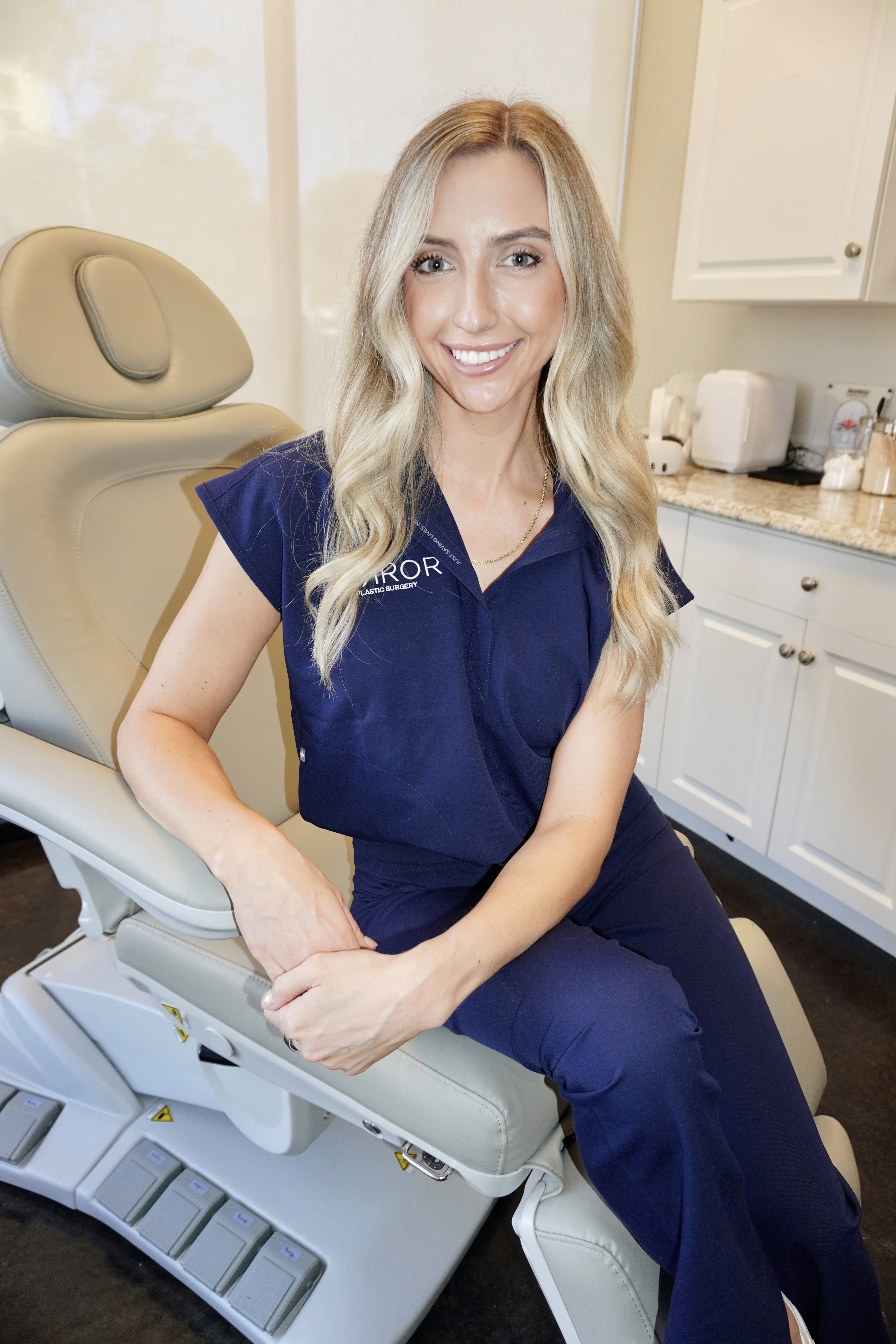
Connect with Ellie at Mirror Plastic Surgery’s St. Petersburg, FL location or remotely from anywhere in the United States to discuss a personalized peptide protocol.
Frequently Asked Questions
Are collagen peptides the same as targeted peptides like GHK-CU?
No. Hydrolyzed collagen peptides are food-derived supplements that supply amino acid building blocks and signaling molecules to support endogenous collagen production. GHK-CU is a synthetic copper-binding tripeptide that functions as a targeted signaling compound and activates specific receptor-mediated pathways involved in collagen synthesis, wound healing, and anti-inflammatory response. The two are complementary but mechanistically distinct. GHK-CU requires intact delivery, typically via subcutaneous injection or topical application, to exert its full biological effect. This requirement is why route of administration and medical oversight matter far more than with standard OTC collagen powders.
How long does it take to see results from a medically supervised peptide protocol?
Timelines depend on the peptide, the condition being addressed, and individual physiology. For collagen-focused outcomes such as skin elasticity and hydration, clinical trials consistently show meaningful changes at 8–12 weeks of daily use. Inflammatory conditions may respond more quickly. At Mirror Plastic Surgery, Ellie sets realistic, individualized expectations during the initial consultation based on your lab results, health history, and specific goals, rather than relying on a generalized timeline.
What makes Mirror Plastic Surgery’s peptide protocols different from buying collagen supplements online?
The primary differences involve sourcing quality, personalization, and ongoing supervision. OTC collagen powders vary widely in molecular weight, hydrolysis quality, and batch consistency, and these variables directly affect absorption. Online peptide retailers typically offer no medical screening, no lab analysis, and no follow-up. Mirror Plastic Surgery sources peptides from providers with rigorous batch testing, conducts comprehensive consultations that may include lab panels, and provides direct concierge access to Ellie throughout the protocol. This structure is designed to maximize both safety and efficacy, particularly given the non-FDA-regulated status of many peptide compounds.
Will I need to take peptides indefinitely to maintain results?
Most applications require ongoing use to sustain benefits. Collagen production naturally declines with age, and the signaling effects of peptides diminish when supplementation stops. This pattern resembles any consistent health regimen, because gains made during a protocol are not permanently locked in once the protocol ends. Ellie designs maintenance protocols tailored to your goals and response, with the aim of achieving lasting outcomes through the most efficient and sustainable approach for your individual profile.
Is it safe to combine collagen peptides with other peptides in a stack?
Peptide combinations, or stacks, can be highly effective when designed with a full understanding of your health history, current medications, and lab markers. Mirror Plastic Surgery’s Glow Stack, for example, combines GHK-CU, BPC-157, and TB500 to address collagen production, systemic inflammation, and soft tissue repair at the same time. Stacking without medical supervision, however, introduces risks related to dosing interactions, contraindications, and quality variability. Every stack at Mirror Plastic Surgery is individualized following a thorough consultation and, where appropriate, lab review.
Conclusion: Choosing the Right Collagen and Peptide Strategy
Current evidence shows that hydrolyzed collagen peptides are absorbed as intact di- and tripeptides, reach systemic circulation within one to two hours, and stimulate fibroblast activity to support endogenous collagen production. Absorption efficiency depends on molecular weight, hydrolysis quality, product sourcing, and individual gut health, and OTC powders address these variables inconsistently. Targeted peptides such as GHK-CU work through distinct signaling mechanisms that require precise delivery and medical oversight to function as intended.
For adults who have moved beyond basic supplementation and want lab-guided, batch-tested, practitioner-supervised protocols, Mirror Plastic Surgery offers a concierge-level alternative grounded in clinical evidence and individualized care.
Start with a comprehensive consultation with Ellie to explore whether a personalized peptide protocol is right for you.
Disclaimer: Many peptide therapies, including GHK-CU and related compounds, are not approved or regulated by the U.S. Food and Drug Administration. The information in this article is educational in nature and does not constitute medical advice. Individual results vary. All peptide protocols at Mirror Plastic Surgery are administered under the supervision of a licensed medical practitioner following a thorough health assessment. Consult a qualified healthcare provider before beginning any peptide or supplementation regimen.
1 Results may vary from person to person. Editorial content, before and after images, and patient testimonials do not constitute a guarantee of specific results.
Peptide therapy is intended for wellness and optimization purposes and is not prescribed to diagnose, treat, cure, or prevent disease unless specifically stated. Many peptides are not FDA-approved and may be used off-label. Some have limited long-term safety data, with a potential for unknown risks, complications, or desensitization with prolonged use.