

Written by: Ellie Pranckevicius, FNP-BC, Aesthetic Nurse Practitioner & Aesthetic Injector | Facial Restoration & Regenerative Injectable Specialist, Mirror Plastic Surgery | Last updated: July 22, 2026
Key Takeaways for Weight Loss After 40
- Weight loss after 40 reflects biological changes like sarcopenia, hormonal shifts, and insulin resistance rather than lack of willpower.
- Eating 1.0–1.6 g protein per kg body weight daily plus 25+ g fiber helps preserve muscle and control appetite.
- Strength training 2–3 times weekly, 7–9 hours of sleep, and moderate caloric deficits support sustainable fat loss and metabolic health.
- Evidence-based peptide therapies such as GLP-3R and growth-hormone-releasing peptides can help when lifestyle changes alone are not enough.
- At Mirror Plastic Surgery, personalized, lab-guided peptide protocols provide safe, concierge-level support. Schedule your personalized consultation to start your customized plan.
Why Weight Loss Gets Harder After 40
Fat-free mass, particularly skeletal muscle and bone, declines with age beginning around age 30. Women experience accelerated loss around menopause because of hormonal and metabolic shifts. This process, called sarcopenia, directly lowers resting energy expenditure. The body burns fewer calories at rest even when food intake stays the same.
Declining estrogen during perimenopause and menopause shifts fat distribution from the hips and thighs to the abdomen, accelerates lean muscle loss, and disrupts appetite-regulating hormones. Hunger and carbohydrate cravings often rise even when calories do not. At the same time, insulin resistance increases progressively with age, promotes fat storage, inhibits fat breakdown, and drives hunger, contributing to visceral fat accumulation even on a conventionally healthy diet.
Approximately 40% of young U.S. adults (ages 18-44) without diabetes already have insulin resistance. These metabolic changes often begin decades before 40 and then intensify with age. They are biological realities, not personal failures. The following 7-step plan addresses each of these mechanisms directly.
Step 1: Hit Protein and Fiber Targets Every Day
Protein is the primary dietary tool for preserving muscle during weight loss. The PROT-AGE Study Group recommends a daily dietary protein intake of 1.0 to 1.2 g/kg body weight for older adults to maintain and regain lean mass and function. Stanford Lifestyle Medicine recommends 1.2–1.6 g protein per kg of body weight per day for adults 50+, especially when combined with resistance training.
Practical protein sources that support this target include eggs, Greek yogurt, cottage cheese, chicken breast, salmon, lentils, and edamame. Pair these with 25 or more grams of daily fiber from vegetables, legumes, and whole grains. This combination slows digestion, stabilizes blood sugar, and supports satiety.
Step 2: Prioritize Strength Training for Muscle and Metabolism
Resistance training is the most effective tool for combating sarcopenia and raising resting metabolism. Combining strength training with a structured diet helps preserve lean mass during weight loss. Studies including randomized trials by Villareal et al. published in the New England Journal of Medicine found that obese adults aged 65 and older who combined diet with resistance training maintained significantly more muscle mass than those who dieted alone.
Higher protein intake further enhances these muscle-preserving effects. Research including a secondary analysis of three randomized controlled trials in adults aged 55 and older found that combining higher protein intake with resistance training during an energy-restricted diet resulted in greater retention of appendicular lean soft tissue mass compared with standard protein intake. Two to three sessions of progressive resistance training per week, focusing on squats, deadlifts, rows, and presses, offers a practical and evidence-supported starting point.
Step 3: Improve Sleep and Manage Stress
Sleep acts as a powerful metabolic intervention. A 2022 randomized controlled trial by Tasali et al. published in JAMA Internal Medicine found that adults with overweight or obesity who extended sleep by an average of 1.2 hours per night reduced caloric intake by approximately 270 kcal per day, even without dietary counseling.1
A separate study found that adults in a caloric deficit who slept only 5.5 hours lost 60% more lean mass and only 25% of their weight as fat, compared with 55% fat loss in the adequate-sleep group.1 Sleep disorders are common among perimenopausal and postmenopausal women, so sleep becomes a high-priority target for women over 40.
The National Sleep Foundation recommends 7 to 9 hours nightly. Stress-reduction practices, including mindfulness, deep breathing, and consistent bedtimes, reduce cortisol, which is linked to abdominal fat accumulation and increased intake of high-fat and high-sugar foods.
Step 4: Choose Moderate Deficits, Not Crash Diets
Rapid weight loss often strips away a large amount of fat-free mass. This loss further reduces energy expenditure and makes weight maintenance harder in older adults. Severe calorie restriction accelerates lean-mass loss, lowers resting metabolic rate, and sets the stage for rebound weight gain.
In adults aged 50 and older, a moderate caloric deficit of about 500 kcal per day combined with resistance training produces approximately 4–5 kg fat loss over 4 months while preserving lean mass.1 Sustainable, moderate deficits consistently outperform aggressive restriction.
Step 5: Consider Evidence-Based Peptide Therapies
Medically supervised peptide therapies can provide a targeted next step when consistent lifestyle changes no longer move the scale or lab markers. Two categories are particularly relevant for adults over 40.
GLP-3R for appetite regulation and insulin control. GLP-3R is a newer-generation peptide similar to GLP-1, a well-established class used for both diabetes and weight management. Clinical trials in adults without diabetes have shown weight loss with GLP-1 receptor agonists and co-agonists, approaching outcomes previously associated mainly with bariatric surgery.1 Newer formulations like GLP-3R are being studied for their potential to address insulin resistance, weight management, and cardiovascular risk factors.
Sermorelin and Ipamorelin for muscle retention and energy. After the third decade of life, growth hormone secretion declines. Growth hormone-releasing peptides (GHRPs) like Sermorelin and Ipamorelin stimulate the pituitary to release GH within natural feedback loops, unlike direct GH replacement. Research suggests growth hormone secretagogues may improve lean body mass, reduce visceral fat, and enhance sleep quality.1
At Mirror Plastic Surgery, peptide protocols are guided by comprehensive lab panels that include thyroid, hormone, liver, kidney, and metabolic markers. These labs help ensure every protocol matches the individual’s physiology. This approach contrasts sharply with unregulated online sources, where product purity, dosing accuracy, and safety screening are unknown.
Schedule your peptide consultation to find out whether a supervised protocol is right for your goals.
Step 6: Seek Medical Supervision from a Qualified Provider
Peptide therapy remains only as safe and effective as the provider who designs and monitors it. At Mirror Plastic Surgery, peptide protocols are led by Ellie Pranckevicius, FNP-BC, a board-certified Family Nurse Practitioner whose background bridges hands-on aesthetic care with advanced clinical medicine. Ellie holds a Master’s in Nursing from the University of South Florida and spent four years in the Neuroscience ICU at Tampa General Hospital. There she developed deep expertise in physiology, metabolic health, and recovery.
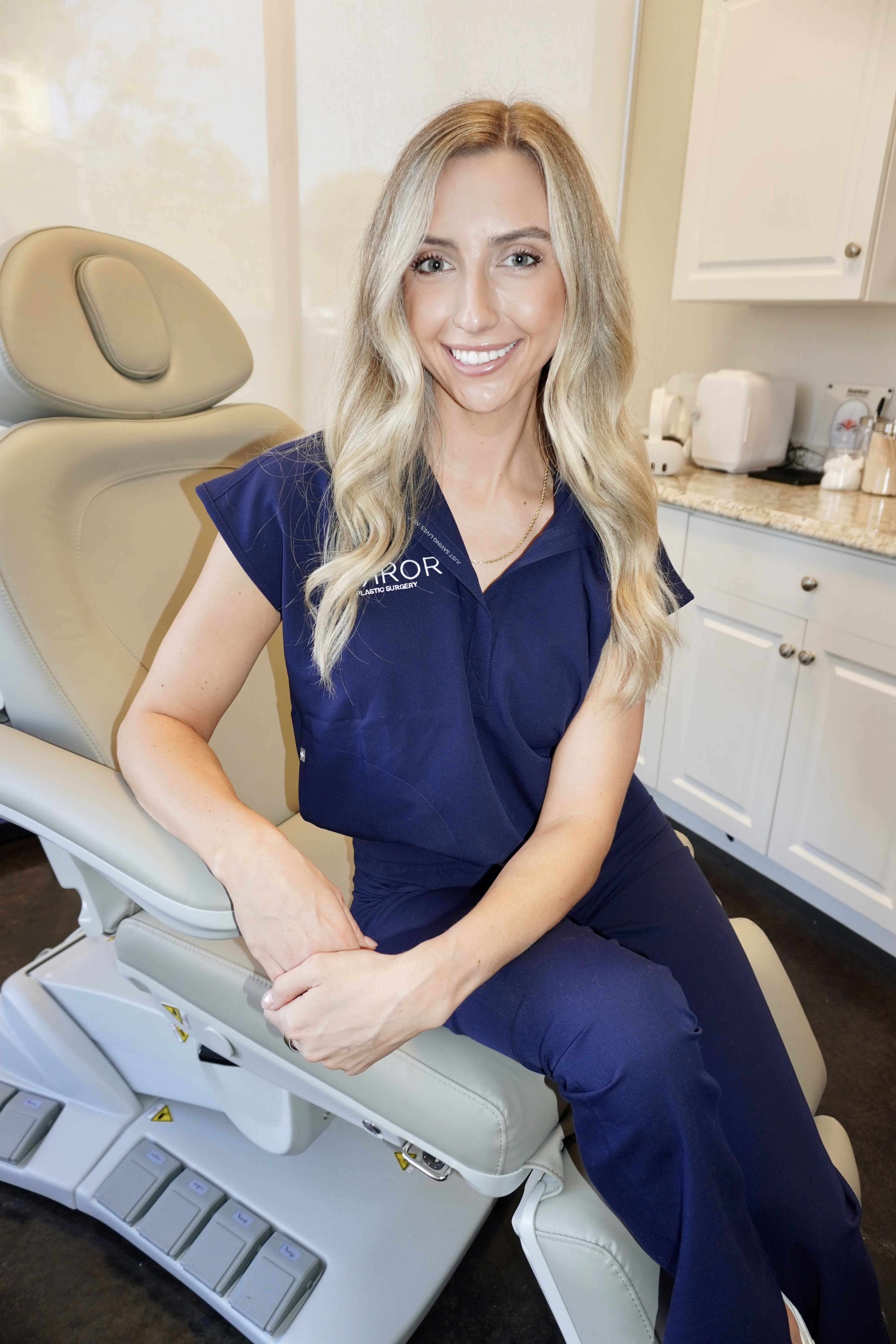
Ellie also began her career at a high-end medical spa in Boston. This experience gives her a rare dual perspective on both the aesthetic goals clients want to achieve and the clinical science required to reach those goals safely.
Ellie’s approach centers on education and transparency. She reviews each patient’s full medical history, orders or evaluates lab panels, and builds individualized peptide stacks rather than one-size-fits-all protocols. Patients receive direct 24/7 access to Ellie via text for ongoing support, refill requests, and questions throughout their journey.
Patients can protect themselves by asking key questions before working with any provider for peptide therapy.
- Will you review comprehensive lab panels (thyroid, hormones, metabolic, liver, kidney) before prescribing?
- Where are your peptides sourced, and do suppliers conduct batch testing for purity and accurate dosage?
- What ongoing monitoring and follow-up support is included?
- How do you screen for contraindications with existing medications or conditions?
- Can I reach you directly between appointments if I have questions or side effects?
Experience concierge-level, lab-guided care by scheduling your consultation with Ellie today.
Step 7: Turn the Framework into Your Personal Plan
Each person’s metabolic profile is unique, even when the same seven principles apply. The framework above provides an evidence-based foundation. The specific combination of protein targets, training structure, sleep interventions, and peptide protocols needs to match your labs, hormones, lifestyle, and goals.
Mirror Plastic Surgery’s concierge model is built for this level of personalization. You receive a thorough 30–60 minute consultation, comprehensive lab review, and a custom peptide stack when indicated. You also receive ongoing one-on-one support as your plan evolves over time.
To begin, calculate your daily protein target, schedule your first two strength sessions, and track your sleep for a week. If you stay consistent for 8–12 weeks and still feel stuck, a structured peptide consultation can help you move forward with clarity.
Frequently Asked Questions
Are peptides FDA-approved?
Many peptides are not FDA-regulated. However, they have been used extensively in clinical and research settings worldwide, with trials spanning more than a decade. The primary risk often comes from obtaining them from unregulated sources without medical supervision.
At Mirror Plastic Surgery, every peptide protocol begins with an in-depth consultation that may include comprehensive lab panels. Peptides are sourced exclusively from reputable providers that conduct rigorous batch testing for purity, identity, and accurate dosage. Ellie Pranckevicius provides medical oversight before, during, and after therapy to ensure the protocol fits each patient’s unique health profile.
What happens if I stop taking peptides?
If peptide therapy is discontinued, the benefits gradually diminish, similar to stopping any health regimen.1 For weight management peptides, appetite regulation and metabolic support taper off. For growth-hormone-releasing peptides, improvements in lean mass and energy decline as GH stimulation returns to baseline.
A maintenance protocol is often recommended to sustain the outcomes achieved. Ellie works with each patient to determine the appropriate duration and maintenance strategy based on their goals and lab results.
Will everyone see the same results with peptides?
Results vary significantly from person to person. Genetics, baseline hormone levels, diet, lifestyle, adherence, and the specific peptide protocol all influence outcomes. This variability makes a personalized approach essential.
Mirror Plastic Surgery conducts a thorough evaluation, including medical history and lab results, before creating any protocol. A custom peptide stack tailored to your unique physiology produces meaningfully better outcomes than a generic, off-the-shelf approach.
How does supervised care at Mirror Plastic Surgery differ from buying peptides online?
Online peptide retailers typically offer no third-party quality testing, no dosing guidance, no screening for contraindications, and no follow-up support. You cannot verify what is in the product or whether the dose is accurate.
Mirror Plastic Surgery sources peptides from suppliers with documented batch testing. The team reviews your full medical history and lab panels before prescribing, provides detailed reconstitution and self-administration instructions, and gives you direct 24/7 access to Ellie via text throughout your protocol. The difference extends beyond convenience to safety and efficacy.
Conclusion: Take the Next Step
Weight loss after 40 becomes harder because biology changes, not because effort fades. Sarcopenia, declining estrogen and testosterone, insulin resistance, and reduced resting energy expenditure all work against conventional calorie restriction. The 7-step framework above addresses each of these mechanisms through adequate protein and fiber, progressive resistance training, improved sleep and stress management, sustainable caloric deficits, evidence-based peptide therapies, qualified medical supervision, and a personalized plan with concierge follow-up.
Mirror Plastic Surgery’s concierge peptide protocols, led by Ellie Pranckevicius, FNP-BC, are designed for motivated adults who are ready to move beyond frustration and into a structured, lab-guided approach that matches the complexity of their biology.
Take the first step and schedule your personalized consultation today.
1 Results may vary from person to person. Editorial content, before and after images, and patient testimonials do not constitute a guarantee of specific results.
Peptide therapy is intended for wellness and optimization purposes and is not prescribed to diagnose, treat, cure, or prevent disease unless specifically stated. Many peptides are not FDA-approved and may be used off-label. Some have limited long-term safety data, with a potential for unknown risks, complications, or desensitization with prolonged use.



