
Written by: Ellie Pranckevicius, FNP-BC, Aesthetic Nurse Practitioner & Aesthetic Injector | Facial Restoration & Regenerative Injectable Specialist, Mirror Plastic Surgery | Last updated: August 13, 2026
Key Takeaways for Safe BHRT in 2026
- Bioidentical hormone replacement therapy (BHRT) can ease hot flashes, fatigue, and mood changes, but it must be medically supervised to avoid dosing errors and unregulated products.1
- A safe pathway includes an initial consultation, baseline labs, personalized treatment selection, early follow-up testing, and long-term monitoring to keep hormone levels therapeutic.
- FDA-approved bioidentical products are usually preferred over compounded formulations because they offer consistent dosing, regulatory oversight, and broader insurance coverage.
- Costs vary widely. FDA-approved options often run $25–$80 per month and may be covered, while compounded creams or pellets can reach $250 or more monthly with little or no insurance reimbursement.
- Patients who want a medically supervised hormone evaluation can schedule a consultation at Mirror Plastic Surgery to review individualized options.
Five-Step Process for Obtaining Bioidentical Hormones Safely
- Initial consultation and medical history review. A qualified practitioner reviews your full health history, current medications, and symptom pattern. This visit clarifies whether hormone therapy makes sense for you and screens for any contraindications before a prescription is written.
- Comprehensive baseline lab testing. Blood panels measure sex hormones (estradiol, progesterone, total and free testosterone), thyroid markers (TSH, free T3, free T4), metabolic markers, liver function, and a complete blood count. These labs establish your baseline and identify conditions that affect treatment safety.
- Individualized treatment plan selection. Your practitioner uses your labs and symptoms to choose the hormone, dose, and delivery method, such as patch, gel, oral capsule, cream, or injection. They also decide whether an FDA-approved product or a compounded formulation is clinically justified.
- Supervised initiation and early follow-up. Follow-up labs are usually scheduled four to eight weeks after you start therapy. These tests assess your initial response, confirm that hormone levels fall within a therapeutic range, and guide early dose adjustments.
- Ongoing monitoring and dose adjustment. Quarterly labs during the first year, then semi-annual or annual testing once levels stabilize, help keep therapy safe and effective. Annual mammography, PSA monitoring when appropriate, and regular symptom reviews form the backbone of long-term oversight.
Start your supervised evaluation to move through these five steps with Ellie at Mirror Plastic Surgery.
Once you understand the clinical pathway, the next practical consideration is cost, which varies significantly between FDA-approved and compounded options.
Monthly BHRT Costs: FDA-Approved vs Compounded
Cost depends mainly on whether you use an FDA-approved product or a custom-compounded formulation. Generic transdermal estradiol patches usually cost about $25–$40 per month cash. Generic micronized progesterone often ranges from $22–$80 per month, with many patients paying less through discounts or insurance copays when coverage applies.
Custom-compounded bioidentical creams, troches, or capsules typically cost $30–$250 or more per month out of pocket and are rarely covered by insurance. Compounded hormone pellets often cost $300–$500 or more per insertion every three to four months, so annual totals can reach $1,500–$3,000 or higher.
Clinician visits, follow-up appointments, and lab testing add further yearly expenses regardless of delivery method. Every patient at Mirror Plastic Surgery receives a personalized quote during consultation that reflects their specific protocol, lab needs, and follow-up schedule.
Insurance Coverage for Bioidentical Hormones in 2026
Most Medicare Part D and ACA marketplace plans cover FDA-approved oral estradiol, estradiol patches, and oral micronized progesterone. These medications usually appear on tier 1 or 2 formularies with copays between $0 and $40 per month. Many private insurers also approve coverage when documentation includes hormone testing and symptoms that affect quality of life.
Compounded bioidentical hormone therapy, including pellets, custom creams, and troches, is rarely covered in any state because these products are not FDA-approved finished drugs. Common denial reasons include compounded status, missing prior authorization, step-therapy rules that require cheaper alternatives first, and limited documentation of medical necessity.
Under the Affordable Care Act, patients have 180 days from a denial notice to file an internal appeal. After a final denial, they have four months to request an external review, and a favorable external decision is legally binding on the insurer. HSA and FSA funds can usually be used for FDA-approved HRT, telehealth visits, and compounded HRT when supported by a letter of medical necessity.
Patients Who Are Not Candidates for Bioidentical Hormones
Absolute contraindications to bioidentical hormone therapy, per the 2022 NAMS Hormone Therapy Position Statement and ACOG guidance, include known or suspected estrogen-sensitive breast cancer, unexplained vaginal bleeding, active or recent venous thromboembolism, active liver disease, and recent stroke or myocardial infarction. Additional absolute contraindications per 2026 AAFP editorial guidance include coronary artery disease and uncontrolled hypertension.
Relative contraindications that require individualized risk-benefit assessment include migraine with aura, controlled hypertension, hypertriglyceridemia, family history of hormone-dependent cancers, endometriosis or uterine fibroids, and borderline glucose levels or prediabetes. These patients need customized protocols and closer monitoring rather than automatic exclusion.
Age, Timing, and Starting BHRT Later in Life
Women aged 60 or older, or more than 10 years past menopause, face a less favorable risk-benefit profile for starting hormone therapy, especially oral estrogen, because stroke risk rises. This situation calls for careful individualized assessment rather than an automatic ban.
For healthy women under 60 or within 10 years of menopause, data on FDA-approved products show that benefits generally outweigh risks. Women with early menopause before age 40 are advised per the 2016 ESHRE guideline to use estrogen therapy until about age 51, usually with covered FDA-approved products. The key factor is the full clinical picture, not age alone.
2026 Comparison: FDA-Approved Versus Compounded Bioidentical Options
The following table highlights key differences in oversight, dose accuracy, coverage, and professional guidance between FDA-approved and compounded bioidentical products. These differences directly affect safety and out-of-pocket cost.
Meet Your Practitioner: Ellie Pranckevicius, FNP-BC
Ellie Pranckevicius, FNP-BC, leads peptide therapies and non-surgical aesthetics at Mirror Plastic Surgery. She holds a Bachelor’s in Health Science from Boston University, completed an aesthetics licensure program, and earned both her Bachelor’s and Master’s in Nursing from the University of South Florida. Four years in the Neuroscience ICU at Tampa General Hospital gave her deep experience in physiology, metabolic health, and complex patient management, which shapes how she evaluates hormone and peptide candidates.
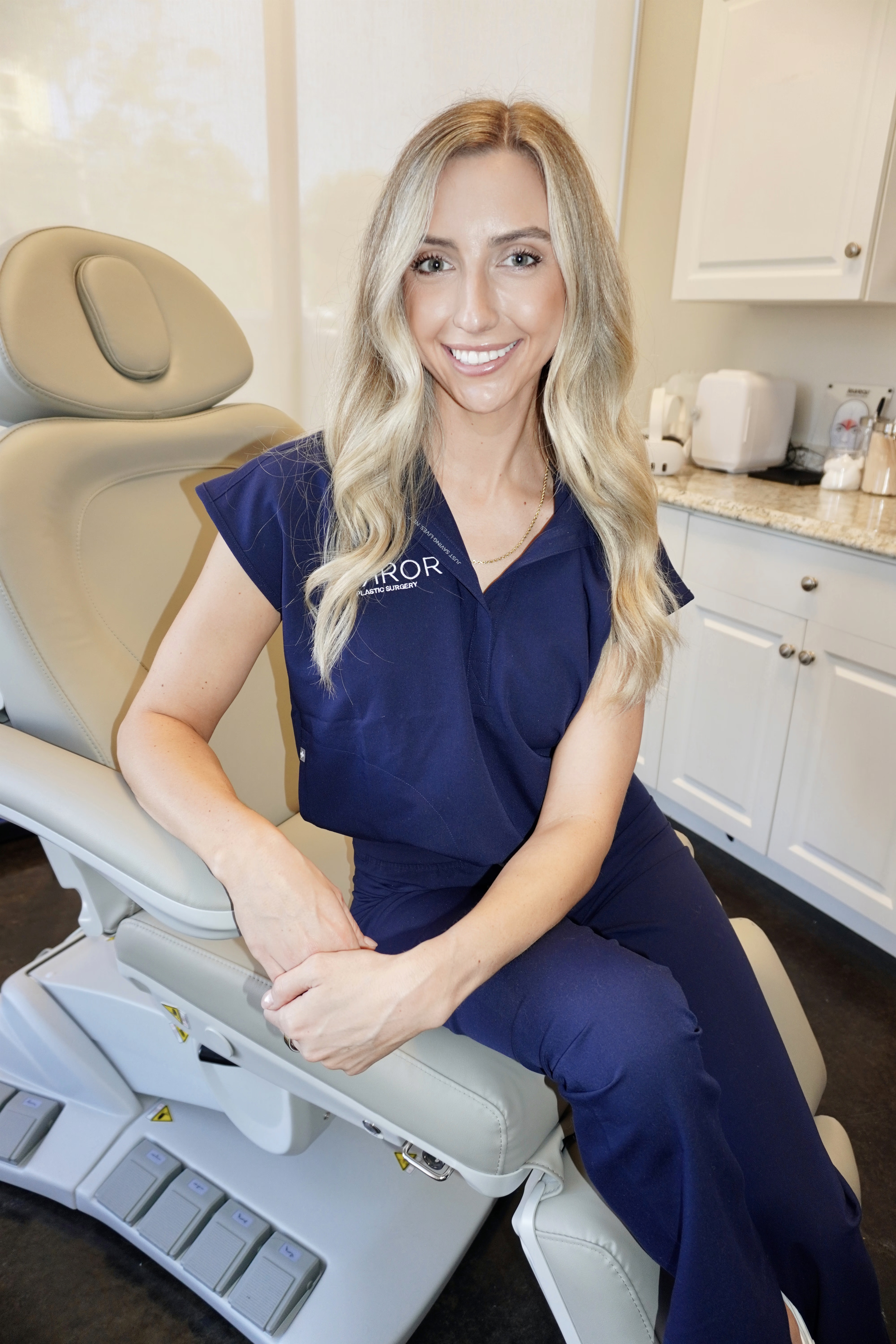
Ellie began in a high-end medical spa in Boston, where she developed expertise in skin physiology and aesthetic assessment before becoming a nurse practitioner. This dual background in aesthetics and advanced nursing helps her connect cosmetic goals with the clinical science needed to reach them safely. She focuses on education, explains the physiology behind each recommendation in plain language, and tells patients when a service is not yet necessary.
Ellie builds protocols around lab results and individual health profiles rather than templates. When a patient’s needs extend into surgery, she collaborates with Dr. Akash Chandawarkar, MD, a Harvard-educated physician and Johns Hopkins-trained plastic surgeon who founded Mirror Plastic Surgery.
Schedule your visit with Ellie and experience the concierge model at Mirror Plastic Surgery in St. Petersburg, Florida.
Candidate Checklist and Contraindications
The following profile outlines who usually qualifies for a supervised BHRT evaluation. Candidacy starts with documented symptoms such as hot flashes, night sweats, low libido, fatigue, mood changes, or cognitive fog. Lab testing then confirms hormone deficiency relative to age-appropriate ranges.
Once symptoms and labs align, the patient must clear two further checkpoints. They need to have no absolute contraindications and should have completed age-appropriate cancer screenings, including mammogram, Pap, PSA, and colonoscopy. Safe therapy also requires ongoing commitment to lab monitoring, follow-up visits, and a medically supervised pathway instead of unregulated online sources.
The following conditions represent absolute contraindications that preclude standard BHRT initiation:
- Personal history of estrogen-sensitive breast cancer or other hormone-dependent neoplasia
- Active or recent venous thromboembolism, pulmonary embolism, stroke, or myocardial infarction
- Active liver disease or severe liver impairment
- Unexplained vaginal bleeding
- Uncontrolled hypertension with blood pressure above 160/100
- Antiphospholipid syndrome or a confirmed thrombophilic disorder
- Pregnancy or breastfeeding
What to Bring and Ask at Your BHRT Consultation
Arriving prepared helps you get more value from your visit. Bring recent lab results from the past 6–12 months if available, including hormone panels, thyroid markers, a metabolic panel, and a CBC. Also bring a complete list of medications and supplements with dosages, plus records of recent cancer screenings such as mammogram, Pap, PSA, and colonoscopy.
A written symptom log that notes frequency, severity, and duration gives your clinician a clearer picture of your daily experience. Your insurance card and any prior authorization paperwork also help streamline coverage discussions.
Ask your practitioner these questions during your appointment:
- Is an FDA-approved product appropriate for my situation, or is there a clinical reason to consider a compounded formulation?
- What labs will you order at baseline, and when will we repeat them?
- What symptoms or lab values would prompt a dose change?
- How might this therapy interact with my current medications or conditions?
- What monitoring schedule will we follow over the first year?
How Supervised Peptide Therapies Fit with or Replace BHRT
Some patients are not candidates for hormone therapy or want to address inflammation, energy, and anti-aging goals alongside or instead of BHRT. For these patients, supervised peptide therapies provide a separate, evidence-informed pathway. Mirror Plastic Surgery’s peptide protocols are led by Ellie and built on detailed lab analysis and individualized stacking.
Examples of protocols available at Mirror Plastic Surgery include:
- The Glow Stack (GHK-CU, BPC-157, TB500): Targets systemic inflammation and supports collagen and elastin production for skin, hair, and nail health.1
- NAD (Nicotinamide Adenine Dinucleotide): Acts on cellular mitochondria to support energy production and cellular anti-aging.1
- Sermorelin/Ipamorelin: Growth hormone-releasing peptides that stimulate natural growth hormone production and support muscle retention and fitness goals.1
- Selank: A nootropic peptide that affects anxiety and mood pathways without the dependency profile of benzodiazepines.1
- GLP-3R Compounding: A newer weight management peptide reported to cause fewer gastrointestinal side effects than earlier GLP-1 formulations, with broader indications that include insulin resistance and cardiovascular risk factors.1
- KPV: Targets gut microbiome inflammation and may help individuals managing irritable bowel conditions.1
Peptides are sourced from providers that perform rigorous batch testing, and every protocol includes ongoing concierge support. This approach contrasts sharply with unverified online purchases that lack medical oversight.
Conclusion: Making Informed Decisions About BHRT and Peptides
Safe access to bioidentical hormones in 2026 requires a qualified practitioner, baseline labs, a clinically justified product choice, and structured monitoring. The North American Menopause Society, Endocrine Society, and ACOG consistently favor FDA-approved bioidentical products when an equivalent exists, and the 2020 NASEM report recommends restricting compounded options to documented allergy or a needed formulation not commercially available. Insurance coverage mirrors these priorities, with FDA-approved products usually covered and compounded preparations rarely reimbursed.
Age and timing influence risk, but they do not stand alone. Contraindications, symptom burden, lab values, and personal health history all shape whether BHRT is appropriate and which form is safest. For patients who are not candidates, or who want to address inflammation, energy, or anti-aging alongside hormones, supervised peptide therapies offer a medically guided alternative.
Mirror Plastic Surgery’s concierge model, led by Ellie Pranckevicius, FNP-BC, and supported by the clinical standards of Dr. Akash Chandawarkar, MD, delivers this individualized, evidence-based care in St. Petersburg and Tampa, Florida, and remotely across the United States.
Start your personalized hormone and wellness evaluation with Ellie today.
Frequently Asked Questions
What is the difference between bioidentical and synthetic hormones?
Bioidentical hormones share the same molecular structure as hormones the human body produces naturally, such as estradiol, progesterone, and testosterone. Synthetic hormones may have a different molecular structure, which can change how they bind to receptors and how the body metabolizes them. The term “bioidentical” describes molecular structure only, not safety, origin, or regulatory status.
Both FDA-approved bioidentical products and custom-compounded bioidentical preparations exist, and they differ in manufacturing oversight, dose consistency, and insurance coverage. The label “bioidentical” does not automatically make a product safer or more effective than an FDA-approved synthetic alternative.
Can I get bioidentical hormones through telehealth, or do I need to be seen in person?
Telehealth now serves as a practical pathway for many patients. As of 2026, 43 states plus Washington D.C. have telehealth private insurance laws, although payment parity is not universal. These laws have expanded access to covered hormone consultations.
Mirror Plastic Surgery offers consultations in person at its St. Petersburg, Florida location and remotely across the United States, including Hawaii and Alaska. The full process, including consultation, lab review, prescription, and monitoring, can occur remotely. Telehealth changes the delivery channel but does not remove the need for baseline labs, follow-up testing, or ongoing medical supervision.
How long does it take to feel results from bioidentical hormone therapy?
Response time varies by person, delivery method, and target symptoms. Some patients notice better sleep, mood, or energy within two to four weeks of starting therapy.1 Hot flashes and other vasomotor symptoms may improve on a similar timeline, although full relief often takes two to three months as levels stabilize.1
Lab-confirmed improvement usually requires the four-to-eight-week follow-up draw and sometimes one or more dose adjustments.1 Baseline hormone levels, specific hormones prescribed, delivery method, metabolic health, and lifestyle all influence speed and depth of response. Ellie reviews progress at scheduled intervals and adjusts protocols based on both labs and symptom changes.
Are peptide therapies a safe alternative if I am not a candidate for BHRT?
Patients who cannot use hormone therapy because of contraindications, such as estrogen-sensitive cancer or active clotting disorders, may still address overlapping goals with supervised peptide therapies. These goals can include inflammation control, energy support, and anti-aging. Peptides are amino acid chains that signal specific physiological processes rather than replacing hormones directly.
Peptides are not regulated like traditional pharmaceuticals, so safety depends on source quality, dosing accuracy, and medical supervision. Mirror Plastic Surgery uses suppliers with rigorous batch testing and pairs every protocol with in-depth lab analysis and concierge follow-up. Whether peptides serve as a complement to or substitute for BHRT is decided individually during consultation with Ellie.
What happens if my insurance denies coverage for my hormone therapy prescription?
A denial often represents a starting point rather than the final word. If your insurer denies an FDA-approved hormone therapy claim, you can file an internal appeal, usually within 180 days of the denial notice. Supporting documents may include a letter of medical necessity, lab results showing hormone deficiency, and records of symptoms that affect daily life.
If the internal appeal fails, you can request an external independent review within four months of the final denial. A favorable external decision is legally binding on the insurer. Many denied HRT claims are reversed on appeal when supported by strong documentation.
For compounded formulations, pellets, or testosterone therapy for women, coverage is rarely available even after appeal. In those cases, out-of-pocket payment or HSA and FSA funds are the realistic options. Ellie helps patients understand which products are most likely to receive coverage and what documentation strengthens an appeal.
1 Results may vary from person to person. Editorial content, before and after images, and patient testimonials do not constitute a guarantee of specific results.
Peptide therapy is intended for wellness and optimization purposes and is not prescribed to diagnose, treat, cure, or prevent disease unless specifically stated. Many peptides are not FDA-approved and may be used off-label. Some have limited long-term safety data, with a potential for unknown risks, complications, or desensitization with prolonged use.