
Written by: Dr. Akash Chandawarkar, Board Certified Plastic Surgeon, Mirror Plastic Surgery | Last updated: July 12, 2026
Key Takeaways About Buccal Fat Removal
- Buccal fat removal permanently reshapes the midface, so candidacy must account for anatomy, age, weight stability, and long-term aging.1
- Ideal candidates are usually in their mid-20s to early 40s, with stable weight, good skin elasticity, and true buccal fat fullness confirmed by a board-certified surgeon.
- Patients with thin faces, low BMI, poor skin quality, age over 45 with laxity, or unstable weight should avoid the procedure to reduce the risk of hollowing or premature aging.
- Long-term risks include hollow cheek syndrome and a gaunt look as natural facial volume declines, so conservative removal and realistic expectations matter.
- Schedule your personalized anatomical assessment at Mirror Plastic Surgery to learn whether buccal fat removal fits your face and goals.
Buccal Fat Removal Basics and How It Changes the Face
Buccal fat removal, also called buccal lipectomy, is a surgical procedure that excises the buccal fat pad, a discrete, encapsulated collection of deep fat located in the lower cheek between the facial muscles. Unlike surface fat that responds to diet and exercise, the buccal fat pad is a structural fat collection that does not reduce meaningfully with weight loss. Its removal rebalances lower-face proportions by reducing fullness in the cheek hollow area and creating a more defined midface contour.1 Because the removed fat does not regenerate, the procedure produces a permanent structural change, which makes careful candidate selection essential.1
Ideal Candidate Checklist for Buccal Fat Removal
The following seven criteria define the anatomical and clinical profile of a well-suited buccal fat removal candidate, progressing from baseline health through anatomy to psychological readiness. Meeting all criteria is the standard at Mirror Plastic Surgery before any surgical recommendation is made.
- General health: No uncontrolled systemic conditions, bleeding disorders, or active infections that elevate surgical risk.
- Facial anatomy: Genuine, persistent fullness in the lower cheek caused by prominent buccal fat pads, not by skin laxity, masseter hypertrophy, or filler placement.
- Weight stability: At or near a stable goal weight for at least six to twelve months, as significant future weight loss can compound hollowing by shrinking superficial facial fat layers.
- Skin quality and elasticity: Sufficient skin thickness and elasticity to contract smoothly over a reduced fat volume without sagging or draping loosely.
- Age range: Typically mid-20s to early 40s, when skin elasticity and facial volume are generally favorable for this procedure.
- Overall facial volume: Enough overall facial volume that removal of the buccal fat produces definition without creating hollowing.
- Realistic expectations and motivation: A clear understanding that results are permanent, subtle, and anatomy-dependent, not a guarantee of any specific celebrity or social-media appearance.
Book a consultation with Dr. Akash to receive a personalized anatomical assessment against each of these criteria.
Facial Anatomy Factors in Buccal Fat Removal Candidacy
The buccal fat pad sits deep within the cheek, beneath the facial muscles, and serves as a structural cushion that supports midface contour. Its volume is largely genetically determined, which explains why overall weight loss does not always produce noticeable changes in the cheeks even when patients maintain a healthy lifestyle.
Ideal candidates present with a round or full lower face that is disproportionate to their overall facial structure and that has not changed meaningfully with weight fluctuation. The most successful long-term outcomes occur in patients with naturally round or “baby” faces who have an excess of deep fat that would likely persist even into old age, which distinguishes them from those with temporary developmental fullness.
Before recommending buccal fat removal, Dr. Akash evaluates alternative causes of lower cheek fullness. Alternative causes include post-procedure swelling from dental work or fillers, masseter hypertrophy, parotid gland enlargement, and bone structure issues such as a short lower third or weak chin. Each of these requires a different treatment approach, and misidentifying the cause is a primary driver of suboptimal outcomes.
Age Guidelines: When Buccal Fat Removal Makes Sense
Age is one of the most critical variables in buccal fat removal candidacy. Patients in their 20s have high collagen and elastin levels that allow skin to conform to a slimmer contour after buccal fat removal, making this age group ideal for a chiseled look when only conservative removal of the buccal extension is performed. However, some surgeons note that buccal fat pads may still be developing in patients in their 20s, which argues for caution in the earliest part of that decade.
Removing buccal fat in the 20s or early 30s carries the highest risk of premature aging, potentially resulting in a gaunt, hollow, or sunken appearance by age 45 as natural facial volume loss accelerates. Entering the 30s, the SMAS weakens and skin elasticity declines, so perceived lower-face heaviness is often caused by sagging tissues rather than excess buccal fat, making isolated buccal fat removal rarely recommended.
For patients in their late 30s to early 40s, a more conservative approach is applied to account for natural fat loss already occurring at that stage. Patients over 45 with significant skin laxity are generally not appropriate candidates for isolated buccal fat removal. Beyond age, weight stability is equally critical to long-term outcomes.
Weight Stability, Bone Structure, and Facial Proportions
Weight stability is a non-negotiable prerequisite. The buccal fat pad itself does not shrink with weight loss, but the superficial fat layers surrounding it do. A patient who undergoes buccal fat removal and then loses significant body weight may experience compounded hollowing as both the removed deep fat and the naturally thinning surface fat are absent simultaneously.
Bone structure also determines candidacy. Malar hypoplasia, or underdeveloped cheekbones, can produce poor aesthetic results from buccal fat removal, because the procedure relies on underlying bony architecture to frame the newly defined contour. Conversely, patients with strong cheekbones and a well-proportioned midface are better positioned to benefit from the procedure. Beyond bone structure, skin elasticity must also be sufficient. Buccal fat removal itself does not cause skin to sag more quickly, as the fat pad is located deep beneath the facial muscles, but over-removal or poor skin elasticity can lead to laxity as superficial fat thins with age.
Who Should Avoid Buccal Fat Removal Entirely
Clear contraindications exist for buccal fat removal. Patients in any of the following seven categories are advised against the procedure at Mirror Plastic Surgery.
- Thin or narrow faces: Buccal fat removal is not suitable for patients who already have a narrow face, prominent cheekbones, or naturally thin cheeks, as it can create an overly hollow or unwell appearance.
- Low BMI: Patients with low BMI or naturally thin faces should avoid buccal fat removal at any age because removal is likely to create a gaunt or sickly appearance rather than a sculpted contour.
- Poor skin elasticity: Patients with diminished skin quality are at elevated risk of skin draping loosely over the hollowed area rather than conforming to the new contour.
- Age over 45 with skin laxity: Patients over 45 with significant skin laxity should avoid isolated buccal fat removal or undergo it only in conjunction with a lifting protocol.
- Unstable weight: Patients anticipating significant weight change are not appropriate candidates until weight has been stable for a sustained period.
- Unrealistic expectations: Regret after buccal fat removal is significantly higher for patients who are too young, too lean, or who expect more dramatic results than the procedure can deliver.
- Fullness from non-buccal causes: Buccal fat removal does not treat loose skin, temporary puffiness, or fullness from other causes such as general facial aging or weight fluctuation.
Buccal Fat Removal 10 Years Later: Long-Term Aging Risks
Long-term aging implications of buccal fat removal are a central concern in current clinical literature. A peer-reviewed study published in Plastic & Reconstructive Surgery raised concerns that buccal fat removal could lead to premature aging and midface distortion in the long run.
No long-term follow-up studies exist documenting buccal fat removal outcomes after a decade or more, so the full picture of how the procedure interacts with natural aging in the 50s and 60s remains incomplete. What is established is that chronic hollowness from overcorrection can produce a gaunt appearance that injectable fillers may not adequately address over the long term, a potential outcome sometimes called “hollow cheek” syndrome.
Excessive buccal fat removal can cause cheeks to appear saggier with age due to loss of underlying fat support as skin quality changes. Reversal options, including dermal fillers, facial fat grafting, and collagen-stimulating treatments, exist but may not fully restore pre-surgical appearance.
Realistic Expectations and Common Misconceptions
Many people assume that any patient with “chubby cheeks” is a suitable candidate. Lower cheek fullness has multiple anatomical causes, including masseter hypertrophy, parotid enlargement, filler placement, and skin laxity, none of which buccal fat removal addresses. Weight loss does not selectively target buccal fat pads and therefore fails to address persistent lower-cheek fullness that remains despite stable body weight, but that same persistent fullness must be confirmed as buccal in origin before surgery is indicated.
A second misconception is that results will remain consistent regardless of future aging. The procedure is permanent in that the removed fat does not return, but the surrounding facial structures continue to change. What looks “snatched” at 25 may look sunken at 45 if the procedure was performed without accounting for the patient’s anticipated aging trajectory.1 Conservative removal is the evidence-based standard because it preserves long-term volume while still achieving meaningful contour improvement.
Mirror Plastic Surgery’s Comprehensive Care Model
Buccal fat removal is a permanent structural change that requires a pre-operative assessment process equal to its long-term consequences. At Mirror Plastic Surgery, every facial procedure evaluation follows a hierarchy of safety first, function second, and aesthetics third. This approach means the anatomical question, whether a patient’s face will benefit from buccal fat removal across decades rather than only in the first year, is answered before any aesthetic goal is discussed.
Mirror Plastic Surgery limits surgical volume to one to two procedures per day, ensuring that the full clinical team’s attention is dedicated to each patient before, during, and after surgery. This limited volume makes possible the depth of evaluation that buccal fat candidacy demands. Consultations run up to an hour and include a comprehensive top-to-bottom facial assessment that evaluates bone structure, skin quality, fat distribution, and aging trajectory simultaneously. This model contrasts with high-volume practices that may perform five to ten surgeries daily, where the depth of pre-operative evaluation is necessarily compressed.
Book a consultation with Dr. Akash and receive a thorough, anatomy-driven evaluation of your candidacy for buccal fat removal.
Provider Expertise: Dr. Akash
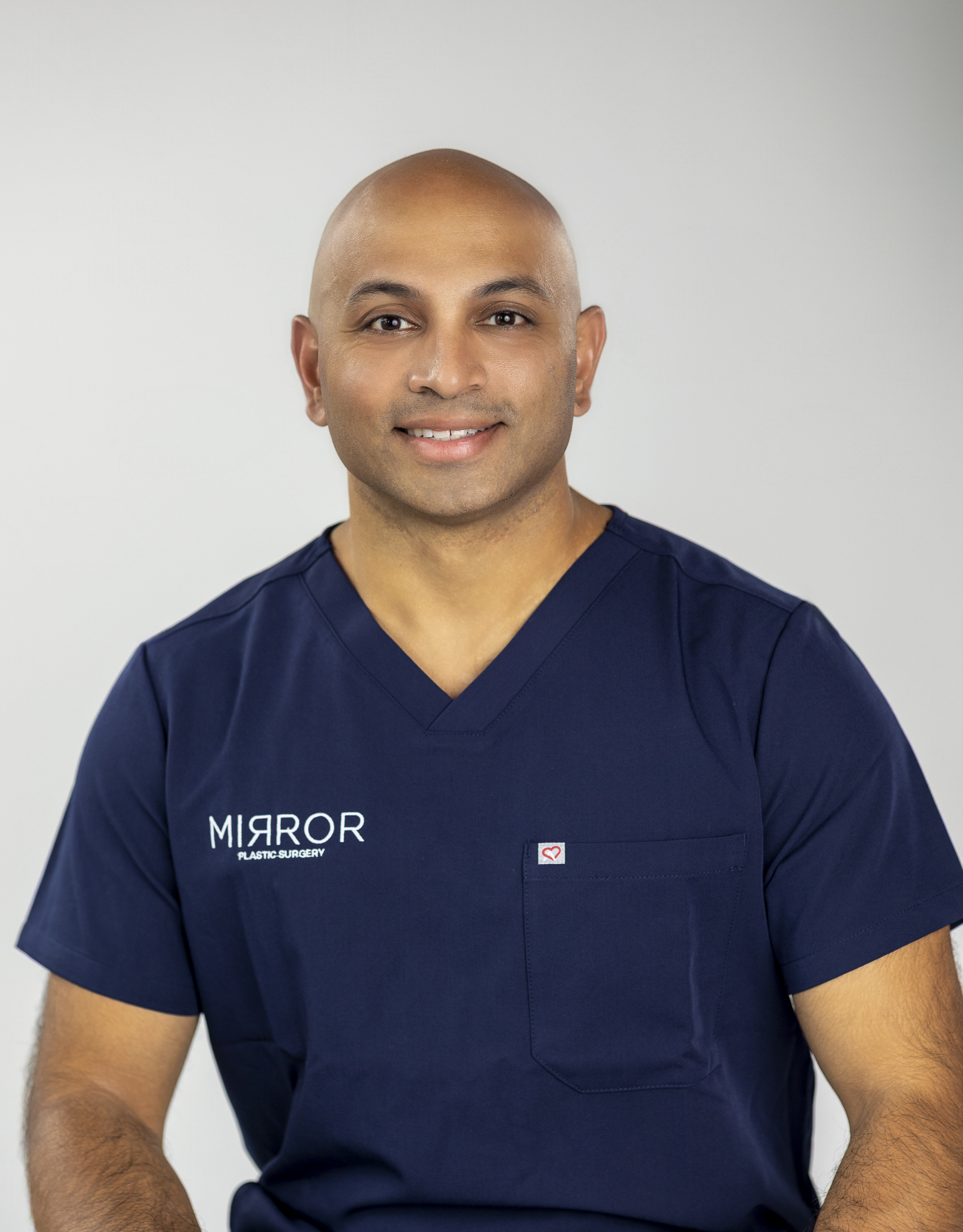
Dr. Akash completed his medical degree through the Harvard-MIT Division of Health Sciences and Technology, graduating from Harvard Medical School with Honors. His surgical training was completed through a seven-year integrated plastic and reconstructive surgery residency at Johns Hopkins University, followed by a specialized aesthetic surgery fellowship at the Manhattan Eye, Ear and Throat Hospital (MEETH), one of the most competitive aesthetic training programs in the country. He also completed the Stanford University Biodesign Innovation Fellowship, which trains physician-innovators to develop clinical solutions grounded in unmet patient needs. Dr. Akash has been named to Newsweek’s America’s Best Plastic Surgeons list for two consecutive years, in 2024 and 2025. He serves as a Next Generation Editor for the Aesthetic Surgery Journal and has testified before the U.S. Food and Drug Administration on implant safety.
Frequently Asked Questions
Is buccal fat removal a safe procedure?
Buccal fat removal is a well-established surgical procedure when performed by a board-certified plastic surgeon on appropriately selected candidates. Risks include temporary or, in rare cases, permanent facial nerve involvement, salivary duct injury, asymmetry, infection, and chronic hollowness from overcorrection. The buccal branches of the facial nerve and the parotid duct both travel in close proximity to the buccal fat pad, which makes anatomical precision essential. At Mirror Plastic Surgery, safety is the first priority in every procedural decision, and candidacy is evaluated rigorously before any surgical recommendation is made.
How do I know if my cheek fullness is from buccal fat or another cause?
Lower cheek fullness has multiple anatomical origins, including masseter muscle hypertrophy, parotid gland enlargement, misplaced or excess dermal filler, skin laxity, and general body fat distribution, none of which buccal fat removal addresses. A thorough in-person evaluation by a board-certified plastic surgeon with deep facial anatomy expertise is the only reliable way to identify the true cause. Dr. Akash’s consultations include a comprehensive facial assessment that distinguishes buccal fat excess from these alternative causes before any treatment is recommended.
What happens to buccal fat removal results as I age?
Because the removed buccal fat does not regenerate, the structural change is permanent. As natural aging progresses, including loss of collagen, bone density, and superficial fat, the absence of the buccal fat pad can contribute to the hollowed appearance described earlier as “hollow cheek” syndrome. This risk is highest in patients who were poor candidates at the time of surgery, such as those who were too young, too lean, or who had aggressive rather than conservative removal. In well-selected patients with conservative removal, the contour created can remain proportionate and natural-looking as the face ages.1 If hollowing develops, fat grafting or biostimulatory fillers can partially restore volume, although outcomes may not fully replicate the original anatomy.
Can buccal fat removal be reversed?
Buccal fat removal cannot be directly reversed because the excised fat does not regenerate. However, volume can be partially restored through facial fat grafting, injectable dermal fillers, or collagen-stimulating treatments such as laser, ultrasound, or microneedling. These approaches can improve the appearance of hollowing but may not fully replicate the natural structure and support of the original fat pad. This irreversibility is precisely why thorough pre-operative candidacy assessment is critical, and why conservative removal is the standard at Mirror Plastic Surgery.
What non-surgical alternatives exist for lower cheek fullness?
For patients who do not meet candidacy criteria for buccal fat removal, or who prefer to avoid surgery, several non-surgical options address lower-face fullness depending on its cause. Masseter hypertrophy responds well to botulinum toxin injections, which slim the lower face without tissue removal. Misplaced hyaluronic acid fillers contributing to cheek puffiness can be dissolved with hyaluronidase and replaced with deep structural support. Strategic deep filler placement can enhance jawline definition and create facial balance. Skin laxity causing perceived fullness may be addressed with radiofrequency or ultrasound-based tightening devices. Each of these options requires accurate diagnosis of the underlying cause before treatment selection.
Conclusion: Making an Informed Decision About Buccal Fat Removal
Buccal fat removal benefits only a narrow set of anatomically suitable patients. The procedure is permanent, the long-term data remain limited, and the consequences of poor candidate selection, including hollow cheek syndrome and premature facial aging, are difficult to fully reverse. Candidacy is determined by facial anatomy, bone structure, skin quality, age, weight stability, and a realistic understanding of how the face will continue to change over decades.
At Mirror Plastic Surgery, every buccal fat removal evaluation is conducted within a concierge model that prioritizes anatomical education, honest communication, and long-term outcomes over volume-driven decision-making. Dr. Akash’s training at Harvard-MIT, Johns Hopkins, and MEETH, combined with his recognition on Newsweek’s America’s Best Plastic Surgeons list for two consecutive years, provides the clinical foundation for that standard of care.
Book a consultation with Dr. Akash at Mirror Plastic Surgery in St. Petersburg, Florida, to receive an individualized, anatomy-driven assessment of your candidacy for buccal fat removal.
1 Results may vary from person to person. Editorial content, before and after images, and patient testimonials do not constitute a guarantee of specific results.