
Written by: Ellie Pranckevicius, FNP-BC, Aesthetic Nurse Practitioner & Aesthetic Injector | Facial Restoration & Regenerative Injectable Specialist, Mirror Plastic Surgery | Last updated: August 14, 2026
Key Takeaways
- Natural bioidentical hormones match the molecular structure of your own hormones, yet FDA-approved and compounded versions differ in oversight, dosing consistency, and safety data.
- Compounded bioidentical hormones lack premarket clinical trials and show documented potency variability, while FDA-approved options undergo rigorous testing and include standardized safety labeling.
- Supervised GHRP protocols such as Sermorelin and Ipamorelin create a separate optimization pathway by stimulating your own growth hormone instead of replacing estradiol, progesterone, or testosterone.
- Guidelines from NAMS, ACOG, and the Endocrine Society favor FDA-approved bioidentical options when appropriate and advise against routine compounded use because safety and efficacy data remain limited.
- Patients interested in personalized hormone or peptide care can schedule a consultation at Mirror Plastic Surgery to review labs and choose an evidence-aligned plan.
How Natural Bioidentical Hormones Are Defined
The phrase “natural bioidentical hormones” appears often in wellness marketing, yet the 2022 North American Menopause Society (NAMS) position statement clarifies that bioidentical refers only to molecular structure. FDA-approved bioidentical products, such as transdermal 17-beta estradiol patches and gels and oral micronized progesterone, have completed Phase III clinical trials. They are manufactured under Good Manufacturing Practice (cGMP) standards and include required safety labeling. Compounded bioidentical preparations use the same active molecules but are mixed by individual pharmacies without the same premarket review.
The Endocrine Society has warned that “bioidentical” is often used as a marketing term and that claims of compounded hormones being more “natural” and therefore safer are not supported by evidence. The 2022 NAMS Position Statement recommends FDA-approved bioidentical options when clinically appropriate and reserves compounding for situations such as documented allergy to excipients in regulated products.
Comparing Compounded Hormones and GHRP Peptide Pathways
Many patients exploring hormone-related care encounter two distinct options. One involves direct hormone replacement with bioidentical estradiol, progesterone, or testosterone. The other uses growth hormone-releasing peptides to stimulate endogenous growth hormone production. These approaches serve different physiologic roles, yet both are marketed for energy, body composition, and recovery. Understanding how they differ in regulation, evidence, and monitoring helps patients choose safely. The table below compares these pathways across key clinical factors.
What Current Evidence Shows About Safety and Efficacy
The 2020 NASEM report found insufficient evidence to support broad use of compounded bioidentical hormones and highlighted dose inconsistency and supraphysiologic levels. This conclusion reinforces earlier concerns from endocrine and menopause societies about unregulated dosing.
On the peptide side, Dominikowski et al. (Frontiers in Endocrinology, 2026) describe GH-IGF-1 modulating peptides such as sermorelin and ipamorelin as part of an evolving field rather than established standard-of-care therapy. That framing supports a cautious approach to broad benefit claims. Combining a GHRH analog like sermorelin with ipamorelin can produce GH pulses two to five times larger than single-agent dosing by activating distinct G-protein pathways1. This combination remains one of the more studied options in clinical anti-aging contexts because of its selectivity profile.
What Are the Negatives of Bioidentical Hormones?
Risks differ depending on whether a product is FDA-approved or compounded. For compounded preparations specifically, several concerns appear repeatedly in the literature.
- Stanczyk et al. (Menopause 2019) documented variability in estradiol and progesterone levels compared with labeled amounts across multiple compounding pharmacies, confirming the potency concerns noted earlier.
- Underdosed progesterone may fail to protect the endometrium in women using systemic estrogen, which increases the risk of endometrial hyperplasia or cancer.
- A retrospective review of compounded testosterone pellets reported some patients discontinuing after the first insertion, with complications such as extrusion, cellulitis, and difficulty managing adverse effects.
- Independent analyses across several studies confirm potency variability in compounded hormones, extending the findings of individual reports.
- The British Menopause Society (reviewed April 2026) notes that many claimed benefits of compounded bioidentical HRT are extrapolated from studies of regulated HRT rather than direct evidence.
For FDA-approved bioidentical formulations, risk estimates are more precise. Combined HRT is associated with roughly five additional breast cancer cases per 1,000 women over five years, which allows for clearer risk-benefit discussions.1
Who Is Not a Candidate for Bioidentical Hormones?
Patients considering HRT should be screened for contraindications such as current pregnancy, hormone-sensitive cancers, active venous thromboembolism, cardiovascular disease, uncontrolled liver disease, or unexplained vaginal bleeding. These factors usually exclude standard hormone therapy.
Timing also matters. Patients more than 10 years past menopause onset or over age 60 without prior hormone therapy need individualized risk-benefit analysis. The 2022 Menopause Society position statement bases its favorable benefit-risk conclusions on data from regulated products in women under 60 or within 10 years of menopause onset, so extrapolating beyond that group requires caution.
Safest Natural Estrogen Replacement in 2026
Modern body-identical HRT that combines transdermal estradiol with micronized progesterone shows a more favorable safety profile than older regimens such as oral conjugated equine estrogen with medroxyprogesterone acetate1. Re-analyses of the Women’s Health Initiative and later studies support this shift.
Transdermal 17β-estradiol does not appear to increase blood clot risk, while oral estrogen is linked to a higher risk1 because the transdermal route bypasses first-pass liver metabolism. Consistent with these guidelines, regulated transdermal estradiol plus micronized progesterone represents the current evidence-based standard for many patients.
When Hormone Therapy Is Not the Answer: Peptide-Supported Optimization
Not every patient seeking physiologic support qualifies for hormone replacement therapy. Some have contraindications such as hormone-sensitive cancers or active cardiovascular disease. Others have already completed a course of HRT and want additional help with muscle retention, recovery, or metabolic function.
For these patients, medically supervised GHRP protocols provide a distinct pathway that focuses on growth hormone physiology. Ipamorelin is a pentapeptide ghrelin mimetic engineered for GH selectivity that stimulates GH release without meaningfully elevating cortisol, ACTH, or prolactin at therapeutic doses, which supports its use in 3 to 6 month protocols1. Sermorelin, a GHRH(1-29) NH₂ analog, preserves the hypothalamic-pituitary feedback loop through somatostatin-mediated pulse termination and has a moderate evidence base from small trials, cohorts, and more than two decades of age-management use.
These protocols do not replace estradiol or progesterone. They work by stimulating the pituitary to release endogenous growth hormone and suit a different clinical profile than classic HRT.
How Medically Supervised Peptide Protocols Work at Mirror Plastic Surgery
At Mirror Plastic Surgery in St. Petersburg, Florida, peptide protocols are directed by a board-certified Family Nurse Practitioner with training that spans critical-care medicine and aesthetics. The practitioner completed a Bachelor’s in Health Science at Boston University on the premedical track, an aesthetics licensure program, and both a Bachelor’s and Master’s in Nursing at the University of South Florida. Four years in the Neuroscience ICU at Tampa General Hospital caring for complex patients inform a deep understanding of physiology, metabolic health, and recovery capacity.
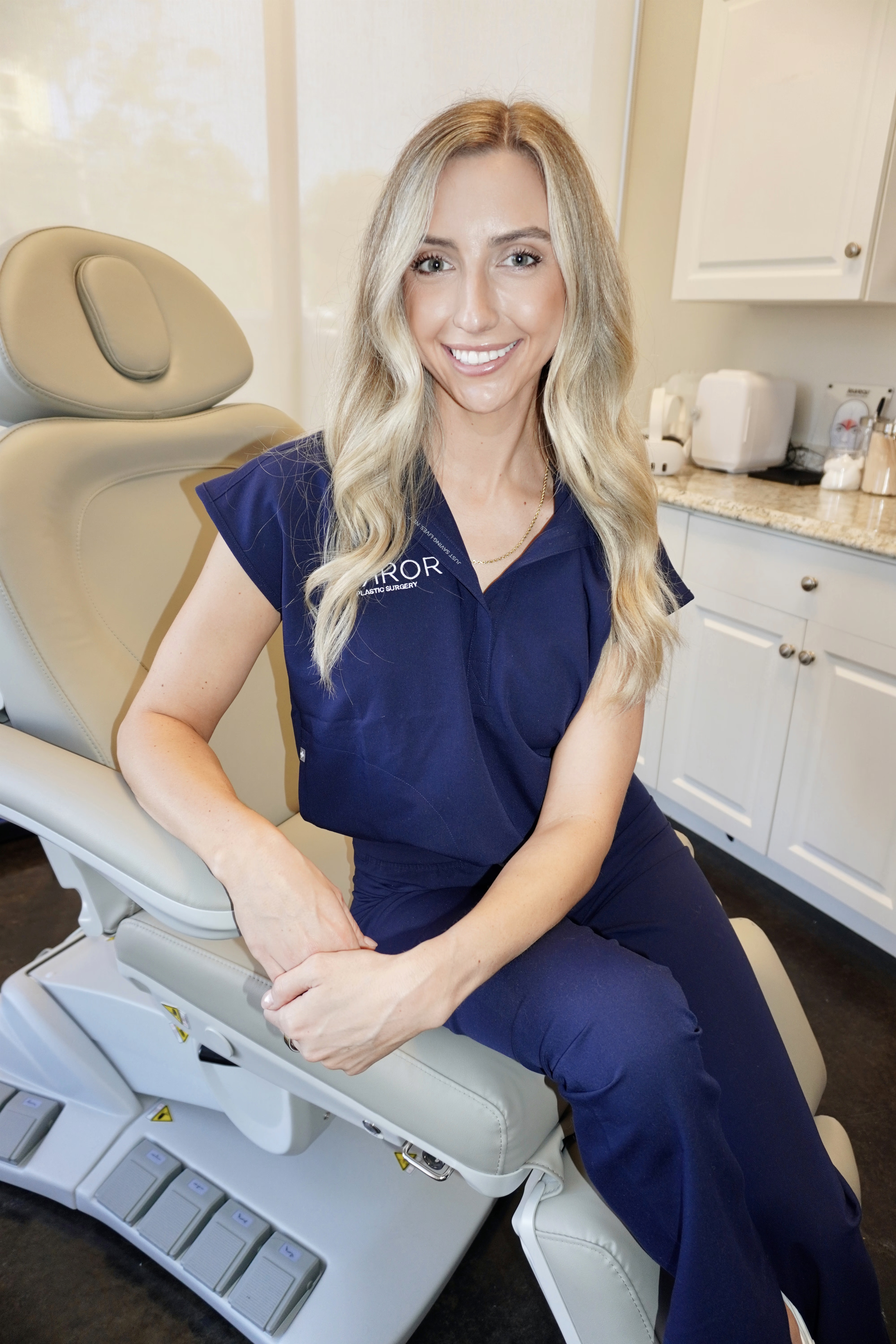
Each protocol starts with a 30 to 60 minute consultation that covers full medical history, health goals, and, when indicated, detailed lab panels including thyroid, liver, kidney, diabetes markers, and hormone levels. Custom peptide stacks are designed from those results. Peptides come from sources with documented batch testing, and patients have direct access to the practitioner throughout treatment for support, dosing questions, and monitoring review.
Start with a comprehensive consultation where your physiology and goals guide a tailored protocol.
Real Patient Concerns and Clear Answers
Patients considering hormones or peptides often share similar questions and worries.
- Are compounded hormones safer because they are “natural”? No major menopause or endocrine society considers compounded bioidenticals safer than FDA-approved therapy, and compounded products can carry the same class risks without standardized oversight.
- Can saliva testing guide my hormone dosing? Professional societies advise against salivary hormone testing because levels fluctuate and may not reliably match clinical outcomes or tissue activity.
- Why do patients pursue compounded products despite the warnings? Millions of women in the United States use compounded bioidentical hormones and pellets, often after feeling dismissed by clinicians, which highlights the need for supportive counseling and evidence-based alternatives.
- What monitoring do GHRP protocols require? Dominikowski et al. (2026) recommend an assessment algorithm that includes exposure history, symptom triage, and risk communication. At Mirror Plastic Surgery, this translates into baseline and follow-up labs such as IGF-1, fasting glucose, and metabolic markers.
How to Choose High-Quality Supervised Care
Patients evaluating hormone or peptide pathways benefit from a structured way to assess providers. First, confirm that the provider relies on serum-based lab monitoring instead of saliva testing, which professional societies consider unreliable for dosing decisions. Second, if compounded or peptide products are used, ask whether they come from pharmacies with documented batch testing to verify potency and purity.
Third, look for clinicians who explain FDA-approved options before discussing compounded alternatives, reflecting the stronger evidence base for regulated products. Finally, confirm that the provider offers ongoing clinical oversight with follow-up labs and symptom review rather than a one-time prescription. These criteria separate evidence-aligned care from unmonitored or template-based protocols.
The practice’s concierge model at Mirror Plastic Surgery limits daily patient volume so each person receives the time and attention complex hormone and peptide decisions require. The team performs only one to two procedures per day, and non-surgical protocols such as peptide therapies receive the same individualized focus.
Informed, individualized decision-making that uses current evidence, lab data, and transparent discussion of uncertainties defines supervised care at this practice.
Frequently Asked Questions
What is the difference between FDA-approved bioidentical hormones and compounded bioidentical hormones?
Both FDA-approved and compounded bioidentical hormones use molecules that match human hormones such as estradiol and progesterone. The difference lies in regulatory review and manufacturing oversight. FDA-approved products, including estradiol patches, gels, and oral micronized progesterone, complete premarket clinical trials for safety, efficacy, and dosing consistency and are produced under Good Manufacturing Practice standards with ongoing FDA monitoring. Compounded preparations are mixed by licensed pharmacies for individual patients but are not reviewed by the FDA as finished drug products. Independent testing has documented meaningful potency variability in compounded preparations, and major organizations including NAMS, ACOG, and the Endocrine Society recommend FDA-approved options when they meet a patient’s clinical needs.
Are GHRP peptides like Sermorelin and Ipamorelin a replacement for hormone therapy?
GHRP peptides such as Sermorelin and Ipamorelin do not replace sex hormones and therefore do not substitute for hormone therapy. They stimulate the pituitary gland to release endogenous growth hormone and do not provide estradiol, progesterone, or testosterone. They are not indicated for vasomotor menopause symptoms and are not a stand-in for HRT in patients with documented hormone deficiency. Instead, they represent a separate optimization pathway that may suit patients who are not candidates for hormone therapy, who have completed HRT, or who want complementary support for muscle retention, recovery, and metabolic function. Any GHRP protocol should start under medical supervision with baseline and follow-up lab monitoring.
What lab work does Mirror Plastic Surgery require before starting a peptide protocol?
Mirror Plastic Surgery begins with a 30 to 60 minute consultation that includes a full medical history and, when clinically indicated, detailed lab panels. For weight management or inflammatory concerns, labs typically include thyroid function, liver and kidney markers, fasting glucose and diabetes markers, and hormone levels. For GHRP protocols, IGF-1 and relevant metabolic markers are checked at baseline and throughout treatment. If a patient lacks recent labs, testing is ordered before any protocol begins. This lab-first approach ensures that the peptide stack reflects the patient’s actual physiology rather than a generic template.
Why does Mirror Plastic Surgery source peptides from specific providers rather than allowing patients to self-source?
Quality control drives the decision to source peptides from vetted providers. Without third-party batch testing, there is no reliable way to confirm that a product contains the stated active ingredient at the stated potency, is free of contaminants, or has been stored correctly. Mirror Plastic Surgery uses peptide suppliers with documented batch testing and strict quality standards. This safeguard matters because peptides are not FDA-regulated, and the online market carries documented risks of incorrect dosing, impurities, and lack of clinical oversight. Patients also receive direct access to the practitioner throughout their protocol for support and monitoring.
Who is not a good candidate for peptide-supported hormone optimization at Mirror Plastic Surgery?
Candidacy for peptide-supported optimization is determined individually through consultation and lab review. In general, patients with active hormone-sensitive cancers, uncontrolled metabolic disease such as unmanaged diabetes or significant dysglycemia, active infections, or pregnancy are not appropriate candidates for GHRP protocols. Patients with a history of pituitary disorders or conditions affecting the hypothalamic-pituitary axis require especially careful evaluation. The practitioner’s Neuroscience ICU background supports early recognition of physiologic contraindications that less clinically experienced providers might miss. The consultation process is designed to identify these issues before any protocol begins.
Disclaimer: The information in this article is educational and does not constitute medical advice. Peptide therapies discussed, including Sermorelin and Ipamorelin, are not FDA-approved for physiologic optimization or anti-aging indications. FDA-approved bioidentical hormone products are regulated medications that require a prescription and clinician oversight. Individual outcomes vary based on health status, genetics, lifestyle, and protocol adherence. Regulatory status of compounded and peptide products may change. Consult a licensed healthcare provider before starting any hormone or peptide therapy.
1 Results may vary from person to person. Editorial content, before and after images, and patient testimonials do not constitute a guarantee of specific results.
Peptide therapy is intended for wellness and optimization purposes and is not prescribed to diagnose, treat, cure, or prevent disease unless specifically stated. Many peptides are not FDA-approved and may be used off-label. Some have limited long-term safety data, with a potential for unknown risks, complications, or desensitization with prolonged use.