

Written by: Ellie Pranckevicius, FNP-BC, Aesthetic Nurse Practitioner & Aesthetic Injector | Facial Restoration & Regenerative Injectable Specialist, Mirror Plastic Surgery
Key Takeaways
- Concierge doctors keep small patient panels, often under a few hundred people, which supports same-day or next-day appointments and 30–60 minute visits.
- Key differences from traditional care include direct after-hours physician access, clear board certifications, and hands-on specialist referral coordination.
- Before you commit, confirm panel size, appointment length, after-hours policies, retainer coverage, and whether medically supervised peptide programs with lab review are available.
- Red flags include undisclosed panel sizes, vague after-hours policies, unverifiable credentials, and peptide offerings without documented sourcing or lab oversight.
- Schedule a consultation at Mirror Plastic Surgery to explore personalized concierge care and lab-reviewed peptide protocols with Ellie Pranckevicius.
What an Ideal Concierge Doctor Offers
The ideal concierge doctor keeps a limited patient panel, often in the 100–600 range, and offers same-day or next-day appointments. Patients receive direct after-hours contact, 30–60 minute visits, and clear board certification details. The strongest practices also integrate medically supervised advanced wellness options, such as peptide therapy, into a long-term, relationship-based care model.
How Concierge Care Differs from Traditional Primary Care
Choosing a concierge doctor starts with seeing how the structure differs from traditional primary care. Concierge practices typically maintain much smaller panels than the roughly 2,000-patient averages seen in family medicine, which changes how care feels and functions.
Traditional primary care visits in the United States average about 18 minutes. Concierge appointments usually last 30–60 minutes and feel unhurried. Traditional practices often have multi-week waits, while concierge practices focus on same-day or next-day visits and direct physician access. These smaller panels support higher satisfaction and stronger continuity for both patients and physicians.1
8 Essential Questions to Ask Before You Commit
- What is your current panel size? Confirm the practice keeps a limited panel, similar to the 100–600 range cited in concierge comparisons, so you receive individualized care and reliable on-call availability.
- How long are standard appointments? Look for visits that run at least 30–60 minutes rather than the typical 18-minute traditional visit.
- What is your after-hours access policy? Ask whether the practice offers true 24/7 physician access or more limited after-hours support, and clarify how you reach the provider.
- Can I verify your board certifications and licensure? Request the practitioner’s credentials and confirm active state licensure before you join the practice.
- What does the retainer fee cover, and how does insurance interact? Clarify whether the membership fee covers access and time only, and whether clinical services are billed separately to insurance.
- How do you coordinate specialist referrals? Confirm the practice organizes referrals, communicates with specialists, and monitors ongoing treatment plans.
- Do you offer advanced wellness therapies such as peptide protocols? Ask whether these programs include lab review, quality-tested sourcing, and ongoing medical supervision.
- What is your approach to long-term care versus episodic visits? Determine whether the practice emphasizes proactive, continuous health management rather than reactive sick care.
How to Check Credentials and Confirm Panel Size
Board certification sets a baseline for clinical training. Confirm that any physician holds active certification from a recognized specialty board and that any nurse practitioner holds current board certification in their specialty, such as the FNP-BC designation for family nurse practitioners. You can verify state licensure through the relevant medical or nursing board’s public lookup tool.
Panel size directly affects access and continuity. Reduced patient panels enable physicians to know patients’ histories better, supporting continuity of care and higher perceived patient satisfaction1. Ask the practice for its current panel count and whether a cap exists. If a practice cannot or will not disclose panel size, proceed with caution.
For practices that employ nurse practitioners or clinical staff, confirm that all nursing and medical assistant staff maintain appropriate credentials and licensure. Ask how often the practice conducts competency reviews.
How Retainer Fees, Insurance, and Value Work Together
Concierge medicine retainer fees vary widely by location and service level. The retainer generally covers enhanced access, physician time, and care coordination, not the clinical services themselves.
Concierge membership complements, rather than replaces, health insurance. Most members still use insurance for lab work, imaging, medications, and specialist visits. In-office services such as vaccinations and labs drawn on-site are usually billed to insurance, while the annual membership fee covers the primary care relationship, access, and time with the physician. Some patients use HSA or FSA funds for qualifying portions of the membership fee, after confirming eligibility with their plan administrator.
Evaluating After-Hours Access and Care Coordination
Beyond the financial structure, the real value of concierge medicine shows up in how accessible your clinician remains outside standard office hours. Concierge physicians are typically directly available and respond quicker than regular practice providers, often the same day. Many concierge patients receive direct cell phone access to their physician for calls or texts at any hour, including holidays and while traveling. After-hours access does not replace emergency services, so patients should still call 911 for life-threatening situations.
Care coordination often separates high-quality concierge practices from the rest. Concierge physicians organize referrals, ensure communication among specialists, and monitor ongoing treatment plans, which reduces fragmented care for patients with complex conditions. Some concierge physicians even accompany patients to specialist visits and make hospital or home visits. When you evaluate a practice, ask how the physician communicates with outside specialists and how quickly referral coordination usually happens.
How to Vet Medically Supervised Peptide and Advanced Wellness Programs
Peptide therapy has become a meaningful differentiator within concierge medicine. Many therapeutic peptides require clinical judgment by licensed prescribers, not casual consumer use, which reinforces the need for medical supervision in concierge or wellness settings. Compounding of therapeutic peptides under Section 503A requires a valid prescription and documentation that the treatment is necessary for the identified patient.
When you vet a peptide program, confirm that the practice conducts in-depth lab analysis before starting any protocol and uses suppliers with documented batch testing. Ensure the team provides ongoing one-on-one support throughout treatment. These safeguards matter because research-grade peptides purchasable without a prescription frequently exhibit purity levels as low as 60 percent and carry higher toxicity risks than pharmaceutical-grade products that require licensed oversight. For these reasons, advanced wellness therapies such as peptides are safest under ongoing medical supervision, guided by biomarker trends and clear clinical indications.
In the Tampa Bay and St. Petersburg area, post-pandemic demand for chronic inflammation management, autoimmune support, and metabolic health has increased interest in medically supervised peptide programs. Physician-supervised peptide therapy is generally considered safe with minimal side effects when a qualified provider reviews risks and benefits for each patient.1 Mirror Plastic Surgery’s peptide program includes comprehensive lab panels, custom protocol design, batch-tested sourcing, and 24/7 direct access, which reflects a full concierge standard for advanced wellness care.
Red Flags When You Compare Concierge Practices
- No disclosed panel size. Practices unwilling to share patient panel counts may not operate at a true concierge capacity.
- Vague after-hours policies. Some practices offer limited after-hours support instead of true 24/7 access, so confirm the details in writing.
- Unverifiable credentials. Any practitioner who cannot provide board certification details or whose licensure does not appear in a state board lookup deserves extra scrutiny.
- Peptides offered without lab review. Starting peptide therapy without reviewing thyroid, liver, kidney, hormone, and metabolic markers represents a significant clinical oversight.
- No documentation of peptide sourcing. Providers who cannot confirm batch-tested, pharmaceutical-grade sourcing expose patients to risks similar to unregulated online purchases.
- High-volume surgical or visit schedules. Practices performing five to ten procedures daily or booking back-to-back visits at traditional primary care volume cannot realistically deliver concierge-level attention.
- Pressure to purchase protocols without individualized assessment. One-size-fits-all peptide stacks or wellness packages offered before a thorough consultation and lab review signal a clear red flag.
Traditional vs. Concierge vs. Peptide-Integrated Concierge Care
| Feature | Traditional Primary Care | Standard Concierge | Peptide-Integrated Concierge (Mirror Plastic Surgery) |
|---|---|---|---|
| Panel Size | Often quoted as 2,500; actual averages approximately 1,933 | Under 100–600 | Limited panel to support personalized care |
| Visit Length | ~18 minutes | 30–60 minutes | Up to 60 minutes per consultation |
| After-Hours Access | Limited, typically through on-call service | Direct cell phone or text access | 24/7 direct text access to Ellie Pranckevicius |
| Peptide Oversight | Not typically offered | Varies, not always included | Lab-reviewed protocols, batch-tested pharmaceutical-grade sourcing, ongoing supervision |
Meet Your Practitioner: Ellie Pranckevicius
Ellie Pranckevicius, FNP-BC, leads peptide therapies and non-surgical aesthetics at Mirror Plastic Surgery. She holds a Bachelor’s in Health Science from Boston University, completed a rigorous aesthetics licensure program, and earned both her Bachelor’s and Master’s in Nursing from the University of South Florida. Her clinical foundation includes four years in the Neuroscience ICU at Tampa General Hospital, where she developed deep expertise in physiology, metabolic health, and complex patient recovery. That experience directly shapes her approach to personalized peptide protocols.
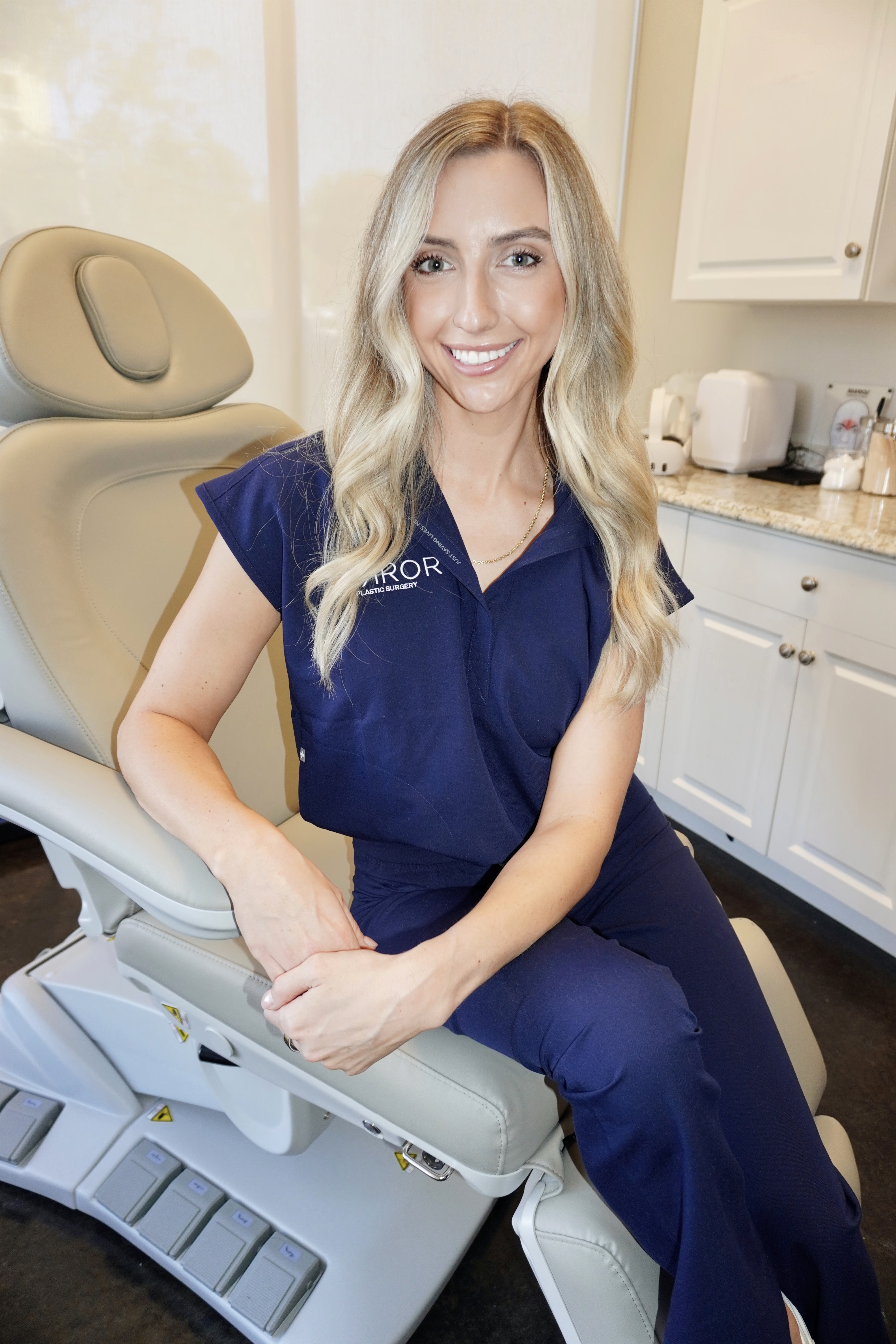
Ellie’s combination of esthetician training and advanced nursing credentials allows her to connect cosmetic goals with the clinical science required to reach them safely. When surgical support is appropriate, her work is complemented by Dr. Akash Chandawarkar, MD, a Harvard-educated physician, Johns Hopkins-trained plastic surgeon, and fellowship-trained aesthetic surgeon at Manhattan Eye Ear & Throat Hospital and Lenox Hill Hospital.
Frequently Asked Questions
How small should a concierge doctor’s panel be?
Most concierge practices maintain much smaller panels than traditional primary care, often in the 100–600 patient range mentioned earlier. These limited panels support same-day or next-day appointments, longer visits, and more responsive after-hours communication. Some ultra-concierge practices operate with panels well below 300. When you evaluate a practice, ask for the current panel count and whether a hard cap exists. A provider unwilling to disclose this information may not be operating at true concierge capacity.
Are peptides FDA-approved?
Many therapeutic peptides are not FDA-approved as standalone drugs, although they remain under active FDA regulatory review, including possible reclassification of certain compounds in 2026 and 2027. Compounded peptides prescribed under Section 503A require a valid prescription and documentation that the treatment is clinically necessary for the individual patient. The main risk with peptides usually comes from unregulated sources and lack of medical supervision, not from the compounds alone. At Mirror Plastic Surgery, peptides come from reputable providers with documented batch testing, and every protocol begins only after a comprehensive consultation and, when indicated, a full lab panel review.
What happens if I stop taking peptides?
Stopping peptide therapy usually leads to a gradual return to your baseline for the conditions being managed. For example, if a peptide protocol reduces systemic inflammation, that inflammation often returns once the protocol ends.1 This pattern resembles stopping any health regimen, because benefits are maintained through continued use. Mirror Plastic Surgery designs maintenance protocols to support long-term results, and Ellie Pranckevicius provides ongoing guidance so patients can decide whether to continue, adjust, or pause their protocols based on labs and symptoms.
How is Mirror Plastic Surgery’s peptide program different from buying peptides online?
Online peptide retailers typically sell research-grade compounds without a prescription, medical history review, or lab analysis. These research-grade products often have significantly lower purity than pharmaceutical-grade alternatives and carry higher toxicity risks. Mirror Plastic Surgery’s program begins with a 30–60 minute consultation with Ellie Pranckevicius, includes lab panels covering thyroid, liver, kidney, hormone, and metabolic markers, and uses only batch-tested pharmaceutical-grade sourcing. Patients receive a custom protocol tailored to their physiology and goals, along with 24/7 direct text access to Ellie for questions, dosing guidance, and refill support.
Can peptide therapy be used alongside surgical or aesthetic procedures?
Peptide therapy can complement surgical and aesthetic procedures when used thoughtfully. Peptides can be integrated into post-surgical recovery plans to reduce inflammation and support healing after procedures performed by Dr. Akash Chandawarkar.1 Mirror Plastic Surgery’s model allows Ellie’s non-surgical and peptide work and Dr. Akash’s surgical expertise to function as a unified care system. Patients undergoing surgery can receive medically supervised peptide support during recovery, with both practitioners coordinating on the overall plan.
Conclusion
Choosing a concierge doctor means looking closely at panel size, visit length, credential transparency, after-hours access, care coordination, and the quality of any advanced wellness programs. Practices that pair concierge access with medically supervised peptide therapy, lab-reviewed protocols, and batch-tested sourcing now represent a comprehensive standard for modern concierge care. Mirror Plastic Surgery’s model, anchored by Ellie Pranckevicius’s clinical expertise and Dr. Akash Chandawarkar’s surgical background, delivers this level of care within a genuinely limited-volume, patient-first practice in St. Petersburg, Florida.
1 Results may vary from person to person. Editorial content, before and after images, and patient testimonials do not constitute a guarantee of specific results.
Peptide therapy is intended for wellness and optimization purposes and is not prescribed to diagnose, treat, cure, or prevent disease unless specifically stated. Many peptides are not FDA-approved and may be used off-label. Some have limited long-term safety data, with a potential for unknown risks, complications, or desensitization with prolonged use.
