

Written by: Ellie Pranckevicius, FNP-BC, Aesthetic Nurse Practitioner & Aesthetic Injector | Facial Restoration & Regenerative Injectable Specialist, Mirror Plastic Surgery
Key Botox Lip Flip Facts
- A Botox lip flip is a non-surgical treatment that uses 4–6 units of botulinum toxin to relax the orbicularis oris muscle, creating subtle upper-lip eversion without adding volume.
- Results appear in 3–14 days and typically last 2–3 months, so the procedure works well for patients who want low-commitment, natural-looking lip enhancement.1
- Unlike lip filler, a lip flip changes lip position rather than size; the two treatments can be combined when both shape refinement and volume are desired.
- Precise, conservative dosing by an experienced injector is essential to minimize risks such as difficulty using a straw, puckering, or speaking clearly.
- Patients in the Tampa Bay area can schedule a personalized consultation at Mirror Plastic Surgery to determine whether a lip flip, filler, or combined approach best suits their anatomy and goals.
How a Botox Lip Flip Works and Typical Unit Counts
Botox injected above the upper lip relaxes the orbicularis oris muscle, preventing it from retracting when smiling and allowing the upper lip to roll slightly outward, revealing more of the lip’s natural surface without adding volume. The procedure does not create new tissue or increase lip size. It changes the resting and dynamic position of the lip edge.
Most providers use 4–6 units, though some use as few as 2 units for subtle results or up to 8 units for stronger muscle relaxation or gummy smile correction, depending on orbicularis oris muscle strength and patient goals. Unit selection depends on anatomy, not a fixed formula. Over-injection of the orbicularis oris can impair functions such as drinking through a straw, puckering, or enunciating certain sounds due to excessive muscle relaxation, which highlights the need for precise, conservative dosing by an injector with deep perioral anatomical knowledge.
This need for precision makes provider selection central to safety. At Mirror Plastic Surgery in St. Petersburg, Ellie Pranckevicius, FNP-BC, approaches every perioral treatment within a full-face assessment framework. Rather than defaulting to a standard unit count, she evaluates orbicularis oris strength, lip-to-gum ratio, overall facial proportions, and the patient’s functional needs before recommending any neuromodulator placement.
Lip Flip vs. Filler: How Ellie Helps You Decide
Botox targets muscles that create motion around the lips, while dermal fillers target tissue layers to adjust contour and fullness. Neither option works best for everyone. The right choice depends on the patient’s anatomy, goals, and comfort level with visible change. The table below compares the two options across four clinical dimensions.
| Dimension | Botox Lip Flip | Lip Filler |
|---|---|---|
| Onset | Initial effect 3–5 days, full result 10–14 days | Visible immediately, final settling about 2 weeks |
| Duration | As noted earlier, results typically span 2–3 months, though this range can extend from 6 weeks to 5 months depending on individual factors such as metabolism and dosage1 | 6–12 months or longer depending on product and metabolism |
| Reversibility | Temporary, effects resolve as toxin wears off over 6–8 weeks, no instant reversal agent | Temporary, hyaluronic acid fillers can be dissolved with hyaluronidase |
| Primary Purpose | Subtle shape change, gummy smile correction, upper-lip eversion without volume addition | Volume increase, symmetry correction, border definition (Cupid’s bow, vermillion border) |
A Botox lip flip and lip filler can be performed in the same session, with filler providing volume and the lip flip refining upper-lip shape and projection. Ellie evaluates whether one, both, or neither treatment fits during a comprehensive top-to-bottom facial consultation, not in isolation.
Realistic Results and Before/After Photos
The Botox lip flip produces a subtle result in which the lip does not increase in size but instead reveals more of its natural surface, making it suitable for patients whose upper lip disappears or curls inward when smiling.1 Before-and-after comparisons for this procedure are most meaningful at the 10–14 day mark, when peak effect occurs.
Patients with very thin lips who expect visible volume addition are not well-matched to this procedure. Very thin lips are a poor match for a Botox lip flip if the patient expects visible added volume, because the procedure only works with the tissue already present. This anatomical limitation makes a thorough pre-treatment assessment essential, so expectations match what the lips can realistically achieve.
The broader industry trend supports this measured approach. Patients are increasingly educated and request enhancement rather than transformation, often stating they want to “look like myself” or appear “refreshed.”
How Long Results Last and Maintenance Planning
The shorter duration of a lip flip results from the high activity level of the orbicularis oris muscle, which is used constantly for speaking, eating, and facial expressions, combined with the low dose of 4–8 units typically injected. Patients with faster metabolisms, higher oral muscle use, such as teachers, singers, or gum chewers, or lower doses within the 4–8 unit range tend to experience results closer to the 8-week end of the spectrum.
Recommended maintenance options include standalone treatments every 8–10 weeks, pairing with other Botox areas every 3–4 months, or event-based single sessions scheduled 2 weeks before occasions. Although a Botox lip flip has a lower per-session cost, the need for repeat treatments every 2–3 months can make the annual cost comparable to lip filler, so long-term budget planning belongs in the consultation conversation.
Day-of Treatment Experience and Recovery
The Botox lip flip procedure takes under 15 minutes, involves a mild pinch sensation, and requires no downtime. After the procedure, patients should stay upright for the first four hours, avoid strenuous exercise for 24 hours, avoid rubbing the area, and avoid straws for the first day. Patients should also avoid alcohol, blood-thinning medications, and supplements such as fish oil or vitamin E in the days before treatment to reduce bruising risk.
Most reputable providers offer a 2-week follow-up after a Botox lip flip to assess results and adjust dose or placement if needed. Mirror Plastic Surgery’s concierge model includes this follow-up as a standard part of the patient journey, not an afterthought.
Side Effects, Limitations, and Who Should Avoid a Lip Flip
Common side effects include mild swelling, redness, or bruising at the injection site, which typically resolve within a few days. The functional changes mentioned earlier, such as straw use, speech clarity, and puckering, can also occur at appropriate doses in some patients, along with mild drooling and a feeling that the lip is weak, and these effects typically resolve as the toxin wears off.
Patients with pre-existing neuromuscular disorders, history of Bell’s palsy, significant lip asymmetry, difficulty with speech articulation, or jobs requiring precise lip control, such as public speaking or singing, are not ideal candidates for a lip flip. Patients who are pregnant or breastfeeding are also generally not good candidates.
Common Lip Flip Misconceptions
A frequent misconception is that a lip flip makes lips look larger. A Botox lip flip affects the position of the upper lip by relaxing targeted muscles but does not increase lip size or create new tissue. The visual change comes from revealing more of the existing lip surface, not from adding substance.
Another misconception is that the lip flip is always a lower-cost alternative to filler over time. As noted in the comparison above, frequent maintenance can equalize annual costs between the two approaches, particularly for patients who require consistent touch-ups. A third misconception is that any injector can safely perform the procedure. Choosing a board-certified plastic surgeon or experienced injector who understands perioral anatomy is a key safety factor for minimizing risks.
Choosing an Expert Injector in Tampa Bay
The facial injectable industry is advancing through improved safety profiles, precision injection techniques, and personalized treatment planning that enable enhanced patient satisfaction and natural-looking results. In a market where AAFPRS members report that non-invasive treatments account for 80% of all facial procedures in 2025, the volume of providers has grown rapidly, which makes injector selection a critical safety decision, not merely a preference.
For Tampa Bay patients, Mirror Plastic Surgery offers a structurally different model. Ellie Pranckevicius, FNP-BC, holds a Bachelor’s in Health Science from Boston University, completed a 600-hour hands-on aesthetics licensure program, and earned both her Bachelor’s and Master’s in Nursing from the University of South Florida. Her four years in the Neuroscience ICU at Tampa General Hospital sharpened her clinical judgment and physiological understanding in ways that directly inform her injection precision and complication awareness.
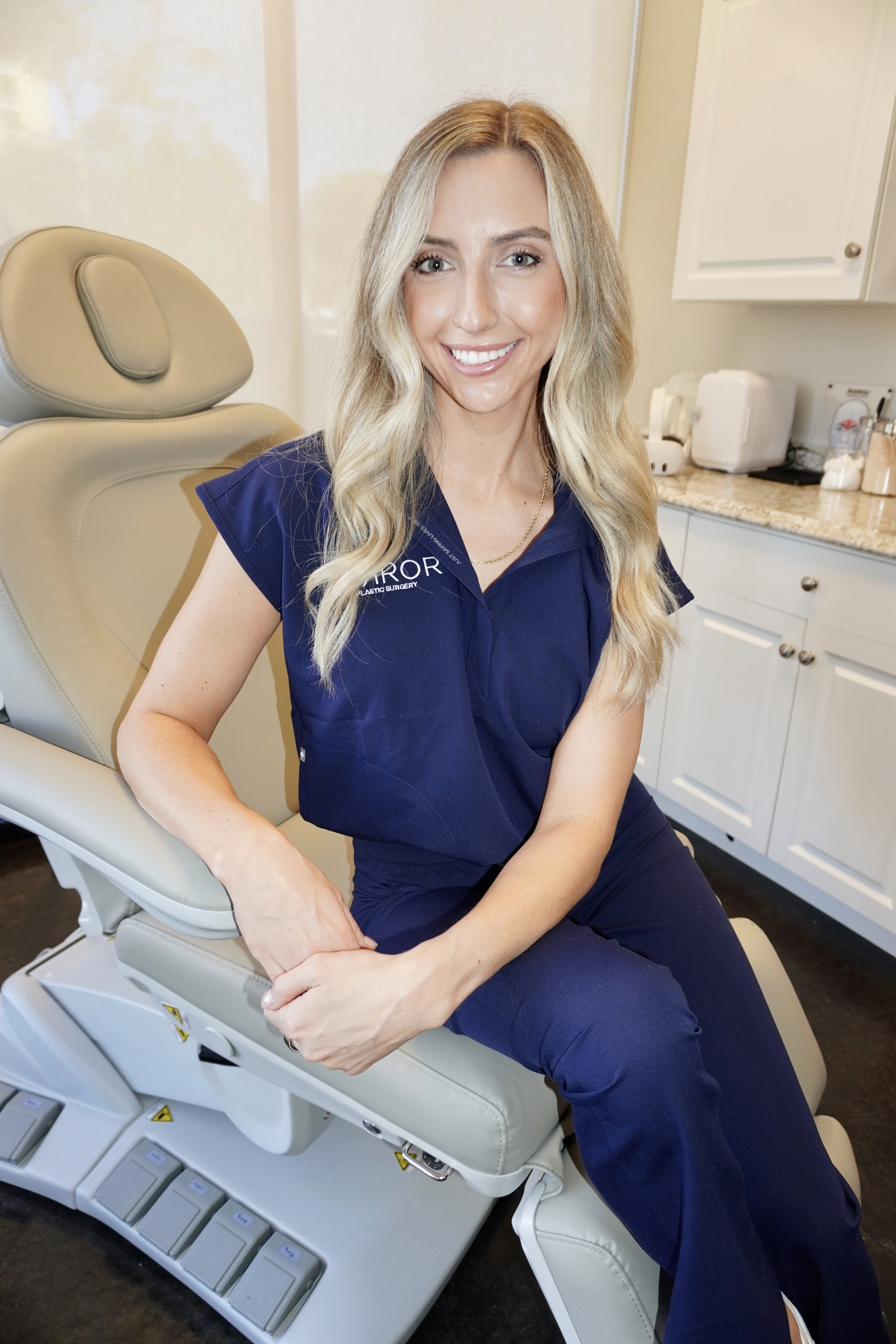
Ellie’s approach to perioral aesthetics begins with a full-face assessment. She evaluates the upper, middle, and lower facial regions as an integrated system before recommending any single treatment. This approach helps prevent the asymmetry and “overdone” appearance that can result from isolated, single-area injections, a risk that is particularly relevant in the perioral zone, where even small deviations in placement affect both aesthetics and function. Her philosophy mirrors the industry shift toward natural enhancement discussed earlier, respecting facial balance, preserving movement, and enhancing confidence without sacrificing authenticity.
Mirror Plastic Surgery operates as a supplier-neutral practice, meaning product recommendations are driven by patient anatomy and goals, not brand quotas or commissions. The practice’s concierge model limits patient volume to ensure that every consultation receives the time and attention required for safe, evidence-based decision-making.
Frequently Asked Questions
Who makes a good candidate for a Botox lip flip?
The best candidates are adults with an upper lip that disappears or curls inward when smiling, those with mild gummy smile concerns, or individuals seeking subtle lip definition without added volume. Patients with very thin lips who want visible volume increase, those with pre-existing neuromuscular conditions, significant lip asymmetry, or jobs that require precise lip control, such as professional singers, wind instrument musicians, or public speakers, may not be well-suited for the procedure. Pregnancy and breastfeeding are also contraindications. A thorough consultation that reviews medical history, anatomy, and functional needs is the only reliable way to confirm candidacy.
How might a lip flip affect smiling, straw use, or speech?
Temporary functional changes are a documented and expected possibility, particularly in the first one to two weeks when the neuromodulator is at peak effect. Some patients experience mild difficulty puckering, using a straw, or enunciating certain consonant sounds. These effects resolve as the toxin wears off, typically within six to eight weeks. The likelihood and severity of functional side effects relate directly to unit count and placement precision, which is why conservative dosing by an anatomically trained injector is essential. Patients whose professional or personal activities depend heavily on precise lip control should discuss this candidly during consultation.
How is a Botox lip flip different from lip filler, and can both be used?
A Botox lip flip changes the position and movement of the upper lip by relaxing the orbicularis oris muscle. It does not add volume or create new tissue. Lip filler adds physical substance to change the size, shape, or border definition of the lips. The two procedures address different anatomical concerns and can be performed in the same session when a patient’s goals and anatomy support both. A lip flip alone is appropriate when the primary concern is upper-lip eversion or gummy smile correction. Filler alone is appropriate when the primary concern is volume or symmetry. A combined approach may be appropriate when both shape refinement and volume are desired, based on a comprehensive assessment of the full face.
How long do results last, and how often is maintenance needed?
Results from a Botox lip flip typically last 8–12 weeks, which is shorter than Botox in less active facial areas because the orbicularis oris muscle is in near-constant use during speaking, eating, and facial expression.1 Patients with faster metabolisms or higher oral muscle activity tend to metabolize the toxin more quickly. Maintenance schedules vary: some patients treat every 8–10 weeks as a standalone session, others align lip flip appointments with broader facial Botox treatments every three to four months, and some use the procedure selectively before specific events. A personalized maintenance cadence is best established after observing how an individual patient responds to the initial treatment.
What should I look for when choosing a lip flip provider in Tampa Bay?
Provider selection for a Botox lip flip should prioritize demonstrated perioral anatomical knowledge, clinical training that extends beyond cosmetic injection courses, and a consultation process that evaluates the full face rather than the target area in isolation. Red flags include rushed consultations, fixed unit counts applied without anatomical assessment, and no discussion of functional limitations or contraindications. A qualified provider will review your medical history, discuss realistic outcomes specific to your anatomy, explain the maintenance commitment, and offer a follow-up appointment to assess results. At Mirror Plastic Surgery, Ellie Pranckevicius’s background in advanced nursing, esthetics, and neuroscience ICU care provides a clinical foundation that directly supports safer, more precise perioral injection outcomes within a full-face treatment philosophy.
Is a Botox Lip Flip Right for You?
A Botox lip flip is a well-defined, minimally invasive procedure that produces subtle upper-lip eversion through targeted relaxation of the orbicularis oris muscle.1 It is not a volume-adding treatment, and it is not appropriate for every patient. Results are temporary, onset occurs within days, and maintenance is required every two to three months because of the high activity level of the perioral musculature. When an injector with precise anatomical knowledge and a full-face assessment framework performs the procedure, the safety profile is favorable and outcomes are predictable. When performed without adequate anatomical evaluation or with excessive unit counts, functional side effects and asymmetry become documented risks. For Tampa Bay adults considering this procedure, the quality of the consultation and the depth of the injector’s anatomical training are the most consequential variables in the outcome.
Disclaimer: Results may vary from person to person. Editorial content, before and after images, and patient testimonials do not constitute a guarantee of specific results.
1 Results may vary from person to person. Editorial content, before and after images, and patient testimonials do not constitute a guarantee of specific results.
