
Written by: Ellie Pranckevicius, FNP-BC, Aesthetic Nurse Practitioner & Aesthetic Injector | Facial Restoration & Regenerative Injectable Specialist, Mirror Plastic Surgery | Last updated: July 10, 2026
Peptide Therapy at Mirror Plastic Surgery: Key Points
- Peptides are short amino acid chains that act as biological messengers, signaling the body’s own pathways rather than functioning like traditional pharmaceuticals.
- Supervised peptide therapy can address inflammation, autoimmune conditions, recovery, anti-aging, energy, neurological health, sexual wellness, fertility, and metabolic concerns beyond weight loss.1
- Choosing a responsible clinic requires batch-tested sourcing, lab-driven protocols, licensed prescribers, remote access, post-surgical integration, and structured follow-up monitoring.
- At Mirror Plastic Surgery, Ellie Pranckevicius, FNP-BC, leads personalized, lab-reviewed peptide protocols sourced from licensed compounding pharmacies with direct practitioner support.
- Patients ready to explore supervised peptide therapy can schedule a consultation at Mirror Plastic Surgery to receive a customized evaluation and protocol.
Conditions Mirror Plastic Surgery Addresses With Peptide Therapy
Weight management is the most publicly recognized application of peptide therapy, largely due to the widespread adoption of GLP-1 receptor agonists. The clinical scope extends considerably further. Supervised peptide protocols are being explored and applied across a broad range of indications:
- Systemic and gut inflammation: BPC-157 supports mucosal protection and intestinal tight junction repair, making it relevant for patients with leaky gut, IBS, or systemic inflammation.1
- Autoimmune conditions: Peptides targeting inflammatory cytokine pathways are being used to manage conditions such as psoriasis and rheumatoid arthritis.1
- Post-surgical and injury recovery: Protocols combining BPC-157, TB-500, and GHK-Cu address different aspects of healing simultaneously, including local tissue repair, reduced scarring, and collagen regeneration.1
- Anti-aging and skin health: GHK-Cu plasma concentrations decline from approximately 200 ng/mL at age 20 to around 80 ng/mL by age 60. Supplementation is used to stimulate collagen, elastin, and tissue repair.1
- Energy and mitochondrial function: NAD+ supports energy production and DNA repair at the cellular level, with levels typically declining 40–50% by midlife.1
- Anxiety and neurological health: Selank acts on similar brain pathways as benzodiazepines without the dependency component and has been explored for anxiety and depression management.1
- Sexual wellness: Bremelanotide (PT-141) improved desire scores and reduced distress scores in Phase 3 trials for hypoactive sexual desire disorder.1
- Fertility: Kisspeptin has shown promise in IVF trials for improving positive outcomes.1
- Weight and metabolic health: Newer GLP-3R formulations are reported to have fewer gastrointestinal side effects than earlier GLP-1 compounds and support broader metabolic indications including insulin resistance and cardiovascular risk factors.1
These established applications represent the current clinical landscape, and the field continues to evolve rapidly. On the 2025–2026 clinical frontier, retatrutide, a triple-agonist peptide targeting GLP-1, GIP, and glucagon receptors, produced an average 28.7% body weight loss at 68 weeks in the Phase 3 TRIUMPH-4 trial.1 Mitochondrial-focused peptides such as NAD+ precursors and SS-31 are gaining traction for fatigue and cellular aging applications.1 Regulatory access also shifted in early 2026: On February 27, 2026, HHS Secretary RFK Jr. signaled during a podcast that the FDA might consider removing approximately 14 peptides from Category 2, but no formal announcement was made that they would be reclassified to Category 1.
Schedule a consultation to explore which peptide protocol fits your health goals.
How to Choose a Medically Supervised Peptide Clinic
The quality of a peptide therapy program is determined by its clinical infrastructure, not its marketing. Six specific factors define that infrastructure and distinguish a responsible supervised clinic from a high-volume or online alternative.
First, batch testing and sourcing transparency. A Certificate of Analysis (COA) is required for every batch of peptides, issued only by ISO 17025-accredited labs, and must include batch or lot numbers, test methods such as HPLC and mass spectrometry, analyst signature, and date. Injectable peptides must demonstrate at least 98% purity. Any supplier unable to provide this documentation should be disqualified.
Second, lab-driven protocol design. Growth hormone peptides require IGF-1 baseline labs, metabolic peptides require fasting glucose, fasting insulin, and HbA1c, and immune-modulating peptides require CBC and inflammatory markers before initiating therapy. Clinics that skip baseline labs and offer pre-set packages represent a clinical red flag.
Third, licensed prescriber credentials. Peptide treatment must be prescribed by a licensed clinician, such as an MD, DO, NP, or PA, with an active state medical license and a documented patient-provider relationship.
Fourth, remote access capability. For patients outside the immediate Tampa Bay area, the ability to conduct consultations, order labs, and ship medications remotely across the United States is a meaningful access factor.
Fifth, post-surgical integration. Clinics embedded within plastic surgery practices can coordinate peptide protocols with perioperative care. Plastic surgeons are well-positioned to lead investigations integrating regenerative peptides into perioperative care and evaluating their ability to improve outcomes in aesthetic procedures, according to ASPS Member Surgeon Johnny Franco, MD.
Sixth, realistic timelines and follow-up structure. Labs for custom peptide stacks should be repeated at 6–8 weeks after initiation and then quarterly during the first year, with protocol adjustments based on objective data. Clinics that do not schedule follow-up labs are not practicing responsible peptide medicine.
Beyond these six technical criteria, the structural model of care delivery itself matters. Concierge models, which limit patient volume and provide direct practitioner access, differ structurally from high-volume telemedicine platforms. The concierge approach allows for individualized monitoring, protocol adjustment, and the kind of extended consultation time that complex cases require. High-volume platforms may offer convenience but typically cannot replicate the depth of clinical oversight that lab-driven personalization demands.
Meet the Practitioner Leading Peptide Therapy: Ellie Pranckevicius
Peptide therapy at Mirror Plastic Surgery is led by Ellie Pranckevicius, FNP-BC, a board-certified Family Nurse Practitioner whose clinical background spans aesthetics, advanced nursing, and critical care medicine. Ellie earned her Bachelor’s in Health Science from Boston University on the premedical track, completed an aesthetics licensure program, and obtained both her Bachelor’s and Master’s in Nursing from the University of South Florida. She spent four years in the Neuroscience ICU at Tampa General Hospital, where she managed complex patients and developed a deep understanding of physiology, metabolic health, and recovery.
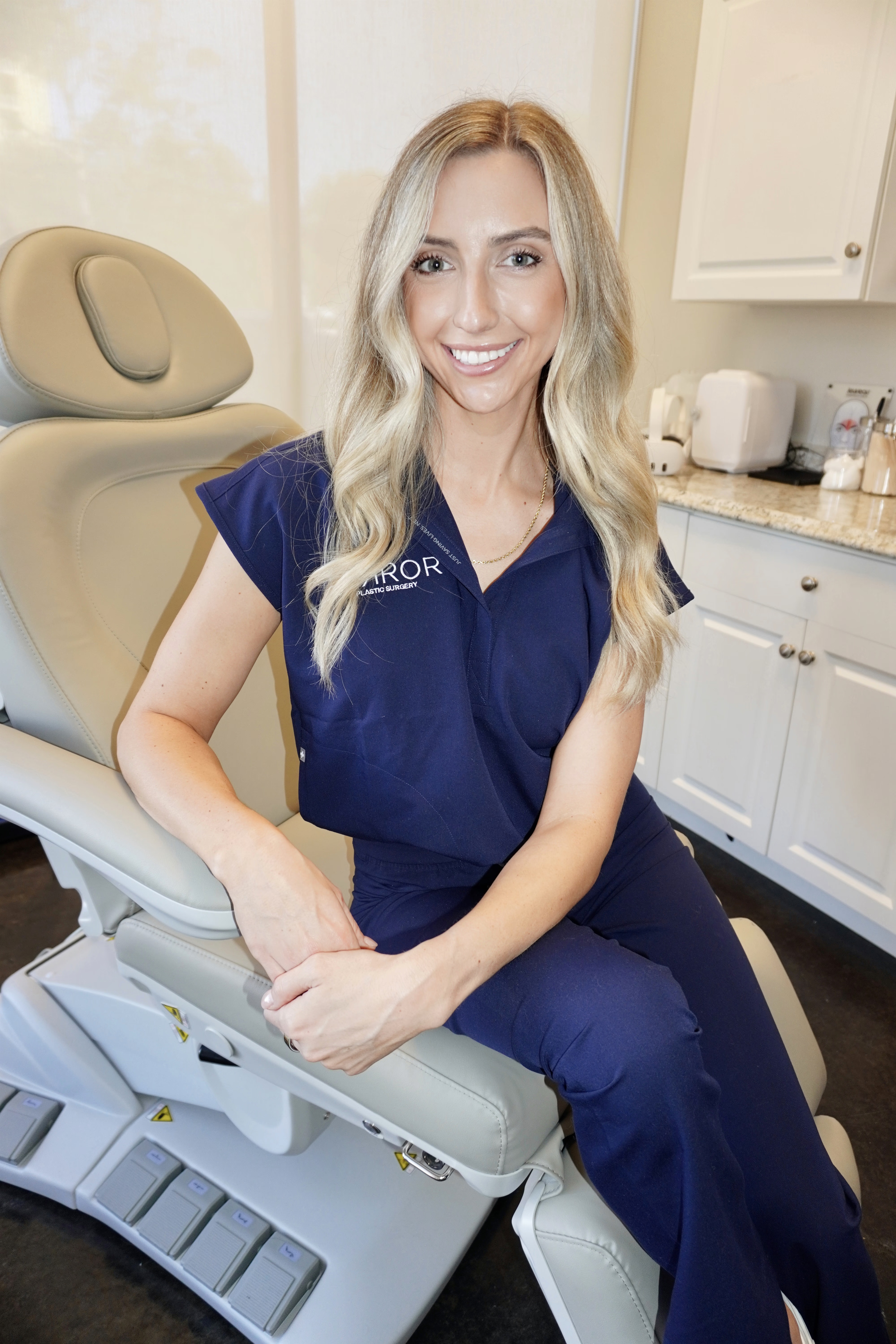
This combination of esthetician training from a high-end Boston medical spa, advanced nurse practitioner credentials, and ICU-level clinical experience gives Ellie a dual perspective that is uncommon in wellness settings. The aesthetic training taught her what patients want to achieve with their appearance and confidence. The ICU experience taught her how to evaluate whether their physiology can support those goals safely. She understands both the aesthetic outcomes patients are seeking and the clinical science required to pursue them safely.
Ellie’s approach to patient education is direct and conversational. She explains the physiology behind each recommendation in accessible terms, so patients understand not just what they are taking but why. She is known for telling patients when a service or product is not yet necessary for them, a practice that prioritizes long-term outcomes over short-term revenue. When cases intersect with surgical planning or post-operative care, Ellie’s work is complemented by Dr. Akash Chandawarkar, MD, a Harvard-educated physician, Johns Hopkins-trained plastic surgeon, and fellowship-trained aesthetic surgeon at Manhattan Eye Ear & Throat Hospital (MEETH) and Lenox Hill Hospital.
Meet with Ellie for a personalized, lab-driven peptide evaluation.
Sourcing, Safety, and How Mirror Plastic Surgery Structures Care
The clinical workflow at Mirror Plastic Surgery follows a structured sequence that keeps safety and personalization at the center. It begins with a comprehensive 30–60 minute consultation covering medical history, current medications, and health goals. For weight management or inflammatory conditions, lab panels covering thyroid, liver, kidney, diabetes markers, and hormone levels are reviewed or ordered if not available. A custom protocol is then designed based on those findings, not a pre-set package.
Peptides are sourced exclusively from reputable compounding pharmacies that conduct rigorous batch testing. Peptide substances must be sourced from licensed 503A compounding pharmacies for patient-specific preparations or 503B outsourcing facilities, and 503A pharmacies are state-regulated and prepare customized medications under USP standards. Patients receive detailed instructions for reconstitution and self-administration, often accompanied by video demonstrations, and have direct access to Ellie via text for ongoing support and refill requests.
The regulatory landscape for peptides is active and requires ongoing attention. Many newer injectable peptides marketed for wellness, anti-aging, and recovery have not been thoroughly tested or reviewed by the FDA and therefore lack data from clinical trials. The primary risk in this space often comes from sourcing: unregulated research chemical peptide vendors have repeatedly shown contamination, mislabeling, incorrect dosing, and inconsistent potency upon independent testing. Patients who obtain peptides online without medical supervision have no mechanism to verify product quality, appropriate dosing, or contraindication screening.
Mirror Plastic Surgery’s service is available in person at its St. Petersburg location and remotely across the United States, including Hawaii and Alaska, through telemedicine consultation and pharmacy shipping.
Frequently Asked Questions About Peptide Therapy
Are peptides approved by the FDA?
Most peptides used in holistic wellness and anti-aging contexts are not FDA-approved for those specific indications, though some have received approval for defined medical uses. For example, bremelanotide (PT-141) is FDA-approved for hypoactive sexual desire disorder in premenopausal women, and tesamorelin is approved for HIV-associated lipodystrophy. Compounded peptides prepared by licensed 503A or 503B pharmacies operate within a separate regulatory framework and are not evaluated by the FDA for safety, efficacy, or quality. The regulatory landscape is evolving, and potential reclassification of certain Category 2 peptides has been discussed at the federal level, though no formal policy change has been announced. At Mirror Plastic Surgery, every peptide protocol is prescribed by a licensed practitioner, sourced from batch-tested compounding pharmacies, and supported by lab review, which provides the clinical infrastructure that responsible use requires.
What are the risks of using peptides without supervision?
The primary risk of obtaining peptides online without medical oversight is the absence of third-party quality verification. Without a Certificate of Analysis from an ISO-accredited lab, there is no reliable way to confirm purity, potency, sterility, or that the product contains what the label claims. Independent testing of unregulated research-grade peptide vendors has repeatedly identified contamination, mislabeling, and inconsistent dosing.
Beyond product quality, unsupervised use carries clinical risks. Certain peptides are contraindicated in individuals with specific cancers, uncontrolled metabolic conditions, or those taking medications that may interact with treatment. Growth hormone secretagogues, for example, require IGF-1 baseline labs before use. Without a full medical history review, lab screening, and ongoing monitoring, adverse effects may go undetected. Mirror Plastic Surgery’s concierge model addresses each of these risks through structured intake, lab panels, licensed sourcing, and direct practitioner access throughout the protocol.
Will everyone see the same results with peptides?
Outcomes from peptide therapy vary significantly between individuals.1 Genetics, baseline lab values, diet, lifestyle, sleep quality, stress levels, and the specific compounds and dosing used all influence how a person responds. A protocol that produces meaningful improvement in one patient’s inflammatory markers may produce a different response in another with a different metabolic profile.
This variability makes a one-size-fits-all approach clinically inadequate. Mirror Plastic Surgery’s protocols are built from individual lab results and medical history, not pre-set packages. Some patients notice improvements in sleep, energy, or inflammation within the first weeks.1 Metabolic, hormonal, and body composition changes typically emerge over longer periods under ongoing monitoring.1 Realistic expectations are established during the initial consultation, and protocols are adjusted at follow-up milestones based on objective data and patient response.
What happens if I stop taking peptides?
When a peptide protocol is discontinued, the biological signals it was providing cease, and the conditions being managed are likely to return toward their baseline state over time. This pattern is consistent with how most health interventions work. The benefits of a structured exercise program diminish when training stops, and inflammation that was being modulated by a peptide protocol will tend to return if the protocol is discontinued without an alternative management strategy in place.
For some applications, such as collagen stimulation or mitochondrial support, the effects may persist longer than for acute inflammatory management. No peptide produces permanent structural change after a single course. Maintenance protocols are often recommended to sustain results, and the appropriate duration and cycling strategy are determined individually based on the patient’s goals, lab trends, and clinical response over time.
Conclusion: Choosing Peptide Therapy With Confidence
Supervised holistic peptide therapy offers a clinically grounded approach to inflammation, autoimmune conditions, weight management, recovery, and anti-aging when delivered through individualized lab review, licensed sourcing, and ongoing medical oversight. The difference between a responsible program and an unregulated one often lies in the infrastructure surrounding the peptides: who prescribes, what labs are reviewed, where the compounds are sourced, and how the patient is monitored over time.
Mirror Plastic Surgery brings together the clinical depth of a concierge plastic surgery practice with the personalized expertise of a practitioner whose background spans critical care, aesthetics, and advanced nursing. For Tampa Bay residents seeking a holistic wellness clinic offering peptide therapy, that combination of lab-driven protocols, batch-tested sourcing, and direct access to Ellie Pranckevicius represents a substantively different standard of care than high-volume or online alternatives.
Ready to begin? Start your peptide consultation at Mirror Plastic Surgery.
Disclaimer: Peptide therapies discussed in this article are not FDA-approved for all indications described. Compounded peptides are not evaluated by the FDA for safety, efficacy, or quality. This content is for informational purposes only and does not constitute medical advice. Consult a licensed healthcare provider before beginning any peptide therapy protocol.
1 Results may vary from person to person. Editorial content, before and after images, and patient testimonials do not constitute a guarantee of specific results.
Peptide therapy is intended for wellness and optimization purposes and is not prescribed to diagnose, treat, cure, or prevent disease unless specifically stated. Many peptides are not FDA-approved and may be used off-label. Some have limited long-term safety data, with a potential for unknown risks, complications, or desensitization with prolonged use.