
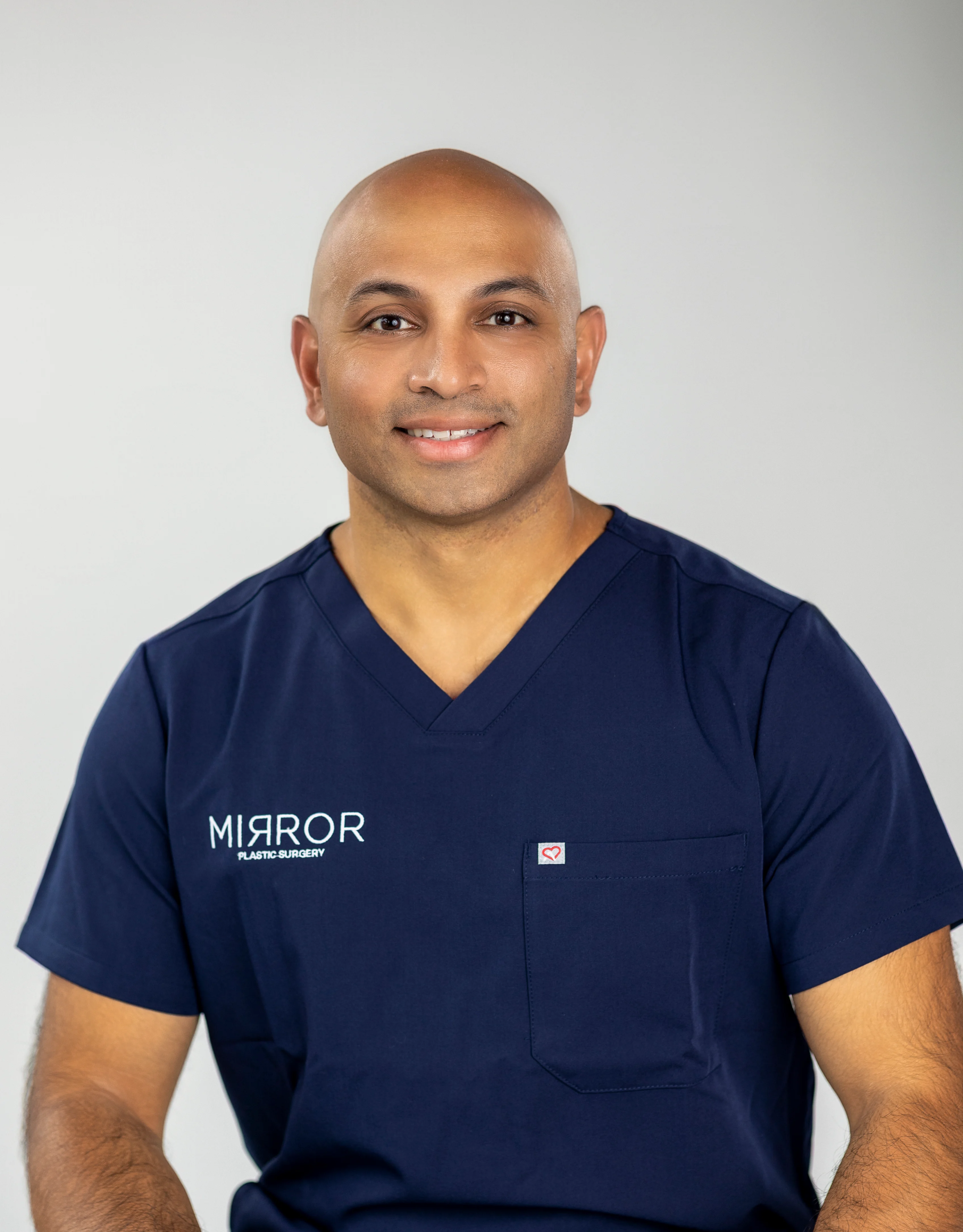
Written by: Dr. Akash Chandawarkar, Board Certified Plastic Surgeon, Mirror Plastic Surgery | Last updated: September 9, 2026
Key Takeaways
- Copper peptides like GHK-Cu may improve hair density and follicle health based on early research, but large clinical trials are still missing.1
- These peptides perform best as supportive therapy alongside proven treatments such as minoxidil, especially for genetic hair loss.1
- GHK-Cu currently has the most robust evidence among hair growth peptides and remains the only copper peptide with published human scalp data.
- Most people who respond need several months of consistent use before seeing visible changes in shedding and density.1
- Physician guidance helps ensure safe, evidence-aligned protocols. Schedule a consultation at Mirror Plastic Surgery to explore supervised peptide therapy for your hair restoration plan.
Executive Summary: The Bottom Line on Hair Growth Peptides
Hair growth peptides, especially copper peptides like GHK-Cu, show real biological activity in preclinical models and small human studies.1 No phase II or phase III randomized controlled trial of GHK-Cu for hair growth has been completed as of 2026, and no peptide matches the clinical rigor of FDA-approved treatments such as minoxidil or finasteride. The unregulated market adds further uncertainty, because products differ widely in purity, concentration, and quality control. This review synthesizes the available evidence through the clinical lens of Dr. Akash Chandawarkar, Harvard-educated, Johns Hopkins-trained plastic surgeon and founder of Mirror Plastic Surgery, to clarify what current science supports versus what is marketing.
Research Methodology: How This Review Was Conducted
This report draws on peer-reviewed clinical studies, regulatory databases such as ClinicalTrials.gov and FDA records, expert consensus from dermatology organizations, and real-world user feedback. Dr. Chandawarkar, a board-certified plastic surgeon with fellowship training in aesthetic surgery and medical innovation training at Stanford University, applied his clinical judgment to weigh the evidence hierarchy and separate genuine promise from promotional overreach. Every claim in this report comes from published literature or regulatory documentation, and the GRADE framework characterizes evidence certainty where applicable.
Schedule a consultation with Ellie to review your hair restoration options and see whether physician-supervised peptide therapy fits your goals.
The Evidence Base: What the Science Actually Says About Hair Growth Peptides
The Mechanism: Why Peptides Could Support Hair Growth
Peptides are short chains of amino acids that act as signaling molecules and guide cellular behavior across many biological pathways. GHK-Cu (glycyl-L-histidyl-L-lysine copper(II)) was first isolated from human plasma in 1973 by biochemist Loren Pickart, who identified it as a factor that helped aged tissue behave more like younger tissue. Plasma concentrations decline significantly with age, from approximately 200 ng/mL at age 20 to roughly 80 ng/mL by age 60, which correlates with slower wound healing, thinner skin, and hair loss.
At the follicle level, GHK-Cu appears to act through several converging mechanisms relevant to hair growth:
- Activation of the Wnt/beta-catenin pathway, which supports follicle stem cell activation and the shift from resting to growing phase
- Suppression of TGF-beta1, a cytokine that drives follicle miniaturization and perifollicular fibrosis
- Upregulation of VEGF to improve perifollicular blood supply around miniaturized follicles
- Downregulation of pro-inflammatory cytokines like TNF-alpha and IL-6, which reduces scalp inflammation that contributes to follicle damage
- Modulation of over 4,000 human genes, including genes involved in tissue repair, collagen synthesis, and stem cell activation
The Clinical Evidence: What Studies Show
The strongest human data for GHK-Cu in hair growth comes from small studies rather than large randomized controlled trials. A 2016 randomized, double-blind, placebo-controlled trial in Annals of Dermatology enrolled 45 men with pattern hair loss and found that a topical spray combining GHK peptide with 5-aminolevulinic acid (5-ALA) produced 71.5 additional hairs per cm² at the lower dose over six months, compared with 9.6 hairs per cm² for placebo.1 Because GHK was combined with 5-ALA, the peptide’s individual contribution cannot be isolated.
A 2025 combination protocol using monthly scalp microneedling with copper peptides, minoxidil, and dutasteride reported 26.5% hair regrowth and a 93% reduction in shedding.1 This protocol also involved multiple active ingredients, so the effect of any single component remains unclear.
Using the GRADE framework, the evidence for GHK-Cu in human hair growth is rated “very low” certainty. This rating reflects the absence of large randomized controlled trials, reliance on preclinical and uncontrolled human data, and a high risk of bias in existing studies. The American Academy of Dermatology’s guidelines on androgenetic alopecia recommend minoxidil and finasteride as first-line agents, and copper peptides do not appear in those recommendation tiers.
Best Peptides for Hair Growth: What the Research Supports
GHK-Cu (Copper Tripeptide-1): Most Studied Option
GHK-Cu currently holds the strongest evidence base of any hair growth peptide and remains the only copper peptide with published human scalp data. Clinical studies have used topical concentrations of 0.5–2%, and many responders require several months of consistent use before seeing visible changes.1 GHK-Cu is a component of the Glow Stack at Mirror Plastic Surgery, where it supports collagen production and hair, skin, and nail health alongside BPC-157 and TB-500.
Quality control matters for GHK-Cu solutions. A correctly formulated GHK-Cu solution appears blue-green. A colorless or brown product has likely undergone copper oxidation or peptide degradation, which can render it inactive.
AHK-Cu (Copper Tripeptide-3): Mechanistically Interesting, Light on Data
AHK-Cu differs from GHK-Cu by a single amino acid, with alanine replacing glycine at position one. This change may improve stability and penetration through the stratum corneum. However, the entire direct evidence base for AHK-Cu consists of a single 2007 ex-vivo study by Pyo and colleagues. that study tested the compound on human hair follicles in a lab dish and found stimulation of follicle elongation and dermal papilla cell proliferation1, but it has not been replicated in nineteen years. AHK-Cu has no registered or completed clinical trials on ClinicalTrials.gov. It functions as a complementary option with mechanistic plausibility rather than a proven equivalent to GHK-Cu.
Biotinoyl Tripeptide-1 and Other Topical Peptides
Biotinoyl Tripeptide-1 combines biotin with a collagen-stimulating peptide and appears in many commercial topical serums marketed for hair strengthening. Most commercial peptide products rely on industry-funded evidence at best. A key practical detail is ingredient order: INCI ingredient lists run from highest to lowest concentration, so a peptide listed after fragrance or preservatives is present only at a trace level. That level almost certainly falls below the biologically active range used in published studies. Ingredient transparency and verified concentration are essential for any meaningful therapeutic effect.
Meet with Ellie for a personalized peptide plan that uses verified sourcing and tailored dosing.
Comparative Analysis: Peptides vs. Minoxidil vs. Finasteride
Copper peptides do not block DHT, so they cannot replace finasteride or dutasteride in androgen-driven alopecia. Hair peptides also have not surpassed minoxidil in powered head-to-head randomized controlled trials. The mechanisms instead appear complementary. Minoxidil acts as a potassium channel opener that promotes vasodilation and anagen prolongation. GHK-Cu targets Wnt signaling, perifollicular inflammation, and growth factor expression, which are pathways minoxidil does not directly address. Peptides therefore fit best alongside minoxidil rather than as a replacement.1 For individuals who cannot tolerate conventional treatments, or who have had only partial success, peptides may offer a meaningful adjunct under physician supervision.
Real-World Reviews: How Users Describe Popular Peptide Products
Given the limited clinical trial data, real-world user feedback offers a practical window into how these products perform outside the lab. Reports on popular serums, including The Ordinary Multi-Peptide Serum for Hair Density and various copper peptide serums, mirror the mixed picture seen in the science. Many users describe reduced shedding and modestly improved hair texture after three to six months of consistent use, while a significant number report no visible change.1
Several patterns from this feedback align with published research:
- Most retail serums list GHK-Cu concentrations below the 0.5–1% range used in studies, which likely explains many non-responses.
- Users who combine peptides with microneedling or minoxidil report more consistent outcomes than those using peptide serums alone, matching evidence that GHK-Cu performs best as part of a layered protocol.1
- Nearly all placebo-controlled trials of defined hair peptides were run or written by the ingredient’s manufacturer, so independent replication of positive results remains limited.
These products can help some individuals, yet they function as tools within a broader plan rather than stand-alone miracle cures.
Safety Analysis: Risks, Side Effects, and Regulatory Status
Topical vs. Injectable: Different Risk Profiles
Topical copper peptides have a strong safety record from decades of cosmetic use. The most common side effect is mild, transient local irritation such as redness, itching, or tingling, especially early in use. Systemic copper toxicity from topical cosmetic application at standard concentrations has not been reported in published literature.
Injectable peptides carry a substantially different risk profile. The FDA issued warning letters to multiple compounding pharmacies between 2023 and 2025 for potency failures and sterility breaches in peptide preparations. A patient receiving injectable peptides from an unverified source has no assurance that the vial contains the labeled concentration or is free from endotoxins. Injectable copper peptides also raise a theoretical concern for copper accumulation. Serum copper above 140 mcg/dL is associated with hepatotoxicity, and no pharmacokinetic study has established safe injectable doses for hair-growth purposes.
Who Should Avoid Copper Peptides
Some individuals face clear contraindications or need strict caution with copper peptides:
- Wilson’s disease or other copper metabolism disorders (absolute contraindication for injectable use)
- Pregnancy or breastfeeding, because no reproductive toxicology data exists for GHK-Cu at any dose
- Known copper sensitivity or a history of contact dermatitis to metal-containing topical products
- Active liver disease
On the regulatory front, the FDA removed injectable GHK-Cu from the Category 2 “do not compound” list on April 15, 2026, alongside 11 other peptides including BPC-157 and TB-500. This change opens a potential compounding-pharmacy access pathway. Formal Category 1 reclassification remains pending as of that date, and all clinical use for alopecia remains off-label.
Protocols and Timelines: What to Expect from Professional Treatment
At Mirror Plastic Surgery, peptide therapy starts with a comprehensive consultation and lab analysis. Dr. Chandawarkar designs each protocol around the patient’s labs, physiology, and specific hair loss pattern, rather than using a single template.
For hair growth, topical GHK-Cu at 0.5–2% currently has the strongest support. Microneedling at 0.5–1.0 mm depth can enhance topical GHK-Cu absorption up to tenfold by creating temporary microchannels that bypass the stratum corneum barrier. A key safety point involves timing and strength. Full-strength 1–2% GHK-Cu serum should not be applied immediately after microneedling, because enhanced absorption effectively delivers a much higher dose and can trigger MMP overexpression that degrades collagen. A diluted 0.05% formulation suits post-needling application more safely.
With a proper protocol in place, published data suggest the following general pattern:
- Reduced shedding often appears after several weeks of consistent use1
- Early vellus hairs may become visible over the next one to two months1
- Meaningful density changes typically require multiple months of treatment1
Results that appear in less than eight weeks usually reflect cosmetic changes1 such as conditioning, reduced breakage, or temporary thickening rather than true follicle-cycle shifts. Consistency matters, because stopping peptides tends to reverse benefits over time, similar to discontinuing other maintenance therapies.
Why Professional Supervision Matters: The Mirror Plastic Surgery Difference
Unsupervised peptide use carries real risks. Counterfeit and subpotent products are common in the unregulated online market. Incorrect dosing can produce no benefit or active harm. Lack of medical oversight also means no screening for contraindications such as copper metabolism disorders or drug interactions. A clinically overseen formulation from a compounding pharmacy with appropriate quality controls offers a very different level of safety and reliability than a DIY peptide mixed at home.
At Mirror Plastic Surgery, Dr. Chandawarkar personally leads every peptide protocol. As a board-certified physician, he tailors each plan to the patient’s labs and physiology and provides ongoing medical supervision. Mirror Plastic Surgery sources peptides from reputable providers with batch testing, including HPLC purity verification and certificate of analysis documentation, and offers telemedicine consultations across the United States. The concierge model gives patients direct access to Dr. Chandawarkar throughout treatment, rather than a one-time prescription with no follow-up.
Arrange a visit with Ellie to explore whether physician-supervised peptide therapy fits your hair restoration strategy.
Frequently Asked Questions
Do Hair Growth Peptides Actually Work?
Copper peptides like GHK-Cu show genuine biological promise, and small human studies report encouraging results1, yet large-scale clinical trials remain absent. The GRADE evidence rating for GHK-Cu in human hair growth is “very low” certainty, reflecting limited and biased data. These compounds perform best as supportive therapy alongside proven treatments such as minoxidil or finasteride. For individuals with early-to-moderate androgenetic alopecia, diffuse thinning, or scalp inflammation, they may provide meaningful adjunctive benefit under physician supervision.1
Which Peptide Is Most Effective for Hair Growth?
GHK-Cu (Copper Tripeptide-1) currently stands as the most studied hair growth peptide and remains the only copper peptide with published human scalp data. AHK-Cu (Copper Tripeptide-3) appears mechanistically promising and may support structural remodeling, but its direct evidence comes from a single ex-vivo study with no human trials. Other marketed peptides such as Biotinoyl Tripeptide-1 and Acetyl Tetrapeptide-3 rely mainly on industry-funded data and lack independent replication. For any peptide, meaningful results depend on concentration, formulation quality, and delivery method, which benefit from professional oversight.
How Long Do Hair Growth Peptides Take to Work?
Most patients who respond need several months of consistent use before noticing visible density changes. Reduced shedding often appears first, followed by early fine vellus hairs, and then gradual thickening as more follicles cycle into anagen. Any dramatic change within a few weeks usually reflects cosmetic effects such as improved conditioning or reduced breakage rather than true follicle-cycle shifts. Hair biology sets this pace, because a follicle recruited from telogen back into anagen still requires weeks before a visible shaft emerges above the scalp.
Are Hair Growth Peptides Safe?
Topical copper peptides have a long cosmetic safety record, with mild scalp irritation as the most common side effect. Systemic copper toxicity from standard topical use has not been documented in published literature. Injectable peptides from unregulated sources pose greater risks, including contamination, incorrect dosing, sterility failures, and lack of quality assurance. The FDA has issued warning letters to several compounding pharmacies for potency and sterility problems in peptide preparations. Individuals with Wilson’s disease, copper sensitivity, active liver disease, or those who are pregnant or breastfeeding should avoid copper peptides. Medical supervision is especially important for any injectable protocol.
Can I Use Peptides with Minoxidil?
Peptides can be combined with minoxidil, and their mechanisms complement each other. Minoxidil acts as a potassium channel opener that prolongs the anagen phase and improves follicular blood supply. GHK-Cu targets Wnt signaling, TGF-beta1 suppression, and perifollicular inflammation, which minoxidil does not directly address. Small studies suggest additive benefit when combining the two.1 Formulation compatibility still matters, because copper ions can oxidize minoxidil under certain conditions, so staggering application by at least 30 minutes is advisable. A physician can design a safe, personalized protocol that integrates both treatments for your specific pattern and health profile.
Conclusion: How to Approach Hair Growth Peptides Wisely
Hair growth peptides, particularly GHK-Cu, show meaningful biological activity supported by preclinical data and small human studies. Current evidence does not position them as replacements for minoxidil or finasteride, which have decades of large randomized trials and FDA approval. The unregulated peptide market introduces real risks, including subpotent products, sterility failures, and lack of screening for contraindications. Professional supervision helps convert these compounds from an expensive experiment into a structured, evidence-aligned protocol.
At Mirror Plastic Surgery, Dr. Akash Chandawarkar offers a physician-led, evidence-based approach to peptide therapy. Patients receive in-depth consultation, lab analysis, custom peptide stacks sourced from verified providers with batch testing, and ongoing concierge support. The Glow Stack, which combines GHK-Cu, BPC-157, and TB-500, illustrates how protocols are built around each patient’s physiology and goals rather than pulled from a shelf.
Schedule your consultation with Ellie to discuss whether peptide therapy aligns with your hair restoration and overall wellness plans.
Disclaimer: This article is for informational purposes only and does not constitute medical advice. Results vary from person to person. Peptide therapies are not FDA-regulated and should be used under the supervision of a qualified healthcare provider.
1 Results may vary from person to person. Editorial content, before and after images, and patient testimonials do not constitute a guarantee of specific results.
Peptide therapy is intended for wellness and optimization purposes and is not prescribed to diagnose, treat, cure, or prevent disease unless specifically stated. Many peptides are not FDA-approved and may be used off-label. Some have limited long-term safety data, with a potential for unknown risks, complications, or desensitization with prolonged use.