
Written by: Dr. Akash Chandawarkar, Board Certified Plastic Surgeon, Mirror Plastic Surgery | Last updated: September 9, 2026
Key Takeaways
- GHK-Cu (copper tripeptide-1) currently has the strongest hair growth evidence, including multiple small human trials and a 2026 systematic review.
- Acetyl tetrapeptide-3, biotinoyl tripeptide-1, and AHK-Cu have moderate or emerging data, but less isolated human clinical evidence than GHK-Cu.
- Topical GHK-Cu with microneedling is the best-studied and safest delivery route, while injectable peptides require medical supervision because of higher risk and limited outcome data.
- Most patients need 4–6 months of consistent use before seeing visible density changes, and GHK-Cu works best alongside treatments like minoxidil or finasteride.1
- Patients who want safe, physician-supervised peptide protocols for hair growth can schedule a personalized consultation at Mirror Plastic Surgery.
What Are Hair Growth Peptides?
Peptides are short chains of amino acids that act as signaling molecules and direct cells to carry out specific tasks. Certain peptides influence hair follicles by increasing blood flow through vascular endothelial growth factor (VEGF), extending the anagen growth phase, reducing perifollicular inflammation, and supporting dermal papilla cell survival. No peptide currently holds FDA approval specifically for hair loss treatment. Topical cosmetic serums with peptides are widely available over the counter, while injectable forms require careful sourcing and medical oversight within a medical practice.
What Is The Best Peptide For Hair Growth? The Evidence-Based Ranking
GHK-Cu (copper tripeptide-1) is a naturally occurring copper-binding peptide that promotes collagen production, reduces inflammation, and supports hair follicle growth by increasing blood supply and extending the anagen phase. Among available hair growth peptides, it has the most robust evidence.
The following ranking is organized by quality of evidence, from strongest to most preliminary. The table that follows summarizes each peptide’s evidence level, primary mechanism, and typical use so you can compare options at a glance.
- GHK-Cu (Copper Tripeptide-1) – Strongest Evidence. GHK-Cu operates through several converging mechanisms. It promotes vascularization via VEGF, activates the Wnt/beta-catenin pathway, suppresses TGF-beta1, downregulates inflammatory cytokines, and reduces androgen receptor sensitivity. A 2016 randomized, double-blind, placebo-controlled trial in the Annals of Dermatology found that a topical spray combining GHK peptide with 5-aminolevulinic acid produced 71.5 additional hairs per square centimeter over six months, compared with 9.6 hairs per square centimeter in the placebo group.1 Most clinical studies used topical formulations at 0.5–2% concentration over 4–6 months, and a growing body of research continues to support its efficacy profile.
- Acetyl Tetrapeptide-3 – Moderate Evidence. This synthetic cosmetic peptide stimulates extracellular matrix proteins in the scalp and helps anchor hair follicles more firmly. It is often combined with red clover extract in a formulation marketed as Capixyl. The FDA’s laboratory report on cosmetic hair ingredients notes that the effects of acetyl tetrapeptide-3 alone on hair growth remain unresolved, because every located human result tested it within a blend rather than as an isolated molecule. Evidence comes primarily from industry-funded studies with limited independent replication.
- Biotinoyl Tripeptide-1 – Moderate-To-Weak Evidence. This peptide appears frequently in cosmetic serums that aim to strengthen hair structure and reduce shedding. It shares the GHK sequence with GHK-Cu but binds biotin instead of copper. No peer-reviewed human clinical trial has tested the isolated peptide alone for hair growth, and most data come from combination products such as Procapil, which prevents clear attribution of effects to the peptide itself. Its evidence base is thinner than that of GHK-Cu, and most positive findings involve multi-ingredient formulas.
- AHK-Cu – Emerging Evidence. AHK-Cu is a copper peptide closely related to GHK-Cu and shows comparable preclinical potency in human hair organ culture studies. The Pyo et al. 2007 study tested both GHK-Cu and AHK-Cu in human hair organ culture against 5% minoxidil and found that both copper peptides produced comparable hair shaft elongation at low concentrations. No direct human trial isolates AHK-Cu’s contribution to hair outcomes, so it currently functions best as a complementary copper peptide rather than a proven standalone treatment.
| Peptide | Evidence Level | Primary Mechanism | Typical Use |
|---|---|---|---|
| GHK-Cu (Copper Tripeptide-1) | Strongest – multiple small human trials and a growing body of research | Wnt/beta-catenin activation, TGF-beta1 suppression, VEGF upregulation, anti-inflammatory signaling | Topical serum (0.5–2%), with or without microneedling, plus physician-supervised injectable protocols |
| Acetyl Tetrapeptide-3 | Moderate – industry-funded studies, no isolated human trial | Extracellular matrix protein stimulation and follicle anchoring | Topical serum, typically in combination with red clover extract (Capixyl) |
| Biotinoyl Tripeptide-1 | Moderate-to-weak – no isolated human RCT, evidence from Procapil combination products only | Laminin-5 and Collagen IV synthesis, hair anchoring and structural support | Topical serum or lotion, usually as part of multi-ingredient formulations |
| AHK-Cu | Emerging – preclinical potency comparable to GHK-Cu, no isolated human trial | Dermal papilla cell proliferation, VEGF upregulation, lysyl oxidase activation | Topical serum, often combined with GHK-Cu in multi-peptide formulations |
Get A Personalized Peptide Protocol reviewed by Dr. Akash Chandawarkar for your specific pattern of hair loss.
Can Peptides Actually Regrow Hair? An Honest Assessment
Skepticism about peptide therapy for hair loss is reasonable, so a direct comparison with established treatments helps set expectations. Minoxidil and finasteride have large randomized controlled trials, FDA approval, and decades of real-world use. GHK-Cu has plausible mechanisms and supportive animal data, but only a few small human trials. Unlike minoxidil and finasteride, it is not a proven hair loss treatment. The evidence for GHK-Cu is stronger than for other hair-focused peptides, yet still weaker than the current standard of care.
Results vary and never come with guarantees. Most peptide studies are small, some are industry-funded, and large-scale independent replication is still missing. A 2026 review of short peptides for hair loss in Biomedicines, covering 29 peptides and related agents, concluded that most evidence is in vitro or in mice, mechanisms remain unclear, several studies lack positive controls, and no standardized protocols exist. Peptides therefore function as complementary tools with potentially fewer side effects, not as replacements for conventional therapies. Many patients achieve the best outcomes when they combine peptides with established treatments under medical supervision.
Topical vs. Injectable Peptides: Choosing A Delivery Route
Topical and injectable peptide delivery differ in evidence strength, accessibility, and risk. Understanding these differences helps match the route to your goals and risk tolerance.
Topical serums are easy to use, widely available, and supported by decades of cosmetic safety data. Skin penetration limits their effectiveness, however. The 500 Dalton rule states that compounds much above 500 Daltons do not passively cross intact skin, and GHK-Cu’s hydrophilic, charged nature further restricts passive diffusion even at its molecular weight of about 340 Da. A 2015 permeation study showed near-zero transdermal delivery through intact skin, with meaningful absorption only after microneedle treatment. Microneedling before topical application can increase absorption significantly, sometimes by up to 10-fold in some protocols, and it independently stimulates growth factors through the wound-healing response.
Injectable peptides bypass the skin barrier and deliver higher concentrations directly to the follicular dermis. However, no published research has measured hair growth outcomes from injectable GHK-Cu as a primary endpoint. Injectable use requires medical supervision, sterile technique, and reliable sourcing. An NPR report from September 2026 noted that injectable cosmetic use of copper peptides is outpacing the science, with risks such as copper overload, immune reactions, and widespread grey-market sourcing. For hair-specific goals, topical GHK-Cu with an optimized delivery strategy remains the better-studied and safer route for most patients.
What To Expect: Timelines, Side Effects, And DHT
Realistic expectations start with hair cycle biology. Scalp hair follicles cycle asynchronously. Any intervention that recruits telogen follicles back into anagen will not create visible density changes for at least three months, and more realistically four to six months. Initial shedding in the first 4–8 weeks reflects a phase transition and often signals that follicles are shifting, similar to what occurs when patients start minoxidil. Early signs of response usually appear around three months, with more noticeable density changes at 4–6 months of consistent use.
Side effects from topical GHK-Cu are generally mild. Topical GHK-Cu has a clean safety profile, with some users experiencing mild scalp irritation, rare contact sensitization, and a theoretical risk of copper overload in people with Wilson’s disease, who should avoid copper peptides entirely. Systemic toxicity from topical use at standard concentrations has not been documented in clinical settings.
DHT remains a central question for androgenetic alopecia. GHK-Cu does not block DHT or 5-alpha reductase. It addresses downstream issues such as inflammation, poor vascularization, and oxidative stress, but not the upstream hormonal driver of pattern hair loss. Patients typically see the best results when they use GHK-Cu as an add-on to finasteride, dutasteride, or minoxidil rather than as a replacement.
How To Choose A Safe Peptide Product: Quality Criteria That Matter
The unregulated online peptide market carries real safety concerns. Industry analyses suggest that up to 25% of peptide products from unregulated sources fail basic quality checks, including incorrect identity, low purity, or bacterial endotoxin contamination. Careful evaluation protects both your health and your results.
To confirm that a peptide product is genuine and safe, look for several key markers of quality that work together. Independent batch testing from ISO 17025-accredited laboratories helps ensure unbiased results. Certificates of analysis should list HPLC purity of at least 95 percent, preferably 98 percent or higher, and include mass spectrometry identity confirmation, because HPLC alone cannot verify that the correct peptide is present. For injectable products, endotoxin testing below 5 EU/mg by LAL assay is essential. Finally, batch-specific documentation with a lot number that matches the vial ties every safety claim to the exact product in your hand.
Mirror Plastic Surgery works only with reputable peptide providers that meet these standards. Dr. Akash Chandawarkar offers personalized consultations, comprehensive lab analysis, and medically supervised protocols that turn peptide use into a structured treatment plan instead of a trial-and-error experiment.
Schedule Your Hair Growth Consultation and have Dr. Chandawarkar design a safe, evidence-informed peptide protocol around your goals.
Common Misconceptions About Hair Growth Peptides
Several recurring myths shape how people think about hair growth peptides, and clearing them up helps you interpret marketing claims more accurately.
- Misconception: “All peptides are the same.” Different peptides have distinct mechanisms, evidence levels, and clinical roles. GHK-Cu targets follicle regeneration through pathways such as Wnt activation, TGF-beta1 suppression, and VEGF upregulation, while cosmetic peptides like acetyl tetrapeptide-3 focus mainly on anchoring existing hair through extracellular matrix support.
- Misconception: “Peptides work instantly.” Hair growth follows a slow biological cycle, so results take time. Visible changes usually require 3–6 months of consistent use, and studies that reported positive copper peptide outcomes measured changes at 16–24 weeks.1 Claims of rapid regrowth rarely match the underlying science.
- Misconception: “Peptides are dangerous.” Topical copper peptides have decades of cosmetic safety data, with no published reports of systemic copper toxicity from topical use at standard clinical concentrations. Most risk comes from unregulated injectable products, incorrect dosing, and lack of medical supervision rather than from well-formulated topical peptides.
- Misconception: “Peptides are only for weight loss.” Peptides support many areas, including hair growth, skin quality, inflammation control, wound healing, and broader anti-aging goals. GHK-Cu in particular targets collagen production, tissue regeneration, and follicle cycling, which differ completely from the metabolic actions of GLP-1 agonists.
To address remaining questions after these clarifications, the next section answers common patient concerns about hair growth peptides.
Frequently Asked Questions
What Is The Best Peptide For Hair Growth?
As noted earlier, GHK-Cu (copper tripeptide-1) currently has the strongest hair-specific evidence among available peptides. Multiple small human trials and a 2026 systematic review support its ability to increase follicle size, extend the anagen phase, and improve hair density. No other hair growth peptide combines this level of mechanistic depth, human clinical data, and long-term cosmetic safety history. GHK-Cu still lacks FDA approval for hair loss, so physicians typically use it as part of a broader protocol that may also include minoxidil or finasteride.
How Long Does It Take For GHK-Cu To Work?
The timeline mirrors the hair cycle discussed earlier. Reduced shedding may appear within 2–4 weeks as follicle cycling begins to shift, although this does not yet represent true regrowth. Fine vellus hairs often emerge at 6–12 weeks, and measurable density changes usually require 16–24 weeks of consistent use.1 This pace reflects normal follicle biology rather than a limitation of the peptide itself.
Are There Any Side Effects Of GHK-Cu?
Topical GHK-Cu is generally well tolerated. Some users experience mild scalp irritation, redness, or itching, especially with higher concentrations or poorly designed vehicles, and these effects often improve with reduced frequency or concentration. Contact sensitization occurs rarely. People with Wilson’s disease or other copper metabolism disorders should avoid copper peptides because of the risk of copper accumulation. Injectable GHK-Cu introduces additional concerns, including sterility issues, immune reactions, and potential copper overload, so it always requires medical supervision. Systemic toxicity from topical use at standard cosmetic concentrations has not been reported.
Can I Buy Peptides Online Safely?
The unregulated online market remains risky. The 25 percent failure rate mentioned earlier highlights how often products do not meet basic quality standards. Without third-party testing from an ISO 17025-accredited laboratory, batch-specific certificates of analysis, and medical oversight, you cannot reliably confirm what is in a vial or whether the dose suits your physiology. Medical supervision is a safety requirement for injectable peptides. Topical cosmetic serums from reputable brands carry lower risk, but quality still varies widely.
Do Peptides Block DHT?
Peptides like GHK-Cu do not block DHT or inhibit 5-alpha reductase, the enzyme that converts testosterone to DHT. They work through complementary mechanisms such as Wnt/beta-catenin activation, anti-inflammatory signaling, TGF-beta1 suppression, and reduced androgen receptor sensitivity. These actions address downstream consequences of androgenetic alopecia rather than its hormonal root cause. For patients with DHT-driven pattern hair loss, GHK-Cu functions best alongside finasteride or dutasteride instead of replacing them.
Why Choose Mirror Plastic Surgery For Peptide Therapy?
Mirror Plastic Surgery provides a concierge-level approach to peptide therapy for hair growth that goes far beyond buying products online or visiting a high-volume clinic. Dr. Akash Chandawarkar, a Harvard-educated, Johns Hopkins-trained, board-certified plastic surgeon with fellowship training in aesthetic surgery and medical innovation training at Stanford University, personally oversees every peptide protocol. As a board-certified physician, he designs each plan around your labs, medical history, and physiology, then supervises treatment throughout.
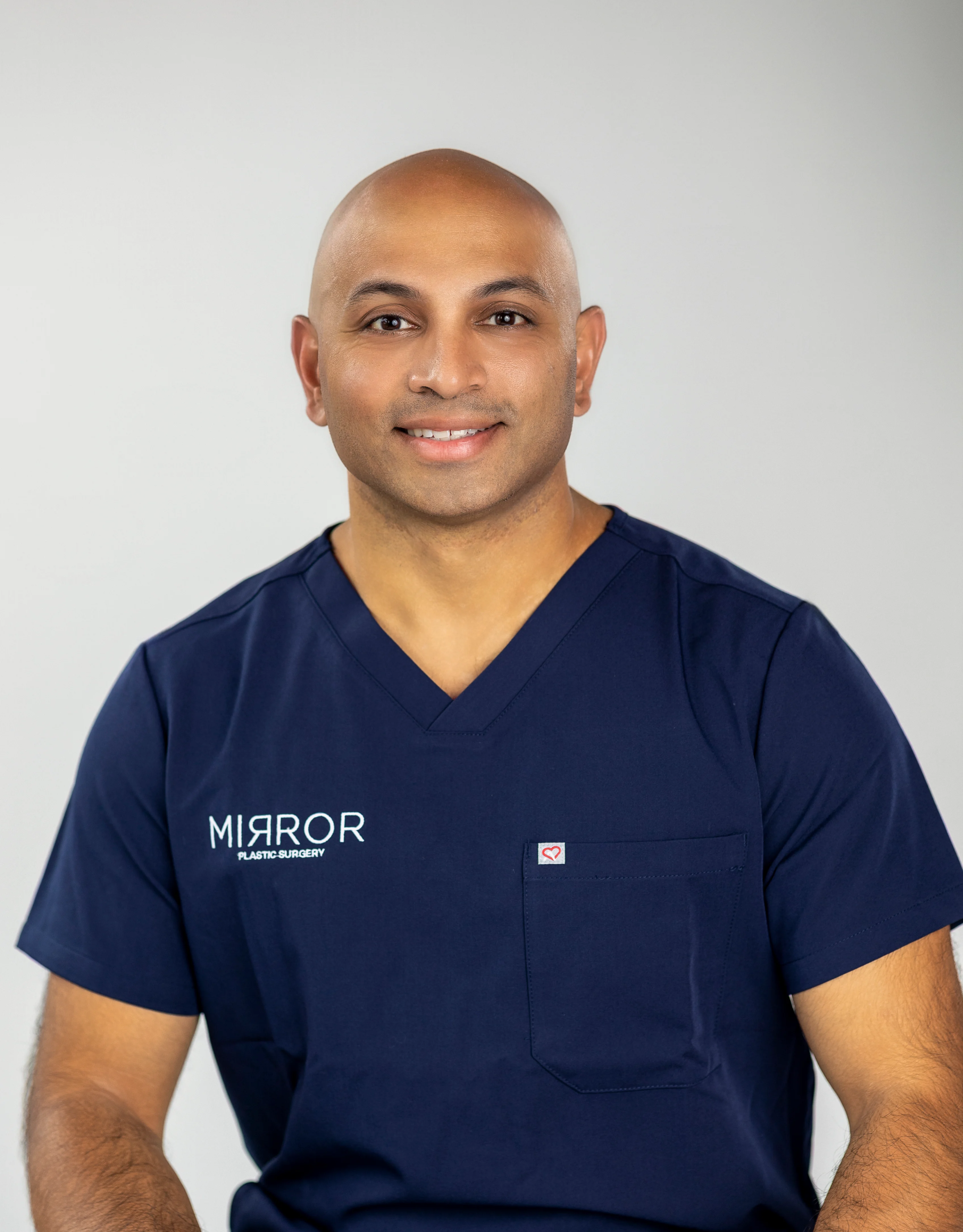
The practice offers 30–60 minute consultations, comprehensive lab panels to uncover root causes of hair loss, and custom peptide stacks tailored to individual biology, along with 24/7 direct text access to Dr. Chandawarkar. Mirror Plastic Surgery’s Glow Stack, which combines GHK-Cu, BPC-157, and TB-500, targets systemic inflammation, collagen and elastin production, and hair, skin, and nail health at the same time. Remote consultations are available across the United States, including Hawaii and Alaska, so patients can access this level of care from nearly anywhere.
Schedule Your Consultation With Dr. Chandawarkar to explore how a tailored peptide protocol can support your hair growth goals.
Conclusion: Your Next Step Toward Healthier Hair
Current evidence points to GHK-Cu as the most scientifically supported peptide for hair growth, with multi-pathway mechanisms, decades of cosmetic safety data, and a growing set of human clinical findings. It does not replace minoxidil or finasteride and never guarantees success, yet it offers a meaningful complementary option for patients with early-to-moderate thinning when used correctly. Because the peptide market is unregulated and quality varies widely, self-directed injectable use carries real and often underappreciated risks. Safe and effective peptide therapy depends on physician oversight, reliable sourcing, and protocols built around your individual labs and physiology.
Mirror Plastic Surgery and Dr. Akash Chandawarkar provide this level of structured, medically guided care. Start Your Hair Growth Journey Today with a personalized, physician-supervised peptide protocol designed around your scalp, health history, and long-term goals.
Peptides are not FDA-approved for hair growth. Results vary. This article is for educational purposes and does not replace medical advice. Always consult a qualified physician before starting any peptide therapy.
1 Results may vary from person to person. Editorial content, before and after images, and patient testimonials do not constitute a guarantee of specific results.
Peptide therapy is intended for wellness and optimization purposes and is not prescribed to diagnose, treat, cure, or prevent disease unless specifically stated. Many peptides are not FDA-approved and may be used off-label. Some have limited long-term safety data, with a potential for unknown risks, complications, or desensitization with prolonged use.