
Written by: Ellie Pranckevicius, FNP-BC, Aesthetic Nurse Practitioner & Aesthetic Injector | Facial Restoration & Regenerative Injectable Specialist, Mirror Plastic Surgery | Last updated: June 18, 2026
Key Takeaways for Hair Growth Peptides
- GHK-Cu, Acetyl Tetrapeptide-3, and Biotinoyl Tripeptide-1 are the three peptides most discussed for hair restoration, and each works through a different follicle pathway.
- Medically supervised delivery methods such as microneedling or mesotherapy consistently outperform over-the-counter topical serums in published studies.
- Patients should complete broad lab testing before starting any peptide protocol to rule out underlying medical causes and support safe dosing.
- Mirror Plastic Surgery’s Glow Stack protocol combines GHK-Cu, BPC-157, and TB-500 under clinician supervision to address inflammation, collagen production, and tissue repair at the same time.
- Start with a comprehensive consultation to receive a personalized, lab-informed peptide plan tailored to your hair-loss pattern.
How Hair Growth Peptides Affect Your Follicles
Hair growth peptides act on dermal papilla cells at the base of the hair follicle. These cells regulate the hair growth cycle by passing nutrients to hair-producing cells and signaling growth, slowdown, or cessation. By supporting the anagen growth phase through gene activation, peptides help follicles shift out of the telogen resting phase. This shift explains why some users notice reduced shedding within the first 14 days.1
This change depends on several supporting mechanisms working together. Improved blood flow delivers nutrients to dermal papilla cells. Increased collagen and protein networks around hair roots help anchor growing hair. Keratinocyte multiplication provides building blocks for new hair shafts. Stem cell activation in the follicle bulge region restores the follicle’s regenerative capacity. Reduced scalp inflammation removes barriers that can disrupt the growth cycle.
The three peptides most cited in current clinical literature differ in their primary mechanisms, administration routes, reported timelines, and side-effect profiles. The table below summarizes each based on available evidence.
| Peptide | Primary Mechanism | Administration Route | Reported Timeline | Common Side Effects |
|---|---|---|---|---|
| GHK-Cu (Copper Peptide) | Wound repair, collagen remodeling, anti-inflammatory effects, and support of follicle repair signals | Topical, tattoo-assisted delivery in a 2025 JAAD International study, injectable mesotherapy | Improved regrowth documented in combination with minoxidil and dutasteride, standalone timeline not established in controlled trials | Mild scalp irritation, redness, dryness, or contact dermatitis in sensitive users |
| Acetyl Tetrapeptide-3 | Activates stem cells in the follicle bulge region and promotes keratinocyte multiplication | Topical cosmetic serums, often combined with botanical actives such as red clover extract (capixyl) | May support scalp condition and hair strength, less likely to initiate robust regrowth alone in pattern hair loss | Generally well tolerated, patch testing advised for sensitive scalp or dermatitis |
| Biotinoyl Tripeptide-1 | Strengthens collagen and protein networks around hair roots and supports anchoring of the hair shaft | Topical cosmetic serums | Typically 8–12 weeks for visible density improvement, no large-scale randomized controlled trial data available as of 2026 | Generally well tolerated, irritation should prompt dermatologist consultation |
Injectable vs Topical Peptides for Hair Growth
The delivery route determines how much active peptide reaches the dermal papilla. After oral ingestion, hair growth peptides are broken down by stomach enzymes into smaller fragments, absorbed through the intestinal wall, processed by the liver, and circulated via the bloodstream to reach the dermal papilla within hours. Each step can reduce the amount of active compound that arrives at the follicle. Topical serums face a different barrier, because intact skin limits penetration to the upper dermis without a penetration-enhancing strategy.
Improved delivery methods such as microneedling, mesotherapy-style injections, and tattoo-assisted delivery place peptides closer to hair follicles. The 2025 JAAD International study on GHK-Cu used tattoo-assisted delivery specifically to bypass the epidermal barrier. A 2025 prospective single-blind randomized study investigated the biomimetic peptide cocktail QR678 Neo in FUE hair transplantation. Injectable and microneedling-assisted routes require clinical oversight for sterile technique, dosing accuracy, and adverse-event monitoring. These factors clearly distinguish medically supervised protocols from at-home topical use.
Risks of Buying Peptides Online Without Supervision
Most biohacking methods for hair growth, including unregulated peptides and experimental supplements, lack safety data and long-term research. These products can cause inflammation, scarring, or permanent damage. These are the same risks that the clinical oversight described above is designed to prevent.
The core problem with unregulated online sources is the absence of third-party batch testing. Without this testing, the actual active peptide content of a product is unknown, dosing is unverifiable, and no system exists to screen for interactions with current medications or medical conditions. Patients with significant or sudden hair loss should see a dermatologist or qualified clinician to rule out underlying medical causes before relying on over-the-counter products alone.
At Mirror Plastic Surgery, peptides are sourced exclusively from reputable compounding providers with documented batch testing. Every protocol begins with a comprehensive lab panel that includes thyroid, liver, kidney, hormone, and inflammatory markers. The peptide stack is then matched to the patient’s verified physiology rather than a generic formula.
Mirror Plastic Surgery’s Glow Stack Protocol for Hair and Skin
Mirror Plastic Surgery’s Glow Stack combines GHK-Cu, BPC-157, and TB-500 into a single medically supervised protocol that targets systemic inflammation, collagen and elastin production, and tissue repair. GHK-Cu addresses follicle repair signaling and collagen remodeling. BPC-157, or Body Protective Compound 157, targets systemic inflammation at the level of muscle, tendon, and connective tissue and can lower the inflammatory burden that suppresses follicle cycling. TB-500, or Thymosin Beta-4, supports wound repair and soft-tissue regeneration. Animal models show that TB-500 can promote hair follicle activity, and patients using TB-500 may notice reduced hair shedding during weeks 6–8, with visible regrowth potentially appearing at weeks 10–12 and beyond.1
The Glow Stack functions as a systemic anti-inflammatory and regenerative protocol rather than a standalone hair treatment. Benefits often extend to hair, skin, and nail health at the same time. Ellie Pranckevicius designs each Glow Stack protocol individually and adjusts peptide ratios and cycling schedules based on lab results and patient response.
Determine whether the Glow Stack fits your health profile in a consultation with Ellie.
Meet Ellie Pranckevicius, FNP-BC
Ellie Pranckevicius is a board-certified Family Nurse Practitioner and the lead practitioner for peptide therapies at Mirror Plastic Surgery. She holds a Bachelor’s in Health Science from Boston University, completed an aesthetics licensure program, and earned both her Bachelor’s and Master’s in Nursing from the University of South Florida. Her four years in the Neuroscience ICU at Tampa General Hospital gave her advanced command of physiology, metabolic health, and complex patient management. She applies this clinical foundation directly to peptide protocol design.
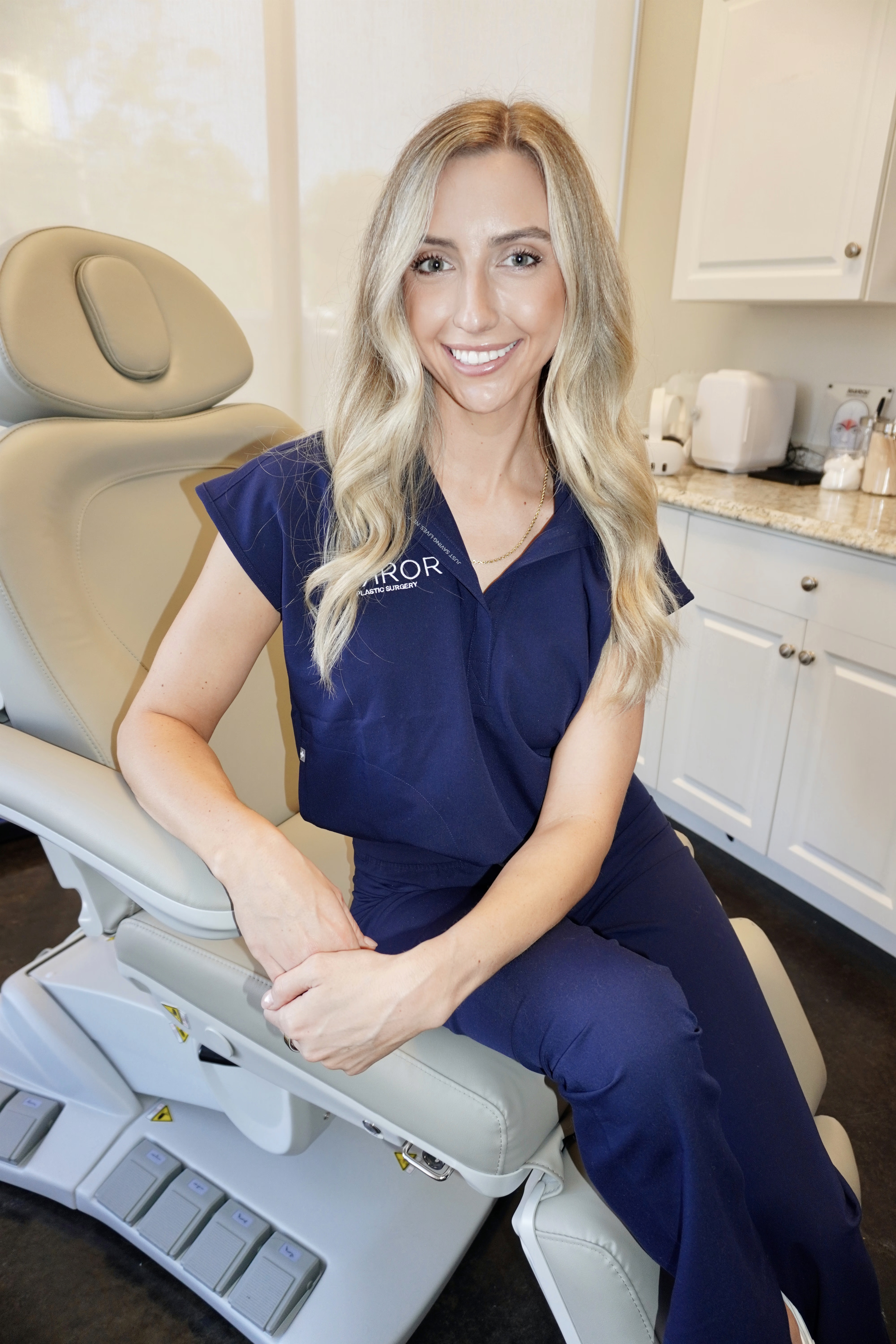
Ellie’s dual background in high-end medical aesthetics and critical-care nursing means she evaluates both the aesthetic outcomes patients want and the clinical science required to achieve them safely.
Hair Growth Timeline in the First 3–6 Months
Subjective improvements usually appear 2–6 weeks before measurable laboratory changes across peptide protocols.1 This pattern supports ongoing medical supervision and serial lab monitoring rather than fixed timelines. In weeks 2–6, stem cells in the hair follicle bulge region multiply, the hair bulb thickens, and scalp inflammation decreases. These changes support stronger strands before visible density shifts appear.
Response timing varies based on age, sleep quality, and baseline inflammation level. Patients under 40 with good sleep and low inflammatory burden often reach milestones 1–2 weeks earlier than older patients with disrupted sleep or chronic inflammation.1 At Mirror Plastic Surgery, each consultation runs 30–60 minutes and includes a full review of medical history, lab work, and lifestyle factors. Ellie remains available via direct text throughout the protocol and adjusts dosing and cycling as objective data and patient feedback accumulate.
Common Misconceptions About Hair Growth Peptides
Many people believe that peptides are exclusively weight-loss compounds. GLP-1 receptor agonists dominate mainstream coverage, yet the peptide category also includes compounds that affect collagen synthesis, follicle cycling, inflammatory modulation, neurological function, and tissue repair. These mechanisms differ completely from metabolic signaling. GHK-Cu, BPC-157, and TB-500 have no primary weight-loss indication. Their documented actions are regenerative and anti-inflammatory.
A second misconception claims that stopping peptides causes permanent loss of gains. Hair growth benefits from TB-500 may reverse within two weeks of cessation, which suggests that continuous or frequent cycling is needed to maintain results.1 This pattern reflects a pharmacodynamic property rather than permanent damage. The follicle environment returns to its pre-treatment baseline when the peptide signal is withdrawn. Ellie therefore structures maintenance protocols with clear phases instead of open-ended indefinite dosing. Peptides remain a supportive scalp treatment and regenerative adjunct rather than a standalone cure for androgenetic alopecia, and honest expectation-setting is central to every Mirror Plastic Surgery consultation.
Frequently Asked Questions
Are hair growth peptides FDA approved?
Most peptides used for hair growth, including GHK-Cu, BPC-157, and TB-500, are not FDA approved for this indication. They are compounded substances used in clinical practice under practitioner supervision. The primary risk usually comes from obtaining them from unregulated sources without quality testing. Mirror Plastic Surgery sources exclusively from compounding providers with documented batch testing and pairs every protocol with a comprehensive lab panel and ongoing clinical monitoring.
What lab work is required before starting a peptide hair protocol?
Ellie reviews thyroid function, liver and kidney markers, hormone panels, and inflammatory markers before initiating any peptide protocol. For patients presenting with hair loss, additional labs may include ferritin, DHEA-S, and sex hormone binding globulin, because deficiencies in these areas can mimic or worsen androgenetic alopecia. If current lab results are unavailable, Ellie orders them before prescribing. This step is non-negotiable at Mirror Plastic Surgery and clearly separates a medically supervised protocol from an online purchase.
Can peptides replace minoxidil or finasteride for hair loss?
Current evidence positions peptides as adjuncts to, not replacements for, established medical therapies. The strongest clinical data for GHK-Cu in hair regrowth comes from a 2025 JAAD International study that combined it with minoxidil and dutasteride. Patients already using minoxidil or finasteride may find that adding a peptide protocol enhances their results by addressing scalp inflammation and follicle repair signaling. Ellie evaluates each case individually rather than applying a blanket substitution recommendation.
How long do I need to stay on a peptide protocol to maintain hair growth results?
Maintenance requirements depend on the underlying cause of hair loss, the specific peptides used, and individual response. TB-500 benefits can reverse within two weeks of stopping, which indicates that cycling or ongoing low-dose maintenance is typically necessary.1 Ellie structures protocols with defined active phases and maintenance phases and reassesses at each interval using lab data and photographic documentation. No universal duration exists, because the protocol evolves with the patient’s response.
Is the Glow Stack appropriate for all types of hair loss?
The Glow Stack works best for patients whose hair loss has an inflammatory or collagen-depletion component. Examples include diffuse thinning associated with chronic inflammation, post-illness shedding, or age-related follicle miniaturization. It is not a primary treatment for scarring alopecias or acute medical hair loss without concurrent management of the underlying condition. Ellie’s intake process, including medical history review and the lab work described above, determines whether the Glow Stack is the right entry point or whether a different peptide combination or referral makes more sense.
How Mirror Plastic Surgery Uses Peptides in Hair Restoration
GHK-Cu, Acetyl Tetrapeptide-3, and Biotinoyl Tripeptide-1 each address distinct mechanisms in the follicle cycle. The evidence base for all three is strongest when delivery is carefully chosen and protocols are individualized. Peptides do not replace diagnosis, medical therapy, or surgical planning in hair restoration. As medically supervised adjuncts with quality-assured sourcing, lab monitoring, and personalized cycling, they can still offer a meaningful addition to a comprehensive hair health strategy.
Mirror Plastic Surgery’s concierge model, led by Ellie Pranckevicius, provides that framework through evidence-informed protocols, transparent timelines, and direct ongoing support from a clinician who understands both the aesthetic goals and the clinical science behind them. Begin with a comprehensive consultation, lab review, and a peptide protocol built around your specific hair loss pattern and health profile.
1 Results may vary from person to person. Editorial content, before and after images, and patient testimonials do not constitute a guarantee of specific results.
Peptide therapy is intended for wellness and optimization purposes and is not prescribed to diagnose, treat, cure, or prevent disease unless specifically stated. Many peptides are not FDA-approved and may be used off-label. Some have limited long-term safety data, with a potential for unknown risks, complications, or desensitization with prolonged use.