
Written by: Dr. Akash Chandawarkar, Board Certified Plastic Surgeon, Mirror Plastic Surgery | Last updated: September 9, 2026
Key Takeaways
- Hair growth peptide dosage varies by patient. A physician tailors it to the peptide, delivery method, stage of hair loss, and individual physiology.
- Topical GHK-Cu at 0.5%–2% concentration is the safest first-line option. Injectable protocols provide higher bioavailability and always require prescription and medical supervision.
- Injectable peptides face regulatory restrictions (FDA Category 2 for GHK-Cu and BPC-157) and carry serious safety risks when sourced from unregulated vendors.
- Results follow the hair cycle timeline: reduced shedding in 4–8 weeks, visible density changes at 3–6 months, and best overall evaluation at 6–12 months.1
- Personalized protocols under physician supervision at Mirror Plastic Surgery support safety, accurate dosing, and consistent outcomes.
How Hair Growth Peptides Work In The Scalp
Peptides are short chains of amino acids that act as signaling molecules, telling cells what to do. In hair, they work through four main mechanisms. They stimulate collagen and elastin in the dermal papilla, improve blood flow around the follicle via VEGF, reduce inflammatory cytokines that shrink follicles, and extend the anagen (growth) phase of the hair cycle.
Three peptides dominate the clinical and research conversation for hair loss because they target one or more of these pathways:
- GHK-Cu (Copper Peptide): A naturally occurring tripeptide first identified in human plasma in 1973 whose plasma concentrations decline from roughly 200 ng/mL at age 20 to under 80 ng/mL by age 60. It activates the Wnt/beta-catenin pathway, suppresses TGF-beta1, and upregulates VEGF.
- BPC-157 (Body Protective Compound 157): A 15-amino-acid synthetic peptide derived from human gastric juice whose follicular relevance centers on VEGFR2-mediated angiogenesis and cytoprotective mechanisms that support the perifollicular vascular bed.
- TB-500 (Thymosin Beta-4): A peptide that activates actin proteins regulating cell movement and tissue repair, with thymosin beta-4 found to promote hair follicle stem cell activation and anagen phase entry in a mouse study. Whether TB-500 replicates these effects in humans remains unknown.
Topical Peptide Dosages As The First-Line Strategy
Topical application is the safest starting point for most individuals because systemic absorption stays minimal. Concentration still matters a great deal. A 2025 Japanese trial using a 0.02% peptide lotion as a standalone topical treatment observed only a 7% increase in hair count after 16 weeks1. Researchers attributed this modest outcome to a concentration 50 to 100 times lower than standard GHK-Cu serums. Therapeutic concentration determines whether a product produces any meaningful biological effect.
General topical dosage ranges from the clinical literature include:
- GHK-Cu (Copper Peptide): 0.5% to 2% concentration in a serum, applied once or twice daily. Products listing GHK-Cu below 0.5% likely deliver subtherapeutic amounts for follicle stimulation. Many protocols use cycling, such as five days on and two days off, to reduce overuse effects.
- Biotinoyl Tripeptide-1: Used in cosmetic formulations for its role in supporting keratin production and strengthening the extracellular matrix, typically at low concentrations in commercially available products applied daily.
Penetration enhancement can significantly improve outcomes. Microneedling increases GHK-Cu absorption by up to 10-fold; Li et al. (2015) quantified that 134 nmol of GHK peptide and 705 nmol of copper permeated through microneedle-treated skin over 9 hours, versus near-zero through intact skin. A physician can match concentration and delivery enhancement to skin sensitivity and the stage of hair loss.
Injectable Peptide Protocols Under Physician Care
Injectable peptides offer substantially higher bioavailability than topical formulations. Injectable GHK-Cu reaches tissue concentrations 10 to 20 times higher than topical serums, which makes it more relevant for moderate-to-advanced hair loss. That potency also explains why these compounds require a prescription and close medical supervision.
The following quick-reference table summarizes dosing ranges most commonly cited in published literature and clinical protocols. These are general ranges, not prescriptions. A physician determines the appropriate dose for each individual.
| Peptide | Topical Concentration | Injectable Dose | Typical Cycle |
|---|---|---|---|
| GHK-Cu | 0.5%–2% serum, once or twice daily | 1–2 mg subcutaneously daily | 8–12 weeks on, 4 weeks off |
| BPC-157 | Not applicable (injectable or oral) | 250–500 mcg subcutaneously once daily | 4–8 weeks on, 2–4 weeks off |
| TB-500 | Not applicable | 2.0–2.5 mg subcutaneously twice weekly (loading), then 2 mg once weekly (maintenance) | 4–6 weeks loading, maintenance ongoing with breaks |
A critical regulatory note appears in current guidance. Injectable GHK-Cu was classified as FDA Category 2 in September 2023, restricting 503A pharmacy compounding for injectable forms, so standard local compounding pharmacies cannot fill GHK-Cu injection prescriptions. Similarly, BPC-157 was designated FDA Category 2 in 2023, and TB-500 carries an FDA “Substance with Safety Concerns” classification for compounding. These restrictions make a licensed, reputable provider essential.
Self-administration of injectable peptides carries serious risks. The Australian Therapeutic Goods Administration (TGA) specifically warns that injected unapproved peptide products can carry significant safety risks, including contamination, infection, or local tissue damage. Patients should never inject peptides without a physician’s guidance.
Oral Peptide Supplements And Hair Health
Oral collagen peptides are widely available and frequently marketed for hair health. General dosage guidance in the literature ranges from 2.5 to 10 grams daily. However, oral delivery of peptides is essentially useless for hair follicles specifically because peptides are broken down to individual amino acids during digestion, losing their signaling specificity entirely. Oral collagen may support general connective tissue health, but it does not deliver targeted follicle-stimulating signals the way topical or injectable forms do.
Choosing The Right Peptide And Dosage For Your Hair
Because there is no universal dosage, the appropriate protocol depends on a clinical assessment that weighs delivery method, stage of loss, and physiology. A complete plan also considers underlying nutritional status and medical contraindications that can affect both safety and results.
- Cause Of Hair Loss: Androgenetic alopecia, driven by DHT-mediated follicle miniaturization, requires a different approach than telogen effluvium from stress, nutritional deficiency, or hormonal shifts. Nutritional deficiencies, particularly ferritin levels below 50 ng/mL, are among the most commonly missed and most easily correctable causes of hair loss. Peptides cannot replace iron in iron-deficiency-driven telogen effluvium.
- Stage Of Loss: Early-stage thinning (Norwood 2–3 / Ludwig 1) may respond well to topical-only protocols. Moderate thinning (Norwood 3–4 / Ludwig 2) often benefits from microneedling-assisted delivery or injectable GHK-Cu.
- Existing Medications And Health Status: GHK-Cu does not block DHT, so it works best alongside treatments that address the hormonal driver of androgenetic alopecia. Active cancer represents a hard contraindication for GHK-Cu because of its angiogenic properties.
A physician will evaluate medical history and order relevant lab panels, including hormone levels, thyroid function, ferritin, and iron. That information guides a personalized peptide stack. At Mirror Plastic Surgery, Dr. Akash Chandawarkar conducts this assessment directly and builds every protocol around the patient’s labs and physiology.
Schedule a consultation with Ellie to have Dr. Akash review your hair loss pattern and lab work before starting any peptide protocol.
Safety, Side Effects, And Unregulated Peptide Risks
The risks of purchasing peptides from unregulated online sources are well documented. Health Canada warns that unauthorized peptide products may contain too much, too little, or none of the active ingredient, and may contain contaminants such as solvents, heavy metals, particles, or microbials including bacteria, fungi, and endotoxins. Health Canada has seized unauthorized injectable peptide drugs including BPC-157, GHK-Cu, and TB-500 and is working with border agencies to stop unauthorized shipments.
Medsafe, New Zealand’s medicines safety authority, warned in May 2026 that unapproved injectable peptides may cause infections, life-threatening allergic reactions, dangerous interactions with other medicines, and may be made in non-sterile, poor-quality conditions. Adverse events reported to the TGA for unapproved peptide products include severe allergic reactions requiring adrenaline and hospitalization, and systemic inflammatory response syndrome (SIRS).
Under medical supervision, side effects are more predictable and manageable. Topical GHK-Cu may cause mild scalp redness or irritation in a small percentage of users. Overuse, such as daily high-concentration application without cycling, can cause what is known as “copper uglies”: persistent redness, breakouts, and collagen degradation from MMP overexpression. Injectable protocols may produce transient injection-site redness or bruising. A physician can adjust dosing and timing to prevent or minimize these effects.
Timeline For Results And When To Adjust Dosage
Hair growth follows a biological clock that higher dosages cannot speed up. The typical evidence-based timeline for peptide-based hair protocols looks like this:
- Weeks 1–8: Little to no visible change; some treatments cause temporary shedding before regrowth.
- Weeks 4–8: Reduced shedding within 2–4 weeks is often the first sign, with fine vellus hairs visible by 6–12 weeks.
- Months 3–4: A 2019 double-blind RCT (Rinaldi et al.) found a topical biomimetic peptide formula produced a 57.07% hair density improvement at 3 months1.
- Months 5–6: The Kuceki et al. (2025) trial measured 26.5% median hair regrowth at 5 months1 using copper peptides combined with microneedling, minoxidil, and dutasteride.
- Months 6–12: Visible density improvements typically become apparent at 6–12 months1 for most protocols.
Dosage adjustments, such as escalating from topical to injectable delivery or modifying cycle length, are clinical decisions based on observed response and any side effects. A physician reviews progress at set intervals and then adjusts the plan.
Why Medical Supervision Improves Peptide Outcomes
A supervised protocol at Mirror Plastic Surgery replaces guesswork with a tested compound at a clinically reasoned concentration, monitored by a board-certified physician. That structure supports both safety and results.
Mirror Plastic Surgery’s approach to peptide therapy follows the same concierge philosophy that guides the rest of the practice. Consultations run up to an hour. Lab panels, including hormone levels, thyroid, ferritin, copper, and ceruloplasmin where relevant, are reviewed or ordered before any protocol begins. Custom peptide stacks, such as the Glow Stack combining GHK-Cu, BPC-157, and TB-500, are designed around each patient’s specific physiology and goals.
Dr. Akash Chandawarkar leads every peptide protocol at Mirror Plastic Surgery. A Harvard Medical School graduate through the Harvard-MIT Division of Health Sciences and Technology, Johns Hopkins-trained plastic surgeon, and Stanford Biodesign Innovation Fellow, Dr. Akash brings deep physiological and clinical expertise to peptide therapy. As a board-certified physician, he supervises every stage of treatment.
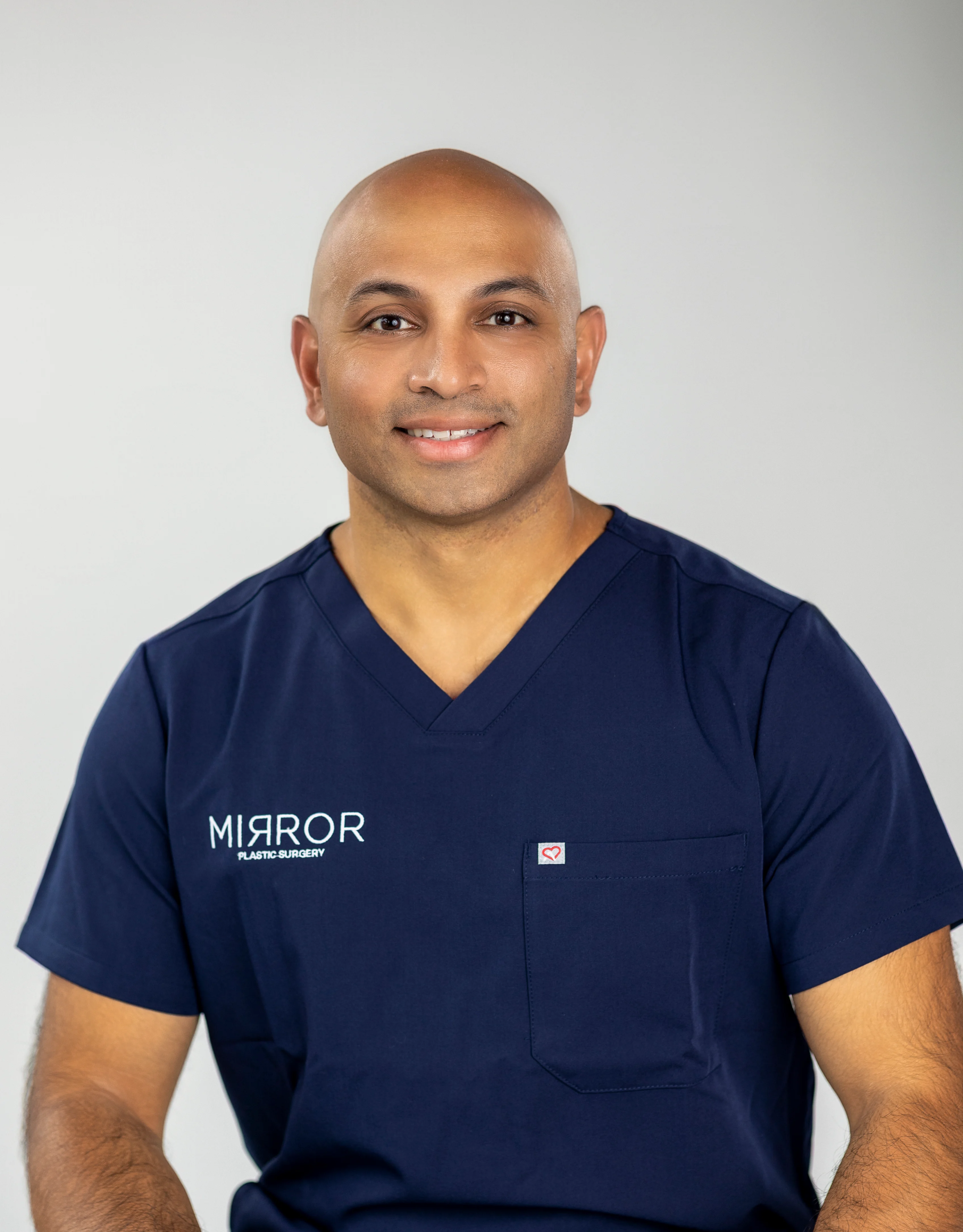
Patients receive direct access to Dr. Akash throughout their protocol, including ongoing support, dosage monitoring, and cycle management. Peptides are sourced from reputable providers with rigorous batch testing, which helps ensure purity and accurate dosage.
Frequently Asked Questions
What Is The Right GHK-Cu Dosage For Hair Growth?
The right GHK-Cu dosage depends on delivery method, stage of hair loss, and individual physiology. For topical use, most clinical and commercial formulations fall in the 0.5% to 2% concentration range, applied once or twice daily with cycling to prevent overuse effects. For injectable protocols, doses commonly discussed in research settings range from 1 to 2 mg subcutaneously per day, typically cycled over 8 to 12 weeks followed by a 4-week break. No large-scale randomized controlled trial has established a definitive optimal injectable dose. A physician selects a starting point after a full clinical assessment, including lab work and hair loss staging.
How Often Should You Apply Topical Peptides?
Most topical GHK-Cu protocols recommend once or twice daily application, with a cycling pattern of five days on and two days off to avoid copper overload. Applying a full-strength serum immediately after microneedling is not recommended because microneedling increases absorption up to 10-fold. Many clinicians use a lower concentration, around 0.05%, post-needling to prevent irritation. Biotinoyl Tripeptide-1 and other cosmetic peptides are generally applied daily as directed by the formulation. Consistent use over months, rather than extra applications in a single day, drives results.
Are Injectable Peptides Safe For Hair Loss?
Injectable peptides can be safe when prescribed by a licensed physician, sourced from a reputable compounding facility with verified purity, and administered with proper sterile technique. Under those conditions, the most common side effects are transient injection-site redness or bruising. Risks escalate with self-administration from unregulated online sources, which may contain contaminants, incorrect concentrations, or entirely different substances than labeled. International health authorities including the Australian TGA, Health Canada, and Medsafe have all issued formal warnings about adverse events, including hospitalization, linked to unregulated injectable peptides. As noted earlier, injectable GHK-Cu’s FDA Category 2 status makes working with a licensed provider even more critical.
How Long Until Peptides Work For Hair?
The hair cycle is slow, and results follow that biology. Most patients notice reduced shedding within the first four to eight weeks of a well-designed protocol.1 Fine vellus hairs may become visible between weeks six and twelve. Meaningful density changes typically require three to six months of consistent treatment, with full evaluation best conducted at the six-to-twelve-month mark.1 Clinical trials using combination protocols have documented the regrowth figures mentioned earlier, with meaningful density changes usually appearing in the 3–6 month window.
Can I Buy Peptides Online And Use Them Myself?
Topical cosmetic peptide serums are available without a prescription and carry relatively low risk when used as directed. Injectable peptides are a different category. Purchasing injectable peptides from unregulated online vendors means there is no third-party verification of contents, no guarantee of sterility, no assurance of accurate dosage, and no medical oversight to screen for contraindications. Health Canada, the TGA, and Medsafe have all documented serious adverse events, including severe allergic reactions, systemic inflammatory response, and contamination, from unregulated injectable peptide products. In many jurisdictions, purchasing these compounds outside a licensed pharmacy is illegal.
Will I Lose Results If I Stop Taking Peptides?
Stopping peptide therapy usually leads to a gradual return of previous symptoms or conditions as effects fade after treatment ends. The hair follicle support provided by peptides, including reduced inflammation, improved blood flow, and an extended anagen phase, diminishes when treatment stops. Many patients who achieve meaningful results transition to a lower-dose maintenance protocol rather than stopping entirely. A physician can design a maintenance plan that preserves results at a lower intensity and cost than the initial treatment cycle.
Conclusion: Moving Toward A Safe, Effective Peptide Plan
Hair growth peptide dosage functions as a clinical variable shaped by the peptide, delivery method, stage of hair loss, and individual physiology. That variable determines whether a protocol produces results or creates risk. Topical GHK-Cu at therapeutic concentrations of 0.5%–2% offers a safe first-line approach. Injectable protocols provide higher bioavailability for more significant cases but carry regulatory restrictions and safety requirements that call for physician oversight. Oral peptides do not deliver targeted follicle-stimulating effects, and unregulated online sources cannot match the quality assurance, dosage accuracy, or medical monitoring available in a supervised setting.
The most effective protocol is a personalized one built on lab results, clinical assessment, and ongoing physician supervision. Mirror Plastic Surgery provides that level of individualized care.
If you are considering peptide therapy for hair growth, start with a conversation with a qualified physician who can evaluate your specific situation and design a protocol that is safe, evidence-based, and aligned with your goals. Talk to Ellie about booking a peptide consultation with Dr. Akash to design a protocol tailored to your hair and health profile.
1 Results may vary from person to person. Editorial content, before and after images, and patient testimonials do not constitute a guarantee of specific results.
Peptide therapy is intended for wellness and optimization purposes and is not prescribed to diagnose, treat, cure, or prevent disease unless specifically stated. Many peptides are not FDA-approved and may be used off-label. Some have limited long-term safety data, with a potential for unknown risks, complications, or desensitization with prolonged use.