
Written by: Ellie Pranckevicius, FNP-BC, Aesthetic Nurse Practitioner & Aesthetic Injector | Facial Restoration & Regenerative Injectable Specialist, Mirror Plastic Surgery
Key Takeaways
- GHK-Cu stimulates collagen production, angiogenesis, and follicle repair. This activity extends the anagen growth phase and supports hair thinning treatment.
- The Glow Stack combines GHK-Cu with BPC-157 and TB-500 to reduce inflammation, support tissue healing, and improve blood flow to follicles.1
- Topical GHK-Cu typically uses 0.5–5% serum once or twice daily. Injectable protocols often use 1–2 mg per day with 5-on/2-off cycling. Many patients notice early changes within 8–12 weeks.1
- Professional supervision protects against impure products, incorrect dosing, and contraindications such as Wilson’s disease or copper metabolism disorders.
- At Mirror Plastic Surgery, you can work directly with Ellie Pranckevicius for lab-tailored, supervised peptide protocols and ongoing support.
Meet Ellie Pranckevicius: Clinical Expertise for Hair Growth Peptides
Ellie Pranckevicius, FNP-BC, blends esthetician training with advanced nursing expertise to guide peptide therapy at Mirror Plastic Surgery. She holds a Bachelor’s in Health Science from Boston University, aesthetics licensure, and a Master’s in Nursing from the University of South Florida. Her four years in the Neuroscience ICU at Tampa General Hospital give her a strong foundation in complex physiology and patient safety.
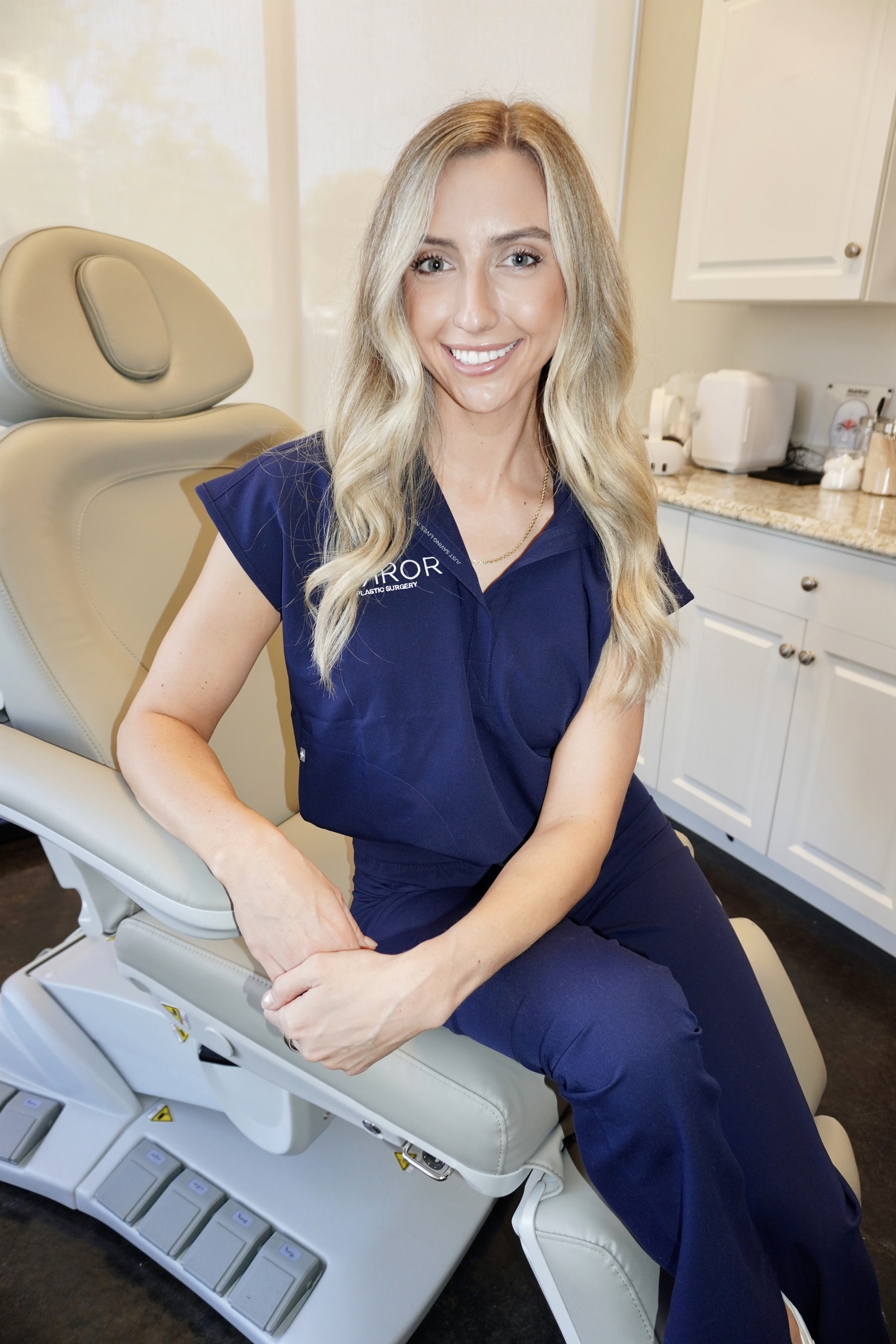
Ellie focuses on education and transparency so patients understand what they are taking and why it fits their plan. She uses lab data and clinical history to design customized GHK-Cu and Glow Stack dosing protocols that match each person’s physiology and goals. Schedule a peptide consult with Ellie for personalized, supervised therapy.
How GHK-Cu and the Glow Stack Support Hair Growth
GHK-Cu acts as a signaling molecule that activates genes involved in hair growth, collagen synthesis, and angiogenesis. Research demonstrates that GHK-Cu extends the anagen growth phase and increases follicle size1, which makes it useful for hair thinning related to stress, hormones, or aging.
The Glow Stack builds on GHK-Cu by pairing it with BPC-157 and TB-500 for a coordinated effect. BPC-157 addresses the inflammatory component by targeting systemic inflammation and promoting tissue healing. TB-500 supports this action through enhanced cell migration and wound repair, which helps damaged follicles recover. AHK-Cu then amplifies GHK-Cu’s impact by promoting blood vessel growth so newly activated follicles receive better nutrient and oxygen supply.
The following table shows how each peptide contributes a distinct role within this combined hair restoration strategy.
| Peptide | Primary Benefit | Mechanism | Source Type |
|---|---|---|---|
| GHK-Cu | Follicle activation | Collagen synthesis, angiogenesis | Topical/Injectable |
| BPC-157 | Inflammation reduction | VEGF upregulation, tissue healing | Injectable |
| TB-500 | Tissue regeneration | Cell migration, wound repair | Injectable |
| AHK-Cu | Vascular support | Blood vessel growth, VEGF production | Topical |
Only one peptide relevant to hair loss (KGF/Palifermin) is FDA-approved, and not for hair loss; it is approved for oral mucositis in cancer patients. This limited approval landscape makes quality sourcing and professional supervision critical for safety and consistent results. Explore Ellie’s supervised Glow Stack protocols with pharmaceutical-grade peptides.
GHK-Cu & Glow Stack Dosage: Topical Use, Injections, and Cycles
Understanding how these peptides work is only the first step. Turning that knowledge into real hair changes requires precise dosing that reflects delivery method, health history, and treatment goals. The following chart outlines common evidence-based ranges used in supervised protocols.
| Peptide/Method | Dosage | Frequency/Cycle | Timeline |
|---|---|---|---|
| Topical GHK-Cu | 0.5–5% serum | 1–2x daily | Improvements in skin thickness, elasticity, and fine line appearance often appear after 8–12 weeks of consistent use1 |
| Injectable GHK-Cu | 1–2 mg/day subQ | 5 days on/2 off | Several weeks to months for visible hair and skin changes1 |
| Glow Stack | GHK-Cu 1–2 mg + BPC-157 250–500 mcg + TB-500 2–5 mg weekly | 8–12 weeks on/4 weeks off | Most patients see meaningful changes after 90 days or longer1 |
| Women’s Protocol | Lower end of ranges | Same cycling | Similar overall timeline |
Clinical data supports these ranges. A 2016 randomized controlled trial showed a +71 hairs/cm² increase with a low-dose GHK peptide formulation.1 A 2025 study reported 26.5% median top scalp area regrowth with copper peptide protocols when applied consistently.1
Women often respond well to the lower end of these dosage ranges because of hormonal differences and sensitivity.1 Cycling days on and off helps prevent receptor desensitization while preserving benefits. Request a lab-tailored dosing plan from Ellie that reflects your specific labs, medications, and hair goals.
Step-by-Step Care: Consultation, Mixing, and Ongoing Monitoring
Professional peptide therapy starts with a 30–60 minute consultation that covers medical history, lab analysis, and goal setting. Lab work often includes thyroid function, hormone panels, and inflammatory markers. These data points define your baseline, reveal contraindications, and guide the design of a custom peptide stack with precise dosing.
Reconstituting GHK-Cu
Proper reconstitution protects peptide stability and keeps dosing accurate. Reconstitution protocols vary based on vial size and desired concentration, so universal numbers do not apply to every patient.
Your provider supplies exact instructions for bacteriostatic water volume and dose draw calculations that match your prescription. Mirror Plastic Surgery offers detailed reconstitution videos and 24/7 text support with Ellie to walk you through each step.
Mirror Plastic Surgery also provides remote delivery across the United States, which allows you to receive peptides and guidance at home. This support system promotes safe administration and consistent results over time. Start a supervised protocol with Ellie and access remote delivery plus real-time guidance.
GHK-Cu Safety Profile: Side Effects, Risks & Contraindications
GHK-Cu has an excellent safety record, supported by decades of research. Common side effects are usually mild and may include injection site reactions, temporary skin changes, or rare mild nausea. Its role as an endogenous human tripeptide contributes to this low overall risk.
Unsupervised or DIY use introduces avoidable dangers such as contaminated products, inaccurate dosing, and missed contraindications. People with Wilson’s disease, active cancer, or copper metabolism disorders may need strict limits or complete avoidance.
Professional oversight reduces these risks through pharmaceutical-grade sourcing, batch testing, and structured monitoring. Mirror Plastic Surgery’s process includes a full health assessment, targeted labs, and access to vetted peptide pharmacies. Schedule a safety-focused visit with Ellie to ensure proper screening and sourcing.
2026 Outlook: Women’s Peptide Stacks and 90-Day Milestones
Current trends highlight gender-specific protocols and thoughtfully combined peptide stacks. Many women benefit from lower dosing and combinations that address hormonal shedding, inflammation, and scalp health. The Glow Stack has become a popular option because it targets inflammation, collagen production, and tissue repair in one coordinated plan.
Most patients can expect reduced shedding within the first week, followed by healthier scalp texture by the end of month one. Visible density and coverage often improve by month three when protocols are followed consistently.1 Recent clinical data supports these 90-day expectations, with patients reaching the median improvements noted earlier when they follow properly administered protocols.1
Hair Growth Peptides Dosage FAQ
What is a safe GHK-Cu dosage for hair growth?
Safe GHK-Cu dosing depends on delivery route, health history, and concurrent medications. Professional supervision aligns dosage with your labs, medical background, and hair restoration goals.
Should I use topical or injectable GHK-Cu for hair growth?
Topical GHK-Cu offers strong safety with minimal systemic absorption, so it works well for many users. Injectable GHK-Cu provides higher bioavailability but requires medical oversight because of greater systemic exposure and possible copper accumulation. The best choice depends on hair loss severity, prior response to treatments, and medical clearance.
How do I properly reconstitute GHK-Cu?
Follow the exact instructions provided for your prescription and vial size. Use sterile technique, store the mixed vial in the refrigerator at 2–8°C, and discard any remaining solution after 30 days.
What’s the best hair growth peptide protocol for women?
Women usually respond best to protocols customized around hormonal status, cycle patterns, and sensitivity. Effective plans often pair topical GHK-Cu with supportive peptides such as BPC-157 for inflammation control. Meet with Ellie for a personalized women’s hair peptide assessment.
How long before I see results from hair growth peptides?
Many patients notice reduced shedding within 1–2 weeks as follicles stabilize. Visible density and coverage typically improve after 3–6 months of steady use because hair cycles progress slowly. Maximum benefits often develop over 6–12 months, and maintenance protocols help preserve those gains.1
Your Path to Hair Regrowth with Supervised Peptide Dosing
Effective hair growth peptide therapy combines accurate dosing, reliable sourcing, and consistent medical guidance. The protocols in this guide offer a starting framework, yet individual supervision remains essential for both safety and meaningful results.
Mirror Plastic Surgery’s concierge model pairs Ellie Pranckevicius’s expertise with comprehensive lab analysis, pharmaceutical-grade peptides, and ongoing follow-up. Contact Ellie at 727-361-6515 or hello@mirrorplasticsurgery.com to begin a supervised peptide plan tailored to your hair restoration goals.
1 Results may vary from person to person. Editorial content, before and after images, and patient testimonials do not constitute a guarantee of specific results.
Peptide therapy is intended for wellness and optimization purposes and is not prescribed to diagnose, treat, cure, or prevent disease unless specifically stated. Many peptides are not FDA-approved and may be used off-label. Some have limited long-term safety data, with a potential for unknown risks, complications, or desensitization with prolonged use.