
Written by: Ellie Pranckevicius, FNP-BC, Aesthetic Nurse Practitioner & Aesthetic Injector | Facial Restoration & Regenerative Injectable Specialist, Mirror Plastic Surgery | Last updated: August 15, 2026
Key Takeaways on GHK-Cu for Hair Growth
- GHK-Cu levels decline with age, which correlates with slower follicle cycling and thinner hair. This makes the peptide a meaningful target for hair restoration research.
- Mechanistic studies show that GHK-Cu supports hair growth through angiogenesis, Wnt/β-catenin activation, TGF-β1 suppression, and dermal papilla cell proliferation.
- Human clinical evidence remains limited. The strongest data come from a 2016 trial using a GHK peptide combination product rather than isolated GHK-Cu alone.
- Measurable density improvements typically require 16–24 weeks of consistent use, which aligns with normal hair growth cycles and follicle response timelines.1
- Patients considering GHK-Cu for hair restoration should work with a qualified provider. Schedule your personalized assessment at Mirror Plastic Surgery to review evidence-based options.
How GHK-Cu Works in the Body and at the Hair Follicle
GHK-Cu is a tripeptide-copper complex that occurs naturally in human plasma, saliva, and urine. It acts as a tissue-repair signal, recruiting regenerative machinery and modulating inflammatory pathways. A 2018 review by Pickart and Margolina reported that GHK-Cu modulates approximately 31% of the human genome, including VEGF, FGF, IGF-1, and anti-NF-κB pathways relevant to hair follicle function. At the follicle level, GHK-Cu copper peptide hair growth effects arise through four converging mechanisms: dermal papilla cell proliferation, angiogenesis, TGF-β1 suppression, and Wnt/β-catenin pathway activation.
Evidence That GHK-Cu Supports Hair Growth
The mechanistic evidence for GHK-Cu is substantial. Human and animal studies highlight four primary pathways through which GHK-Cu influences follicle biology and supports regrowth.
Angiogenesis: Research shows that GHK-Cu can increase proliferation of dermal papilla cells while upregulating VEGF to stimulate angiogenesis around follicles. Increased perifollicular vasculature improves nutrient and oxygen delivery to the dermal papilla, which supports healthier, more active follicles.
This vascular support creates the metabolic foundation for the next mechanism, Wnt/β-catenin signaling.
Wnt/β-catenin signaling: GHK-Cu can activate Wnt/β-catenin signaling in dermal papilla cells. This pathway pushes follicle stem cells into active anagen growth. Animal studies show that copper peptide formulations can promote hair growth through the Wnt/β-catenin pathway, which aligns with cell-level findings.
Once blood flow and growth signaling improve, GHK-Cu also addresses inflammation and fibrosis around the follicle.
Anti-inflammatory and anti-fibrotic effects: GHK-Cu suppresses perifollicular inflammation by downregulating pro-inflammatory cytokines TNF-alpha and IL-6 while inhibiting TGF-beta1 to reduce fibrosis that can choke follicle function. GHK-Cu also downregulates TGF-β2, a cytokine associated with fibrosis and follicular miniaturization in androgenetic alopecia.
These anti-inflammatory effects help preserve the cells that drive hair growth.
Dermal papilla cell survival: A 2007 Seoul National University study (Pyo et al.) showed AHK-Cu stimulated human hair follicle elongation and dermal papilla cell proliferation at concentrations as low as 10⁻¹² M. The peptide also decreased TGF-beta1 secretion and increased the Bcl-2/Bax ratio, which reduced apoptosis and supported cell survival.
These mechanistic findings establish strong biological plausibility. The key question becomes whether these effects translate into measurable hair regrowth in humans.
Human clinical data remain limited. A 2016 randomized, double-blind, placebo-controlled trial published in Annals of Dermatology (Lee et al.) tested a topical spray combining GHK peptide with 5-aminolevulinic acid in 45 men with androgenetic alopecia, reporting mean hair count increases of +71.5 hairs/cm² (low-dose) and +52.6 hairs/cm² (high-dose) versus +9.6 hairs/cm² for placebo after 6 months, with zero adverse events.1 The formulation tested was a combination product, not isolated GHK-Cu, which limits direct extrapolation.
Patients who want to know whether GHK-Cu fits their hair restoration plan can benefit from individualized guidance. Schedule a lab-guided assessment with Ellie to determine whether your physiology makes you a strong candidate.
Timeline for Seeing Hair Changes with GHK-Cu
Clinical studies on GHK-Cu for hair generally require several months to show measurable effects. This window reflects how hair grows, because hair length increases by roughly half an inch per month and follicle cycling changes take weeks before they appear as visible density shifts.
- Weeks 2–4: Reduced shedding is the earliest reported change, consistent with TGF-β1 suppression slowing the follicle’s transition into catagen.1
- Weeks 6–12: Fine vellus hairs may become visible as follicles re-enter anagen. Some trials have reported increases in hair count within the first months.1
- Weeks 12–16: Larger gains can emerge by month 3 in some studies as more follicles complete a full growth cycle.1
- Weeks 16–24: Measurable density improvement becomes assessable at 16 to 24 weeks, the standard endpoint used across hair growth trials.1 The Lee trial’s peak results at month 6 align with this 16–24 week window.1
Combination protocols that layer GHK-Cu with microneedling and other treatments may show faster or larger changes. A 2025 trial (Kuceki et al.) using GHK-Cu with microneedling, minoxidil, and dutasteride measured 26.5% median hair regrowth across 5 monthly sessions.1
Long-Term Safety of GHK-Cu for Hair
Topical GHK-Cu has a favorable tolerability profile, with no serious adverse events reported at cosmetic concentrations in published studies and multiple cosmetic tolerance trials. Studies of GHK-Cu consistently report good tolerability. No serious adverse events have been reported in any published GHK-Cu hair study to date.
Several practical considerations guide safe long-term use. Research formulations typically use 0.01% to 2% concentrations. In vitro dose-response data suggest concentrations above approximately 2% may shift the peptide’s effect from regenerative to pro-fibrotic. Injectable GHK-Cu reaches follicle-depth tissue at 10–20 times the concentration of topical serums, which makes sterile technique under medical guidance essential. As of May 2026, no phase II or phase III randomized controlled trial of GHK-Cu for hair growth had been completed, so long-term safety data beyond 6-month study windows remain limited. Medically supervised protocols with periodic lab review help address this gap by monitoring individual response over time.
Comparing GHK-Cu with Minoxidil and Finasteride
No head-to-head clinical trial has directly compared GHK-Cu with minoxidil or finasteride in a large human study. Any comparison relies on indirect evidence from separate studies. The table below illustrates the key trade-off: GHK-Cu offers a mechanistically distinct pathway with minimal reported side effects but lacks the decades of clinical validation that support minoxidil and finasteride as first-line treatments.
| Treatment | Primary Mechanism | Evidence Level | Typical Timeline |
|---|---|---|---|
| GHK-Cu | Wnt/β-catenin activation, TGF-β1 suppression, VEGF-mediated angiogenesis, dermal papilla cell proliferation | One small RCT (45 men) plus extensive in vitro and animal data; no FDA approval for hair loss | 16–24 weeks for measurable density change |
| Minoxidil | Potassium channel opening, vasodilation, anagen prolongation | FDA-approved since 1988 (2%) and 1997 (5%), supported by multiple clinical trials and Cochrane reviews | Measurable regrowth appears in many men after several months of use, with increases in hair count reported at 48 weeks. |
| Finasteride | 5-alpha reductase inhibition, reducing DHT-driven follicle miniaturization | Multiple large RCTs; FDA-approved for male androgenetic alopecia; potential sexual side effects in a small percentage of users | 12–24 weeks before measurable differences emerge; must be continued indefinitely |
Clarifying Common GHK-Cu Claims from Reddit
Online forums, including Reddit, often repeat similar claims about GHK-Cu for hair loss. Several of these statements benefit from clarification against the published evidence.
Claim: “GHK-Cu regrew my hair in 8 weeks.” No clinical study has documented meaningful density changes before 16 weeks. Reduced shedding at 2–4 weeks is plausible, but visible density gains require a full follicle cycle.
Claim: “+121% active hair growth at 12 weeks.” This figure does not appear in the published Pickart 2018 review and often derives from misattributed AHK-Cu studies (Pyo et al. 2007).
Claim: “Any GHK-Cu serum will work.” The only published efficacy trial used a 2% GHK-Cu solution, while most commercial hair serums contain 0.5% to 1%, below the tested concentration, with no head-to-head dose-response RCT validating lower doses. Product purity from unverified online retailers adds another uncontrolled variable.
Claim: “GHK-Cu is the same as minoxidil.” GHK-Cu does not directly block DHT like finasteride and does not open potassium channels like minoxidil. It operates through distinct complementary mechanisms.
Why Medical Supervision Matters with GHK-Cu
The difference between purchasing GHK-Cu online and receiving it through a medically supervised protocol affects safety, dosing, and outcomes.
Product quality: Peptides are not FDA-regulated consumer products, which means manufacturers have no legal requirement to verify concentration or sterility. Without batch testing documentation, concentration accuracy and sterility cannot be confirmed, and this gap creates real clinical risk when peptides are purchased online. At our practice, peptides are sourced from reputable compounding pharmacies with rigorous batch testing, which ensures purity and accurate dosage.
Delivery method and concentration: Injectable GHK-Cu reaches follicle-depth tissue at 10–20 times the concentration of topical serums. Microneedling or micropigmentation delivery achieves near-complete local dermal penetration, bypassing the 1–5% absorption limit of standard topical formulations. Selecting the appropriate delivery route and strength requires clinical judgment based on scalp condition, goals, and tolerance.
Protocol integration: The 2025–2026 trend is toward medically supervised combination protocols, such as GHK-Cu with minoxidil or dutasteride, rather than single-agent use. Our practitioner reviews lab panels, assesses contraindications, and builds individualized stacks such as the Glow Stack (GHK-Cu, BPC-157, TB500) when systemic inflammation or skin health goals are concurrent priorities. Ongoing support is available via direct text or scheduled telemedicine appointments throughout the protocol.
If you are weighing GHK-Cu against other options for thinning hair, start with a comprehensive consultation to review your labs and build a protocol grounded in your specific physiology.
Meet Ellie, Your Peptide and Hair Restoration Specialist
Our lead practitioner for peptide therapies and non-surgical aesthetics holds a Master’s in Nursing from the University of South Florida and spent four years in the Neuroscience ICU at Tampa General Hospital, where she developed deep expertise in physiology, metabolic health, and recovery. Her career began at a high-end medical spa in Boston, giving her a rare dual foundation in esthetic assessment and advanced clinical medicine. Her approach centers on education and transparency. She explains the physiology behind every recommendation in plain terms and often tells clients when a treatment is not yet necessary, prioritizing long-term outcomes over short-term revenue.
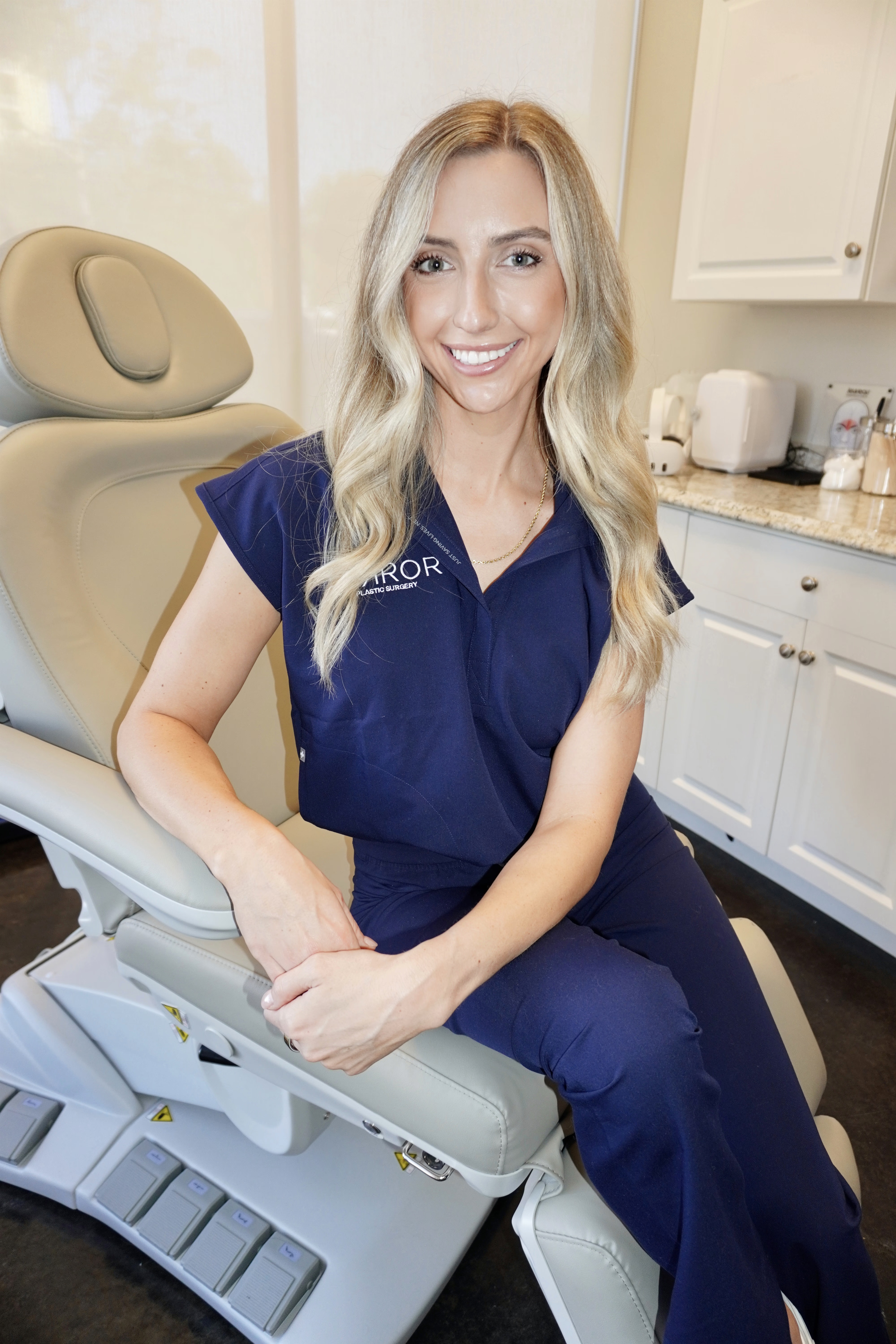
When surgical considerations arise, her work is complemented by our Harvard-educated physician, Johns Hopkins-trained plastic surgeon, and fellowship-trained aesthetic surgeon at Manhattan Eye Ear & Throat Hospital. Begin your concierge-level evaluation at our St. Petersburg location to explore evidence-based hair restoration options.
Frequently Asked Questions
Is GHK-Cu FDA-approved for hair growth?
No. GHK-Cu has no FDA approval for any hair loss indication. As of 2026 it has no FDA-approved formulation and cannot legally be compounded under 503A or 503B frameworks. This regulatory status means that quality, concentration, and sterility are not standardized across products sold online. Sourcing through a medically supervised practice with documented batch testing helps protect both safety and efficacy.
Can I stop GHK-Cu once I see results?
Stopping GHK-Cu will likely lead to a gradual return toward baseline, which mirrors how most hair-active treatments behave. Hair follicle cycling is an ongoing biological process, and the signaling support GHK-Cu provides, including Wnt/β-catenin activation, TGF-β1 suppression, and perifollicular angiogenesis, ends when the peptide is no longer present. Most supervised protocols shift patients into a maintenance phase rather than abrupt cessation, with dosing frequency adjusted based on the response achieved during the active phase.
Will GHK-Cu results vary from person to person?
Yes. Factors such as the degree of follicle miniaturization, baseline scalp inflammation, concurrent DHT levels, delivery method, protocol concentration, and individual genetics all influence outcomes. Published studies report a range of responses, and patient satisfaction in the 2016 Lee et al. trial was moderate, with only a minority rating results as “good” or “excellent.” A thorough intake evaluation, including lab panels where indicated, allows Ellie to identify which patients are most likely to respond and to set realistic expectations before beginning any protocol.
Can GHK-Cu be combined with BPC-157 or other peptides?
Combination use is common in supervised concierge protocols. Mirror Plastic Surgery’s Glow Stack pairs GHK-Cu with BPC-157 and TB500 to address systemic inflammation alongside hair, skin, and nail health at the same time. BPC-157 targets muscle, tendon, and joint repair while also reducing systemic inflammation, which can contribute to follicle dysfunction. No established pharmacokinetic interaction prevents combining topical GHK-Cu with topical minoxidil or oral finasteride, and their distinct mechanisms make rational combination plausible. All stacking decisions are made after reviewing a patient’s medical history and, when appropriate, lab results.
What makes Mirror Plastic Surgery’s GHK-Cu protocol different from buying online?
Three factors distinguish a supervised protocol from self-directed online purchasing. First, Mirror Plastic Surgery sources peptides from providers with documented batch testing, so concentration and purity are verified. Second, Ellie conducts a comprehensive consultation that includes lab review to determine whether GHK-Cu is appropriate, at what concentration and delivery method, and whether combination with other peptides or standard treatments is indicated. Third, patients receive ongoing concierge support via direct text or telemedicine throughout the protocol, with the ability to adjust dosing based on response. Online purchasing offers none of these safeguards, because product quality is unverified, dosing is self-determined, and no clinical oversight exists.
Disclaimer: GHK-Cu is not FDA-approved for the treatment of hair loss or androgenetic alopecia. The information in this article is educational and does not constitute medical advice. Individual results vary based on genetics, baseline health, delivery method, protocol adherence, and other factors. Peptide therapies carry risks when used without medical supervision, including unknown product quality and inappropriate dosing. Consult a qualified healthcare provider before beginning any peptide protocol.
1 Results may vary from person to person. Editorial content, before and after images, and patient testimonials do not constitute a guarantee of specific results.
Peptide therapy is intended for wellness and optimization purposes and is not prescribed to diagnose, treat, cure, or prevent disease unless specifically stated. Many peptides are not FDA-approved and may be used off-label. Some have limited long-term safety data, with a potential for unknown risks, complications, or desensitization with prolonged use.