

Written by: Dr. Akash Chandawarkar, Board Certified Plastic Surgeon, Mirror Plastic Surgery | Last updated: September 9, 2026
Key Takeaways
- Concierge peptide therapy delivers personalized, physician-supervised treatment using short amino-acid chains to target inflammation, weight management, aging, and other health concerns.
- Concierge care includes comprehensive lab testing, medical history review, and ongoing physician oversight to support safety and results.
- Dr. Akash Chandawarkar at Mirror Plastic Surgery personally designs every protocol around each patient’s labs and goals, sourcing peptides exclusively from verified U.S. compounding pharmacies.
- Medical supervision matters because the FDA has flagged many popular peptides for limited safety data, and unregulated products often show contamination or incorrect dosing.
- Schedule a Concierge Peptide Consultation at Mirror Plastic Surgery to begin a physician-led evaluation tailored to your labs and goals.
Why Concierge Medicine Peptides Deserve Serious Attention
Peptide therapy has moved well beyond the biohacking fringe. Many sophisticated patients who feel stuck with conventional treatments now research peptides for chronic inflammation, autoimmune conditions, weight management, skin aging, and low energy. The market has responded with a flood of options from online retailers, high-volume med spas, and telehealth platforms.
Peptide therapy offers real potential, yet the market remains largely unregulated. The gap between a safe, effective experience and a risky one often comes down to physician-led, concierge-level medical supervision. Concierge medicine focuses on unhurried, personalized, physician-directed care. That model functions as a medical safeguard for peptide therapy, not a luxury add-on.
Talk With Ellie About Concierge Peptide Care at Mirror Plastic Surgery to explore a supervised approach that fits your health goals.
What Concierge Peptide Therapy Involves
Peptides Explained Simply
Peptides are short chains of amino acids that act as signaling molecules. They tell the body to perform specific tasks, such as reducing inflammation, building collagen, stimulating growth hormone release, or improving cellular energy production. Their targeted nature allows a physician to select and combine them around a patient’s specific physiology instead of triggering broad, systemic drug effects.
The Concierge Difference at Mirror Plastic Surgery
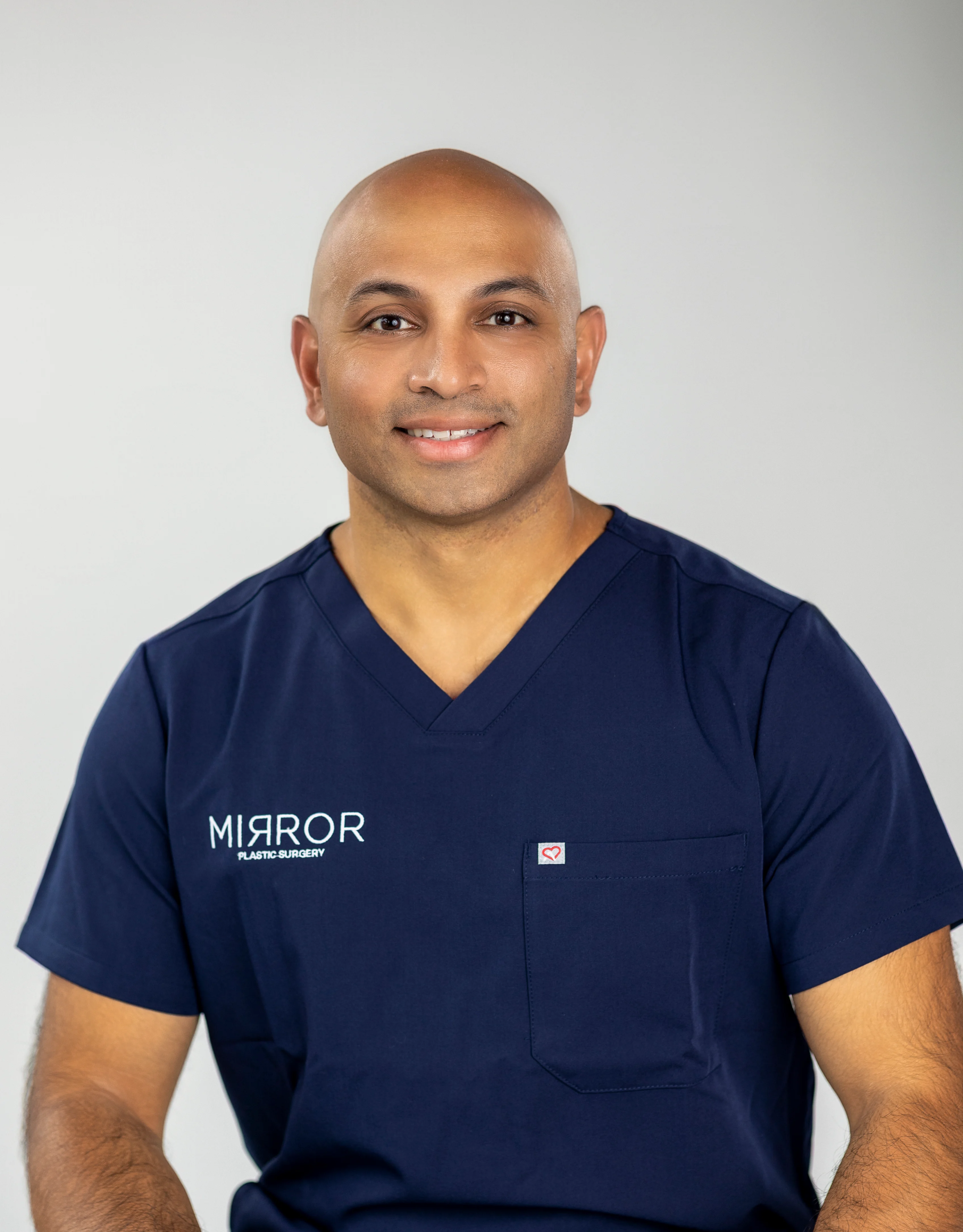
Concierge peptide therapy functions as a comprehensive medical service rather than a quick prescription. At Mirror Plastic Surgery, every peptide protocol begins with a 30-to-60-minute consultation with Dr. Akash Chandawarkar. He is a Harvard-educated, Johns Hopkins-trained, board-certified plastic surgeon who personally leads all peptide therapy at the practice. During this visit, he reviews your full medical history, current medications, and health goals.
For weight management or inflammatory conditions, he also reviews or orders baseline lab panels for thyroid, liver, kidney, diabetes markers, and hormone levels before designing any protocol. The outcome is a custom peptide stack built around your specific labs and physiology. Ongoing support, follow-up testing, and protocol adjustments are built into the care model.
Patients can reach Dr. Akash via text or scheduled telemedicine appointments, and the practice serves patients across the United States, including Hawaii and Alaska. This approach contrasts sharply with purchasing peptides online, where oversight, quality verification, and medical screening are absent, or visiting a high-volume clinic where evaluation is rushed and follow-up is minimal. That lack of oversight explains why medical supervision has become central to safe peptide use.
Why Medical Supervision Matters for Peptides
The Current Regulatory Landscape
The FDA’s Pharmacy Compounding Advisory Committee met in July 2026 to consider whether seven popular peptides, including BPC-157, TB-500, and Semax, should be added to the 503A Bulks List, which would permit state-licensed compounding pharmacies to prepare them under prescription. FDA staff reviewers noted limited evidence supporting the safety and effectiveness of these peptides for their intended uses, citing a lack of adequate human clinical trials and limited data on quality, stability, and consistency.
The FDA has also issued warning letters to telehealth companies for false or misleading claims about compounded drugs, emphasizing that compounded drugs are not approved by the agency and are not reviewed for safety, effectiveness, or quality prior to marketing. This environment places more responsibility on the prescribing physician and the sourcing pharmacy.
Risks of Unregulated Online Peptide Purchases
Peptides sold online as “research use only” or “not for human consumption” are not manufactured, tested, labeled, or dosed for human use and can be mislabeled, contaminated, under-dosed, or contain entirely different compounds than claimed. A study cited by FDA sources found that 40% of tested gray-market peptide products had quality problems, including incorrect dosages and contamination. Buyers also receive no medical screening for contraindications, no guidance on reconstitution or dosing, and no plan for managing side effects.
How Physicians Improve Peptide Safety
At Mirror Plastic Surgery, Dr. Akash screens for contraindications, including cancer history, pregnancy, and specific cardiac or thyroid conditions, before any protocol begins. The practice sources peptides exclusively from reputable compounding pharmacies that conduct rigorous batch testing and provide Certificates of Analysis confirming purity, identity, and sterility. Every patient receives detailed reconstitution and administration instructions, often supported by video demonstrations, so home use feels clear and manageable.
What Concierge Peptide Therapy Can Address
Concierge peptide therapy can support several health goals when paired with careful evaluation and follow-up. The sections below outline common applications seen in a physician-supervised setting.
Inflammation and Autoimmune Conditions
Several peptides help address inflammation and autoimmune concerns. BPC-157 targets systemic inflammation and tissue repair, including muscle, tendon, ligament, and joint recovery. TB-500 supports soft tissue inflammation and wound healing. KPV focuses on inflammation within the gut microbiome, with potential implications for conditions such as irritable bowel disease. Some clients have reported reversals in autoimmune conditions such as psoriasis, although results vary significantly by individual.1
Weight Management and Metabolic Health
GLP-3R is a newer-generation peptide similar to GLP-1. It is reported to have fewer gastrointestinal side effects, a lower likelihood of muscle wasting, and broader indications that include insulin resistance, weight management, and cardiovascular risk factors. Sermorelin and Ipamorelin stimulate natural growth hormone production, which supports muscle retention and fitness goals. Schedule a Weight Management Peptide Consultation With Ellie to review which protocol fits your labs and health history.
Anti-Aging and Skin Health
GHK-Cu (copper peptide) has one of the strongest evidence bases among anti-aging peptides. Multiple studies show improved skin laxity, reduced fine lines, and enhanced wound healing.1 One randomized, double-blind trial demonstrated significant improvement in facial skin density and thickness after 12 weeks.1
Mirror Plastic Surgery’s Glow Stack combines GHK-Cu, BPC-157, and TB-500 to address systemic inflammation alongside collagen and elastin production. These benefits extend to hair and nail health as well. NAD+ targets cellular mitochondria to support increased energy and a more youthful appearance.
Anxiety, Mood, and Sexual Wellness
Selank is a nootropic peptide used for anxiety and depression that acts on similar brain pathways as benzodiazepines but without the addictive or dependency component. Some patients have transitioned from pharmaceutical SSRIs and benzodiazepines to Selank under physician supervision. PT-141 (Bremelanotide) supports sexual arousal and libido enhancement.
Fertility Support
Kisspeptin has shown promise in IVF trials for improving positive outcomes and represents an emerging area of physician-supervised peptide application.
Cost and Insurance for Concierge Peptide Therapy
Because most peptides are not FDA-approved drugs, insurance rarely covers compounded or off-label peptides. The main exception is FDA-approved GLP-1 medications like semaglutide (Wegovy) or tirzepatide (Zepbound) when prescribed for specific diagnoses such as obesity or type 2 diabetes.
Initial consultation and baseline labs for in-clinic physician-office peptide therapy commonly run a few hundred dollars, with monthly peptide costs varying based on the specific peptides, dosing, and whether the fee includes ongoing physician support and follow-up labs. Concierge care typically bundles lab work, personalized protocols, and ongoing support, which adds value beyond the lower upfront price of buying peptides online, where the patient assumes all clinical risk.
Prescription peptides can be eligible for reimbursement through an FSA or HSA, but only with a valid prescription; over-the-counter or research-grade purchases do not qualify. Patients should confirm eligibility with their account administrator. Mirror Plastic Surgery does not publish fixed pricing, because every protocol is personalized, and costs are discussed during the consultation.
How to Choose a Concierge Peptide Provider
This checklist reflects what Dr. Akash believes every patient should confirm before starting any peptide protocol. Use it to guide both your questions and your evaluation of potential red flags.
Five Questions to Ask a Peptide Provider
- Are you a board-certified physician, and do you personally oversee my care? Look for ABMS board certification and a provider who is directly accessible, not a distant medical director. Dr. Akash is board-certified by the American Board of Plastic Surgery and personally leads every peptide protocol at Mirror Plastic Surgery.
- Do you order comprehensive lab work before starting any protocol? Any clinic that prescribes peptides without baseline bloodwork is a red flag, because many peptide effects, such as insulin resistance from excessive GH stimulation, can be asymptomatic until advanced. Baseline labs for thyroid, liver, kidney, hormone function, and inflammatory markers support safer care.
- Where do you source your peptides, and can you verify batch testing? Confirm that the clinic uses licensed U.S. 503A or 503B compounding pharmacies that can provide a Certificate of Analysis (COA) for purity and sterility for every batch. A legitimate clinic remains transparent about its supply chain.
- How do you personalize my protocol? Standardized protocols, where every patient receives the same peptides at the same doses, signal a lack of personalization. Your protocol should reflect your labs, medical history, and specific goals.
- What does your follow-up and support look like? You should have a clear plan for monitoring progress, managing side effects, and adjusting dosing, with direct access to your physician. At Mirror Plastic Surgery, patients have 24/7 text access to Dr. Akash.
Red Flags When Evaluating a Peptide Clinic
- Providers who sell peptides without a consultation or medical history review
- Clinics that do not require baseline bloodwork
- Vague answers about peptide sourcing or unwillingness to disclose the compounding pharmacy
- Guaranteed results or pressure to start immediately
- No plan for follow-up or side-effect management
Common Misconceptions About Peptide Therapy
“Peptides Are Only for Weight Loss.”
Peptides address a wide spectrum of conditions, including systemic inflammation, autoimmune diseases, post-surgical recovery, neurological health, energy, skin aging, sexual wellness, and fertility. Weight management represents one application among many.
“All Peptides Are Unsafe or Illegal.”
Many peptides have been studied in clinical settings for more than a decade. Most peptides used in functional medicine are not FDA-approved drugs and exist in a regulatory gray zone, where licensed providers can compound and prescribe them, and online vendors can sell them as research chemicals with minimal quality oversight. The main risk comes from unregulated sourcing and unsupervised use.
“You’ll Lose All Benefits If You Stop.”
Benefits can diminish without a maintenance protocol, similar to stopping any effective health regimen. Clinical trial extensions for GLP-1 peptides showed that participants regained approximately two-thirds of lost weight within one year of discontinuation1. This pattern highlights the value of ongoing physician-guided maintenance planning.
“Everyone Sees the Same Results.”
Results vary widely and depend on genetics, lifestyle, protocol precision, and adherence.1 This variability reinforces the need for a personalized, lab-driven approach instead of a standardized stack.
Conclusion: Choosing a Safe Path to Peptide Therapy
Concierge peptide therapy offers a powerful, personalized path to wellness when led by a qualified physician who prioritizes safety through comprehensive lab testing, quality sourcing from verified compounding pharmacies, and ongoing medical support. The risks of the unregulated market are well documented, yet patients can avoid many of them by working with the right provider.
From inflammation and autoimmune conditions to weight management and anti-aging, Mirror Plastic Surgery offers advanced peptide therapies for a wide range of health and wellness concerns. Every protocol is designed by Dr. Akash Chandawarkar, a board-certified, Harvard-educated, Johns Hopkins-trained surgeon, around your labs, your physiology, and your goals.
Request Your Personalized Peptide Evaluation With Ellie at Mirror Plastic Surgery to explore how a tailored protocol can support your next stage of health.
Disclaimer: Peptide therapies discussed in this article are not FDA-regulated drugs. Results vary by individual. Medical supervision is essential to support safety and efficacy. This content is for educational purposes and does not constitute medical advice.
Frequently Asked Questions About Concierge Medicine Peptides
Are Peptides FDA Approved?
Most therapeutic peptides used in concierge medicine are not FDA-approved drugs. They exist in a regulatory gray zone where licensed providers can compound and prescribe them, but the FDA does not review them for safety, effectiveness, or manufacturing quality before use. As discussed earlier, the FDA’s advisory committee has raised concerns about several popular peptides, including BPC-157 and TB-500. A small number of peptides, such as semaglutide (Wegovy) and tirzepatide (Zepbound), are FDA-approved for specific indications like chronic weight management. For all others, physician oversight and sourcing from licensed compounding pharmacies with batch testing remain the primary safeguards.
What Peptides Will Insurance Cover?
As mentioned in the cost section, insurers rarely cover compounded or off-label peptides. Certain FDA-approved GLP-1 medications, such as semaglutide (Wegovy) or tirzepatide (Zepbound), may receive coverage when prescribed for qualifying diagnoses like obesity or type 2 diabetes. The initial consultation and lab work ordered by a physician may receive partial coverage depending on your plan and diagnosis codes. Many peptide-related expenses, including physician consultation fees with a Letter of Medical Necessity, prescription peptides from compounding pharmacies, lab work ordered by a prescriber, and injection supplies, may qualify for HSA or FSA reimbursement. Confirm details with your account administrator.
How Much Does Concierge Peptide Therapy Cost?
Costs depend on the specific peptides prescribed, the complexity of the protocol, and the level of ongoing medical support. Initial consultation and baseline lab work typically run a few hundred dollars. Monthly peptide costs can range from a few hundred dollars to higher amounts for complex, multi-peptide protocols. Concierge programs bundle lab work, personalized protocol design, and ongoing physician access into the overall cost, which differs from buying peptides online, where the patient assumes all clinical and quality risk. Mirror Plastic Surgery does not publish fixed pricing, and costs are reviewed during your consultation with Dr. Akash.
What Is the Most Legitimate Way to Access Peptide Therapy?
Legitimacy in peptide therapy comes from the prescribing physician and the sourcing pharmacy. The most reliable pathway involves a board-certified physician who conducts a thorough medical evaluation, orders baseline labs, personalizes your protocol, and sources peptides exclusively from licensed U.S. 503A or 503B compounding pharmacies that provide Certificates of Analysis confirming purity, identity, and sterility for every batch. A provider who cannot or will not disclose their compounding pharmacy source, skips baseline bloodwork, or offers standardized protocols falls short of the standard of care that physician-supervised peptide therapy requires.
What Are the Risks of Buying Peptides Online?
Purchasing peptides from online “research chemical” vendors carries significant and often underestimated risks. Products may be mislabeled, contaminated, under-dosed, or contain entirely different compounds than claimed. There is no third-party testing for purity, sterility, or accurate dosing. Buyers receive no medical screening for contraindications or drug interactions and no guidance on proper reconstitution, dosing, or administration. As noted earlier, a significant share of gray-market products fail quality testing. Without physician oversight, you may inject a product that does not match its label and have no safety net if complications arise.
1 Results may vary from person to person. Editorial content, before and after images, and patient testimonials do not constitute a guarantee of specific results.
Peptide therapy is intended for wellness and optimization purposes and is not prescribed to diagnose, treat, cure, or prevent disease unless specifically stated. Many peptides are not FDA-approved and may be used off-label. Some have limited long-term safety data, with a potential for unknown risks, complications, or desensitization with prolonged use.


