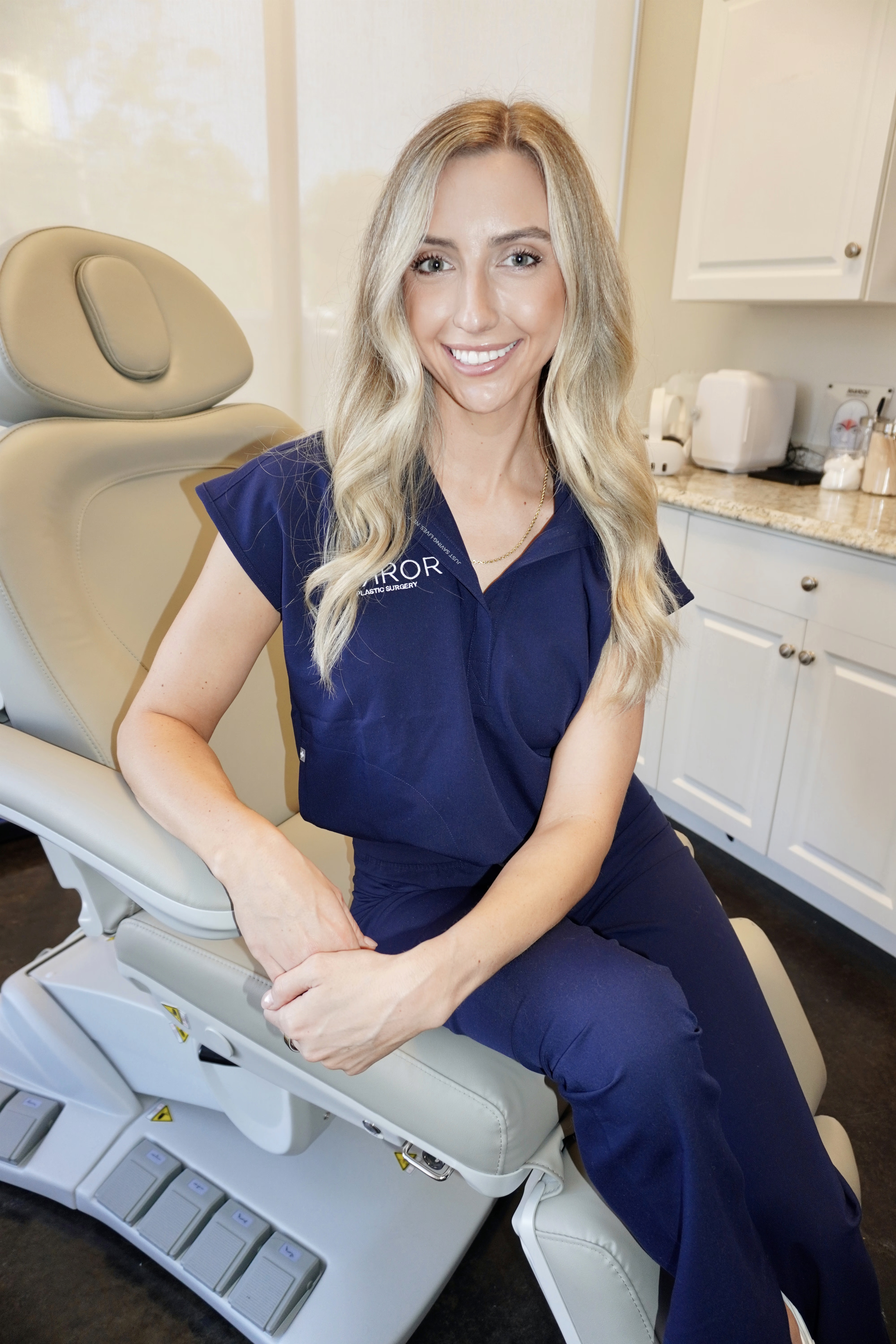
Written by: Ellie Pranckevicius, FNP-BC, Aesthetic Nurse Practitioner & Aesthetic Injector | Facial Restoration & Regenerative Injectable Specialist, Mirror Plastic Surgery | Last updated: July 31, 2026
Key Takeaways
- Concierge peptide therapy in Tampa uses lab-guided personalization, 503A pharmacy sourcing, and ongoing practitioner oversight to support safety and results.
- Key peptides such as BPC-157, TB-500, GHK-Cu, and KPV may help with inflammation, tissue repair, and recovery, but most are not FDA-approved and require medical supervision.1
- A structured clinical workflow with intake, baseline labs, custom protocol design, administration training, and scheduled rechecks separates legitimate programs from unregulated online vendors.
- Current 2026 standards emphasize mandatory diagnostic testing, live provider consultations, and continuous monitoring instead of subscription-style, low-touch services.
- Patients seeking personalized peptide protocols can schedule a consultation with Mirror Plastic Surgery to begin with a comprehensive intake and lab review.
How Concierge-Level Peptide Therapy Works at Mirror Plastic Surgery
Concierge peptide care sits between conventional medicine and the unregulated online market and focuses on depth, not volume. A concierge model allocates extended one-on-one time, reviews comprehensive lab panels before prescribing, builds a custom protocol around individual physiology and goals, and offers ongoing access for dose adjustments and questions.
At Mirror Plastic Surgery in St. Petersburg, Ellie Pranckevicius, FNP-BC, leads peptide protocols as a board-certified Family Nurse Practitioner with a background tailored to this work. Ellie’s Bachelor’s in Health Science from Boston University on the premedical track built a strong foundation in human physiology. She expanded that training through a Bachelor’s and Master’s in Nursing from the University of South Florida, then applied it during four years in the Neuroscience ICU at Tampa General Hospital managing complex patients. That experience sharpened her understanding of metabolic health, physiology, and recovery capacity, which directly informs how she designs peptide protocols.
Ellie’s early career at a high-end medical spa in Boston added advanced aesthetic assessment skills to her critical-care background. She now combines esthetician-level attention to visible outcomes with rigorous clinical science in every peptide consultation. Her approach stays explicitly educational. She explains the physiology behind each recommendation in plain language and tells clients when a product or service is not yet necessary for them.

Peptide Therapy Tampa: Key Terms You Will Hear in Consults
Before exploring the clinical workflow and specific protocols Ellie designs, understanding the vocabulary behind commonly prescribed peptides makes it easier to evaluate any provider’s recommendations and ask informed questions.
- Peptides: Short chains of amino acids that act as biological signals and direct specific cellular processes such as tissue repair, hormone release, or immune modulation.
- Stacks: Combinations of two or more peptides designed to address overlapping or complementary goals at the same time.
- BPC-157 (Body Protective Compound 157): A 15-amino-acid synthetic peptide derived from human gastric juice that downregulates pro-inflammatory cytokines and modulates the NF-κB pathway while promoting angiogenesis and tissue repair. It is not FDA-approved and carries WADA ban status.
- GHK-Cu (Copper Peptide): A copper-binding tripeptide whose plasma concentration declines from roughly 200 ng/mL at age 20 to 80 ng/mL at age 60, which correlates with reduced skin repair capacity. It modulates genes involved in collagen and elastin synthesis, antioxidant defense, and DNA repair.
- TB-500 (Thymosin Beta-4 fragment): A synthetic 7-amino-acid fragment linked in preclinical studies to enhanced wound healing, muscle regeneration, and inflammation reduction via actin regulation. Only Phase I safety data exist, and no human efficacy randomized controlled trials have been completed.
- KPV: A melanocortin-derived tripeptide that inhibits the NF-κB signaling pathway, reducing production of pro-inflammatory cytokines IL-1β, TNF-α, and IL-6, with research interest in gut inflammation and IBD.
- Tirzepatide: An FDA-approved dual GIP/GLP-1 receptor agonist that produced mean weight loss of 16.0%–22.5% at 72 weeks in the SURMOUNT-1 Phase 3 trial1, supporting its role in metabolic dysfunction and visceral fat reduction.
- GLP-3R compounds: A newer generation of GLP-axis peptides reported to carry fewer gastrointestinal side effects than earlier GLP-1 formulations and to support broader indications including insulin resistance and cardiovascular risk factors.
- Retatrutide: A triple-receptor agonist for GIP, GLP-1, and glucagon under active research in 2026 for metabolic health and weight management, representing the next frontier beyond tirzepatide.
- Sermorelin / Ipamorelin / CJC-1295: Growth hormone secretagogues that stimulate natural GH release. CJC-1295 produces 2–10-fold GH increases sustained for 6+ days and 1.5–3-fold IGF-1 elevations lasting 9–11 days1 while preserving physiological pulsatile release.
- NAD+ (Nicotinamide Adenine Dinucleotide): A coenzyme that targets mitochondrial function and is associated with increased energy production and cellular anti-aging effects.
- Selank: A nootropic peptide studied for anxiety and depression that acts on similar brain pathways as benzodiazepines without the same dependency profile.
Step-by-Step Clinical Workflow for Peptide Therapy
A medically supervised peptide program follows a clear, repeatable sequence so patients know what to expect. At Mirror Plastic Surgery, the process unfolds as follows.
- Comprehensive intake (30–60 minutes): Ellie reviews full medical history, current medications, lifestyle factors, and specific health goals before any protocol is discussed.
- Lab review: Baseline laboratory testing commonly includes a comprehensive metabolic panel (CMP), complete blood count (CBC), lipid panel, HbA1c, fasting glucose, fasting insulin, and inflammatory markers such as hs-CRP. For growth-hormone-related peptides, IGF-1 is added. For weight-management protocols, thyroid, liver, kidney, and hormone panels are included. If a patient does not have recent labs, Ellie orders them before any protocol begins.
- Custom protocol design: Based on intake and lab data, Ellie builds a personalized peptide stack. She selects compounds, doses, and administration routes that match the individual’s physiology and goals instead of relying on a standardized template.
- Administration training: Patients receive detailed reconstitution and self-injection instructions, often with video demonstrations, so they can administer peptides safely at home.
- Scheduled rechecks: A typical monitoring cadence includes a targeted recheck at 4–8 weeks, a more complete reassessment around 3 months, a full panel at 6 months, and then comprehensive labs every 6–12 months for ongoing therapy.
- Ongoing concierge access: Ellie remains available via text or scheduled telemedicine for questions, dose adjustments, and refill requests between formal check-ins. The entire process, from consultation through prescription and shipping, can occur in-clinic in Tampa or remotely across the United States.
Book an appointment with Ellie to start with a lab-guided intake before any peptide is prescribed.
2026 Regulatory and Clinical Trends in Peptide Therapy
The regulatory and clinical landscape for peptides shifted significantly in late 2025 and into 2026. The SAFE Drugs Act of 2025 (H.R. 6509), introduced December 2025, proposes additional regulation of compounding pharmacies including limits on copy products and enhanced inspections and reporting but has not been enacted and contains no mandates for 503A sourcing or third-party testing of purity, potency, or ingredients. Providers who source from gray-market suppliers may face increased regulatory risk.
On the clinical side, demand is growing in 2026 for longevity protocols using recovery peptides to support tissue repair and reduce inflammation, cognitive support peptides for neuroprotection, and weight-management peptides such as compounded semaglutide and compounded tirzepatide. Retatrutide, a triple-receptor agonist targeting GIP, GLP-1, and glucagon simultaneously, is advancing in research as a next-generation metabolic compound beyond tirzepatide.
Post-surgical recovery peptide protocols are also gaining traction, especially in practices like Mirror Plastic Surgery where peptide therapy and surgical care can be coordinated under one roof. Personalized peptide therapy in 2026 relies on mandatory diagnostic labs, synchronous video consultations with licensed providers, and ongoing monitoring with follow-up labs. This standard distinguishes legitimate programs from subscription-box-style online services.
BPC-157 in Tampa and Other Peptides for Inflammation and Recovery
Tampa residents dealing with chronic inflammation, soft-tissue injuries, or post-surgical healing often benefit from a focused discussion of recovery peptides. Several compounds now have meaningful preclinical evidence and are used in supervised clinical settings.
BPC-157 is among the most studied peptides for tissue repair. In rat tendon injury models BPC-157 has been shown to accelerate healing compared with controls1, and pilot studies have reported pain relief in patients with chronic knee pain and 83.3% complete symptom resolution in women with refractory interstitial cystitis.1 It is not FDA-approved, and 35 of 36 published studies were conducted in animals, with no published Phase 1 human safety data and no controlled human efficacy trials. Medical supervision and quality sourcing therefore remain non-negotiable.
TB-500 targets soft-tissue inflammation and wound repair through actin regulation and anti-inflammatory acSDKP release. It speeds healing of muscle, tendon, ligament, and skin injuries by enhancing cell migration, tissue regeneration, and reducing inflammation.1
GHK-Cu has the strongest human evidence base among the three primary recovery peptides. It stimulates collagen and glycosaminoglycan synthesis with up to a 70% increase in fibroblast studies and influences more than 60 genes involved in tissue remodeling.1 It appears in approved topical cosmetic and dermatological products and forms part of Mirror Plastic Surgery’s Glow Stack alongside BPC-157 and TB-500.
KPV is used to target gut-specific inflammation. A 2008 study in Gastroenterology showed KPV uptake via the PepT1 transporter reduced inflammation in experimental colitis models, and researchers continue to explore its role in IBD and colon cancer risk reduction.
None of BPC-157, TB-500, or injectable GHK-Cu is FDA- or EMA-approved as a drug for post-surgical recovery or inflammation. Regulatory status should appear in every informed consent discussion with a licensed practitioner.
Risks of Buying Peptides Online Compared with Supervised Care
The gap between supervised and unsupervised peptide use has real safety consequences, not just philosophical differences. Analytic testing of gray-market peptide products has shown wide variability in purity and quality. Many products carry a “research use only” label and bypass prescriptions, pharmacist oversight, and quality testing.
Supervised care addresses these risks through several safeguards. At Mirror Plastic Surgery, peptides are sourced exclusively from 503A compounding pharmacies with rigorous batch testing for purity, potency, and accurate dosage. Pre-treatment lab panels identify contraindications such as pre-existing insulin resistance or liver enzyme abnormalities before any compound is introduced. Stacking multiple injected peptides increases the risk of interactions with each other or with prescription or over-the-counter medications, so Ellie reviews current medications and health history before designing any stack. Ongoing monitoring catches adverse signals early, and 24/7 practitioner access means patients never have to interpret unexpected symptoms alone.
Peptide Therapy Pricing for Concierge Care in Florida
Pricing for physician-supervised peptide therapy in Florida varies based on protocol complexity, monitoring intensity, and the level of concierge access. Fee structures also differ across providers.
Some Florida clinics use cycle-based pricing, where a single peptide protocol for a defined duration is billed as a flat fee that may or may not include supplies, labs, and follow-up visits. Others use monthly subscription models that bundle the peptide medication, provider access, and monitoring into a recurring charge. A third model bundles everything, including baseline labs, body composition tracking, physician reviews, and direct access, into a tiered concierge membership.
Initial medical consultations and lab panels for peptide therapy in Florida commonly add $200 to $500. Follow-up consultation fees vary by provider. Monthly costs for in-clinic or concierge peptide therapy in Florida typically range from $400–$1,200 per peptide depending on protocol intensity. Direct-pay lab services allow comprehensive peptide monitoring panels for $200–$400. Compounded peptide therapy is not covered by health insurance in the United States, though HSA and FSA funds may apply with a letter of medical necessity. Telehealth-only providers that quote low monthly rates often exclude labs, injection supplies, body composition monitoring, and in-person clinical oversight, which can create comparable or higher all-in first-year costs than clinic-based programs. Mirror Plastic Surgery provides personalized quotes during consultation because each protocol is built around individual lab results, goals, and monitoring requirements.
Questions to Ask Before Joining a Peptide Program
Patients can use a simple checklist to evaluate whether a concierge peptide program meets the standard of care appropriate for non-FDA-regulated compounds.
- Where are the peptides sourced? Confirm the provider uses 503A compounding pharmacies with documented batch testing for purity, potency, and sterility, not gray-market or “research use only” suppliers.
- Are baseline labs required before starting? A legitimate program orders or reviews a CMP, CBC, relevant hormone panels, and condition-specific markers before prescribing anything.
- How frequently are labs monitored during the protocol? Look for structured rechecks at 4–8 weeks, 3 months, and 6 months at minimum, with dose adjustments based on objective data.
- What is the practitioner’s clinical background? Credentials in critical care, metabolic medicine, or a related specialty matter when managing compounds that affect glucose metabolism, liver enzymes, or immune function.
- How accessible is the practitioner between appointments? Direct text or telemedicine access becomes crucial when unexpected symptoms or dosing questions arise.
- Is the regulatory status of each peptide disclosed? Any provider who does not proactively discuss FDA approval status, WADA ban status, and the current evidence base for each compound is not operating transparently.
- Are outcome expectations realistic and individualized? Results vary based on genetics, lifestyle, and protocol design. Providers who guarantee specific outcomes without reviewing your labs first signal a red flag.
- What is the maintenance expectation? Most peptide benefits require ongoing use to sustain. A provider should explain what a long-term maintenance protocol looks like before you begin.
Conclusion: Choosing Safe, Personalized Peptide Care
Personalized peptide therapy in 2026 offers real clinical potential for inflammation management, tissue recovery, metabolic health, and anti-aging. That potential becomes accessible only within a framework of lab-guided personalization, quality-controlled sourcing, and continuous practitioner oversight. The distance between a supervised protocol and an online purchase is not a matter of preference. For unregulated, gray-market injectable peptides, there is simply not enough evidence to determine safety or efficacy without the safeguards that medical supervision provides.
Most wellness peptides discussed in this article are not FDA-approved for the indications described. Working with a licensed practitioner who reviews your labs, discloses regulatory status, sources from verified compounding pharmacies, and monitors your response over time separates responsible use from experimentation.
Mirror Plastic Surgery’s concierge model, led by Ellie Pranckevicius with surgical oversight from Harvard-educated, Johns Hopkins-trained plastic surgeon Dr. Akash Chandawarkar when needed, follows that standard. Patients receive one-on-one time, comprehensive lab review, custom protocol design, and 24/7 access throughout their journey.
Book an appointment with Ellie to receive a personalized lab review and protocol designed around your specific physiology and goals.
Frequently Asked Questions
Are peptides FDA-approved, and is it legal to use them in Tampa?
Most wellness peptides, including BPC-157, TB-500, GHK-Cu, and KPV, are not FDA-approved for the indications commonly used in concierge wellness settings. FDA-approved peptide medications such as insulin, semaglutide, and tirzepatide have undergone large clinical trials and carry established safety profiles. The unapproved peptides exist in a compounding pharmacy framework regulated at the state and federal level, and recent legislative proposals like H.R. 6509 aim to tighten compounding pharmacy oversight, though none have yet mandated the third-party testing standards that distinguish quality programs. Using these compounds is legal in Florida when a licensed practitioner prescribes them and a compliant pharmacy supplies them. The main risk comes from obtaining peptides from unregulated sources without medical screening, proper dosing guidance, or quality verification. At Mirror Plastic Surgery, every peptide comes from reputable compounding pharmacies with documented batch testing, and no protocol begins without a comprehensive intake and lab review.
What conditions can peptide therapy address beyond weight loss?
Peptides are often associated with GLP-1-class weight-loss medications, yet the broader peptide class can support many other concerns. At Mirror Plastic Surgery, Ellie designs protocols for systemic inflammation and autoimmune conditions such as psoriasis and rheumatoid arthritis. She also supports post-surgical and injury recovery with compounds that reduce inflammation and accelerate tissue repair, and she addresses skin, hair, and nail health through collagen and elastin-stimulating peptides.
Additional protocols may target anxiety and depression using nootropic peptides that act on similar pathways as benzodiazepines without the same dependency risk. Energy and cellular anti-aging protocols often include mitochondria-targeting compounds like NAD+, and some stacks support sexual wellness, libido, and fertility. Each protocol is built around the individual’s lab results and health history rather than a one-size-fits-all template. The same goal, such as reducing inflammation, may call for different compounds depending on whether the inflammation is systemic, gut-specific, or localized to soft tissue.
What does the monitoring process look like after starting a peptide protocol?
Monitoring centers on objective lab data instead of symptom reporting alone. Before any protocol begins, Ellie orders or reviews a comprehensive baseline panel that typically includes a CMP, CBC, relevant hormone panels, inflammatory markers such as hs-CRP, and peptide-specific markers like IGF-1 for growth-hormone secretagogues or HbA1c and fasting insulin for metabolic peptides.
After starting, a targeted recheck of key markers occurs at 4–8 weeks to confirm the expected response and catch any early signals. A more complete reassessment follows at 3 months, and a full panel repeats at 6 months. For ongoing protocols, comprehensive labs repeat every 6–12 months. Between formal check-ins, Ellie remains available via direct text for questions, dose adjustments, and refill requests. This cadence distinguishes a medically supervised program from a subscription service that ships peptides without follow-up.
What are the risks of buying peptides online instead of through a supervised program?
The main risks of purchasing peptides from online vendors fall into three categories: product quality, medical screening, and dosing accuracy. Analytic testing has shown wide variability in purity and quality among gray-market peptide products. Without a prescription requirement or pharmacist oversight, no mechanism verifies that the product contains what the label claims.
Beyond product quality, unsupervised use means no pre-treatment screening for contraindications such as pre-existing insulin resistance, liver dysfunction, or certain autoimmune profiles that would change which peptides are appropriate and at what dose. Stacking multiple peptides without clinical guidance also increases the risk of interactions with other medications. Mirror Plastic Surgery addresses all three risk categories through verified sourcing, comprehensive lab review before prescribing, and ongoing monitoring throughout the protocol.
Can peptide therapy be delivered remotely if I am not in the Tampa area?
Remote delivery of concierge peptide therapy remains fully available for patients outside the Tampa area. Mirror Plastic Surgery offers the complete concierge peptide experience across the United States, including Hawaii and Alaska. The initial consultation with Ellie can occur via telemedicine, lab work can be ordered through a local draw site, and peptides ship directly to the patient’s home from a compliant compounding pharmacy.
Ongoing support, including dose adjustments, refill requests, and between-visit questions, is available via direct text or scheduled telemedicine appointments. The remote model does not lower the standard of care. Every remote patient receives the same comprehensive intake, lab-guided protocol design, administration training, and monitoring cadence as in-clinic patients in the Tampa Bay area.
1 Results may vary from person to person. Editorial content, before and after images, and patient testimonials do not constitute a guarantee of specific results.
Peptide therapy is intended for wellness and optimization purposes and is not prescribed to diagnose, treat, cure, or prevent disease unless specifically stated. Many peptides are not FDA-approved and may be used off-label. Some have limited long-term safety data, with a potential for unknown risks, complications, or desensitization with prolonged use.