

Written by: Ellie Pranckevicius, FNP-BC, Aesthetic Nurse Practitioner & Aesthetic Injector | Facial Restoration & Regenerative Injectable Specialist, Mirror Plastic Surgery
Key Takeaways
- 2026 meta-analyses confirm oral collagen peptides improve skin hydration and elasticity within 4–12 weeks at daily doses of 2.5–10 g.1
- Wrinkle-reduction evidence weakens after statistical correction, so structural anti-aging claims remain inconsistent.
- Early functional signs such as better hydration, smoother texture, and reduced water loss usually appear before visible wrinkle changes.1
- Marine and bovine peptides show comparable outcomes, and pairing supplementation with vitamin C supports collagen synthesis.
- For personalized, lab-guided collagen protocols that go beyond OTC options, schedule a consultation at Mirror Plastic Surgery.
Current Clinical Evidence on Collagen Peptides for Skin
The largest recent systematic review analyzed 19 randomized controlled trials and found significant improvements in hydration and elasticity, though wrinkle-reduction effects weakened after statistical correction and outlier removal.1 This pattern supports collagen peptides as a tool for functional skin quality rather than a proven wrinkle treatment.
For skin outcomes specifically, elasticity and barrier-function improvements appear with consistent oral supplementation over several weeks at daily doses in the 2.5–10 g range used in dermatology trials.1 Higher doses are sometimes used in musculoskeletal protocols but are not required for skin hydration or elasticity benefits.
Structural anti-aging effects such as visible wrinkle reduction and dermal densification remain areas where current evidence is limited and inconsistent. Existing trials are short, often underpowered, and use varied scoring systems, which makes firm conclusions difficult.
To explain why clinical wrinkle data remain weaker than hydration results, researchers have turned to cellular mechanisms. At the cellular level, a 2026 review in Molecules describes how collagen peptides may influence lysosome and mitochondria function in skin cells. These mechanisms are well-characterized in vitro but are not yet fully established in vivo.
Timeline: When Collagen Peptides Start to Show Results
Most people follow a similar response pattern, although age, diet, baseline skin condition, and lifestyle all affect the pace of change. Clinical trials and mechanistic studies together outline a practical timeline.
- Weeks 1–4: Early hydration improvements often appear first. Skin can feel less tight or dry, and makeup may sit more smoothly.1
- Weeks 4–8: Texture and surface smoothness usually improve as fibroblast signaling accumulates. Visible changes tend to lag behind the functional hydration gains from the first month.1
- Weeks 8–12: Elasticity and barrier-function gains commonly become apparent during this window, especially at daily doses of 2.5–10 g.1
- Beyond 12 weeks: Continued supplementation helps maintain hydration and elasticity gains. Long-term trials have not yet clarified whether benefits plateau or keep building, so most protocols shift to a maintenance dose after three months.
Early Signs Your Collagen Supplement Is Working
The first changes tend to be functional rather than dramatic shifts in appearance. People usually notice these effects before any visible wrinkle change:
- Improved skin hydration with less tightness or flaking1
- Smoother surface texture and less roughness to the touch1
- Reduced sensitivity to dry environments, reflecting lower transepidermal water loss1
These signals connect directly to how collagen peptides behave in the body. The Pro-Hyp dipeptide appears in human blood plasma at about 15 nmol/mL within 1–2 hours after oral collagen hydrolysate ingestion and is associated with fibroblast activation. Specific bioactive peptides such as Pro-Hyp and Hyp-Gly accumulate in skin tissue and stimulate dermal fibroblasts to produce more collagen as signaling molecules, not solely as building blocks.
Practical Dosing Guidelines and Collagen Forms
Clinical data converge on a clear dosing window for skin. Molecular weight, source, and vitamin C support all influence how well a product performs.
- Effective dose range: Most hydration and elasticity benefits occur at 2.5–10 g per day over 8–12 weeks, with higher doses up to 15 g sometimes producing additional barrier-function improvements.1
- Molecular weight: Hydrolyzed collagen peptides show good bioavailability, and smaller peptides tend to absorb more efficiently than larger fragments.
- Source: Marine collagen peptides usually fall between 2,000 and 3,000 Daltons, while bovine peptides often range from 3,000 to 8,000 Daltons. Head-to-head clinical trials, however, have not consistently shown superior outcomes for marine collagen.
- Vitamin C cofactor: Vitamin C acts as a required cofactor for prolyl hydroxylase and lysyl hydroxylase enzymes that stabilize collagen’s triple-helix structure during synthesis from supplemented peptides.
How Collagen Peptides Compare to Retinol
Oral collagen peptides and topical retinol work through different biological pathways and serve different roles in a skin regimen. They complement each other rather than replace each other.
Systemic fibroblast signaling through absorbed Pro-Hyp dipeptidesSystemic effect after intestinal absorption, with peptides detectable in plasma and skin tissueVery favorable, with rare mild GI discomfort and general safety in pregnancy because it is food-derived protein
| Feature | Oral Collagen Peptides | Topical Retinol / Tretinoin | Combined Use |
|---|---|---|---|
| Primary Mechanism | Retinoic acid receptor activation that shifts gene expression toward collagen synthesis | No known interaction, so both pathways can run at the same time | |
| Depth of Effect | Dermal effect, with tretinoin (0.025–0.1%) showing high-confidence increases in dermal collagen synthesis | Addresses both systemic collagen supply and local gene-level remodeling | |
| Evidence Strength for Skin | Moderate, with meta-analyses showing significant gains in hydration and elasticity, while wrinkle data remain weak after outlier correction | High, with multiple independent RCTs and FDA approval for photoaging, including biopsy evidence of procollagen I upregulation | Additive, although no head-to-head RCT has tested the combination against either alone |
| Tolerability and Contraindications | Retinization symptoms such as dryness, flaking, and erythema are common for 2–4 weeks, and retinoids are contraindicated in pregnancy | Retinol contraindications still apply, while collagen adds no additional known risk |
Safety, Side Effects, and What to Avoid
Collagen peptides have a strong safety record, yet several issues deserve attention before you start a supplement.
- GI discomfort: Gastrointestinal effects are largely dose-dependent and most pronounced above roughly 15 g taken as a single serving on an empty stomach, because high glycine content creates an osmotic load in the upper GI tract. Starting at 2.5 g per day with meals and increasing gradually lowers this risk.
- Allergen risk: Marine-sourced products can trigger urticaria, angioedema, or rarely anaphylaxis in people with seafood allergies. Bovine, porcine, and egg-membrane sources each carry their own allergen profiles, so matching the product to your history matters.
- Heavy metal contamination: Independent testing has detected heavy metals such as lead, cadmium, and arsenic in some commercial collagen powders from both bovine and marine sources because of bioaccumulation in animal connective tissues. Third-party batch testing remains the main safeguard.
- Lack of FDA regulation: The FDA reviews GRAS notices and safety data for specific collagen polypeptides, such as GRN 1171, but does not pre-approve collagen peptide dietary supplements as it does drugs. Look for NSF Certified for Sport or USP Verified products to reduce quality concerns.
- Special populations: People who may need to avoid or limit collagen peptides include pregnant or breastfeeding women, individuals with kidney disease, those taking blood thinners such as warfarin, and individuals with phenylketonuria (PKU).
Why Expert Guidance Elevates Collagen and Peptide Protocols
Our lead practitioner for peptide therapies is a board-certified Family Nurse Practitioner with four years in the Neuroscience ICU at Tampa General Hospital. Managing critically ill patients required mastery of metabolic pathways, inflammatory cascades, and tissue-repair physiology, which are the same systems that govern how peptides like GHK-Cu and BPC-157 influence collagen synthesis and skin recovery. She began her career as an esthetician at a high-end medical spa in Boston, and this dual background in skin physiology and advanced clinical nursing shapes every peptide protocol she designs.
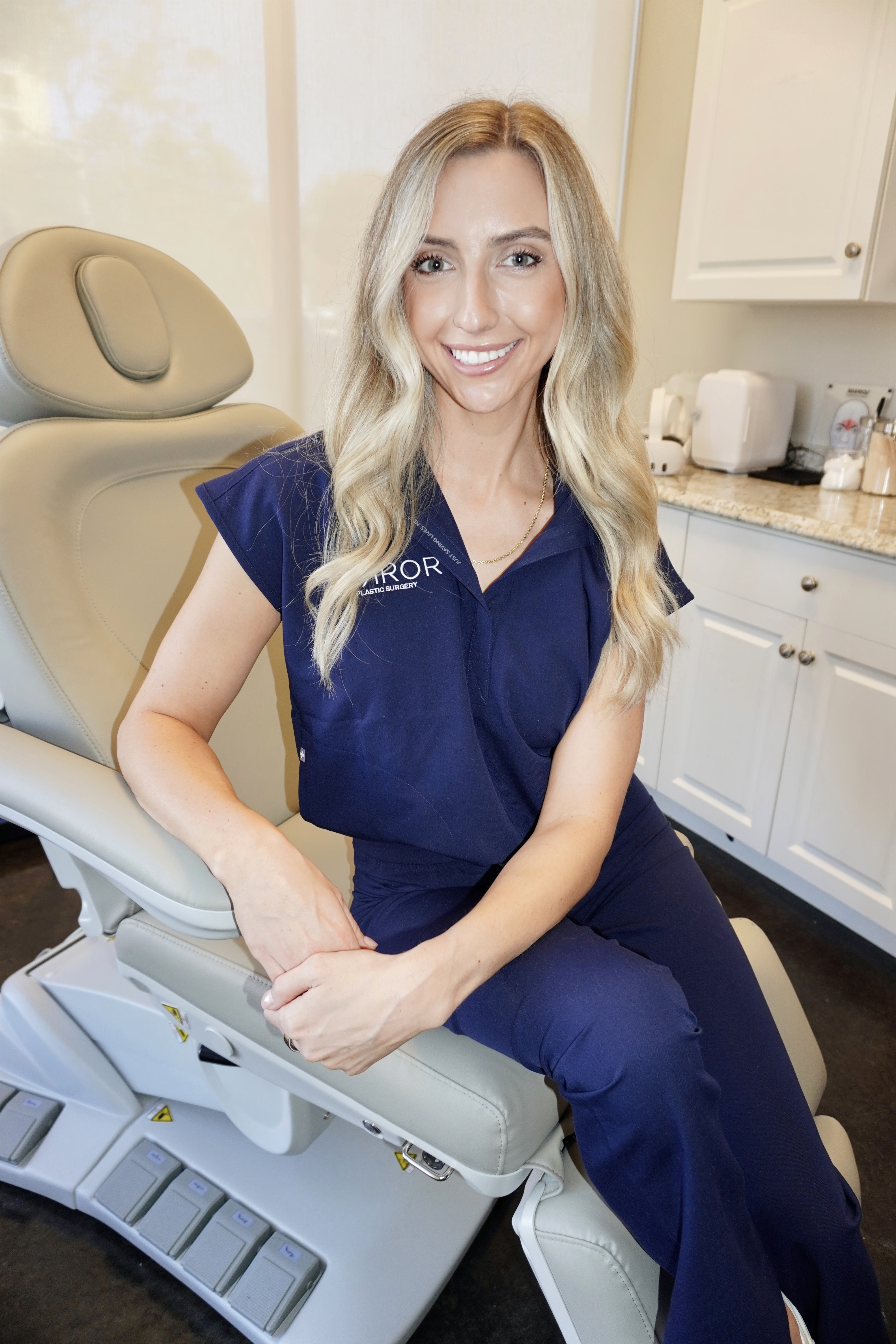
At Mirror Plastic Surgery, collagen support extends beyond standard supplements. The practice’s signature Glow Stack, which combines GHK-CU, BPC-157, and TB500, targets systemic inflammation along with collagen and elastin production. GHK-Cu has stimulated collagen and glycosaminoglycan synthesis at nanomolar concentrations in fibroblast cultures, and transcriptomic analysis shows that GHK-Cu can influence expression of thousands of human genes related to collagen biosynthesis.
Medical Supervision Callout: Why Lab-Guided Protocols Differ from OTC Supplementation
A consultation at Mirror Plastic Surgery includes a detailed medical history review, relevant lab panels such as thyroid, liver, kidney, and hormone markers when indicated, and an individualized peptide stack tailored to your physiology and goals. Peptides come from sources with rigorous batch testing, which supports purity and accurate dosage and separates these products from the unregulated online market. Ongoing concierge support through text or telemedicine allows protocol adjustments as your results evolve, a level of oversight that standard supplement retail channels do not provide.
Frequently Asked Questions
Can collagen peptides reverse sagging skin?
Collagen peptides do not reverse significant skin laxity. Evidence supports measurable improvements in hydration and elasticity, which are functional properties, but not structural reversal of established sagging that involves dermal volume, fat compartments, and ligament support.1 For moderate to significant laxity, oral collagen usually serves as a supportive adjunct to other interventions rather than a standalone solution. An in-person evaluation with a qualified provider clarifies which combination of approaches fits your anatomy and goals.
Is it better to take collagen peptides at night?
Clinical trials have not identified a clearly superior time of day for collagen intake when the goal is skin improvement. Many practitioners suggest pairing collagen with vitamin C to support collagen synthesis and separating it from time-sensitive medications by 30–60 minutes. People who combine collagen with exercise sometimes take it 30–60 minutes before activity, based on musculoskeletal data rather than skin-specific trials. For hydration and elasticity outcomes, consistent daily use matters more than exact timing.
What happens if I stop taking collagen peptides?
Benefits from collagen peptide supplementation fade after you stop.1 Fibroblast signaling from circulating Pro-Hyp dipeptides declines once oral intake ends, and skin hydration and elasticity tend to drift back toward baseline. Most trials do not track long washout periods, yet the pattern matches other nutritional interventions, where continued use maintains the effect. A maintenance protocol, often at a lower dose than the initial phase, usually helps sustain results. Our peptide plans build this long-term maintenance strategy into the first consultation.
Conclusion: Where Collagen Peptides Fit in a Skin Strategy
The 2026 clinical literature shows that oral collagen peptides can improve skin hydration and elasticity at doses of 2.5–10 g daily, with hydration gains often appearing by week 4 and elasticity and barrier-function changes following later.1 Wrinkle-reduction data remain weak after rigorous statistical correction, so structural anti-aging claims still require stronger evidence. Topical retinoids and oral collagen peptides act through distinct yet complementary pathways and work best as partners, not substitutes. For adults who want systemic collagen support beyond OTC products, medically supervised protocols that include GHK-CU stacks, lab panels, and individualized dosing provide a more accountable and personalized path.
1 Results may vary from person to person. Editorial content, before and after images, and patient testimonials do not constitute a guarantee of specific results.
Peptide therapy is intended for wellness and optimization purposes and is not prescribed to diagnose, treat, cure, or prevent disease unless specifically stated. Many peptides are not FDA-approved and may be used off-label. Some have limited long-term safety data, with a potential for unknown risks, complications, or desensitization with prolonged use.
