Written by: Ellie Pranckevicius, FNP-BC, Aesthetic Nurse Practitioner & Aesthetic Injector | Facial Restoration & Regenerative Injectable Specialist, Mirror Plastic Surgery
Key Takeaways for Collagen and Digestion
- Collagen peptides can cause bloating, gas, and cramps in sensitive users, yet dose, timing, and additives often drive these symptoms more than the collagen itself.
- Begin with a low dose of 2.5–5 g daily, increase slowly, and always take collagen mid-meal to ease the digestive workload.
- Choosing a single-ingredient, unflavored, fully hydrolyzed collagen with third-party testing removes common triggers such as sweeteners and gums.
- Marine-sourced or highly hydrolyzed peptides are usually gentler on the gut than bovine or partially processed collagen.
- If symptoms continue, explore therapeutic peptides under medical supervision at Mirror Plastic Surgery for a digestion-friendly way to support collagen and gut health.
How Collagen Interacts With Your Digestive System
Collagen peptides come from animal connective tissue and contain mostly the amino acids glycine, proline, and hydroxyproline. When you take them as a powder, your gut processes a concentrated dose of protein that looks different from the proteins in whole foods. This sudden protein load can temporarily shift gut microbiota, change motility, and raise osmotic pressure in the small intestine, which can contribute to bloating and loose stools.
Hydrolysis level strongly affects tolerance. Fully hydrolyzed collagen, often labeled as collagen peptides, breaks the protein into shorter chains with molecular weights usually below 5 kDa. These smaller fragments absorb more easily in the small intestine. Less hydrolyzed or partially processed collagen needs more enzymatic work, which keeps it in the gut longer and increases fermentation by colonic bacteria. That fermentation directly drives gas and cramping. Sourcing matters as well. Marine collagen often has a finer particle size and higher bioavailability than bovine or porcine collagen, which can mean a lower digestive burden for sensitive users.
How Collagen Can Cause Digestive Issues
Mild digestive upset occurs in a small share of collagen peptide users, and symptoms typically resolve within one to two weeks of use.1 That statistic can feel misleading for people who react to common co-ingredients. Many commercial collagen powders include sweeteners such as stevia or erythritol, flavoring agents, guar gum, or dairy-based creamers. Each of these can independently trigger gastrointestinal symptoms in susceptible individuals.
Allergen cross-reactivity often plays a role. Bovine collagen can provoke reactions in people with beef or milk protein sensitivities. Marine collagen carries a fish or shellfish allergen risk. Even products labeled “unflavored” may be processed on shared equipment with common allergens. Formulation additives and allergens can drive gastrointestinal complaints in sensitive users. Identifying the specific trigger, whether the collagen protein itself or a co-ingredient, is the first diagnostic step before you give up on collagen entirely. Once you clarify the likely trigger and adjust your product choice, you can better assess whether any remaining symptoms reflect true intolerance.
Recognizing Signs of True Collagen Intolerance
True collagen intolerance is uncommon. Most people who feel intolerant are dealing with dose sensitivity, reactions to additives, or an underlying gut condition that collagen supplementation exposes. Signs that point toward genuine intolerance include symptoms that last beyond two weeks despite dose reduction, reactions that appear even with single-ingredient, unflavored hydrolyzed collagen at doses below 5 g, and systemic symptoms such as skin flushing, joint pain, or fatigue along with digestive complaints.
When symptoms stay limited to bloating and mild gas that show up only at higher doses or with flavored products, dose sensitivity or additive reactivity is more likely. Both issues are usually fixable. Individuals with diagnosed IBS, SIBO, or histamine intolerance belong to a higher-risk group and need closer monitoring with collagen. The amino acid profile of collagen, especially glycine and proline, can interact with existing gut dysbiosis and amplify symptoms.
Collagen and IBS: When It Helps and When It Hurts
Collagen peptides do not cause IBS, yet they can worsen symptoms in people who already have the condition. The fermentable amino acid content of collagen, combined with the osmotic effect of a high protein dose, can increase gut motility and stool frequency in IBS-D (diarrhea-predominant) subtypes. For IBS-C (constipation-predominant) individuals, the same mechanisms may sometimes provide relief, although this effect is not consistent.
Gut inflammation adds another layer. People with increased intestinal permeability or low-grade mucosal inflammation may experience a temporary symptom spike when they introduce any concentrated protein supplement. This group often benefits more from targeted therapeutic peptides that address gut inflammation directly, instead of adding a protein supplement that an inflamed gut must still process.
Four Practical Adjustments for Collagen Tolerance
| Strategy | What to Do | Why It Works | Expected Timeline |
|---|---|---|---|
| Dose Titration | Start at 2.5–5 g daily, then increase by 2.5 g every 7–10 days | Reduces the acute protein load on the small intestine and gives gut microbiota time to adapt gradually | Symptoms often improve within 1–2 weeks1 |
| Timing With Meals | Take collagen in the middle of a meal instead of on an empty stomach | Food slows gastric emptying, dilutes protein concentration, and softens osmotic effects | Noticeable improvement within 3–5 days1 |
| Additive and Allergen Audit | Switch to a single-ingredient, unflavored, third-party-tested hydrolyzed collagen and remove sweeteners and gums | Removes formulation additives and allergens that can trigger gastrointestinal complaints | Improvement within 1 week of switching1 |
| Hydrolyzed vs. Non-Hydrolyzed Source | Choose fully hydrolyzed collagen peptides (<5 kDa molecular weight) instead of gelatin or partially processed collagen | Shorter peptide chains need less enzymatic digestion, which reduces fermentation and gas production in the colon | Sustained improvement over 2–4 weeks1 |
Therapeutic Peptides as an Alternative to Oral Collagen
Some individuals still cannot tolerate oral collagen after trying the adjustments above, while others want to address gut inflammation and collagen production together under medical supervision. For these patients, therapeutic peptides provide a structurally different and more targeted option.
Standard collagen peptides function as a dietary protein supplement. They supply amino acids that the body uses to build collagen, yet they do not directly signal collagen-producing cells, called fibroblasts, or regulate gut inflammation. Therapeutic peptides work differently. They are short bioactive sequences that bind to specific receptors and trigger targeted physiological responses, and they are usually given by subcutaneous injection, which bypasses the digestive tract.
BPC-157 (Body Protective Compound 157) is a 15-amino-acid peptide with a well-documented role in gut mucosal healing. It promotes angiogenesis in the intestinal lining, which increases blood flow to damaged tissue and speeds repair. This vascular support works together with BPC-157’s ability to upregulate growth hormone receptor expression in gut tissue, creating an environment that supports cellular regeneration. These regenerative actions pair with demonstrated anti-inflammatory effects in the gastrointestinal tract in preclinical models. For individuals whose collagen supplement intolerance stems from gut inflammation or permeability issues, this multi-pathway activity allows BPC-157 to address the root cause rather than only the symptom.
GHK-Cu (Copper Peptide) is a naturally occurring tripeptide that directly stimulates fibroblast activity and supports collagen and elastin synthesis. Because clinicians administer it topically or by injection, it delivers collagen-stimulating signals without asking the gut to process extra protein. This feature makes GHK-Cu a practical choice for people who want skin, hair, and connective tissue benefits from collagen support without digestive side effects.
KPV is a tripeptide fragment of alpha-melanocyte-stimulating hormone with targeted anti-inflammatory activity in the gut microbiome. Research suggests it can reduce inflammatory signaling pathways linked to irritable bowel disease and intestinal permeability. For individuals whose collagen intolerance overlaps with IBS or gut inflammation, KPV works directly on the intestinal environment.
The key distinction is simple. Oral collagen peptides supply building blocks and depend on a healthy gut to process them. Therapeutic peptides such as BPC-157, GHK-Cu, and KPV signal the body’s repair systems and, when injected, do not burden the digestive system. Determining which approach or combination fits your situation requires lab-guided assessment of gut health markers, inflammatory panels, and personal health history.
Schedule your lab-guided peptide consultation to explore whether a therapeutic peptide protocol is the right next step for your collagen and gut health goals.
About Your Peptide and Aesthetics Practitioner
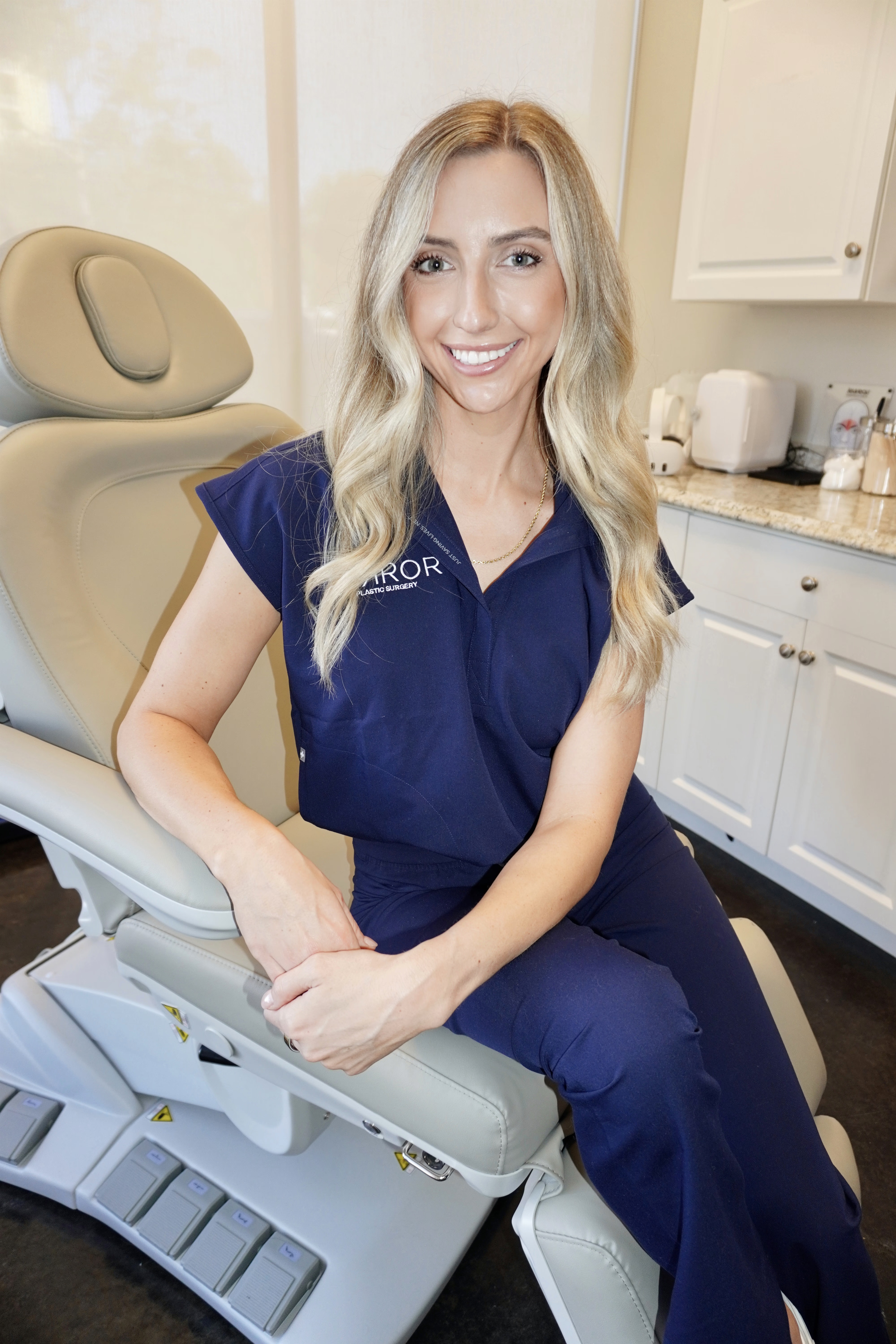
Ellie Pranckevicius, FNP-BC, leads peptide therapies and non-surgical aesthetics at Mirror Plastic Surgery in St. Petersburg, Florida. She holds a Master’s in Nursing from the University of South Florida and spent four years in the Neuroscience ICU at Tampa General Hospital, which gave her a deep foundation in physiology and metabolic health. Ellie began her career as a licensed esthetician at a high-end medical spa in Boston, so she understands both the aesthetic outcomes clients want and the clinical science needed to achieve them safely. Her peptide protocols rely on detailed lab analysis, clear education, and concierge-level one-on-one support throughout each patient’s treatment.
Practical Checklist for Collagen and Peptide Use
- Start collagen at 2.5–5 g daily and increase gradually over 7–10 day intervals.
- Take collagen in the middle of a meal, not on an empty stomach.
- Use a single-ingredient, unflavored, fully hydrolyzed collagen with third-party batch testing.
- Read the ingredient label for sweeteners such as erythritol and stevia, gums, and dairy-derived creamers.
- Confirm your collagen source, such as bovine, marine, or porcine, and compare it with your known food sensitivities.
- Consider gut inflammation as a possible factor if symptoms continue beyond two weeks on a clean-formula, low-dose collagen.
- Consult a qualified practitioner before starting therapeutic peptides, especially if you have a diagnosed GI condition.
- Request a lab panel to check inflammatory markers and gut health before beginning any peptide protocol.
Get your personalized peptide protocol for a comprehensive lab-guided assessment and tailored peptide plan.
Frequently Asked Questions
Can I take collagen peptides if I have IBS?
Collagen peptides are not automatically off-limits in IBS, yet they require a cautious approach. Starting at a very low dose of 2.5 g, taking the supplement mid-meal, and choosing a single-ingredient unflavored product lowers the chance of a flare. IBS-D subtypes face a higher risk of worsening symptoms because increased protein load can speed gut motility. If symptoms continue, therapeutic peptides such as BPC-157 or KPV may provide collagen-related and gut-healing benefits without the digestive burden of an oral protein supplement.
How long do collagen peptide digestive side effects last?
For most users, mild digestive side effects resolve within the first one to two weeks as the gut adapts to the new protein source.1 This adaptation period reflects the time needed for gut microbiota to adjust to the concentrated amino acid profile and for digestive enzymes to respond to the new protein load. If symptoms persist beyond two weeks despite dose reduction and a switch to a clean, additive-free product, the issue is unlikely to be simple adaptation. Ongoing symptoms call for evaluation of gut inflammation, food sensitivities, or a collagen source that does not match your biology.
What is the difference between collagen peptides and therapeutic peptides for skin and gut health?
Collagen peptides act as a dietary supplement that supplies amino acids the body uses to build collagen. They work indirectly and depend on a functional digestive system. Therapeutic peptides such as GHK-Cu and BPC-157 are bioactive signaling molecules, usually given by injection, that directly stimulate fibroblast activity, collagen synthesis, and gut mucosal repair. These therapeutic peptides bypass the digestive tract, which makes them a strong option for people who cannot tolerate oral collagen or who prefer a more targeted, medically supervised strategy.
Are therapeutic peptides safe without medical supervision?
Therapeutic peptides can pose real risks when used without medical supervision. Product quality is a major concern because unverified online sources often lack third-party batch testing, so actual peptide content and purity remain unknown. Dosing accuracy also matters and depends on individual health history, lab markers, and any contraindicated conditions or medications. At Mirror Plastic Surgery, every peptide protocol starts with a comprehensive consultation and, when appropriate, a full lab panel to confirm that the protocol fits each person’s physiology.
Start your consultation to discuss your collagen, gut health, and peptide therapy options with a board-certified practitioner.
Most people do not need to abandon their collagen-related health goals because of digestive side effects. In many cases, symptoms trace back to correctable variables such as dose, timing, formula additives, or hydrolysis level and improve with simple adjustments. For individuals with persistent intolerance or underlying gut inflammation, therapeutic peptides used under medical supervision offer a targeted, digestion-friendly path to collagen support and gut healing. Lab data and guidance from a qualified practitioner provide the clearest route to safe, lasting results.
1 Results may vary from person to person. Editorial content, before and after images, and patient testimonials do not constitute a guarantee of specific results.
Peptide therapy is intended for wellness and optimization purposes and is not prescribed to diagnose, treat, cure, or prevent disease unless specifically stated. Many peptides are not FDA-approved and may be used off-label. Some have limited long-term safety data, with a potential for unknown risks, complications, or desensitization with prolonged use.