

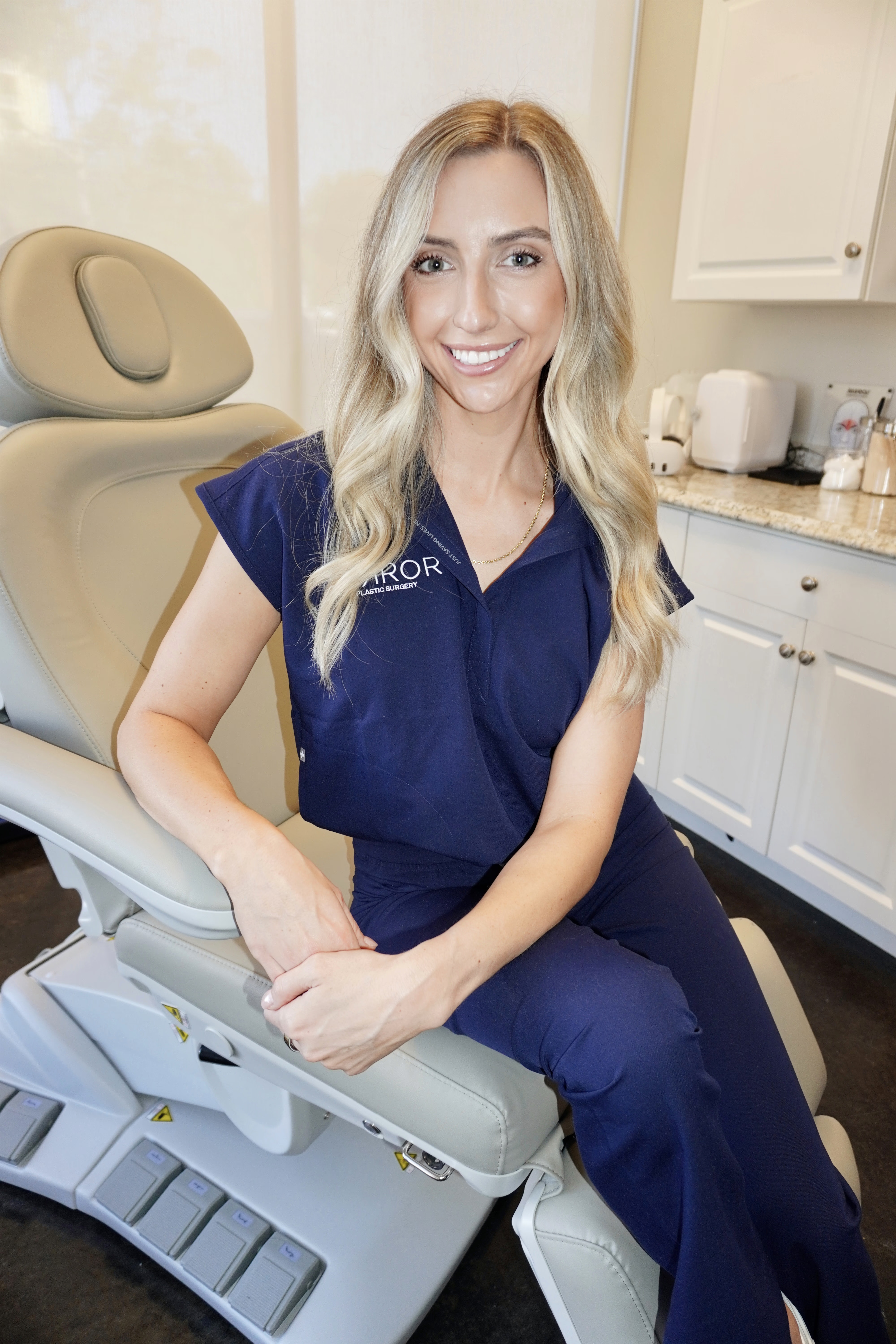
Written by: Ellie Pranckevicius, FNP-BC, Aesthetic Nurse Practitioner & Aesthetic Injector | Facial Restoration & Regenerative Injectable Specialist, Mirror Plastic Surgery
Key Takeaways
- Collagen peptides are generally considered low risk for most adults, but clinical evidence for autoimmune conditions remains limited and inconsistent.
- Proposed mechanisms include gut-barrier support and anti-inflammatory amino acid supply, though large-scale trials have not confirmed these effects.
- Current research shows modest joint-comfort signals in rheumatoid arthritis, but no strong disease-modifying outcomes across autoimmune conditions.
- Supervised peptide protocols differ from over-the-counter collagen supplements by offering condition-specific selection, lab-guided dosing, and ongoing clinical monitoring.
- Patients seeking personalized peptide care can schedule a consultation with Ellie Pranckevicius, FNP-BC at Mirror Plastic Surgery to review lab results and choose an appropriate approach.
How Collagen Peptides May Interact With Autoimmune Pathways
Collagen is the most abundant structural protein in the human body and provides tensile strength to skin, cartilage, tendons, and the intestinal lining. Collagen peptides are short chains of amino acids, primarily glycine, proline, and hydroxyproline, produced by hydrolyzing whole collagen into smaller, more bioavailable fragments. When ingested, these peptides are absorbed through the gut and distributed systemically, where they may stimulate fibroblast activity and support connective tissue repair.
Autoimmune conditions develop when the immune system mistakenly targets the body’s own tissues. Autoimmune inflammation drives tissue degradation in conditions such as rheumatoid arthritis (RA), inflammatory bowel disease (IBD), and lupus. One proposed mechanism for collagen peptide benefit involves gut-barrier theory. A compromised intestinal lining, sometimes called “leaky gut,” may allow bacterial antigens into systemic circulation and amplify immune activation. Collagen’s amino acid profile, particularly glycine, may support tight-junction integrity in the intestinal epithelium and reduce this antigen translocation. Researchers continue to investigate these mechanisms, and large randomized controlled trials have not yet confirmed them.
Current Research on Collagen Peptides in Autoimmune Conditions
The published literature on collagen peptides in autoimmune contexts is growing but still preliminary. Most trials are small, short in duration, and funded by supplement manufacturers, which increases bias risk. The following table summarizes the current state of condition-specific evidence.
| Condition | Proposed Mechanism | Evidence Quality | Observed Findings |
|---|---|---|---|
| Rheumatoid Arthritis (RA) | Oral tolerance induction via type II collagen, anti-inflammatory amino acid supply | Small RCTs, mixed results | Early trials with oral type II collagen reported modest reductions in tender and swollen joint counts.1 Larger trials have not consistently replicated these findings. |
| Systemic Lupus Erythematosus (SLE) | Glycine-mediated anti-inflammatory signaling, connective tissue support | Preclinical and anecdotal, no robust RCTs | No peer-reviewed human trials specifically examining collagen peptide supplementation in SLE populations have been published as of 2026. |
| Inflammatory Bowel Disease (IBD) | Gut-barrier reinforcement, tight-junction support via glycine and proline | Mechanistic studies, limited human data | Glycine supplementation research suggests anti-inflammatory effects in intestinal tissue. Direct collagen peptide trials in IBD patients remain limited. |
| Psoriasis | Collagen support for skin-barrier integrity, systemic inflammation reduction | Observational, small pilot studies | Some patients report improvements in skin texture and reduced flare frequency.1 Controlled trial data specific to psoriasis and collagen peptides remains sparse. |
A consistent limitation across this research is the lack of standardized dosing, collagen source, and molecular weight specifications, which makes direct comparison difficult. Systematic reviews of collagen supplementation note some positive signal for joint comfort outcomes.1 They do not show clear disease-modifying effects on autoimmune activity.
Schedule a consultation to review your lab results and decide whether collagen peptides or a more targeted peptide protocol fits your condition and goals.
Choosing Between Collagen Supplements and Targeted Peptide Therapy
Patients managing autoimmune conditions often face a choice between over-the-counter collagen supplements and medically supervised peptide protocols. This distinction carries real clinical impact. Collagen peptides sold as dietary supplements are not evaluated for disease treatment, and their formulations vary widely in purity, molecular weight, and bioavailability. Supervised peptide therapy uses condition-specific peptide selection, lab-guided dosing, and ongoing clinical monitoring.
Several practical considerations guide this decision.
- Condition severity: Mild joint discomfort or early gut permeability concerns may respond to collagen supplementation. Active autoimmune flares with measurable inflammatory markers usually require more targeted intervention.
- Current medications: Patients on immunosuppressants, biologics, or corticosteroids need clinical review before adding any peptide, because interactions and contraindications must be assessed.
- Lab baseline: Without a baseline inflammatory panel that includes CRP, ESR, and relevant autoimmune markers, clinicians cannot objectively measure whether an intervention provides benefit.
- Peptide specificity: Peptides such as BPC-157 (Body Protective Compound 157) target systemic inflammation in muscle, tendon, and joint tissue. KPV specifically addresses gut microbiome inflammation and may be relevant for IBD. These mechanisms differ from the structural amino acid supply provided by collagen peptides.
- Supervision and accountability: Unsupervised supplementation offers no mechanism for dose adjustment, adverse event monitoring, or protocol modification based on response.
These decision points highlight why clinical oversight matters. Mirror Plastic Surgery’s peptide protocols use custom stacks designed after a full consultation and lab review, with peptides sourced from suppliers that provide documented batch testing. Ellie’s clinical background in critical care and metabolic health allows her to evaluate autoimmune complexity that many general wellness providers do not address.
Request a personalized assessment that moves beyond generic supplementation advice.
Risks, Limitations, and Product Quality for Autoimmune Patients
Collagen peptides are broadly regarded as safe for healthy adults, yet several risk factors deserve attention for individuals with autoimmune conditions.
- Immune stimulation risk: Some autoimmune conditions involve antibody responses to collagen, particularly type II collagen in RA. Introducing exogenous collagen peptides in these patients may theoretically influence immune activity, although clinical evidence on this risk remains inconclusive.
- Sourcing and contamination: Dietary supplements, including collagen peptides, are not evaluated by the FDA for safety or efficacy before market entry. Third-party testing for heavy metals, microbial contamination, and label accuracy is not mandatory, so product quality varies substantially between brands.
- Dosing variability: Published studies use doses ranging from 5 g to 30 g per day of collagen peptides, with no consensus on optimal dosing for autoimmune applications. Consumer products rarely match clinically studied formulations.
- Allergen considerations: Most commercial collagen peptides come from bovine, porcine, or marine sources. Patients with relevant food allergies or sensitivities must verify sourcing before use.
- Drug interactions: No well-characterized interactions between collagen peptides and common immunosuppressive medications have been established. This lack of data does not guarantee safety in combination.
Mirror Plastic Surgery’s sourcing standard, noted earlier, directly addresses contamination and dosing variability risks that over-the-counter collagen products cannot reliably manage. Beyond product quality, every protocol is reviewed against a patient’s current medication list and baseline markers before initiation, which helps mitigate drug interaction and immune stimulation concerns that unsupervised supplementation cannot address.
Ensure clinical-grade peptide care. Book an appointment to have any peptide therapy sourced, dosed, and monitored to a high clinical standard.
From Collagen Research to Personalized Peptide Care
The collagen peptide literature represents an early chapter in a broader scientific conversation about peptide-based approaches to chronic inflammation and immune modulation. As research matures, more targeted peptides, including BPC-157 for joint and tissue repair, KPV for gut inflammation, and TB500 for soft tissue recovery, show mechanisms that address autoimmune pathophysiology more directly than structural collagen supplementation alone.
Navigating this evolving landscape requires individualized clinical oversight. The peptide space changes quickly, regulatory status shifts, and individual patient responses vary widely. Concierge-style care provides the personalized, lab-guided support needed for safe and effective peptide use. Mirror Plastic Surgery’s model of in-depth consultation, lab-guided protocol design, batch-tested sourcing, and 24/7 direct access to Ellie serves patients who need more than a supplement aisle can provide. For patients in the Tampa Bay area and across the United States, the entire process from consultation to protocol delivery can occur in person or remotely.
Frequently Asked Questions
Are collagen peptides FDA-approved for autoimmune conditions?
No. Collagen peptides sold as dietary supplements are not FDA-approved to treat, cure, or prevent any disease, including autoimmune conditions. The FDA regulates dietary supplements under a different, less stringent framework than pharmaceutical drugs, so manufacturers do not need to demonstrate efficacy before selling their products. This situation does not mean collagen peptides are automatically unsafe, but quality, purity, and dosing accuracy are not guaranteed without independent verification. At Mirror Plastic Surgery, peptides come from suppliers with documented batch testing, and every protocol receives clinical review before initiation.
Can collagen peptides make autoimmune symptoms worse?
Most people do not experience worsening autoimmune symptoms with collagen peptides. In conditions where the immune system produces antibodies that target collagen, such as certain presentations of rheumatoid arthritis, introducing additional collagen may theoretically influence immune activity. Evidence on this risk remains limited, yet it highlights the need for clinical evaluation before starting any peptide regimen. Ellie reviews each patient’s autoimmune history, current medications, and key lab markers before recommending a protocol.
What peptides does Mirror Plastic Surgery offer for autoimmune-related inflammation?
Mirror Plastic Surgery offers several peptides relevant to autoimmune and inflammatory conditions. BPC-157 targets systemic inflammation in muscle, tendon, ligament, and joint tissue. KPV addresses gut microbiome inflammation and may help patients with IBD or gut-permeability concerns. TB500 supports soft tissue repair and inflammation reduction. GHK-Cu contributes to collagen and elastin production and also carries anti-inflammatory properties. These peptides are not prescribed as one-size-fits-all solutions. Ellie designs custom stacks based on lab findings, medical history, and specific health goals.
Will I need to take collagen peptides or other peptides indefinitely?
Peptide therapy, like most health interventions, requires continued use to maintain benefits. When a peptide manages active inflammation or supports tissue integrity, stopping it usually allows the underlying condition to return to its previous state. Ellie works with patients to design maintenance protocols that remain sustainable and adjust over time based on response and evolving health goals. The objective focuses on a long-term strategy that produces measurable, lasting improvements in health markers and quality of life.1 not indefinite dependency.
How is Mirror Plastic Surgery different from buying collagen peptides online?
Buying collagen peptides or other peptides online without medical supervision carries significant risks. These include no guarantee of product purity, no third-party batch testing, no assessment of whether the peptide suits your specific condition or medications, and no clinical monitoring of your response. Mirror Plastic Surgery provides a comprehensive consultation with lab review, sources peptides from verified suppliers with batch testing, creates a personalized protocol, and offers 24/7 direct access to Ellie for ongoing support and adjustments. This level of oversight does not exist with online retailers.
Summary
Collagen peptides show modest supportive potential for joint comfort and gut-barrier integrity in some autoimmune contexts.1 yet the clinical evidence base remains limited, inconsistent, and largely derived from small or industry-funded trials. No collagen peptide product holds FDA approval for autoimmune disease management, and quality and dosing vary substantially across consumer products. Patients who want more targeted, evidence-informed outcomes often benefit from medically supervised peptide protocols designed around individual lab results and clinical history, rather than unsupervised supplementation.
Medical Disclaimer: The information provided in this article is for educational purposes only and does not constitute medical advice, diagnosis, or treatment. Collagen peptides and other peptide therapies discussed herein are not FDA-approved for the treatment of autoimmune diseases or any other medical condition. Individual results vary. Always consult a qualified healthcare provider before beginning any new supplement or peptide regimen, particularly if you have an existing medical condition or are taking prescription medications. Mirror Plastic Surgery’s peptide services are provided under the supervision of licensed clinical professionals and are tailored to each patient’s individual health profile.
1 Results may vary from person to person. Editorial content, before and after images, and patient testimonials do not constitute a guarantee of specific results.
Peptide therapy is intended for wellness and optimization purposes and is not prescribed to diagnose, treat, cure, or prevent disease unless specifically stated. Many peptides are not FDA-approved and may be used off-label. Some have limited long-term safety data, with a potential for unknown risks, complications, or desensitization with prolonged use.
