
Written by: Ellie Pranckevicius, FNP-BC, Aesthetic Nurse Practitioner & Aesthetic Injector | Facial Restoration & Regenerative Injectable Specialist, Mirror Plastic Surgery | Last updated: July 5, 2026
Key Takeaways
- BPC-157 is a synthetic peptide studied for inflammation reduction, tissue repair, and post-surgical recovery, and all protocols require medical supervision because online guidance is inconsistent and product quality is often unverifiable.1
- Standard cycles last 4–8 weeks of daily dosing followed by a 2–4 week break to prevent receptor adaptation and maintain effectiveness.
- Weight-based dosing typically ranges from 200–500 mcg daily, with routes and cycle lengths tailored to specific goals such as acute injury, chronic inflammation, or gut health.
- Baseline and follow-up lab monitoring, including liver, kidney, and inflammatory markers, is essential for safety, especially given limited human clinical data and evolving FDA regulations as of mid-2026.
- At Mirror Plastic Surgery, patients receive individualized, lab-guided BPC-157 protocols with batch-tested sourcing and direct provider support, and you can schedule your consultation today.
How a Structured BPC-157 Cycle Supports Results
A BPC-157 cycle is a defined period of daily or near-daily administration followed by a planned rest phase. Standard cycles run four to eight weeks of daily dosing followed by a two-to-four-week break. This rest interval helps prevent receptor adaptation and preserves responsiveness over time.1 Administration routes include subcutaneous injection near the target tissue for localized effects and abdominal subcutaneous injection for systemic goals such as gut healing.
Reconstituted BPC-157 requires refrigeration between 36–46°F and should be used within 30 days to maintain potency. Because food can affect absorption, morning administration on an empty stomach supports more consistent plasma levels. These technical details form the base of every protocol at Mirror Plastic Surgery, where each cycle is structured around the individual patient’s condition, body weight, lab results, and recovery goals, rather than a generic template.
Ellie Pranckevicius, FNP-BC: Guiding Your Peptide Plan
Peptide therapies at Mirror Plastic Surgery are led by Ellie Pranckevicius, FNP-BC, a board-certified Family Nurse Practitioner. Ellie holds a Bachelor’s in Health Science from Boston University, completed an aesthetics licensure program, and earned both her Bachelor’s and Master’s in Nursing from the University of South Florida. She spent four years in the Neuroscience ICU at Tampa General Hospital, building a clinical foundation in physiology, metabolic health, and complex patient recovery that now shapes her peptide protocols.
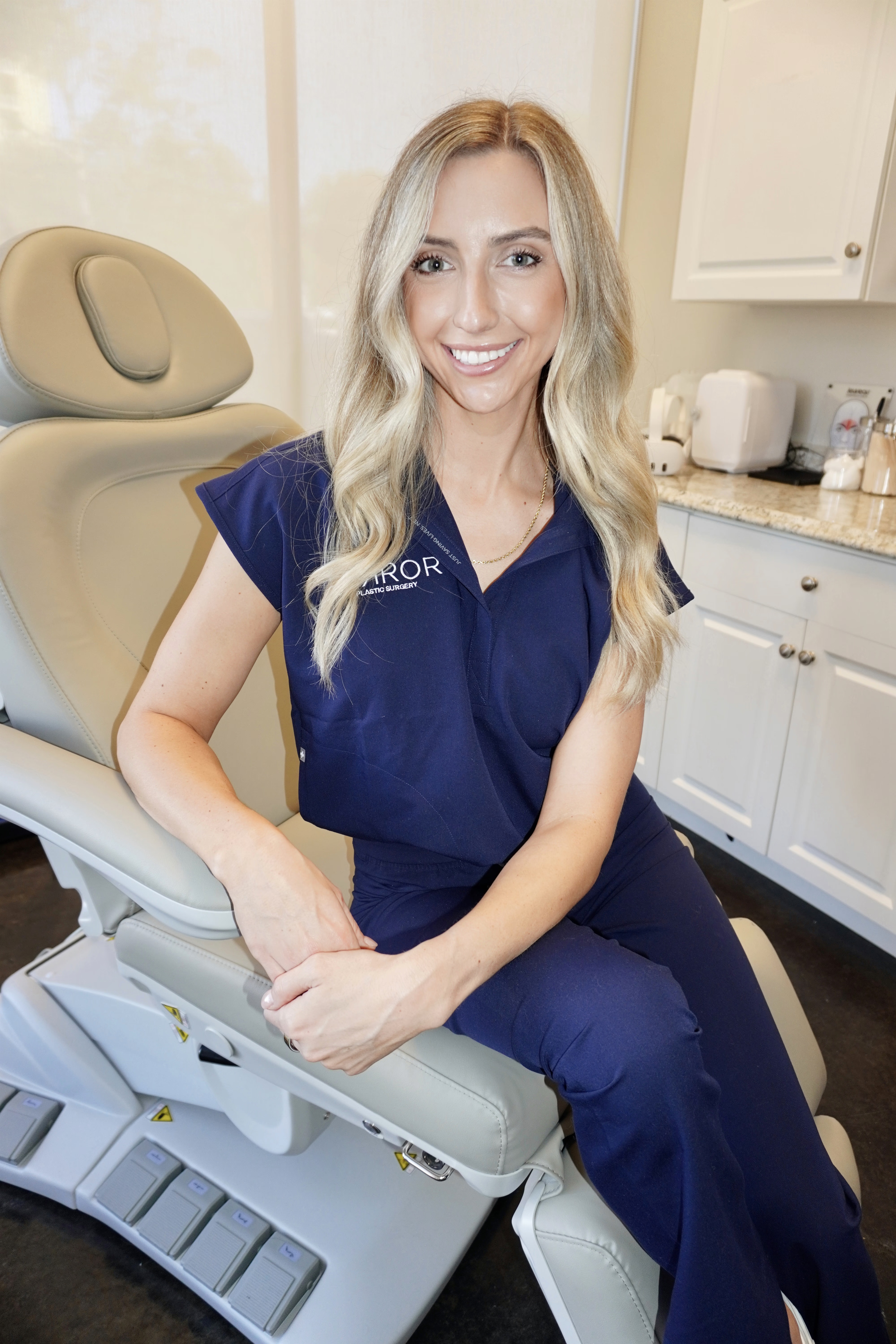
Ellie’s approach blends esthetician training with advanced nursing expertise. She explains the physiology behind every recommendation in plain language and tells patients when a protocol is not yet necessary. Patients receive direct concierge access, including text communication and telemedicine, throughout the entire cycle.
BPC-157 Dosage Ranges by Goal and Body Weight
Weight-based research supports 10–20 mcg per kilogram of body weight daily, which translates to roughly 200–500 mcg for most adults. The table below reflects commonly discussed clinical ranges. A licensed provider must individualize all figures based on health history, labs, and injury severity.
| Goal | Daily Dose (mcg) | Route | Cycle Length |
|---|---|---|---|
| Acute musculoskeletal injury | 250–400 | SubQ near site | 2–4 weeks |
| Chronic inflammation / tendinopathy | 200–300 | SubQ near site | 4–8 weeks |
| Joint or tendon repair | 300–500 | SubQ near joint | 4–6 weeks |
| Gut health support | 250–500 | Oral / abdominal SubQ | 4–6 weeks |
| Neurological / systemic support | 200–500 | Systemic SubQ | 4–8 weeks |
Doses above 1,000 mcg daily are associated with nausea and headaches. Patients with autoimmune conditions should begin at the lower end of the range. No BPC-157 dosage is FDA-approved, so a licensed practitioner must individualize every protocol based on indication, body weight, injury severity, and clinical response.
How Long a BPC-157 Cycle Typically Lasts
Cycle durations typically span 4–12 weeks. Within that framework, acute injuries are often treated for 4–6 weeks, while chronic conditions or gut healing protocols may extend to 8–12 weeks depending on severity and goals. Beyond eight weeks, diminishing returns and tolerance risk increase, so a provider should reassess before continuing.
Before starting a cycle, baseline assessment should include body weight, fasting glucose or HbA1c, lipid panel, liver function tests, kidney function markers such as BUN and creatinine, complete blood count, thyroid function, and inflammatory markers such as CRP. During the first eight weeks, clinical check-ins every two to four weeks focus on GI tolerance, injection-site reactions, energy changes, and unexpected symptoms.
BPC-157 repair effects can continue for two to three weeks after stopping a cycle.1 Some patients then move to a maintenance schedule of two to three doses per week after an intensive course. At Mirror Plastic Surgery, Ellie reviews labs before, during, and after each cycle to guide these transitions.
Stacking BPC-157 with TB-500
BPC-157 is frequently stacked with TB-500 (Thymosin Beta-4) to broaden tissue repair coverage. BPC-157 promotes angiogenesis and growth factor upregulation, while TB-500 supports actin-based cell migration. The combination offers more comprehensive soft tissue recovery than either peptide alone.1 Mirror Plastic Surgery offers this combination as part of the Glow Stack alongside GHK-CU.
Commonly discussed stacking protocols pair the standard BPC-157 dose via local injection with 2–5 mg TB-500 weekly in divided doses. Timing, injection sequencing, and dose adjustments for stacked protocols require direct provider oversight to reduce the risk of compounding tolerability issues.
Current BPC-157 Regulations and Sourcing Standards
Peptide therapy has expanded rapidly across U.S. wellness markets, while the regulatory environment for BPC-157 remains unsettled. The FDA placed BPC-157 into Category 2 in late 2023, which prohibited licensed compounding pharmacies from preparing it under Section 503A of the Federal Food, Drug, and Cosmetic Act because of identified safety concerns and insufficient human clinical data.
That classification may soon change. On February 27, 2026, HHS Secretary Robert F. Kennedy Jr. announced that approximately 14 of the 19 Category 2 peptides, including BPC-157, are expected to return to Category 1 status, although the FDA had not published a formal updated Category list as of March 2026. The FDA scheduled a Pharmacy Compounding Advisory Committee meeting for July 23–24, 2026, to discuss whether BPC-157 should be added to the 503A Bulks List, and committee recommendations will be advisory only.
In this environment, sourcing becomes a central safety decision. Mirror Plastic Surgery sources peptides exclusively from suppliers with rigorous batch testing, documented purity, and verified dosage, which exceeds the standards of unregulated online retailers.
Key Factors in Planning a Safe BPC-157 Cycle
- Lab panels: Baseline and follow-up labs, including liver, kidney, inflammatory markers, and a metabolic panel, establish safety parameters and track response.
- Injection site selection: Localized injection near the target tissue versus systemic abdominal injection depends on the condition being treated.
- Post-cycle breaks: Two-to-four-week rest periods between cycles help prevent receptor downregulation.
- Outcome variability: Individual response depends on genetics, diet, lifestyle, injury chronicity, and protocol adherence, so results vary between patients.1
- Contraindications: Extreme caution is advised for individuals with a history of cancer, pregnancy, breastfeeding, autoimmune disease, multiple prescription medications, or chronic liver or kidney disease.
Risks, Limitations, and Common Misconceptions
A 2025 systematic review in HSS Journal analyzed 36 studies (35 preclinical and 1 clinical) from 1993 through June 2024 and found no completed controlled human efficacy trials for BPC-157. The evidence confirms a single qualifying orthopaedic clinical study amid roughly 30 total human subjects across three small pilots.
BPC-157’s experimentally observed angiogenesis effects raise a theoretical concern about tumor progression, although this risk has not been evaluated in clinical studies. The FDA has identified potential risks including immunogenicity for certain routes of administration and complexities related to peptide-related impurities and API characterization.
Common misconceptions include the belief that longer cycles produce proportionally better results, which is inaccurate because diminishing returns set in beyond eight weeks. Another misconception is that oral administration is equivalent to injection for musculoskeletal targets, when oral use is preferred mainly for GI indications. Many people also assume results are permanent without maintenance, yet benefits often diminish when cycling stops, similar to discontinuing any health regimen.
Purchasing BPC-157 from unregulated online sources introduces risks of unknown purity, inaccurate dosage, and lack of clinical oversight. Case reports document compartment syndrome occurring after self-injection of unregulated peptides.
Frequently Asked Questions
Does BPC-157 need to be cycled?
Yes. Continuous, uninterrupted use increases the risk of receptor adaptation, which reduces the peptide’s effectiveness over time. Standard practice involves defined on-cycles of four to eight weeks followed by two-to-four-week rest periods. Patients with chronic conditions may run two to three consecutive cycles with breaks between each, for a total program of three to four months, under provider supervision.
How long should you cycle peptides for?
Cycle length depends on the condition being treated. Acute musculoskeletal injuries typically respond within two to four weeks. Chronic tendinopathies, gut inflammation, or systemic inflammation protocols generally run four to eight weeks. Neurological support protocols may extend to eight to twelve weeks. Any cycle beyond eight weeks requires reassessment by a licensed practitioner to evaluate response and adjust the protocol.
Is it safe to take BPC-157 every day?
Daily administration is the most common protocol during an active cycle. Short-term animal studies and limited human observations suggest a favorable tolerability profile at standard doses, with mild adverse events usually limited to localized injection-site irritation or transient GI discomfort. However, no large-scale human safety trials exist. Daily use should occur only under medical supervision with baseline labs and ongoing monitoring, particularly for individuals with pre-existing liver, kidney, autoimmune, or oncologic conditions.
Is BPC-157 hard on kidneys?
BPC-157 is excreted renally, which makes kidney function a relevant monitoring parameter. No clinical guidelines currently mandate specific renal monitoring thresholds for BPC-157 cycles, because comprehensive human safety data does not yet exist. At Mirror Plastic Surgery, Ellie includes kidney function markers such as BUN and creatinine in baseline and follow-up lab panels as a precautionary standard of care, particularly for patients with any history of renal compromise.
What is the difference between BPC-157 and TB-500, and should they be stacked?
BPC-157 primarily promotes angiogenesis and growth factor upregulation, targeting muscle, tendon, ligament, and joint repair. TB-500 (Thymosin Beta-4) supports actin-based cell migration and soft tissue wound repair. The two peptides address complementary mechanisms, which is why they are frequently combined for broader recovery support. Stacking requires provider oversight to coordinate injection timing, manage total peptide load, and monitor for additive tolerability effects. Mirror Plastic Surgery offers this combination as part of a structured, lab-guided protocol.
Conclusion: Choosing a Supervised BPC-157 Plan
A structured BPC-157 cycle offers a targeted approach to tissue repair, inflammation reduction, and recovery when planned, dosed, and monitored under qualified medical supervision.1 The evidence base remains primarily preclinical, the regulatory landscape is actively evolving, and product quality from unverified sources presents a documented risk. These realities make practitioner-led, lab-guided protocols the safest path for adults considering BPC-157.
Mirror Plastic Surgery provides this level of care through concierge oversight from Ellie Pranckevicius, FNP-BC, including comprehensive lab review, batch-tested sourcing, individualized cycle design, and direct ongoing support throughout your protocol, whether you are in the Tampa Bay area or accessing care remotely across the United States.
Regulatory disclaimer: BPC-157 is not approved by the U.S. Food and Drug Administration for any human indication and is currently classified as a Category 2 bulk drug substance under FDA compounding regulations. All BPC-157 protocols at Mirror Plastic Surgery are provided under the supervision of a licensed practitioner and are not a substitute for FDA-approved medical treatment. Individuals should consult a qualified healthcare provider before initiating any peptide therapy.
1 Results may vary from person to person. Editorial content, before and after images, and patient testimonials do not constitute a guarantee of specific results.
Peptide therapy is intended for wellness and optimization purposes and is not prescribed to diagnose, treat, cure, or prevent disease unless specifically stated. Many peptides are not FDA-approved and may be used off-label. Some have limited long-term safety data, with a potential for unknown risks, complications, or desensitization with prolonged use.