
Written by: Ellie Pranckevicius, FNP-BC, Aesthetic Nurse Practitioner & Aesthetic Injector | Facial Restoration & Regenerative Injectable Specialist, Mirror Plastic Surgery
Key Takeaways for Autoimmune Care in Tampa Bay
- Many Tampa Bay residents leave initial rheumatology visits with unanswered questions, which highlights the need for clearer autoimmune care options.
- Conventional rheumatologists focus on pharmaceutical suppression, while integrative specialists may use peptide protocols that target cellular inflammation.
- Peptide therapies at Mirror Plastic Surgery complement, not replace, standard rheumatology care and always require thorough lab screening before starting.
- Ellie Pranckevicius provides concierge-level support with personalized stacks, ongoing monitoring, and direct access for Tampa Bay patients.
- Ready to explore a customized peptide protocol as part of your autoimmune plan? Book your consultation at Mirror Plastic Surgery today.
What an Autoimmune Disease Specialist Typically Provides
A conventional autoimmune disease specialist, most often a board-certified rheumatologist, diagnoses and manages conditions such as rheumatoid arthritis, lupus, psoriatic arthritis, and multiple sclerosis. The standard workflow involves clinical examination, blood panels measuring inflammatory markers like CRP and ANA, imaging, and prescription of disease-modifying antirheumatic drugs (DMARDs), biologics, or corticosteroids.
Researchers believe there are more than 80 autoimmune diseases, many of which are chronic and debilitating with no known cures. Treatments exist for only some of these diseases and do not work for everyone. High patient volumes in many rheumatology practices can limit appointment time, which reduces the opportunity for individualized protocol adjustments or root-cause exploration.
How Rheumatologists and Integrative Autoimmune Specialists Differ
A rheumatologist is a physician who completed medical school, internal medicine residency, and a rheumatology fellowship, focusing primarily on pharmaceutical suppression of immune activity. An integrative autoimmune specialist, such as a board-certified nurse practitioner operating within a concierge medicine model, may layer peptide-based protocols on top of or alongside conventional care. These protocols target cellular inflammation pathways rather than broadly suppressing immune function.
Autoimmune care is shifting toward personalized medicine that uses individualized biomarkers, genetic markers, immune cell profiles, and disease activity patterns to tailor treatments instead of relying on trial-and-error prescribing. The table below outlines the practical distinctions between the two models.
| Feature | Conventional Rheumatology | Integrative Peptide-Based Care (Mirror Plastic Surgery) |
|---|---|---|
| Primary approach | Pharmaceutical suppression of immune activity via DMARDs, biologics, corticosteroids | Targeted peptide protocols aimed at cellular inflammation pathways, informed by lab panels |
| Personalization | Diagnosis-driven, and conventional prescribing has historically relied on trial-and-error approaches | Custom stacks built from individual lab results, medical history, and health goals |
| Monitoring | Periodic clinic visits, labs ordered at set intervals | Ongoing concierge support via text and telemedicine, labs reviewed before and during protocol |
| Regulatory status of treatments | FDA-approved medications with established trial data | Most wellness-market peptides lack FDA approval for inflammation and immune support uses, and are sourced from reputable compounding pharmacies with batch testing |
Ready to compare these models using your own labs? Schedule a consultation with Ellie.
Choosing the Right Doctor for Autoimmune Disorders
The right provider depends on disease severity, current medications, and personal goals. A board-certified rheumatologist remains the appropriate first contact for diagnosis, acute flares, and pharmaceutical management of serious conditions. For Tampa Bay adults who have completed that initial evaluation and want deeper inflammation management, an integrative practitioner who uses lab-based peptide protocols can offer a complementary option.
This personalized approach, which analyzes your unique markers to predict therapy response rather than relying on trial-and-error prescribing, is the same principle Mirror Plastic Surgery applies to peptide protocols. Ellie Pranckevicius reviews thyroid, liver, kidney, diabetes, and hormone panels before building any protocol. This process keeps recommendations grounded in your individual physiology rather than a population average.
For those exploring integrative rheumatologist Florida options, the distinction often centers on workflow. The key questions involve whether the provider spends adequate time with you, reviews your labs in depth, and offers ongoing support between appointments.
Why Some Autoimmune Diseases Are Hard to Detect
Systemic lupus erythematosus (SLE), early-stage multiple sclerosis, and undifferentiated connective tissue disease are frequently cited as among the most diagnostically elusive autoimmune conditions. Many autoimmune diseases disproportionately affect women, including rheumatoid arthritis, multiple sclerosis, and systemic lupus erythematosus, and symptom overlap across conditions can delay accurate diagnosis by years.
Peptide protocols at Mirror Plastic Surgery do not replace diagnostic rheumatology. They instead incorporate inflammatory marker review, including CRP, cytokine-related indicators, and metabolic panels. These data points help identify areas where targeted peptides such as BPC-157 or KPV may reduce systemic or gut-based inflammation while a formal diagnosis is being pursued or refined.1 The practitioner guiding this lab-driven approach brings a unique combination of critical-care experience and aesthetic medicine training.
Meet Ellie Pranckevicius: Lead Practitioner for Peptide Protocols
Ellie Pranckevicius, FNP-BC, is a board-certified Family Nurse Practitioner and the lead practitioner for peptide therapies and non-surgical aesthetics at Mirror Plastic Surgery. She holds a Bachelor’s in Health Science from Boston University on a premedical track, completed an aesthetics licensure program, and earned both her Bachelor’s and Master’s in Nursing from the University of South Florida.
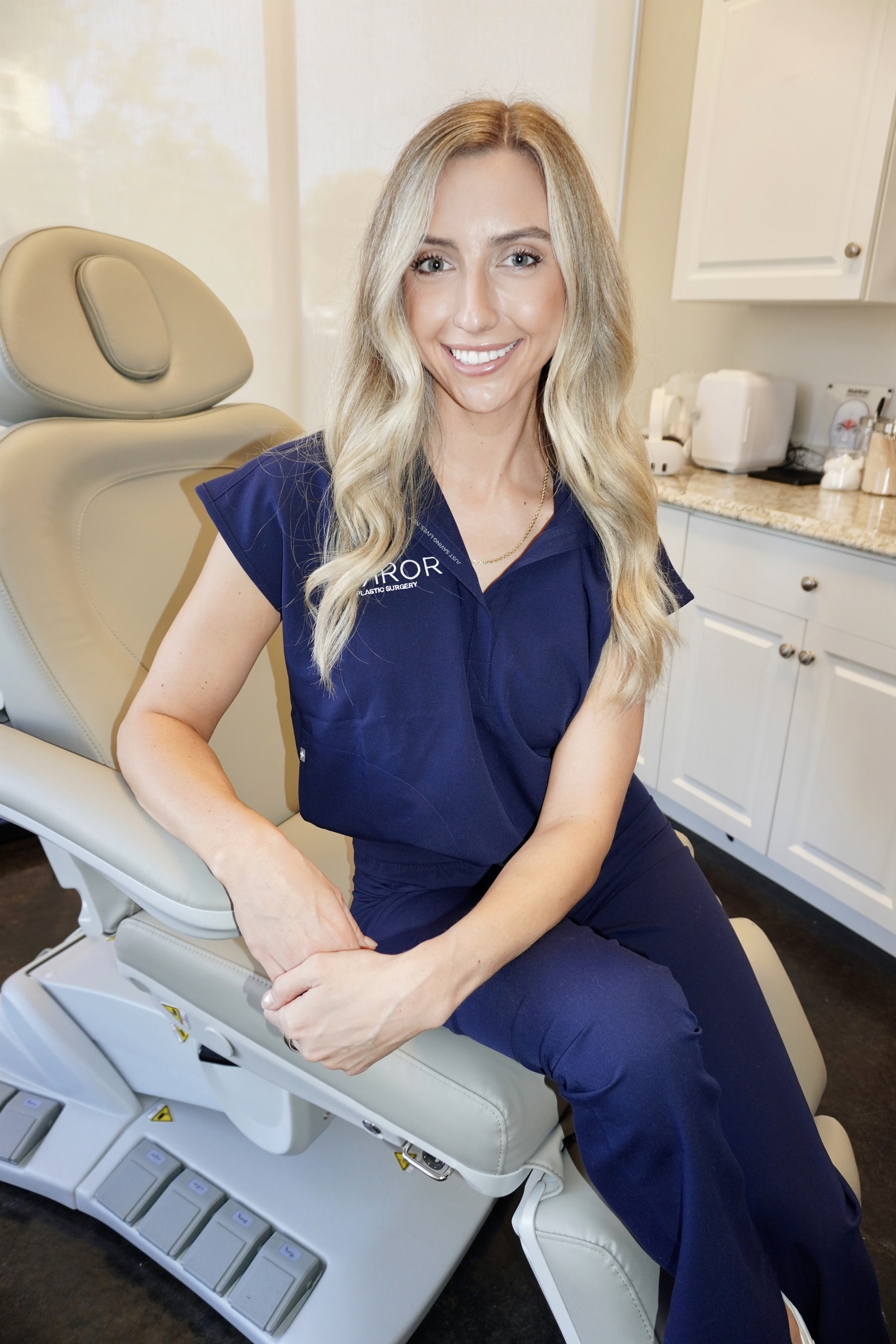
Before entering the nurse practitioner role, Ellie spent four years in the Neuroscience ICU at Tampa General Hospital managing complex patients. That experience built a deep command of physiology, metabolic health, and recovery capacity. She began her career at a high-end medical spa in Boston, which gave her a dual perspective that bridges aesthetic goals with clinical science.
Ellie’s approach mirrors the practice’s broader philosophy: education first, revenue second. She often tells clients when a service is not yet necessary and prioritizes long-term outcomes over short-term sales. Her work can be complemented in the surgical realm by Dr. Akash Chandawarkar, MD, a Harvard-educated physician, Johns Hopkins-trained plastic surgeon, and fellowship-trained aesthetic surgeon at Manhattan Eye Ear & Throat Hospital/Lenox Hill Hospital.
Experience Ellie’s concierge approach firsthand by booking your consultation.
Peptides for Autoimmune and Inflammatory Conditions
Peptides are short chains of amino acids that act as biological messengers, binding to specific receptors to trigger targeted cellular responses. Approximately 100 peptide-based drugs have been approved by the FDA since insulin was first isolated in 1921, including medications for osteoporosis, Type 2 diabetes, weight loss, irritable bowel syndrome, and chronic pain. The peptides used in wellness settings operate on the same amino acid chemistry but are not FDA-approved for the specific uses described below.
Antigen-specific peptide therapies are among the tolerance-inducing approaches being explored to retrain the immune system to stop attacking healthy tissue by encouraging tolerance to specific self-antigens. At Mirror Plastic Surgery, Ellie works with several inflammation-relevant peptide categories. Each category targets different pathways that may relate to your symptoms and lab findings.
- BPC-157 (Body Protective Compound 157): Targets systemic inflammation, muscle, tendon, ligament, and joint repair. BPC-157 is not approved for any medical use in humans and lacks randomized human clinical trials.
- GHK-Cu (Copper Peptide): Supports collagen and elastin production, skin health, and systemic inflammation reduction.
- KPV: Targets inflammation within the gut microbiome, with potential relevance to inflammatory bowel conditions.
- GLP-3R Compounding: A newer-generation metabolic peptide reported to carry fewer gastrointestinal side effects than earlier GLP-1 formulations, addressing insulin resistance and cardiovascular risk factors.
- TB500 (Thymosin Beta-4): Used for soft tissue inflammation and wound repair.
Curious which of these peptides match your markers? Start with a lab review and consultation.
Clinical Workflow for Peptide Therapy at Mirror Plastic Surgery
Mirror Plastic Surgery’s peptide therapy process follows a structured, lab-first sequence.
- Consultation (30–60 minutes): Ellie reviews full medical history, current medications, and health goals.
- Lab panel review: Thyroid, liver, kidney, diabetes markers, and hormone panels are reviewed. If these labs are unavailable, Ellie orders them before any protocol begins.
- Custom stack creation: A personalized peptide combination is built from lab findings and individual physiology, not from a template.
- Quality sourcing: Peptides are sourced from reputable U.S.-based compounding pharmacies with rigorous batch testing. Peptide injections are safest when sourced from FDA-compliant compounding pharmacies and accompanied by ongoing monitoring.
- Self-administration instructions: Detailed reconstitution and injection guidance, often with video demonstrations, is provided.
- Ongoing support: Direct 24/7 text access to Ellie, plus scheduled telemedicine appointments, covers questions, adjustments, and refills. This concierge support model works whether you are local to St. Petersburg or accessing care remotely from anywhere in the United States.
Important Considerations and Realistic Risks
Peptide therapy for autoimmune and inflammatory conditions carries meaningful considerations that every prospective patient should understand before starting a protocol.
Regulatory status: Most peptide injections marketed in wellness settings lack FDA approval for inflammation and immune support uses and have not undergone rigorous human clinical trials, lack standardized dosing guidelines, and carry unknown long-term safety profiles.
Autoimmune-specific caution: Peptide therapies are offered by Mirror Plastic Surgery for managing autoimmune conditions such as psoriasis, with reported reversals under medical supervision.1 This reality makes pre-protocol screening and ongoing monitoring non-negotiable.
Sourcing risk: Most adverse events with peptide injections occur when peptides are sourced improperly or used without clinical oversight. Purchasing from unverified online retailers removes all quality controls.
Maintenance requirement: Peptide benefits diminish when protocols are discontinued, similar to stopping any health regimen.1 Sustained results require ongoing maintenance protocols.1
Individual variability: Results differ based on genetics, lifestyle, diet, and the specific condition being addressed. No outcome is guaranteed.1
Two common misconceptions deserve clarification. Peptides are not exclusively for weight loss, because they also address inflammation, recovery, neurological health, energy, and more. Additionally, not all peptides carry the same risk profile. Peptides generally have favorable safety profiles when used under medical supervision because they mimic naturally occurring sequences, act on specific receptors with low off-target effects, and break down into amino acids.
Frequently Asked Questions
Are peptides FDA-approved for autoimmune conditions?
Most peptides used in wellness and concierge settings are not FDA-approved for autoimmune or inflammatory indications. However, the peptide drug class itself is well-established, with roughly 100 FDA-approved peptide medications on the market. The primary risk usually involves obtaining products from unregulated sources without medical supervision. Mirror Plastic Surgery sources exclusively from reputable compounding pharmacies with batch testing and provides full clinical oversight before and during every protocol.
Can peptide therapy replace my rheumatologist?
No. Peptide protocols at Mirror Plastic Surgery are designed to complement, not replace, conventional rheumatology care. A rheumatologist remains the appropriate provider for formal diagnosis, acute disease management, and pharmaceutical treatment of serious autoimmune conditions. Ellie’s protocols are best suited for patients who have completed initial conventional evaluation and are seeking additional support for inflammation management and overall cellular health.
What happens if I stop taking peptides?
Benefits from peptide therapy are not permanent once a protocol is discontinued.1 If the underlying inflammatory process was being managed by a peptide, it will likely return to its prior state when the peptide is stopped, similar to discontinuing any health regimen.1 Ellie designs maintenance protocols to help sustain results over time and adjusts them based on ongoing lab reviews and patient feedback.
Will I see the same results as other patients?
No. Outcomes vary significantly based on genetics, diet, lifestyle, the specific condition being addressed, and the peptide stack used.1 This variability is the reason Mirror Plastic Surgery conducts a thorough lab panel and medical history review before creating any protocol. A personalized approach reduces the likelihood of ineffective treatment and helps set realistic expectations from the outset.
Is it safe to buy peptides online without a prescription?
Purchasing peptides from unverified online sources carries significant risks, including unknown product purity, inaccurate peptide sequences, contamination, incorrect dosing, and no screening for pre-existing conditions or medication interactions. Medical supervision ensures you receive a quality-verified product at an appropriate dose, with someone monitoring your response and available if complications arise.
Choosing Your Next Step in Autoimmune Care
Navigating autoimmune care in Tampa Bay means weighing the established safety record of conventional rheumatology against the emerging, lab-personalized potential of peptide-based protocols. Neither pathway works for every person in every situation. The right choice depends on your diagnosis, disease activity, current medications, and personal goals.
Mirror Plastic Surgery stands out through its combination of clinical rigor and concierge attention. The team performs a full lab review before any recommendation, sources peptides from batch-tested compounding pharmacies, and offers direct ongoing access to Ellie Pranckevicius. Ellie is a board-certified nurse practitioner with critical-care and aesthetic medicine experience who will tell you honestly when a protocol is not the right fit.
Tampa Bay adults who have explored conventional autoimmune care and want a more individualized, root-cause-oriented evaluation can move forward with a one-on-one consultation.
1 Results may vary from person to person. Editorial content, before and after images, and patient testimonials do not constitute a guarantee of specific results.
Peptide therapy is intended for wellness and optimization purposes and is not prescribed to diagnose, treat, cure, or prevent disease unless specifically stated. Many peptides are not FDA-approved and may be used off-label. Some have limited long-term safety data, with a potential for unknown risks, complications, or desensitization with prolonged use.