
Written by: Ellie Pranckevicius, FNP-BC, Aesthetic Nurse Practitioner & Aesthetic Injector | Facial Restoration & Regenerative Injectable Specialist, Mirror Plastic Surgery
Key Takeaways for Autoimmune Management
-
Autoimmune disease management works best as a layered plan that combines medication, nutrition, stress reduction, sleep support, and low-impact exercise.
-
Standard treatments like corticosteroids, DMARDs, and biologics can control symptoms but carry risks such as organ toxicity, infection, and high cost.
-
The Mediterranean and AIP diets reduce inflammatory markers and pain, giving patients accessible first steps that complement medication.
-
Supervised peptide protocols using compounds such as BPC-157, KPV, and GHK-CU can support targeted inflammation control and tissue repair when guided by lab work.1
-
Patients who want a personalized autoimmune roadmap can schedule a consultation at Mirror Plastic Surgery to review labs and explore supervised peptide options tailored to their inflammatory profile.
Conventional Autoimmune Therapies and Their Tradeoffs
Standard autoimmune care often starts with NSAIDs for pain and inflammation, corticosteroids for acute flares, disease-modifying antirheumatic drugs (DMARDs) such as methotrexate for long-term immune suppression, and biologics that target specific cytokines, the proteins that drive immune activity. These therapies reduce symptoms for many patients, yet they come with clear tradeoffs. Long-term corticosteroid use can cause bone density loss, metabolic disruption, and adrenal suppression. DMARDs require regular liver and kidney monitoring because of organ toxicity risk. Biologics increase infection risk and are cost-prohibitive for many patients.
The estimated combined direct and indirect costs associated with multiple sclerosis alone totaled $85.4 billion in the US in 2019, which shows how heavy the burden of conventional-only care can be. These limitations have encouraged many patients to explore adjunctive approaches that address underlying drivers of inflammation instead of symptoms alone.
Anti-Inflammatory Eating and AIP-Style Elimination Plans
Diet gives patients one of the most practical and well-studied tools for managing autoimmune disease. Systematic reviews from 2018 and 2020 found that the Mediterranean diet, used as an adjunctive treatment for rheumatoid arthritis, reduces systemic inflammation while improving pain levels and physical function. The Autoimmune Protocol (AIP) diet uses a more restrictive elimination structure. It removes grains, legumes, dairy, nightshades, and processed foods, then reintroduces them in stages to uncover personal food triggers.
Consider a patient with rheumatoid arthritis who shifts from a standard Western diet to a Mediterranean pattern over twelve weeks. Inflammatory markers such as C-reactive protein (CRP) and erythrocyte sedimentation rate (ESR) often improve alongside self-reported pain scores.1 This pattern aligns with the systematic review data. Dietary change rarely creates full remission on its own, yet it can significantly lower the inflammatory load that medications must handle.
Stress, Sleep, and Movement as Daily Inflammation Controls
Dietary change alone rarely achieves remission, so lifestyle habits that shape stress and recovery become equally important. Chronic psychological stress raises cortisol and pro-inflammatory cytokines, which directly worsen autoimmune activity. Mindfulness-based stress reduction (MBSR), diaphragmatic breathing, and structured sleep hygiene each help calm this response. Consistent sleep and wake times, limited blue-light exposure in the evening, and a cool, dark bedroom reduce the neuroendocrine strain on an already dysregulated immune system.
Physical activity supports joint function, mood, and metabolic health in autoimmune conditions. A 2021 meta-analysis found that home-based physical activity interventions reduced symptoms and pain while improving functional capacity and quality of life in patients with autoimmune rheumatic diseases compared to controls. Separate meta-analytic data showed better balance and functional walking ability in multiple sclerosis patients who practiced yoga, aerobic training, and aquatic exercise. Low-impact options work best for many patients because very high-intensity exercise can briefly spike inflammatory cytokines and may trigger flares in sensitive individuals.
Schedule a lifestyle and lab review with Ellie to align your daily habits with your specific inflammatory profile.
Spotting Triggers and Tracking Autoimmune Symptoms
Autoimmune flares are episodes of intensified immune activity in which cytokines surge and attack healthy tissue. Common flare triggers include sleep deprivation, dietary antigens, emotional stress, infections, hormonal shifts, and environmental toxins. Mitochondrial support matters here. Mitochondria produce cellular energy, and impaired mitochondrial function lowers resilience, which can make flares more frequent and longer lasting. Gut microbiome dysbiosis and increased intestinal permeability have been linked to autoimmune disease development and progression, so gut health becomes a key area to monitor.
Practical tracking tools work best as a combined system. A daily symptom journal captures subjective experiences such as pain levels, fatigue, sleep quality, diet, and stress that lab work cannot fully describe. Wearable devices add objective data by tracking heart-rate variability as a proxy for autonomic stress load, which can reveal patterns you might not notice on your own. Quarterly lab panels that measure CRP, ESR, a complete metabolic panel, and relevant autoimmune antibodies then confirm whether symptom changes match measurable shifts in inflammation. Together, these three layers of information help patients and practitioners spot personal trigger patterns and intervene before a full flare develops.
Supervised Peptide Protocols for Autoimmune Support
Peptides are short chains of amino acids that act as biological signals and direct specific cellular processes. Several peptides now attract clinical interest for their roles in modulating inflammation and supporting tissue repair in autoimmune conditions.
BPC-157 (Body Protective Compound 157) targets systemic inflammation and supports muscle, tendon, ligament, and joint repair, which often matters in autoimmune disease. KPV is a tripeptide that focuses on inflammation within the gut microbiome and may support inflammatory bowel conditions and the broader gut-immune axis. GHK-CU (Copper Peptide) supports collagen and elastin production and shows anti-inflammatory properties that can help skin-manifesting autoimmune conditions such as psoriasis. GLP-3R compounding represents a newer metabolic peptide option that addresses insulin resistance and cardiovascular risk factors, with a reported reduction in gastrointestinal side effects compared with earlier GLP-1 formulations. Selank is a nootropic peptide that modulates anxiety pathways without the dependency risk associated with benzodiazepines, which can benefit autoimmune patients whose stress burden worsens immune dysregulation.
At Mirror Plastic Surgery, peptide protocols are built around the individual rather than pulled from a fixed menu. Ellie Pranckevicius reviews each patient’s lab results, including inflammatory markers, hormone panels, thyroid function, and liver and kidney status, before selecting and dosing peptides. The practice sources peptides from suppliers with documented batch testing, which is a key safeguard because these compounds are not FDA-regulated. Patients have reported improvements in psoriasis, lower systemic inflammation, and faster recovery from flares within the first weeks of a supervised protocol.1
Explore personalized peptide protocols with Ellie based on your lab results and autoimmune history.
Comparing Conventional, Integrative, and Unsupervised Peptide Paths
|
Feature |
Conventional-Only Care |
Integrative + Supervised Peptides (Mirror Plastic Surgery) |
Unsupervised Online Peptides |
|---|---|---|---|
|
Personalization |
Diagnosis-based, limited individual tailoring |
Lab-guided, individual protocol built per patient |
None, self-directed without clinical data |
|
Inflammation monitoring |
Periodic physician visits with standard panels |
Comprehensive baseline and ongoing lab panels with Ellie |
No monitoring and no baseline established |
|
Product quality assurance |
FDA-regulated pharmaceuticals |
Batch-tested peptides from vetted suppliers |
No third-party testing and purity unverified |
|
Ongoing support |
Scheduled appointments with limited between-visit access |
24/7 direct text access to Ellie and telemedicine available nationwide |
No clinical support available |
Meet Ellie Pranckevicius, FNP-BC, Your Peptide Therapy Partner
Ellie Pranckevicius is a board-certified Family Nurse Practitioner and the lead practitioner for peptide therapies and non-surgical aesthetics at Mirror Plastic Surgery. She holds a Bachelor’s in Health Science from Boston University, completed an aesthetics licensure program, and earned both her Bachelor’s and Master’s in Nursing from the University of South Florida. Her clinical foundation includes four years in the Neuroscience ICU at Tampa General Hospital, where she managed complex patients with acute physiological crises. That experience gives her a precise understanding of metabolic health, inflammatory physiology, and recovery capacity.
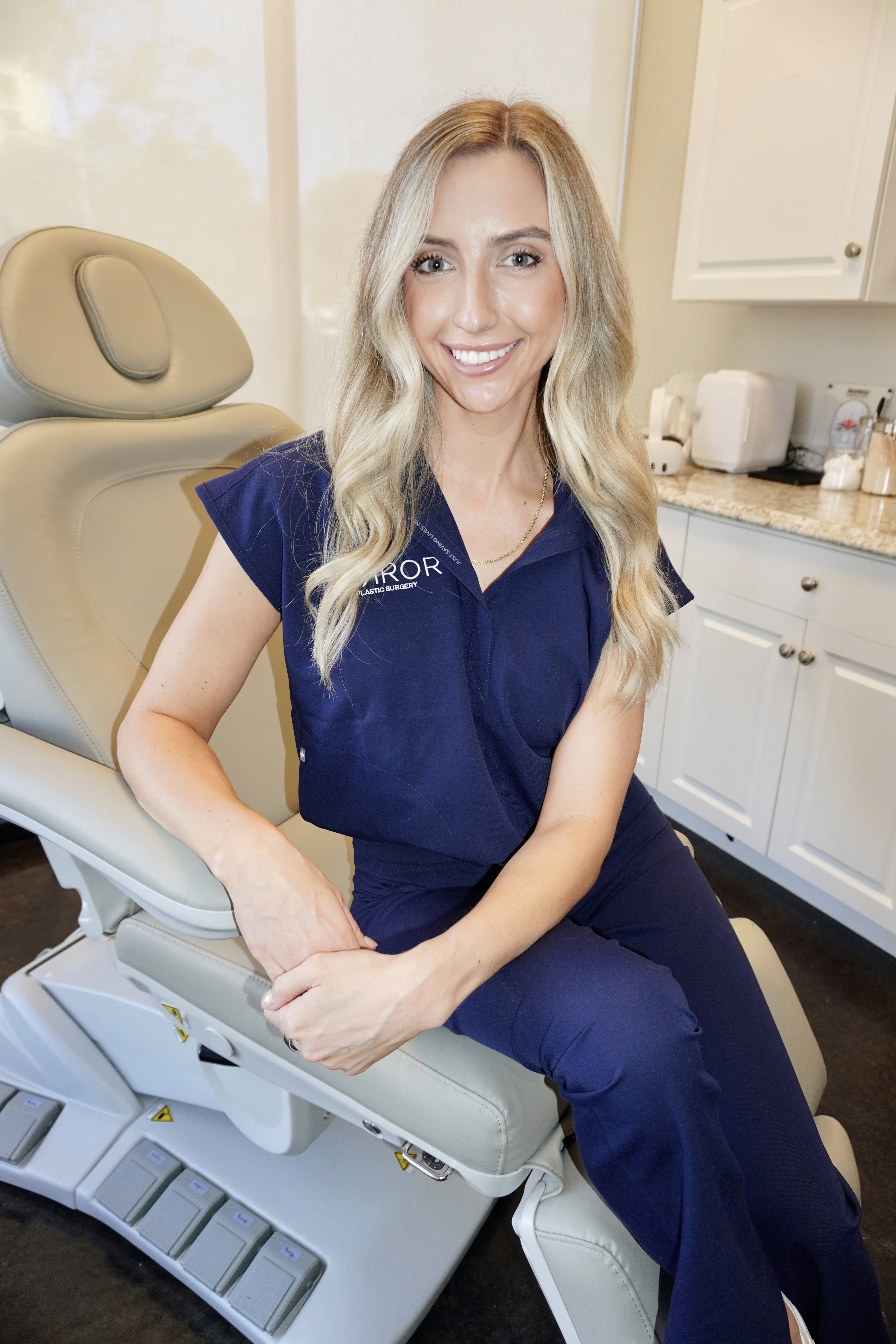
Ellie began her career at a high-end medical spa in Boston and developed deep expertise in skin physiology and aesthetic assessment before advancing to nurse practitioner credentials. This dual background, which combines esthetician training with advanced clinical nursing, allows her to address both the aesthetic and systemic dimensions of autoimmune care. Her approach centers on education. She explains the physiology behind every recommendation so patients understand not just what they are taking but why. She often advises patients when a service is not yet necessary and prioritizes long-term outcomes over short-term revenue. When surgical intervention becomes relevant, Ellie’s work is complemented by Dr. Akash Chandawarkar, MD, a Harvard-educated physician, Johns Hopkins-trained plastic surgeon, and founder of Mirror Plastic Surgery.
Safety, Quality, and Candid Expectations for Peptide Use
Peptides used in autoimmune management are not FDA-regulated, so quality, purity, and dosing vary widely between suppliers. The main risk of unsupervised peptide use comes from products of unknown composition used without a clinical baseline. That situation can lead to no therapeutic effect or, in patients with hidden contraindications, harmful outcomes. At Mirror Plastic Surgery, every peptide protocol starts with a detailed medical history review and, when appropriate, a full lab panel. The practice uses only suppliers with documented batch testing.
Individual outcomes depend on genetics, disease severity, concurrent medications, diet, and adherence. No peptide protocol replaces physician-supervised medical care for acute autoimmune presentations. Patients on immunosuppressive medications should share all current therapies before starting any peptide regimen. Most patients need maintenance protocols to sustain benefits. When peptides stop, inflammatory activity usually drifts back toward the pre-treatment baseline over time.1
Frequently Asked Questions
Are peptides safe for people with autoimmune conditions?
Peptides can be appropriate for individuals with autoimmune conditions when a qualified practitioner prescribes and monitors them. Safety depends on the specific peptide, the patient’s current medications, disease severity, and underlying lab values. At Mirror Plastic Surgery, Ellie Pranckevicius completes a thorough intake that includes medical history and relevant lab panels before recommending any protocol. This screening process identifies contraindications and confirms that the selected peptides fit with existing treatments.
How do supervised peptide protocols differ from buying peptides online?
Online peptide purchases carry significant risks. Products are often not third-party tested for purity or accurate dosing, there is no clinical baseline to guide selection, and no professional oversight exists if adverse effects occur. Mirror Plastic Surgery sources peptides from suppliers with documented batch testing, designs protocols from individual lab results, and provides ongoing concierge support, including 24/7 direct text access to Ellie, throughout the treatment period.
How long does it take to see results from a peptide protocol for autoimmune inflammation?
Results vary by individual, condition severity, and the specific peptides used. Some patients notice early improvements in energy, pain, or inflammatory symptoms within the first week.1 More significant changes in lab markers and flare frequency usually appear over six to twelve weeks of consistent use.1 Because outcomes differ from person to person, Mirror Plastic Surgery focuses on ongoing monitoring and protocol adjustment rather than a fixed timeline.
Do I need to stay on peptides indefinitely to maintain the benefits?
Most autoimmune applications require a maintenance protocol to maintain results. When patients discontinue peptides, inflammatory activity typically returns toward its pre-treatment baseline over time, similar to stopping other ongoing health interventions.1 Ellie works with each patient to determine the right maintenance frequency and dosing based on their response and evolving lab data.
Can peptide protocols replace my current autoimmune medications?
Peptide protocols function as adjunctive, integrative tools rather than direct replacements for physician-prescribed immunosuppressive or disease-modifying therapies. Any changes to existing medications should occur in coordination with the prescribing physician. Ellie’s role is to layer a personalized peptide strategy onto the patient’s current care plan with the goal of lowering inflammatory burden and improving quality of life alongside conventional medical management.
Conclusion: Your Next Step Toward a Personalized Autoimmune Plan
Effective autoimmune disease management usually requires more than a single prescription. A multi-layered strategy that blends lab-informed assessment, anti-inflammatory nutrition, stress and sleep support, low-impact exercise, careful trigger tracking, and supervised peptide protocols addresses the condition from several angles at once. Autoimmune diseases affect millions worldwide, with prevalence continuing to rise, yet many conventional care models still offer limited personalization. Mirror Plastic Surgery’s concierge model, led by Ellie Pranckevicius in St. Petersburg, Florida, responds to that gap with tailored protocols, quality-assured peptides, and direct ongoing support for patients across the United States.
Start your personalized autoimmune roadmap with a comprehensive consultation with Ellie.
1 Results may vary from person to person. Editorial content, before and after images, and patient testimonials do not constitute a guarantee of specific results.
Peptide therapy is intended for wellness and optimization purposes and is not prescribed to diagnose, treat, cure, or prevent disease unless specifically stated. Many peptides are not FDA-approved and may be used off-label. Some have limited long-term safety data, with a potential for unknown risks, complications, or desensitization with prolonged use.