
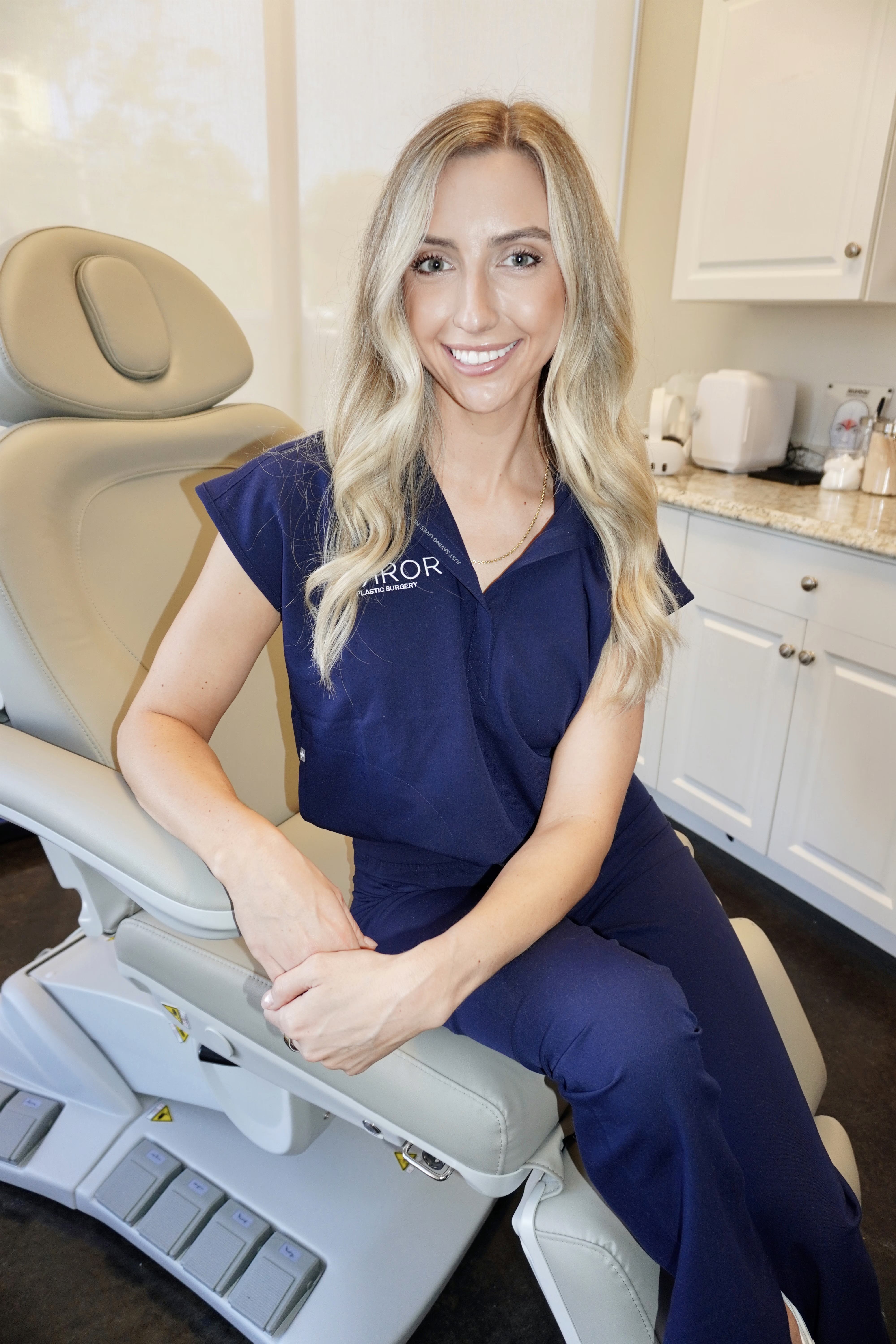
Written by: Ellie Pranckevicius, FNP-BC, Aesthetic Nurse Practitioner & Aesthetic Injector | Facial Restoration & Regenerative Injectable Specialist, Mirror Plastic Surgery
Key Takeaways
-
Most visible swelling after lip filler settles within 5–7 days. Final results refine over 2–4 weeks as the filler integrates with lip tissue.1
-
Swelling peaks around day 2, then gradually eases through the first week. The two-week mark is the standard clinical assessment point for results.1
-
Clear aftercare, including cold compresses, head elevation, hydration, and avoiding blood thinners, helps limit swelling, bruising, and complications.
-
An experienced injector with deep anatomical knowledge plays the biggest role in minimizing swelling, bruising, and recovery time.
-
Book a consultation with Ellie at Mirror Plastic Surgery to receive a treatment plan tailored to your anatomy, goals, and schedule.
Lip Filler Swelling Stages: What Happens Day by Day
Your lips look most dramatic in the first 48 hours, which does not reflect your final result. Here is what typically happens at each stage of the lip filler healing process.
Days 1–2: Swelling and Bruising Peak
Immediately after treatment, lips appear significantly fuller than the final result. Lips can appear 30–50% larger than the final result due to water retention and inflammation during the first 48 hours.1 This occurs because the injected filler is hydrophilic and draws water from surrounding tissue, adding a secondary layer of volume on top of inflammatory swelling. The lips also have a rich submucosal vascular network, so they swell more dramatically than most other facial injection sites.
Day 2 usually feels like the peak of swelling. Swelling typically reaches its maximum between 24 and 72 hours post-treatment, with some sources specifying a 48–72 hour peak. Expect tenderness, firmness, possible bruising, and small red pinprick marks at injection sites. Asymmetry is completely normal at this stage. One side often swells more than the other, and this pattern does not indicate uneven filler placement.
Days 3–5: Swelling Begins to Subside
Swelling drops noticeably during this window. During days 4–5, the acute inflammatory response resolves as neutrophils are cleared by macrophages and lymphatic drainage increases; bruising transitions from red-purple to yellow-green as haemoglobin is metabolised to biliverdin and then bilirubin. Lips begin to feel softer, and the true shape starts to emerge. Some firmness and unevenness may still be present. Most people feel comfortable going out in public by day 4 or 5 after lip filler.
Days 6–7: Socially Ready
Most visible swelling and bruising have resolved by this point. Day 5 lips are typically within 15% of the final settled result, and most swelling is gone by day 7.1 Some tightness or firmness may remain. Many patients feel confident returning to normal social activities during this stage.
Weeks 2–4: Final Results Take Shape
The filler integrates with lip tissue during this period. Fillers reach their final rheological equilibrium, settling into their definitive shape and hydration state, at approximately 14 days post-injection, which is why the two-week review appointment is standard practice. Any remaining stiffness softens, and the natural result becomes clear. Subtle refinements continue through week 4 as the filler matrix fully blends with natural lip tissue, allowing final results to be assessed.
Lip Filler Aftercare Rules: What to Do and What Not to Do
Clear aftercare is the most effective way to minimize swelling, reduce bruising, and support smooth results. A 2026 expert consensus paper published in the Journal of Cosmetic Dermatology recommends that patients receive clear aftercare instructions covering the first 24–48 hours as a core component of safe lip augmentation practice.
What to do in the first 48 hours:
-
Apply a clean cold compress wrapped in a cloth for 10–15 minutes at a time during the first 24–48 hours, and never apply ice directly to the skin.
-
Sleep with your head elevated on extra pillows for the first few nights, which reduces gravitational fluid pooling in the perioral area and correlates with faster resolution of facial oedema.
-
Stay hydrated, as fillers attract water and hydration supports even settling.
-
Take acetaminophen (Tylenol) for discomfort if needed, and avoid ibuprofen, Advil, and aspirin because NSAIDs thin the blood and increase bruising risk.
What to avoid after lip fillers:
-
Avoid makeup on the lips for 24 hours, because injection sites are tiny open wounds and early application can introduce bacteria.
-
Refrain from kissing, pressing lips together, or touching the area for 24–48 hours.
-
Skip strenuous exercise for 48 hours. The American Society of Plastic Surgeons recommends pausing intense exercise for 24 to 48 hours after lip filler to reduce swelling and bruising, as hard training increases blood flow and blood pressure.
-
Steer clear of alcohol for 24–48 hours, as it thins the blood and expands blood vessels, which increases bruising.
-
Avoid extreme heat, including saunas, steam rooms, hot tubs, and sunbathing, for at least 48 hours.
-
Postpone dental work for 2 weeks, because dental procedures can affect filler placement or trigger inflammatory responses that may compromise your results.
-
Hold off on blood-thinning medications such as ibuprofen, aspirin, and fish oil unless they are medically necessary.
Red Flags: When to Call Your Injector Immediately
Most swelling and bruising fall within a normal range, but certain symptoms require prompt medical attention. Recognizing these warning signs protects both your health and your results.
Contact your injector immediately if you experience any of the following:
-
Severe pain that worsens rather than improves after 48 hours
-
White, blue, grey, or mottled patches on or around the lips, which can signal vascular occlusion where filler blocks or compresses a blood vessel and the risk of irreversible necrosis climbs continuously over time
-
Fever, spreading redness, or warmth, which may indicate infection
-
Asymmetry that worsens after day 3 rather than improving
-
Blistering or skin breakdown
-
Vision changes, sudden facial weakness, or stroke-like symptoms, which require immediate emergency care
Vascular occlusion is rare, occurring in roughly 0.01% to 0.05% of all dermal filler procedures, but it is time-sensitive. These symptoms can signal vascular occlusion, a complication that needs rapid treatment. Administered as quickly as possible, hyaluronidase is the only evidence-based therapy that can fully save tissue in vascular occlusion, ideally within the first hour. Choosing a provider with deep anatomical knowledge and hyaluronidase on-site helps manage this risk. Mirror Plastic Surgery offers prompt, concierge-level support to its patients if any concerns arise after treatment.
Planning Your Recovery Around Work, Exercise, and Events
Most people want their lips to look presentable quickly, so planning around the swelling timeline makes life easier. Use this overview to match your treatment date to your calendar.
-
Work: Many patients return to work the next day for desk jobs. Plan for 48 hours of noticeable swelling if you have client-facing meetings. Scheduling your treatment on a Thursday or Friday allows the weekend for initial swelling to subside.
-
Exercise: The 48-hour rest period protects your results, and after that, light activity is usually fine if your body feels comfortable.
-
Social events: Plan events after day 5–7, when most swelling has resolved. For a major event such as a wedding or photo session, schedule your treatment at least two weeks beforehand so you have time for full recovery and result assessment.
-
Judging results: Wait the full 2 weeks before evaluating your outcome, because early swelling does not reflect your final lips.
Get a recovery timeline mapped to your actual calendar by booking a consultation with Ellie so your plan fits your real schedule.
Why Your Injector Matters for a Smooth Recovery
Your recovery experience starts with the skill and judgment of your injector, not just the aftercare sheet. A recent cadaver study identified 24 separate compartments in the lips, each with a small volume of 0.30–0.52 mL, reinforcing the need for small injection volumes at individual points and a deep understanding of lip anatomy. A skilled injector uses this anatomical knowledge to minimize tissue trauma, select the right product, and inject conservatively, which directly reduces swelling, bruising, and recovery time.
The single most important factor in filler complication prevention is provider experience and anatomical knowledge, specifically of facial vascular anatomy, with appropriate injection technique including slow injection and low volume per pass. This same expertise helps prevent complications in the first place. High-volume practices that rush consultations may not take the time to understand your unique anatomy and goals, and that gap often shows up in both results and recovery.
At Mirror Plastic Surgery in St. Petersburg, Ellie Pranckevicius, FNP-BC, brings a rare combination of esthetician training, including 600 hours of hands-on clinical practice, and advanced nursing expertise with four years in the Neuroscience ICU at Tampa General Hospital. This dual background gives her a comprehensive understanding of skin physiology and subdermal anatomy, plus the clinical judgment to recognize and respond to complications. The practice follows a safety-first, function-second, aesthetics-third philosophy. Consultations are unhurried, lasting up to an hour, so your treatment plan is personalized rather than cookie-cutter. Ellie uses a holistic, full-face approach and considers your entire facial profile before placing a single drop of filler, which reduces the risk of an overdone appearance.
Frequently Asked Questions About Lip Filler Recovery
How long does lip filler swelling last?
Most visible swelling resolves within 5–7 days, with the worst swelling occurring on days 1–2. Subtle residual swelling may persist for up to 2 weeks as the filler continues to integrate with surrounding lip tissue. How quickly swelling settles depends on individual factors such as age, metabolism, lymphatic function, and the volume of filler used. Patients with robust lymphatic drainage often see faster resolution, while those with slower metabolism may notice mild puffiness through the end of the first week.
When can I go back to work after lip fillers?
Most patients can return to work the next day, especially for desk-based roles. If your job involves client-facing meetings, presentations, or public appearances, scheduling your treatment on a Thursday or Friday allows the weekend for initial swelling to subside, as described earlier. By day 3–5, most patients feel comfortable in social and professional settings. For a high-profile event such as a conference, media appearance, or important meeting, plan your treatment at least two weeks in advance.
Is day 2 after lip fillers the worst?
Day 2 usually represents the peak of swelling. Swelling typically peaks at 24–48 hours after treatment, and your lips may look significantly larger than your final result on that day due to the inflammatory response and the water-attracting properties of filler. This stage is completely normal and does not reflect your final outcome. Asymmetry at this point is also expected, because swelling resolves at different rates on each side. The appearance on day 2 should not be used to judge the success of your treatment.
What is forbidden after lip fillers?
For the first 24–48 hours, avoid makeup on the lips, kissing or pressing the lips together, strenuous exercise, alcohol, extreme heat such as saunas, hot tubs, steam rooms, and direct sun exposure, and blood-thinning medications such as ibuprofen, aspirin, or fish oil supplements unless medically necessary. Avoid dental work for 2 weeks following treatment. Do not massage or press the lips unless your injector specifically instructs you to do so, because pressure can displace filler before it has integrated with surrounding tissue.
How long until I see final results?
Most swelling resolves by day 7, and the final settled result is visible at 2–4 weeks when the filler has fully integrated with your lip tissue.1 The 2-week mark is the standard clinical assessment point, and this is when shape, symmetry, and volume should be evaluated. If any refinement is needed, your injector will discuss options at this stage. Subtle changes in texture and softness may continue through week 4 as the filler completes its integration process.
Conclusion: Your Recovery Starts with the Right Injector
Lip filler recovery follows a predictable pattern. Swelling peaks around day 2, settles within a week, and final results refine over 2–4 weeks. Thoughtful aftercare minimizes discomfort, and understanding red flags keeps you safe. The most influential decision you make is choosing an injector with the anatomical expertise to deliver natural results with minimal tissue trauma.
At Mirror Plastic Surgery in St. Petersburg, Ellie Pranckevicius combines esthetician training with advanced nursing expertise to provide safe, personalized lip augmentation with attentive, concierge-level care. Each consultation focuses on your anatomy, your goals, and your timeline so your recovery fits your life.
Book a consultation with Ellie to discuss your goals and receive personalized guidance for your lip filler journey.
Disclaimer: Results may vary from person to person. Editorial content, before and after images, and patient testimonials do not constitute a guarantee of specific results.
1 Results may vary from person to person. Editorial content, before and after images, and patient testimonials do not constitute a guarantee of specific results.