
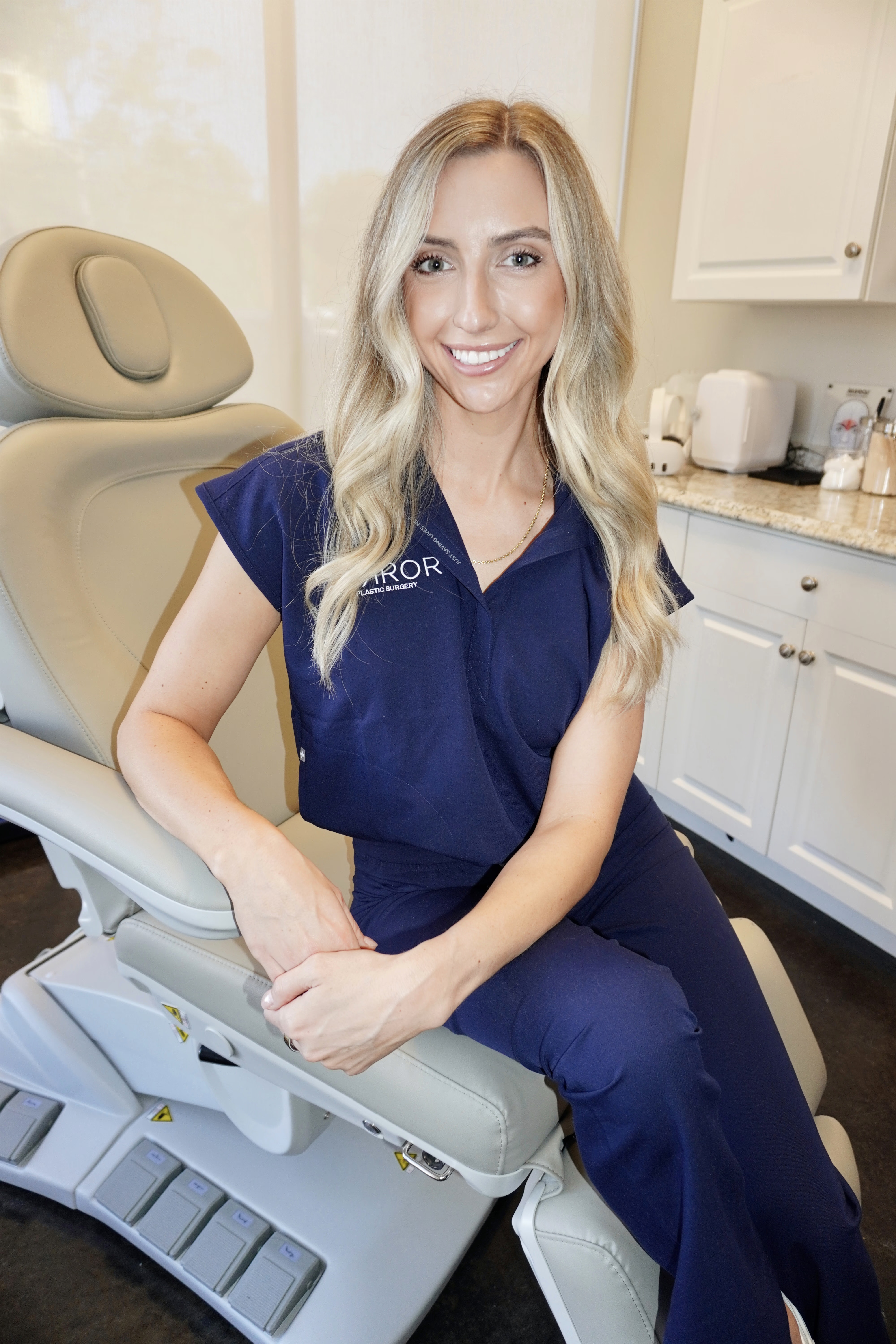
Written by: Ellie Pranckevicius, FNP-BC, Aesthetic Nurse Practitioner & Aesthetic Injector | Facial Restoration & Regenerative Injectable Specialist, Mirror Plastic Surgery | Last updated: August 27, 2026
Key Takeaways
- Most lip-augmentation side effects involve mild, short-term swelling, bruising, and tenderness that peak within 48 hours and resolve within two weeks.1
- Vascular occlusion is rare but presents with severe disproportionate pain, blanching, cool skin, or mottled discoloration and requires immediate reversal-agent treatment.1
- Asymmetry and small lumps are normal in the first two weeks; lumps that grow or persist after day 14 need professional evaluation.1
- Patients with a history of cold sores benefit from antiviral prophylaxis to reduce the risk of HSV reactivation triggered by the procedure.1
- Schedule your personalized safety assessment at Mirror Plastic Surgery to receive direct injector contact and a tailored recovery plan before your lip-augmentation procedure.
24–48 Hour Recovery Timeline for Lip Augmentation
Systematic reviews of lip augmentation show that most adverse events are mild and short-lived, including edema, ecchymosis, tenderness, and nodularity. Knowing the typical recovery timeline helps you stay calm about normal changes and recognize a true emergency quickly.
| Timeframe | Normal Findings | Abnormal Findings | Recommended Action |
|---|---|---|---|
| Hours 0–48 | Peak swelling, mild-moderate tenderness, possible pinpoint bruising | Sharp throbbing pain, cold or white/blanched skin, blue-gray discoloration | Contact injector immediately for any abnormal sign |
| Days 3–5 | Swelling subsiding, bruising transitioning from purple to green-yellow | Increasing pain with warmth and redness, spreading severe bruising | Same-day injector contact or urgent care |
| Days 5–14 | Bruising fading, swelling largely resolved, true lip shape emerging | Persistent or worsening swelling, fever, pus, hard growing lumps | Schedule evaluation; do not wait for next routine appointment |
| Week 2–4 | Settled final shape, swelling undetectable, result stable | Lumps that grow rather than soften, progressive discoloration | Formal revision assessment with injector |
Swelling after lip augmentation reflects a normal inflammatory response rather than a complication in most patients. Peak swelling can make lips appear 30–50% larger than the final result because of water retention and inflammation. Most patients reach their final settled appearance within two to four weeks.1
Book a consultation with Ellie to receive a personalized recovery timeline based on your anatomy before your procedure.
Vascular Occlusion Red Flags After Lip Filler
Vascular complications from filler are rare. The lips are lower risk than the glabella, forehead, and nose, where anastomoses with the ophthalmic artery create greater danger. When vascular occlusion occurs in the lip region, it becomes a medical emergency, and the first 48 hours matter most.
The following red flags require immediate action, not a wait-and-see approach:
- Severe or rapidly worsening pain out of proportion to expected discomfort
- Immediate blanching or skin becoming dusky, mottled, or bluish
- Skin that feels distinctly cool, with blue-grey or net-like spreading discoloration
- Vision changes, which are extremely rare but require emergency care immediately
- Blistering or breathing difficulty
Vascular occlusion presents as blanching, mottling, or severe pain shortly after injection and constitutes a medical emergency requiring immediate reversal agent treatment. At Mirror Plastic Surgery, Ellie’s background in the Neuroscience ICU at Tampa General Hospital supports rapid recognition and management of vascular emergencies with a level of clinical judgment that high-volume aesthetic practices rarely provide.
Asymmetry and Lumps After Lip Filler
Asymmetry during the first 48 hours after lip filler is normal because swelling is rarely symmetrical and each side of the lips has slightly different anatomy and blood supply.1 This asymmetry typically persists through day 3 as filler settles at different rates; patients should wait until day 14 before evaluating final symmetry.
Lumps follow a similar pattern. Small lumps that soften over two weeks are listed among normal post-lip-filler symptoms.1 The threshold for concern is a lump that grows rather than softens after the two-week mark. Hard, growing lumps appearing or persisting after two weeks should be evaluated, as they could represent a granuloma or nodule. Foreign-body granulomas after filler injections remain uncommon.
Ellie’s whole-face assessment approach, which evaluates the upper, middle, and lower facial regions together instead of treating the lips in isolation, reduces the likelihood of placement-related asymmetry from the start. A 2026 expert consensus recommends whole-face assessment, respect for individual lip proportions including upper-to-lower lip ratios varying by ethnicity, and avoidance of channels that breach the vermilion border to prevent product displacement.
Cold Sore Reactivation Protocol for Lip Filler
Beyond structural issues like asymmetry and lumps, lip augmentation carries a unique infectious risk: herpes simplex virus reactivation. Patients with a history of cold sores may experience herpes simplex virus reactivation during the inflammatory period (days 2–3) after lip filler, warranting prophylactic antiviral therapy. This risk is specific to lip procedures and distinguishes lip augmentation from other filler sites. Needle or cannula punctures, tissue manipulation, and local inflammation can reactivate latent HSV-1 already present in the patient’s nervous tissue; the filler itself does not introduce the virus.
The clinical protocol at Mirror Plastic Surgery follows established evidence:
- An active herpetic lesion is a contraindication to lip filler injection, and treatment is deferred until the lesion has fully healed.
- A common prophylaxis regimen uses oral antiviral medication starting 1–2 days before the procedure and continuing for several days after.
- Topical antivirals are not typically used for prophylaxis.
- If a cold sore appears after augmentation, patients should immediately contact the clinician and begin prescribed herpes treatment as early as possible.
All patients are screened for cold sore history during Ellie’s top-to-bottom assessment. Antiviral prescriptions are coordinated with the supervising physician before any procedure is scheduled.
Comparing Risks: HA Filler, Implants, and Fat Transfer
Tampa patients considering lip augmentation often weigh temporary filler against permanent implants or autologous fat transfer. Each option carries a distinct risk profile that must align with individual anatomy and goals.
| Modality | Reversibility | Key Characteristics | Longevity |
|---|---|---|---|
| HA Filler | Fully reversible within days via reversal agent | Side effects usually mild and transient, with rare serious vascular events | 6–12 months, with faster absorption in lips due to movement |
| Silicone Implant | Removable through original incisions; does not integrate with tissue | Surgical procedure with risks of malposition, infection, or extrusion that may prompt removal | Permanent augmentation, with surgical revision possible |
| Autologous Fat Transfer | Not reversible; uses the patient’s own tissue | Variable fat survival that can require additional procedures for refinement | Autologous fat transfer to the lips can provide long-lasting or permanent results if the transferred fat survives, with any touch-ups typically needed after years rather than months. |
Peer-reviewed studies on custom silicone lip implants report high patient satisfaction with low complication rates, with asymmetry as the most frequent concern. Patient satisfaction after HA lip augmentation is also typically high. The right modality depends on individual anatomy, goals, and risk tolerance, which Ellie evaluates during a comprehensive assessment, with surgical options available through Dr. Akash Chandawarkar when appropriate.
When to Contact Your Injector and When to Visit the ER
Patients often feel unsure about where to turn with a concern after hours, so clear triage guidance helps. The appropriate contact point depends on the type and severity of the symptom.
Contact your injector by text or call for:
- Any symptom worsening rather than improving after day three, including increasing pain, spreading redness, progressive discoloration, or fever
- Bruising that worsens after several days, or skin appearing pale, gray, or blotchy
- Swelling that does not improve after 2 weeks, or hard lumps that persist
- Cold sore symptoms appearing within the first week post-procedure
Go to the emergency room immediately for:
- Vision changes or stroke-like symptoms after any facial filler procedure
- Breathing difficulty or rapidly worsening swelling affecting the airway
- Signs of vascular occlusion described above, including blanching, mottling, severe disproportionate pain, or cool skin with blue-gray discoloration
Mirror Plastic Surgery’s concierge model means Ellie is reachable by text or call, not through a call center. Patients receive guidance during the critical 48-hour window instead of managing concerns alone.
Book a consultation with Ellie and receive direct injector contact information before your procedure, not after.
Long-Term Lip Filler Safety Signals
Beyond the acute recovery window, a small subset of patients may encounter delayed effects that deserve monitoring. Uncommon and delayed complications of lip filler include persistent asymmetry or contour irregularity, nodules, granulomas, migration, discoloration, and allergic reactions, which may appear weeks, months, or years after injection.
Granulomas and angioedema are uncommon but worth understanding before committing to a procedure. Because these delayed complications often relate to excessive product volume, expert consensus recommends using conservative volumes per session in treatment-naïve patients and staged approaches to minimize cumulative risk over time.
Ellie’s philosophy aligns directly with this evidence-based approach. She avoids maximizing volume in a single session and instead prioritizes foundational restoration first. Volume augmentation is considered only after assessing the full facial context. This staged strategy reduces the likelihood of migration, disproportion, and corrective treatment, which occur more often in high-volume practices that treat the lips in isolation.
Technical reviews have identified compartmentalized lip subunits, reinforcing the need for small, compartment-respecting injection volumes. Ellie’s dual background in esthetics and advanced nursing, combined with Mirror’s MEETH-trained surgical oversight from Dr. Akash Chandawarkar, creates a structured, anatomy-driven framework for monitoring long-term safety signals instead of reacting only when problems appear.
Conclusion: Lip Augmentation Safety at Mirror Plastic Surgery
The vast majority of lip augmentation side effects are mild, predictable, and self-resolving within two weeks. Serious complications such as vascular occlusion, tissue necrosis, or vision-threatening events remain rare when experienced injectors use evidence-based techniques. The rare serious complications that do occur, including vascular occlusion, infection, and granuloma, are best prevented through individualized anatomical planning and best managed by an injector who can recognize them within the critical 48-hour window.
At Mirror Plastic Surgery, Ellie Pranckevicius, FNP-BC, brings ICU-level clinical judgment, 600 hours of hands-on aesthetics training, and a whole-face assessment framework to every lip augmentation consultation. Surgical backup from Dr. Akash Chandawarkar, who is Harvard-educated, Johns Hopkins-trained, and fellowship-trained at MEETH, is available on-site when the clinical picture requires escalation. The practice operates as a concierge environment rather than a high-volume clinic, so your anatomy, your history, and your 48-hour recovery are treated as individual clinical priorities.
Book a consultation with Ellie at Mirror Plastic Surgery in St. Petersburg, Florida, and receive a personalized safety plan before your procedure begins.
Frequently Asked Questions
How long does swelling last after lip augmentation, and when should I be concerned?
Swelling after lip augmentation typically peaks within the first 24 to 48 hours and decreases substantially by days 5 to 7. As mentioned in the recovery timeline above, most patients reach their final settled appearance within two to four weeks, although most swelling improves much sooner. Swelling that worsens after day three rather than improving, or that appears with increasing pain, spreading redness, fever, or skin color changes such as blanching or blue-gray discoloration, is not normal and warrants same-day contact with your injector. At Mirror Plastic Surgery, Ellie provides direct contact information before your procedure so you are not left guessing during the recovery window.
What does vascular occlusion feel like, and how is it different from normal bruising?
Normal bruising after lip filler appears within hours of the procedure, follows a predictable color progression from red-purple to blue-green to yellow, causes mild discomfort, and leaves surrounding skin looking normal. Vascular occlusion presents differently. It typically involves severe or rapidly worsening pain disproportionate to the procedure, immediate or progressive blanching of the skin, skin that feels cool to the touch, and a dusky, mottled, or net-like discoloration pattern. These signs can appear shortly after injection or develop over the following hours. Vascular occlusion is a medical emergency that requires immediate reversal agent treatment. If you experience any of these signs, contact your injector immediately or go to the emergency room. Ellie’s ICU background at Tampa General Hospital supports clear differentiation between normal bruising and true vascular compromise.
Do I need antiviral medication before lip filler if I have a history of cold sores?
Yes. Patients with a history of cold sores are at risk of herpes simplex virus reactivation after lip filler because needle punctures and tissue inflammation can trigger the virus already present in the nervous system. An active cold sore lesion is a contraindication to the procedure, and treatment must be deferred until the lesion has fully healed. For patients with a cold sore history, oral antiviral prophylaxis is typically prescribed starting one to two days before the procedure and continuing for several days after. Topical antiviral creams are not typically recommended for this purpose. At Mirror Plastic Surgery, every patient is screened for cold sore history during the initial top-to-bottom assessment, and antiviral prescriptions are coordinated with the supervising physician before any procedure is scheduled.
How does the risk profile of lip filler compare to permanent lip implants?
Lip filler and permanent silicone implants serve different patient goals and carry distinct risk profiles. Lip filler produces temporary results lasting 6 to 12 months, is fully reversible with hyaluronidase if complications arise or the patient is dissatisfied, and usually causes mild, transient side effects. Permanent silicone implants provide lasting augmentation that is surgically removable but carry surgical risks including malposition, infection, or extrusion, and some patients ultimately elect removal. Autologous fat transfer to the lips can provide long-lasting or permanent results if the transferred fat survives, with any touch-ups typically needed after years rather than months. The right choice depends on individual anatomy, goals, and tolerance for surgical versus non-surgical risk, which Ellie and Dr. Chandawarkar assess during a comprehensive consultation. At Mirror Plastic Surgery, Ellie manages non-surgical augmentation, and Dr. Akash Chandawarkar is available for surgical options when indicated.
What makes Mirror Plastic Surgery’s approach to lip augmentation safer than a high-volume clinic?
The primary safety differentiator is individualized anatomical planning. High-volume practices often treat the lips in isolation with standardized volumes and minimal pre-procedure assessment. Mirror Plastic Surgery’s approach begins with a comprehensive top-to-bottom assessment that can extend up to an hour, evaluating the full facial context, medical history including cold sore history, and individual vascular anatomy before any product is selected or volume determined. Ellie’s background includes four years in the Neuroscience ICU at Tampa General Hospital, 600 hours of hands-on aesthetics training, and dual expertise in esthetics and advanced nursing. This clinical foundation supports early recognition of warning signs that a less experienced injector might miss. Additionally, Dr. Akash Chandawarkar’s MEETH fellowship training in aesthetic surgery provides on-site surgical oversight for cases that require escalation. The practice performs a limited number of procedures per day by design, so every patient receives the focused attention that safety-first medicine requires.
Disclaimer: Results may vary from person to person. Editorial content, before and after images, and patient testimonials do not constitute a guarantee of specific results.
1 Results may vary from person to person. Editorial content, before and after images, and patient testimonials do not constitute a guarantee of specific results.